
Review · TOKYO
Tokyo: Visit Sumo Morning Practice with English Guide
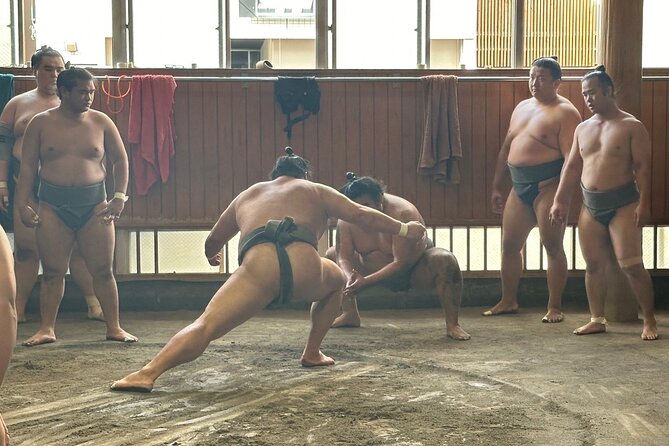
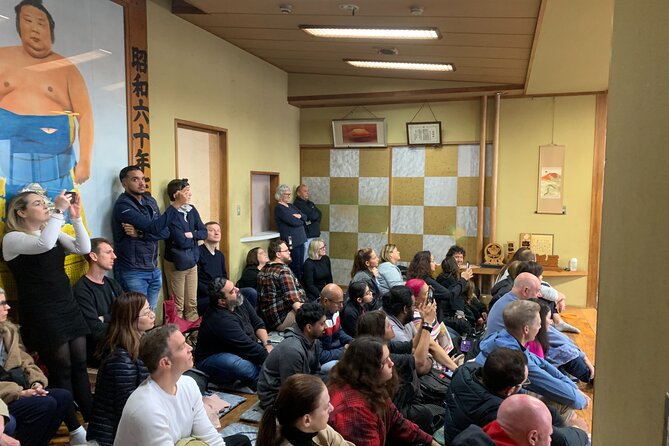
Tokyo’s sumo wrestlers do not put on a show for this visit. At Takasago stable, you sit quietly a few feet from professional rikishi as they stretch, stomp, grapple, and repeat hard drills. This is the real morning routine, not a staged demonstration, and that makes the experience unusually intimate.
I like the close view and the chance to see training that most visitors never witness. I also like the practical English guidance from hosts such as Keiko and Naomi, plus the photo with the wrestlers at the end. The main drawback is simple: sitting on a floor cushion or tiny stool for up to two hours can be tough, and the $96 price feels high if you want a long spoken tour rather than access to the stable.
Key points to know
- Training, not theater: Watch professional wrestlers follow their normal practice without stopping to entertain the audience.
- A historic stable: Takasago has produced six yokozuna, the top rank, and eight ozeki, the second-highest rank.
- Early start: Meet at the A-3 elevator exit of Ryogoku Station’s Toei Oedo Line at 7:45 a.m.
- Close-up viewing: The stable places you near the action, with written information about exercises and sumo rules.
- Photo opportunity: Take a commemorative picture with rikishi after practice, with a 1,000-yen tip requested according to one recent experience.
- Quiet behavior matters: You must stay silent during training, and photos are allowed only when they do not interfere.
Why Takasago stable makes this special
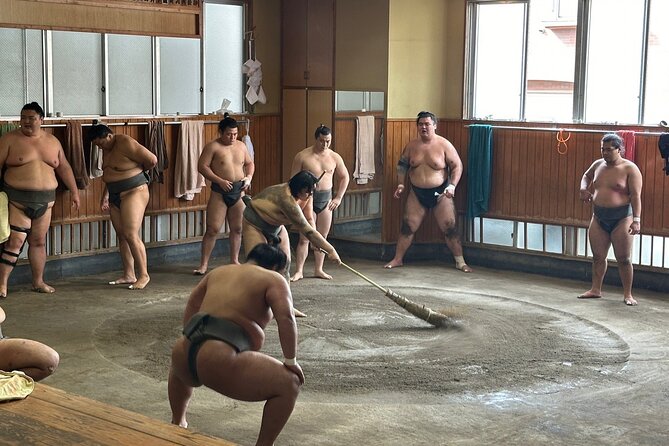
Sumo is easy to recognize but not always easy to understand. A tournament gives you the drama of official bouts, yet the short matches can pass quickly if you do not know what to watch. At Takasago stable, you see the work behind those few explosive seconds.
The stable has a notable record. Six wrestlers from Takasago have reached yokozuna, the highest rank in sumo. Eight have reached ozeki, the next rank down. Those numbers give the visit extra weight, though the real appeal is less about famous names and more about seeing how a working stable operates.
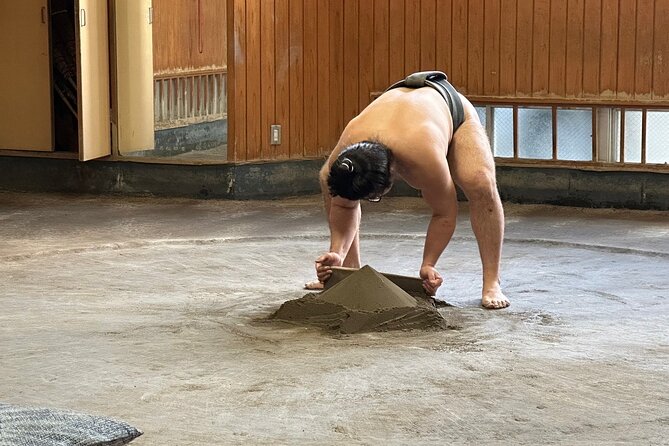
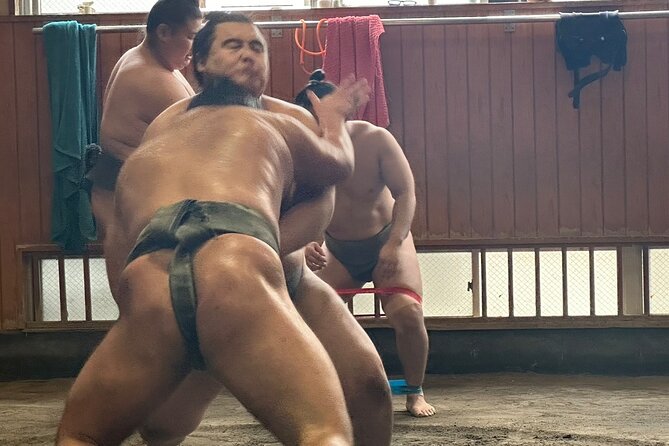
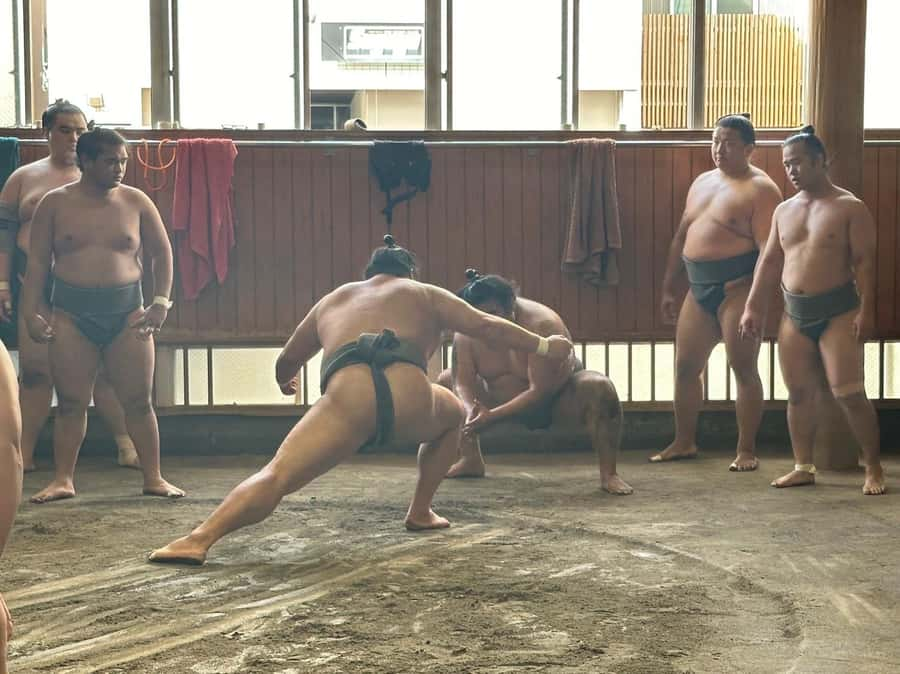
You watch wrestlers repeat movements until they look almost automatic. The exercises show the power, balance, flexibility, and timing required in the ring. A practice session can include stretching, footwork, pushing drills, and sparring. The contrast is striking: sumo looks slow from a distance, but close up you see heavy bodies move with speed and control.
The wrestlers generally carry on with practice rather than performing for you. That is exactly what I want from a cultural visit. You are observing a daily discipline, not buying a front-row seat to a tourist production.
More Sumo Experiences in Tokyo
- Tokyo: Sumo Show and Dining Experience
★ 4.8 · 2,742 reviews - the SUMO show
★ 5.0 · 1,960 reviews - Tokyo Shinjuku Sumo Show & Experience with Photo
★ 5.0 · 1,750 reviews
Meeting at Ryogoku Station before breakfast
Your morning begins at 7:45 a.m. at Ryogoku Station, on the Toei Oedo Line. Find the A-3 elevator exit, where the staff member waits for the group. This detail matters because Ryogoku has more than one station and several exits, so do not simply type the station name into your map and wander.
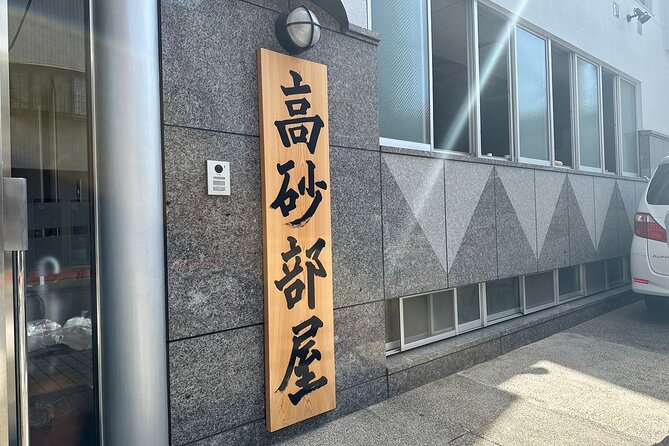
From the meeting point, your guide leads the group on a roughly 10-minute walk to Takasago-beya. The short walk keeps the morning easy and gives you time to ask basic questions before entering. Guides speak English and Japanese. Names reported for this experience include Keiko, Naomi, and Ma-yo, though the guide assigned to your date may be different.
Arrive early. One group arrived 15 minutes before the meeting time and found the guide already waiting. Another group arrived late and was helped back to the meeting point by the guide. That kindness is useful, but you should still plan to be there before 7:45. A stable is a working place, and the group cannot hold up the training schedule indefinitely.
Wear something comfortable and be ready for a quiet indoor visit. You are not walking far, but you may sit for a long time in one position. If floor sitting is hard for you, ask about a small seat near the start of the viewing area. One person appreciated being placed near a fan, while others found the cushions and miniature chairs uncomfortable.
Inside the stable, silence becomes part of the experience
After arrival, the guide explains what you are about to see. You may receive a written booklet or handout describing sumo positions, traditions, exercises, and rules. This printed material is useful because the practice itself must remain quiet. You cannot count on a running commentary while the wrestlers train.
The stable may feel warm, though air-conditioned comfort has been reported. Conditions can vary, and one group was given chilled water. The room is a practical training space, not a polished museum, which is part of the appeal. You sit close to the action and watch the wrestlers work in front of you.
Quiet is not a minor request. Do not chat, use a cellphone, or distract the wrestlers. The information says cellphones are not allowed, while photos may be taken when they do not get in the way of practice. Treat that as a strict rule: keep your phone put away and follow the guide’s instructions about photography. If you bring a separate camera, ask before using it.
The atmosphere is focused. Wrestlers are not there to pose, explain their lives, or react to the audience. You may see them repeat the same movements for long stretches, then shift into more intense practice. The lack of interaction during training is a strength, not a weakness. It lets you watch the routine on its own terms.
What the 90 to 120 minutes of practice reveals
The formal viewing lasts about 90 to 120 minutes, though the exact length depends on the stable’s schedule. Some groups have watched for around two hours. One group found that practice continued for three hours but had to leave for other plans. Do not build a tightly timed morning around an exact finish.
The first part can feel measured. Sumo training is not nonstop combat. Preparation, repetition, and stance work matter. You see how much effort goes into basic movements before the wrestlers face one another.
When sparring begins, the mood changes. The bouts are short but forceful. Two wrestlers collide, push, brace, and try to force the other out of position. From a close seat, you can see the strain in their legs and shoulders far better than you can from distant tournament seats.
A detailed handout can help you identify what is happening. You may learn the names of positions and exercises, then recognize them as the practice continues. Some guides add spoken explanations before or after the session. Others keep their comments brief and rely more on the printed material. If you want more context, ask questions during the walk or after training, when conversation is easier.
That variation is worth knowing before you pay. This is best understood as guided access to an authentic practice session, not a two-hour lecture on sumo. Several people found the access and atmosphere worth the cost, while others felt $96 was too much for sitting and watching. Your enjoyment will depend on how much you value the rare setting and close view.
Same city, another way to catch the action:
- Tokyo: Sumo Show and Experience in Shinjuku
★ 4.8 · 1,001 reviews - Tokyo Grand Sumo Tournament Viewing Tour with Tickets
★ 5.0 · 692 reviews - Tokyo Sumo Wrestling Tournament Experience
★ 5.0 · 660 reviews - Tokyo:Luxury Sumo Show Experience & Japanese cuisine & Drink
★ 4.7 · 577 reviews
The photo with the rikishi
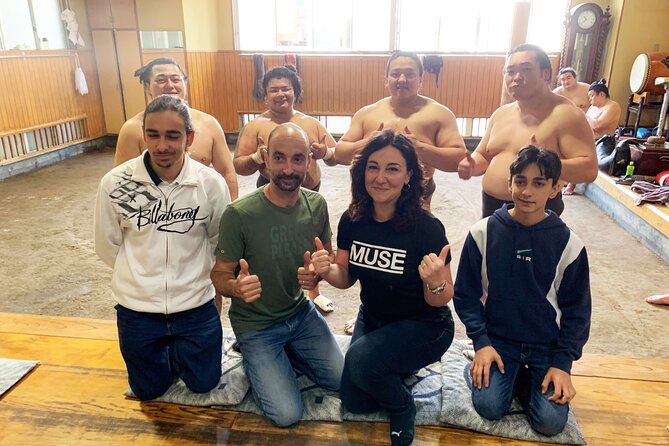
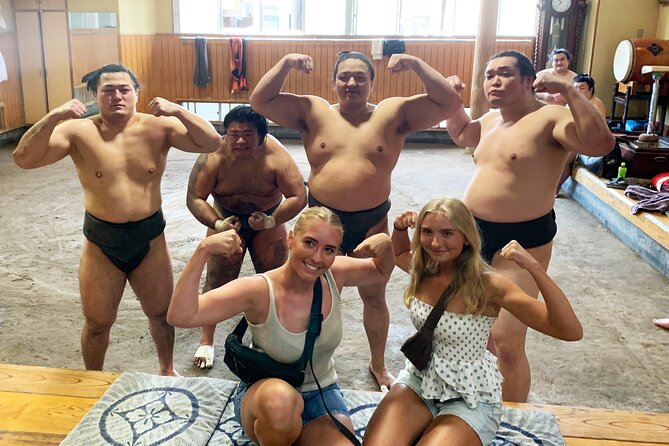
After training, the mood becomes more relaxed. You are given a chance to take a commemorative photo with some of the wrestlers. This is the personal moment most likely to stay in your travel album, especially after spending so long watching them work without interruption.
The photo session is organized by the guide, and several hosts have gone out of their way to make sure groups get their pictures. You may also have photo opportunities outside the stable after the practice ends.
Bring cash. One recent participant said a 1,000-yen tip is requested for the photo. The advertised activity includes taking photos, but this extra request can surprise you, especially after paying the tour price. I would carry the cash and ask the guide politely about the custom before the picture.
Do not expect a long conversation with the wrestlers. The main point is the photograph and the brief chance to meet them after their work. Keep the process quick and respectful so the stable can return to its normal routine.
Is $96 a fair price for two hours?
At $96 per person, this is not a cheap morning outing. You are paying for a guide, access to a working sumo stable, the chance to watch practice from close range, and help with the photo afterward. You are not paying for a tournament ticket, meal, transport around Tokyo, or a long cultural lecture.
The value is strongest if you have already tried to find sumo tickets and want a reliable way to see the sport in Tokyo. Tournament tickets can be difficult to obtain, and a practice visit gives you useful context before attending a match. After seeing the drills, rituals, and physical demands, you will understand more of what happens during a tournament.
The value is weaker if you mainly want entertainment or constant explanation. The wrestlers train for themselves, not for an audience. If you dislike sitting on the floor, need frequent movement, or expect a show with narration, the price may feel steep.
I would also budget the possible 1,000-yen photo tip. It is a small extra compared with the booking cost, but it is better to know before you arrive.
Comfort, children, and practical limits
The stable can accommodate children who are able to observe quietly. The fee is the same for children and adults. This could be a strong educational outing for older children and teenagers, especially those interested in sport, Japan, or physical training. Younger children may struggle with the early start and the requirement to remain quiet for a long stretch.
Think carefully about seating. You may sit on a floor cushion or small stool for 90 minutes or more. Some people manage this without trouble, while others find it uncomfortable. If you have knee, hip, or back concerns, ask the guide about available seating as soon as you arrive.
The warm room may also affect your comfort. Air conditioning and fans have been available for some groups, but conditions can vary. Bring water and dress sensibly for indoor sitting.
Cellphones are listed as not allowed. That means this is not a good time to check messages, record freely, or post while practice continues. Cameras and photos may be permitted when the training is not disturbed, but follow the guide’s instructions rather than assuming every picture is acceptable.
Who should book the Takasago morning practice?
I recommend this to anyone who wants to see working sumo culture up close, especially if you have little interest in a staged performance. It suits people who can sit quietly, enjoy watching process rather than spectacle, and want a rare look at professional training.
It is also a smart choice before a tournament. The visit helps you recognize basic movements and understand why training is so demanding. The English guide and written material make the sport less mysterious, even though the amount of spoken explanation may vary.
Families with quiet older children can enjoy it. The photo adds a clear finish to the morning and gives children a memorable connection to what they have watched.
I would hesitate to recommend it to anyone seeking a cheap activity, flexible timing, or a fully narrated tour. The early meeting time, quiet rules, variable end time, floor seating, and extra photo tip all matter. You should book because you value access to the stable itself, not because you expect two hours of entertainment.
Cancellation is free up to 24 hours before the start, and you can reserve now and pay later. That helps if your Tokyo schedule is still shifting, but it does not change the basic decision: this is a premium price for a very specific experience.
Final verdict: book it for access, not a performance
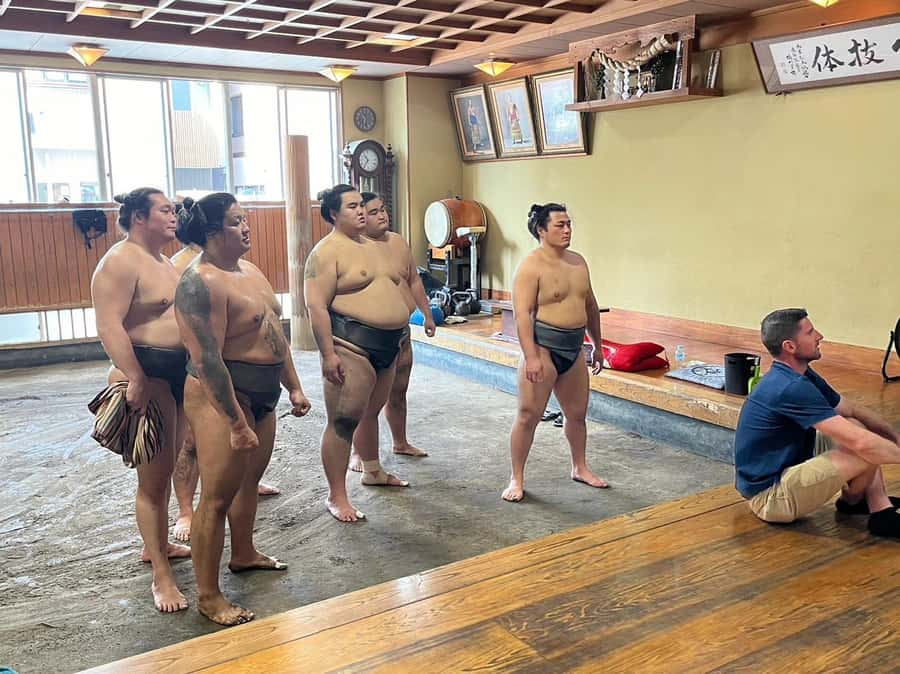
The Takasago morning practice gives you something a tournament cannot: a close look at the discipline behind sumo. You watch wrestlers repeat demanding exercises in their own training space, guided by hosts who can explain the basics and arrange a photo afterward.
I like its authenticity, the stable’s record of producing top-ranked wrestlers, and the chance to stand close to a living tradition without a stage between you and the action. I also appreciate the practical care shown by guides such as Keiko and Naomi, including help with directions, seating, and photos.
Book it if you can handle the early start, quiet observation, and uncomfortable seating. Skip it if you want a polished show or a heavily narrated tour. For the right visitor, this is one of Tokyo’s most memorable ways to understand what sumo demands before the wrestler ever steps into the ring.
FAQ
Where does the sumo practice tour meet?
Meet at 7:45 a.m. at the A-3 elevator exit of Ryogoku Station on the Toei Oedo Line. Staff wait at the exit before walking with the group to Takasago-beya.
How far is the stable from Ryogoku Station?
The walk from the meeting point to Takasago stable takes about 10 minutes.
How long do I watch the morning practice?
The practice usually lasts 90 to 120 minutes. The exact length can be shorter or longer depending on the training schedule.
Can I take photos during the practice?
Photos may be allowed as long as they do not interfere with training. Cellphones are not allowed, so follow the guide’s instructions about what camera equipment you may use.
Can I take a photo with the sumo wrestlers?
Yes. After practice, you can take a commemorative photo with the rikishi. A 1,000-yen tip may be requested for the photo, so carrying cash is sensible.
Is the activity suitable for children?
Children may attend if they can observe quietly, and the fee is the same as for adults. The visit requires quiet behavior and extended sitting.
New on the fixture list around Tokyo
- Tokyo: Sumo Morning Practice Viewing Tour at a Real Stable★ 4.9 · 32 reviews
- Tokyo: Sumo Morning Practice -Stable Visit Tour with a Guide★ 4.8 · 16 reviews
- Tokyo: Watching Sumo and Ryogoku Area Walking Tour★ 4.0 · 5 reviews
- Tokyo: Sumo Keiko Training Tour with Audio Guide & Photo★ 4.8 · 5 reviews
- Tokyo Sumo Morning Practice: Witness the Life of a Wrestler★ 4.8 · 56 reviews
- Tokyo: Sumo Morning Practice Tour in Ryogoku and Photo Shoot★ 4.7 · 47 reviews
- Tokyo Highlights Tour: Sumo, Sushi, Tea, and Tokyo Tower★ 5.0 · 2 reviews
- Tokyo: Sanctuary Authentic Grand Sumo Experience & Training★ 5.0 · 7 reviews
More Sumo Experiences in Tokyo to weigh up.
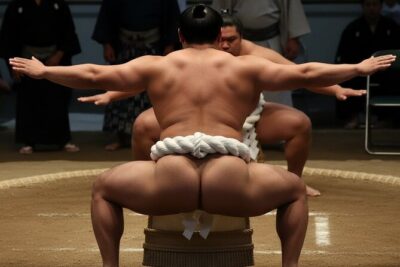
Tokyo Shinjuku Sumo Show & Experience with Photo
Read our review →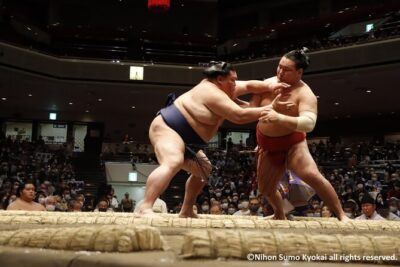
Tokyo Grand Sumo Tournament Viewing Tour with Tickets
Read our review →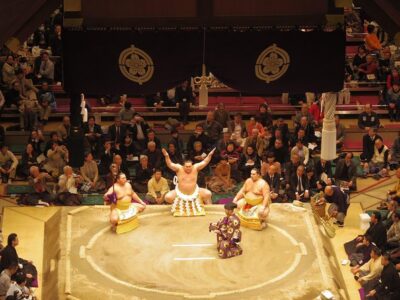
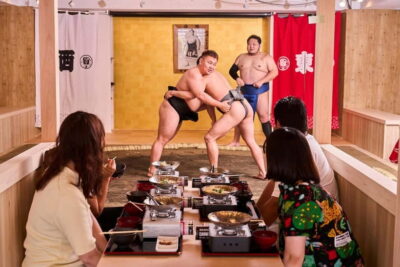
Tokyo:Luxury Sumo Show Experience & Japanese cuisine & Drink
Read our review →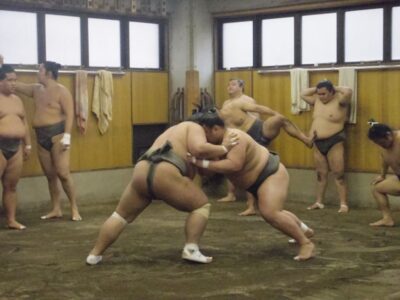
Tokyo Sumo Experience: Chanko & Mochi with a Former Pro
Read our review →This one also appears in