
Review · TOKYO
Tokyo: Sumo Morning Training Visit
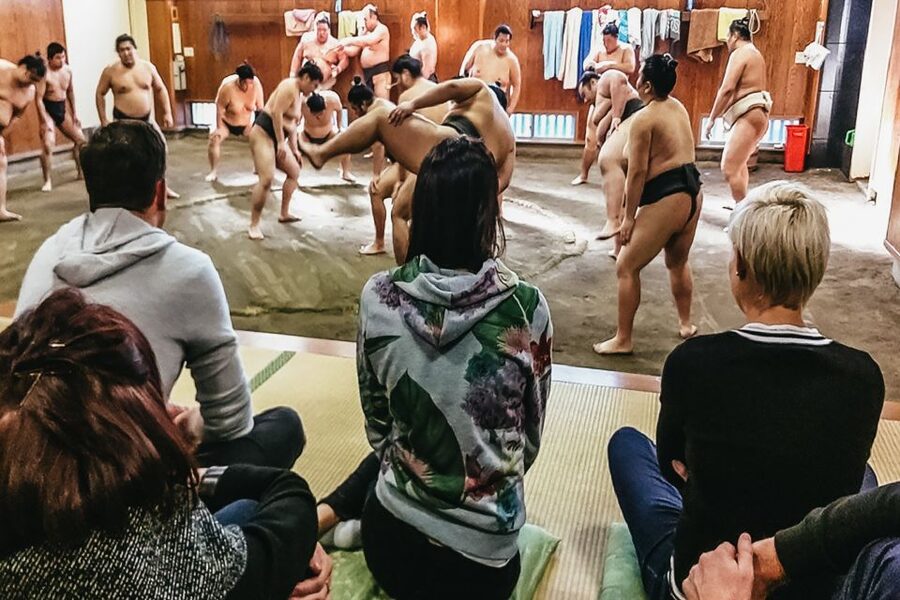
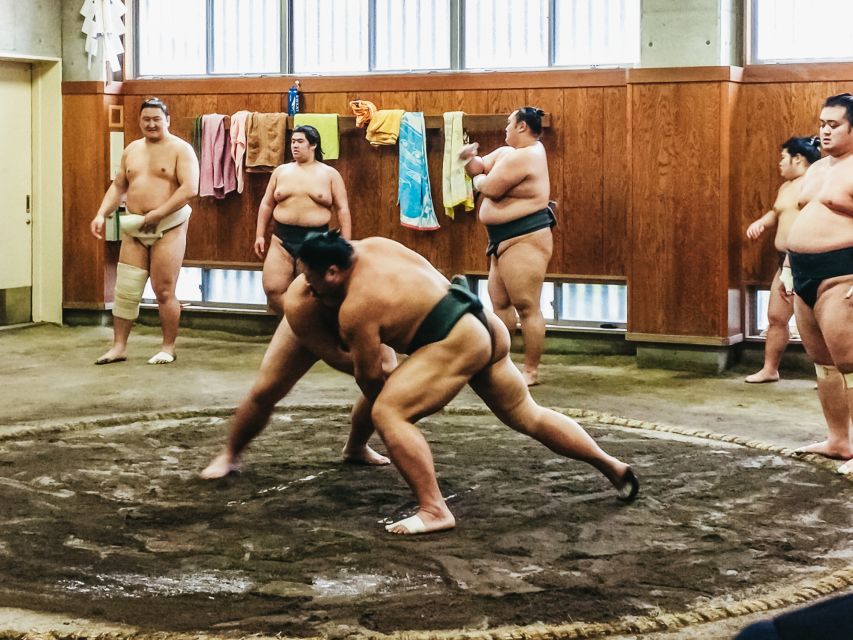
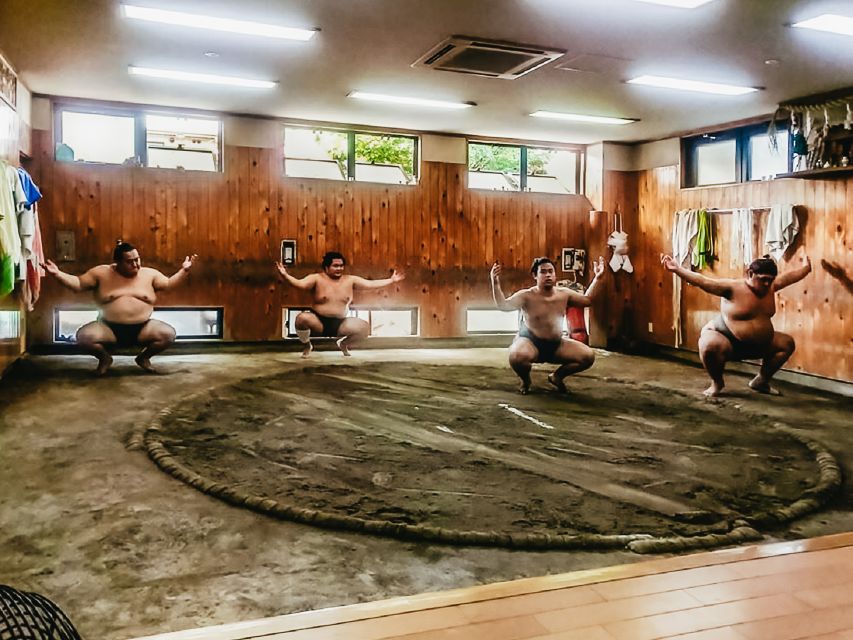
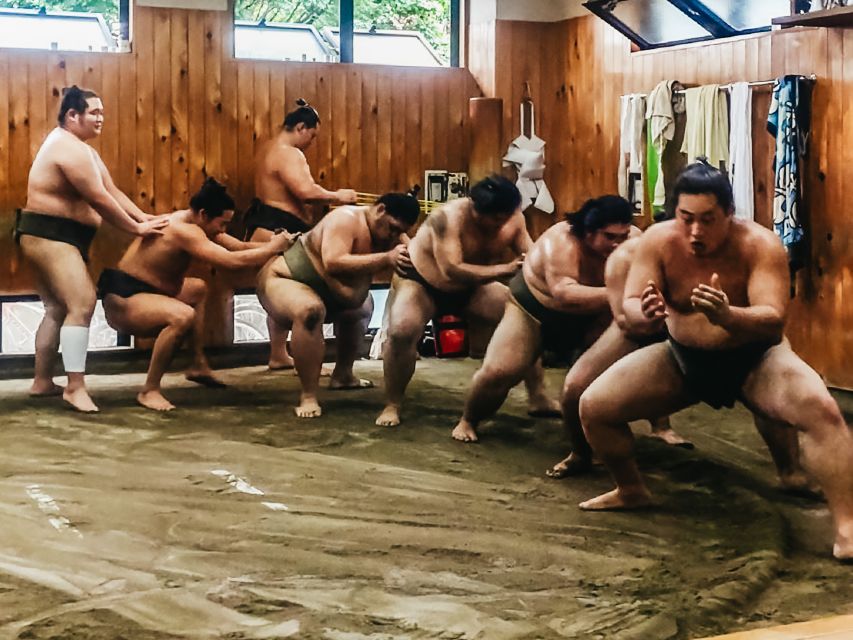
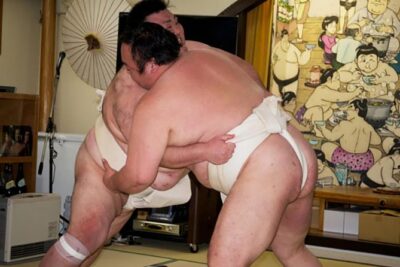
The most remarkable part of this Tokyo experience is its setting: you are not watching a staged demonstration, but observing professional wrestlers training inside a real sumo stable. You may see stretching, footwork, pushing drills, warm-ups, and sparring close enough to hear the impact.
I like the genuine glimpse into a demanding Japanese tradition, and I like the chance to take a group picture with the wrestlers afterward. The main drawback is comfort. You may sit on the floor for an hour or longer, often without moving, talking, eating, or drinking.
- Watch practice at arm’s length: See active wrestlers work through drills and sparring rather than performing a tourist show.
- Arrive at the final meeting point: The stable and directions are sent by email about three days before the visit.
- Treat the room like a place of work: Keep silent, switch off your phone sound, and follow the stable’s rules.
- Prepare for floor seating: A cushion or chair may not be provided, and seating is generally assigned or free choice.
- Expect a shorter visit during tournament months: January, May, and September sessions can last only about 30 minutes.
- Finish with a group photograph: The photo is included, but only if you stay through the appropriate point in the visit.
Inside a Working Tokyo Sumo Stable
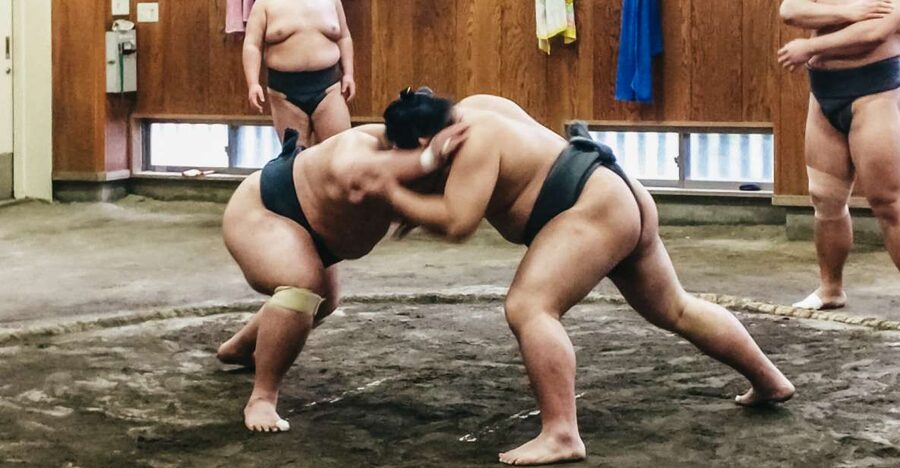
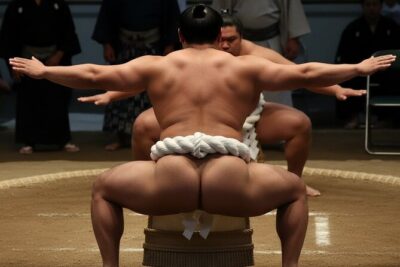
Sumo is often seen in a tournament hall, from a distant seat and through a formal ceremony. This visit changes the scale. You watch wrestlers train at close range, where the focus is on repetition, control, balance, and strength rather than on entertaining an audience.
The experience is especially useful if you want to understand the work behind a bout. The training can include warm-ups, drills, pushing exercises, and sparring. You may hear the force of bodies meeting and notice that the wrestlers rely on speed and technique as much as size.
This is not a lesson with a full spoken explanation at every step. The host or greeter is listed as English-speaking, but the practical role may be limited to checking names, showing you where to sit, and explaining the rules of behavior. Several people found that a short introduction to the rituals, gestures, and training methods would have added a lot.
I would prepare by reading a little about sumo before you arrive. Knowing the basic purpose of the dohyo, the meaning of warm-up movements, and the difference between drills and sparring will help you follow the action without needing a running commentary.
Why the Training Feels More Powerful Than a Show
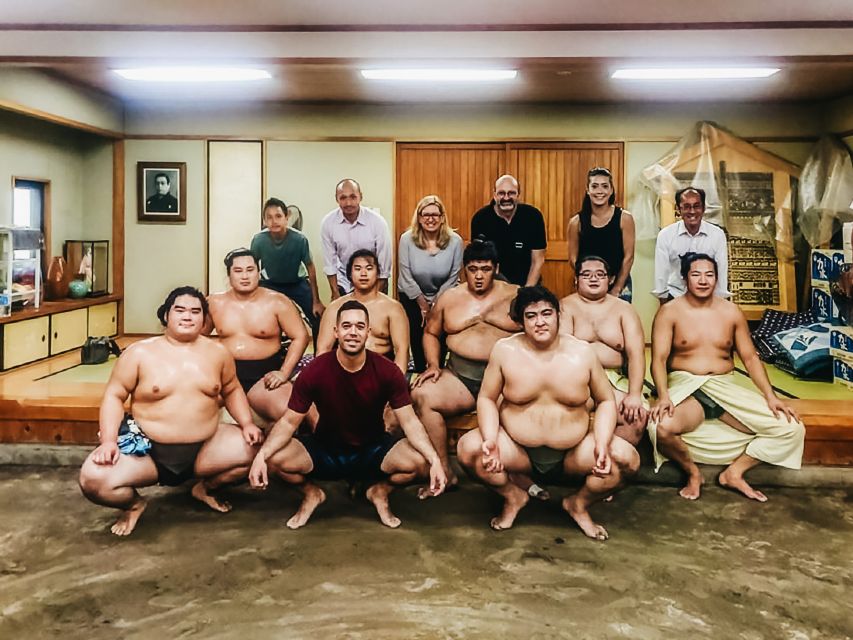
A staged sumo performance can be easier to follow, but real practice gives you something different. The wrestlers are repeating skills they need for competition, and the mood is generally quiet and focused. That makes even a simple pushing drill worth watching.
You may first see the wrestlers stretch and warm up. Their movements can look slow or ritualized, but the session gradually reveals careful preparation. Foot placement, balance, posture, and timing all matter. When sparring begins, the contrast is striking: a large wrestler can move with surprising speed, then stop or redirect force with control.
The best views usually come from sitting near the front. Seating may be free, and arriving late can leave you behind other people. From the back, your view can be blocked, especially when the room is crowded or the wrestlers are working low to the ground.
Do not expect a full tournament match. The point is to see training, not to watch a scheduled contest with formal announcements and a championship atmosphere. Some sessions may include vigorous sparring. Others may focus more on warm-ups, pushing exercises, or less intense work, depending on the stable and the wrestlers’ condition.
More Sumo Experiences in Tokyo
- Tokyo: Sumo Show and Dining Experience
★ 4.8 · 2,742 reviews - the SUMO show
★ 5.0 · 1,960 reviews - Tokyo Shinjuku Sumo Show & Experience with Photo
★ 5.0 · 1,750 reviews
The Meeting Point Can Change, So Read Every Email
The most important practical detail is also the easiest to miss. The meeting place shown on an automatic voucher or booking page may not be the actual location. The stable and final directions are normally confirmed by a separate email about three days before your visit.
Read both the voucher and the later message. Use the stable named on the voucher and follow the newest instructions. The exact location depends on the day, and specific stable requests cannot be accommodated. All participating stables are in Tokyo, but the location can change between bookings.
Check-in begins at the stated meeting time. If you arrive early, do not ring the doorbell or enter the building. Wait for the guide or greeter. If you have trouble finding the location, use the phone number in your confirmation email. Quick assistance has been available in at least one early-morning situation, which matters when you are trying to locate a quiet residential building before training starts.
Arrive on time. You are allowed into the stable only with the guide, and missing the opening can mean missing part of the training. The activity is short enough that even a late arrival takes away a meaningful portion of it.
What the One Hour Really Means
The advertised duration is one hour, and normal training is described as lasting about 60 minutes. In practice, the session can run longer. Some people have watched for 90 minutes, two hours, or even close to three hours, depending on the stable’s schedule and the day’s practice.
This creates two different expectations. If you book it as a one-hour morning stop, you may be pleased if the training continues. If you have a fixed reservation afterward, leave plenty of time. You should not assume that a session ending at the listed duration means the wrestlers will stop at exactly that minute.
During the Tokyo Grand Sumo Tournaments in January, May, and September, training may be shortened to about 30 minutes. This happens because wrestlers’ schedules and condition change around competition. The price does not drop for the shorter visit, and no refund is offered for that reduced duration.
That timing issue matters when you compare this with attending a tournament. If you want formal bouts, a tournament ticket gives you the actual competition. If you want to see wrestlers close up in a working stable, this visit offers something a tournament seat cannot.
Sitting Still Is Part of the Experience
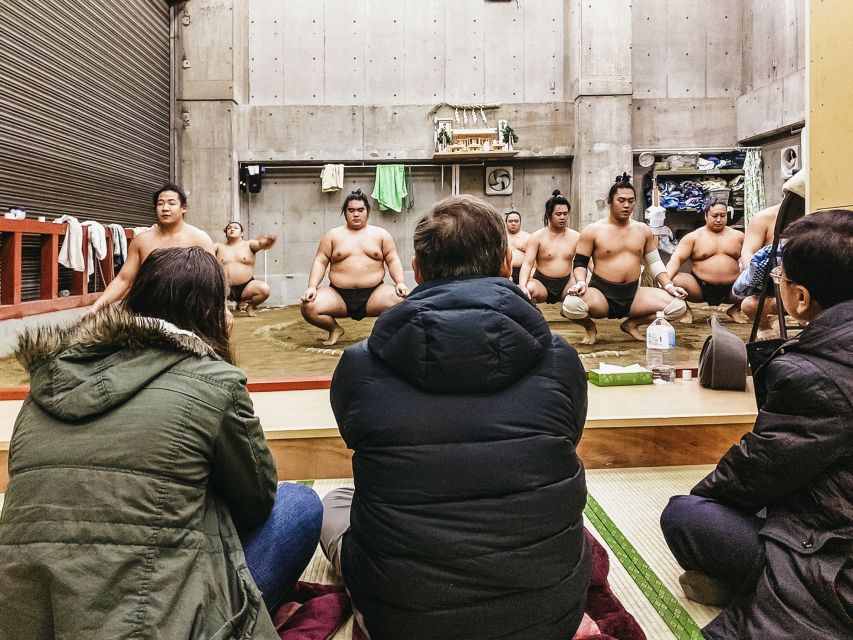
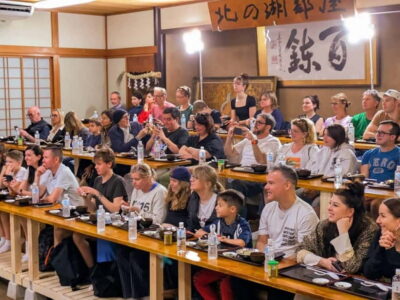
The stable is a place of concentration, so you are expected to sit quietly and remain still. Phones must be on silent. Loud conversation, food, drinks, smoking indoors, hats, and sunglasses are not allowed. Flash photography is forbidden, and video recording requires permission.
You may need to sit with your feet positioned away from the training area and avoid leaning on walls. This is not a casual sightseeing stop where you can stand, stretch, or wander around. Leaving early is possible, but you will not receive the group photo.
Floor seating is the biggest physical concern. A session that lasts two hours can be uncomfortable, especially for anyone with knee, hip, or back problems. One useful tip is to request a chair in advance if you need one. Do not assume that the stable will have spare seating available on the morning.
Bring a face mask or protective covering, as requested by the activity provider. Leave luggage and large bags behind. You also cannot buy a snack or drink during the session, so plan your morning around those restrictions without bringing food into the stable.
Same city, another way to catch the action:
- Tokyo: Sumo Show and Experience in Shinjuku
★ 4.8 · 1,001 reviews - Tokyo Grand Sumo Tournament Viewing Tour with Tickets
★ 5.0 · 692 reviews - Tokyo Sumo Wrestling Tournament Experience
★ 5.0 · 660 reviews - Tokyo:Luxury Sumo Show Experience & Japanese cuisine & Drink
★ 4.7 · 577 reviews
The Group Photo at the End
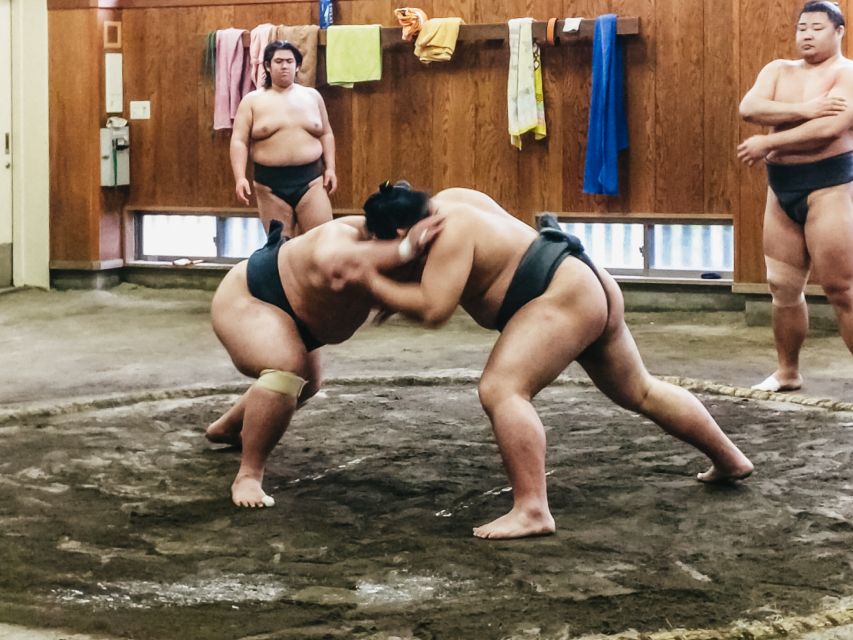
The photo is a simple but worthwhile finish. After training, you have the chance to pose in a group picture with the wrestlers. It gives the visit a clear ending and provides a keepsake from an experience that otherwise requires you to keep your phone away.
The photo is not available if you leave before the end. That rule is worth remembering if the floor becomes uncomfortable or you have a later appointment. If the picture matters to you, stay until the host indicates that the photo opportunity is complete.
The photo is also one reason to respect the stable’s rules during training. This is not a photo session first and a cultural visit second. You are entering a working space, watching quietly, and receiving the photograph as part of that arrangement.
How Much Explanation Should You Expect?
The English-speaking host or greeter can help with arrival and basic instructions, but you should not book this expecting a guided lecture. The activity information does not name a personal guide, and several accounts describe little or no explanation once the group is seated.
That is the clearest weakness in an otherwise unusual experience. A brief explanation of sumo history, the training sequence, nutrition, or the choice to become a wrestler would make the movements easier to understand. Without it, you may need to work out the purpose of each drill by watching closely or doing some reading beforehand.
The lack of commentary is not entirely negative. Silence lets you hear the training and preserves the stable’s normal atmosphere. It also keeps the visit from turning into a performance for tourists. Still, first-time visitors who want a strong educational component should know that the action carries most of the explanation.
I would save a few questions for after the practice only if the guide or stable staff invites them. Do not interrupt the session. The room’s quiet is part of the etiquette, not an optional extra.
Is $77 a Fair Price?
At $77 per person, this is not the cheapest way to add sumo to a Tokyo itinerary. You are paying for access to a location that is normally difficult to enter, along with coordination, an English-speaking host or greeter, and the group photograph.
The value depends on what you want. If you are looking for a polished tour with a detailed lecture, comfortable seats, and a predictable one-hour schedule, the price may feel high. The limited explanation and uncertain seating make the offering less polished than some visitors expect.
If you want to see active professionals in a real stable, the cost is easier to justify. You are not simply watching a short demonstration staged for cameras. You may see serious drills, powerful contact, and the physical discipline behind the sport. Compared with the cost and difficulty of getting close to wrestlers during a tournament, this can be a fair trade.
The price is less attractive during a tournament month if your session lasts only 30 minutes. During those periods, consider booking this only if close-up access matters more to you than watching full competition. For actual bouts, use your budget toward a tournament ticket instead.
Optional hotel transfer is available in Tokyo’s 23 wards, but it is not included in the basic price. The transfer can carry up to four passengers, uses a Japanese-speaking driver who does not speak English, and requires a hotel with a front desk. You must send the hotel name, check-in date, and booking name by email, along with a Japanese mobile number. Pickup time is sent at least one day ahead, and a failure to appear within 10 minutes counts as a no-show.
Who Will Enjoy This Morning Visit?
I would recommend this to you if you enjoy watching real work rather than a staged cultural presentation. It suits people who are curious about discipline, physical technique, and the everyday side of traditional sports.
Families can enjoy it, but young children need to handle silence and stillness. One family found that children aged nine and twelve stayed captivated by the training, and even a three-year-old was absorbed by the wrestlers and the final interaction. That will not be true for every child, so think about your child’s patience before booking.
It can also work well for a small group. The close setting makes the experience feel personal when the room is not crowded, though the best views depend on arriving early and choosing a good seat.
I would hesitate to recommend it to anyone with serious knee problems unless a chair is arranged in advance. It is also a poor fit if you need to eat, drink, use the bathroom, move around often, or record video. The stable’s rules are strict because the training is real.
Booking Tips That Matter on the Morning
Use these simple steps to avoid the common problems:
- Check the late confirmation email: The real meeting place may differ from the automatic voucher or map.
- Plan to arrive exactly on time: Early entry is not allowed, and late arrival can cost you part of the session.
- Arrive early enough to choose a good place: Late seating may leave you at the back with a blocked view.
- Request a chair ahead of time: This is especially important if floor seating is difficult for you.
- Keep your phone silent and your camera flash off: Video needs advance permission.
- Leave large bags elsewhere: Luggage is not permitted inside.
- Allow extra time afterward: Training may continue beyond the listed one-hour duration.
- Check the tournament calendar: January, May, and September can bring a shorter session.
Free cancellation is available up to 11 days before the scheduled date. That gives you time to reconsider if the meeting location, sitting arrangement, or tournament timing no longer fits your plans.
Should You Book the Sumo Morning Training Visit?
Book it if your main goal is close-up access to authentic sumo training. The strongest part is the chance to watch professionals work in a real stable, hear the force of their drills, and see the balance and speed behind the sport. The group photo is a pleasant extra.
Think twice if you want a fully narrated tour or a comfortable, carefully timed attraction. The host may provide little background, the meeting point is confirmed late, and the floor seating can be tough. During January, May, and September, a 30-minute session may also offer less value for the same price.
For the right person, this is a memorable Tokyo morning and a useful counterpoint to watching sumo in a tournament hall. Go prepared, sit quietly, arrive on time, and treat the stable as a working place rather than a show venue.
FAQ
Where is the meeting point for the sumo training visit?
The final meeting place is decided about three days before the scheduled date and sent by email. The location shown on Google Maps or an automatic voucher may not be correct, so use the stable and directions in the latest confirmation.
How long does the sumo training session last?
The listed activity duration is one hour, and normal training usually lasts about 60 minutes. Some sessions continue for 90 minutes or longer. During the Tokyo tournaments in January, May, and September, training may last only about 30 minutes.
Can I take photos or record video?
Flash photography is not allowed. Video recording requires permission, and phones must be switched to silent mode. A group photograph with the wrestlers is included at the end if you remain for the photo opportunity.
Do I sit on the floor?
Floor seating is normally used, and you may need to remain still for the duration of training. If you need a chair because of knee or other physical problems, arrange it in advance.
Is hotel pickup included?
No. One-way hotel transfer is an optional extra. Pickup must be within Tokyo’s 23 wards, is limited to four passengers, and uses a Japanese-speaking driver. The hotel must have a front desk.
What happens if I arrive early or cannot find the stable?
Check-in begins at the stated meeting time, so do not ring the doorbell or enter if you arrive early. If you have trouble finding the location, call the number in your confirmation email. You may enter the stable only with the guide.
New on the fixture list around Tokyo
- Tokyo: Sumo Morning Practice Viewing Tour at a Real Stable★ 4.9 · 32 reviews
- Tokyo: Sumo Morning Practice -Stable Visit Tour with a Guide★ 4.8 · 16 reviews
- Tokyo: Watching Sumo and Ryogoku Area Walking Tour★ 4.0 · 5 reviews
- Tokyo: Sumo Morning Practice Tour in Ryogoku and Photo Shoot★ 4.7 · 47 reviews
- Tokyo: Sumo Keiko Training Tour with Audio Guide & Photo★ 4.8 · 5 reviews
- Tokyo Sumo Morning Practice: Witness the Life of a Wrestler★ 4.8 · 56 reviews
- Tokyo Highlights Tour: Sumo, Sushi, Tea, and Tokyo Tower★ 5.0 · 2 reviews
- Tokyo: Sanctuary Authentic Grand Sumo Experience & Training★ 5.0 · 7 reviews
More Sumo Experiences in Tokyo to weigh up.
Tokyo Shinjuku Sumo Show & Experience with Photo
Read our review →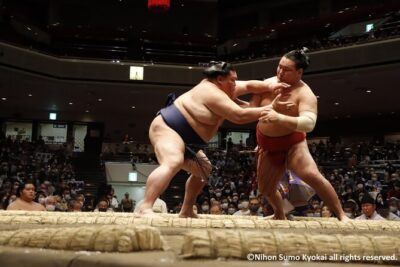
Tokyo Grand Sumo Tournament Viewing Tour with Tickets
Read our review →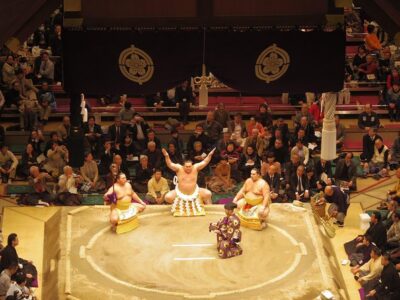
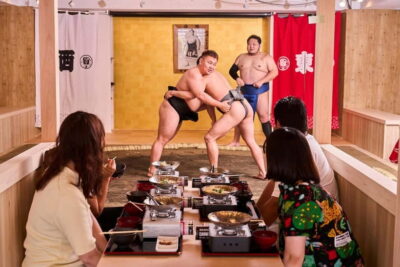
Tokyo:Luxury Sumo Show Experience & Japanese cuisine & Drink
Read our review →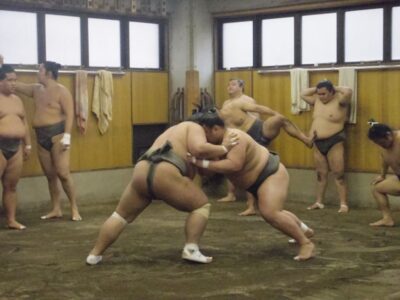
Tokyo Sumo Experience: Chanko & Mochi with a Former Pro
Read our review →This one also appears in