
Review · TOKYO
Tokyo Sumo Morning Practice: Viewing & Exclusive Interaction
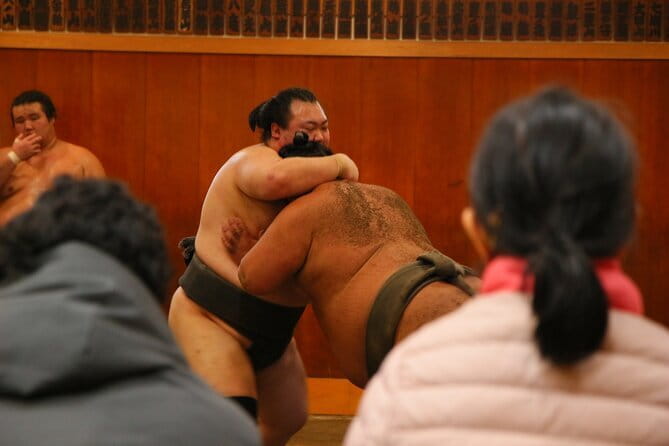
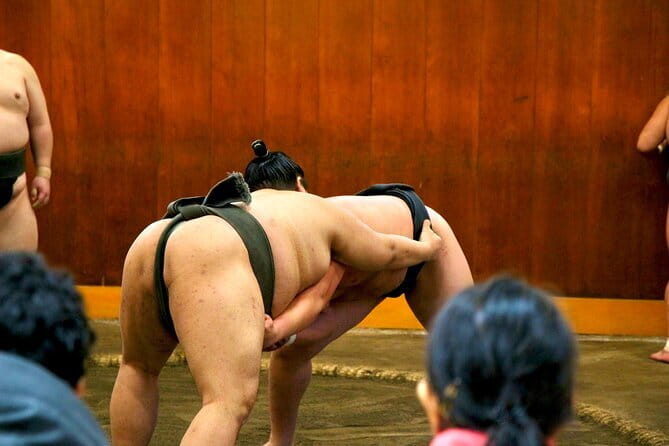
Seeing sumo on television is one thing. Sitting only a few meters from wrestlers as they slap, stomp, push, and collide is another. This real morning practice is not a stage show or a tournament, so you see the repetitive drills, rituals, waiting, and sudden bursts of force that shape a wrestler’s day.
I like the useful introduction from guides such as Sarah, Momo, Haru, Peach, Taka, and Moana, and I like that the visit includes time for questions and photos afterward. The optional Japanese brunch is another smart touch. The main caution is value: at $95.77 per person, the price feels fair when practice runs long and the interaction is generous, but less convincing if the stable finishes early.
Key points to know before booking
- Real training, not a tourist performance: You watch professional wrestlers work through their actual morning routine.
- Very close viewing: The small stable setting can put you just a few meters from the action.
- Useful cultural briefing: Your guide explains sumo rituals, rules, rankings, and stable life before you enter.
- Interaction comes after practice: Expect a Q&A, photos, and, for some male participants, a chance to enter the ring.
- Women cannot enter the ring: This follows long-standing sumo tradition, so the physical participation is not equal for everyone.
- Morning timing leaves your afternoon free: The experience lasts about two and a half to three hours, though the practice itself can vary.
Why this morning practice feels different from a sumo tournament
Tokyo hosts major sumo tournaments only a few times each year. If your visit does not match those dates, this experience gives you another way to see the sport at close range.
A tournament offers spectacle: formal entrances, packed seating, official bouts, and the excitement of competition. Here, you see the work behind that spectacle. The wrestlers repeat exercises, practice techniques, face one another in training bouts, and build the strength and balance needed for a professional match.
That difference matters. You are not watching a polished presentation designed for tourists. You are entering a working training environment, where the schedule and mood depend on the stable’s practice. Some mornings may bring several intense bouts. Other days may feel quieter or end sooner.
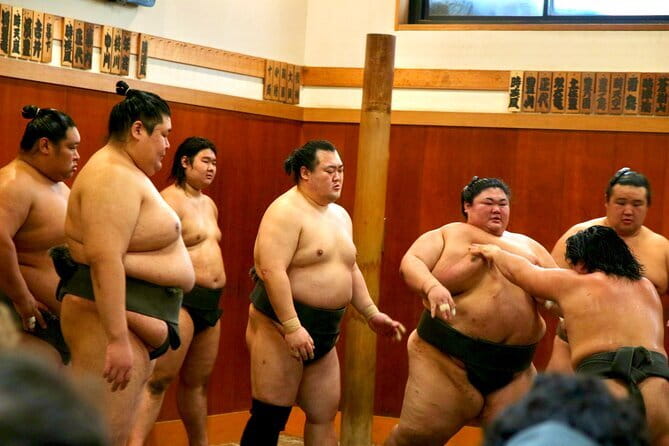
The setting can also be intimate. One account described a small stable with eight visitors and seven wrestlers, though the advertised group limit is as high as 45 people. Your actual group size may depend on the date and booking level. A smaller group makes the questions and photographs feel far more personal.
More Sumo Experiences in Tokyo
- Tokyo: Sumo Show and Dining Experience
★ 4.8 · 2,742 reviews - the SUMO show
★ 5.0 · 1,960 reviews - Tokyo Shinjuku Sumo Show & Experience with Photo
★ 5.0 · 1,750 reviews
Starting at Narihira Park in Sumida
The meeting point is Narihira Park, near the multipurpose restroom, at 2-chōme-3-番 Narihira, Sumida City. Your guide meets you there and gives a short orientation before walking to the stable.
Allow time to find the exact meeting place. One person reported that the ticket showed an incorrect location, so I would verify the meeting instructions carefully before leaving your hotel. The guide may contact you the day before, as Sarah and other guides have done, with directions and reading material.
The first part lasts about 20 minutes. This is more useful than it sounds. Without context, a visitor may see stomping, slapping, stretching, and sudden collisions without understanding what each action means. The briefing covers the origins and rituals of sumo, stable life, the basic rules, and details about the wrestlers you are about to watch.
I recommend reading any pre-tour material before you arrive. That lets you spend the practice itself watching the athletes rather than trying to absorb every rule at once.
Sitting close to the wrestlers during practice
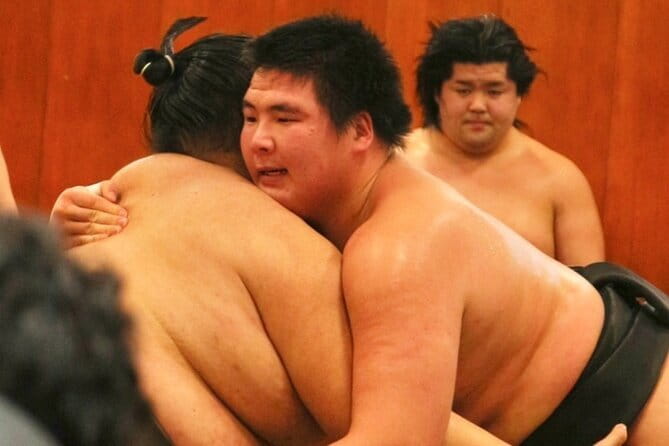
The main viewing period lasts about 90 minutes, although the exact length can change. You sit quietly and watch the wrestlers train at close range. The physical force is the first thing you notice. A collision can sound and feel startlingly powerful when there is no arena distance between you and the action.
The practice is not one long series of matches. You may see warmups, repeated drills, technique work, and bouts between wrestlers. This makes the session more revealing than a simple demonstration. You see concentration, discipline, and fatigue, not just the dramatic moment when one wrestler pushes another out of the ring.
The guides help explain what is happening. They may point out differences in wrestling style, describe the meaning of certain rituals, and clarify why wrestlers repeat particular exercises. Taka, for example, was praised for explaining sumo’s history and traditions with real enthusiasm. Momo was also singled out for taking time with questions and making the visit feel personal.
Still, keep your expectations realistic. The guide may mainly translate questions between English and Japanese once you are inside. One person felt that the historical explanation was limited and that more direct interpretation would have improved the visit. The quality of the commentary can depend on the guide assigned that day.
Why the quiet rules matter
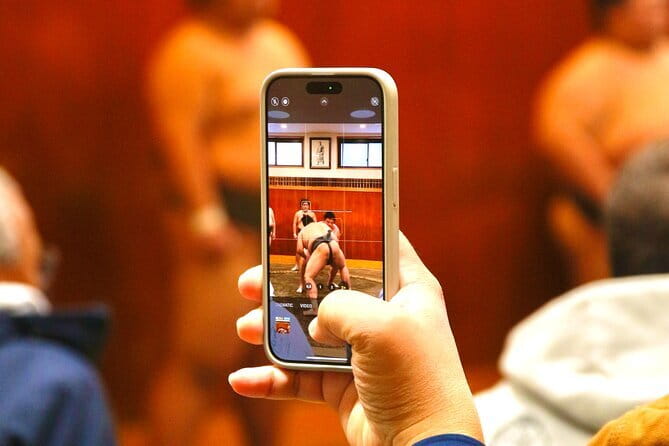
You need to sit quietly during practice. This is a working stable, not a theater, and interruptions would be disrespectful. The quiet period can last close to two hours, depending on the morning’s schedule and training length.
That makes the experience a better fit for adults and older children who can watch patiently. Families have enjoyed it, including children who later took part in the interaction, but young children may find the waiting and silence difficult.
Pay attention to the guide’s instructions about behavior inside the stable. You are close enough to see details clearly, but you are still in someone else’s workplace. The best approach is to watch, listen, and save your questions for the proper time.
Same city, another way to catch the action:
- Tokyo: Sumo Show and Experience in Shinjuku
★ 4.8 · 1,001 reviews - Tokyo Grand Sumo Tournament Viewing Tour with Tickets
★ 5.0 · 692 reviews - Tokyo Sumo Wrestling Tournament Experience
★ 5.0 · 660 reviews - Tokyo:Luxury Sumo Show Experience & Japanese cuisine & Drink
★ 4.7 · 577 reviews
The Q&A, photos, and ring interaction
After practice, the tone becomes more relaxed. The wrestlers answer questions through the guide, and you have a chance to take personal photos with them. This is one of the strongest parts of the experience because the athletes are not simply distant figures across an arena.
You may hear about training, daily life, sumo traditions, and the path to becoming a professional wrestler. The available information does not guarantee that the stable master, known as the Oyakata, will answer questions personally. One person specifically wished for that opportunity, but the training schedule and traditions can limit access.
Some sessions include a playful physical activity. Male participants may be invited into the ring to push against a wrestler or try a brief practice exchange. Several families described sons and grandsons enjoying this moment, and one person was allowed to push a wrestler who did not move until he chose to let the participant make progress.
This is not promised as a full wrestling lesson. It is a short, supervised interaction, and what happens can depend on the stable, the wrestlers available, and the group. Women are not allowed to enter the ring because of long-standing sumo traditions. That restriction disappointed at least one participant who wanted the same chance to push a wrestler. You should know this before booking, especially if the physical activity is the main reason you are interested.
The closing session and banzuke souvenir
The group returns to the park for a closing session of about 30 minutes. This gives you time for extra questions and a calmer finish after the intensity of practice.
You receive an official banzuke, the ranking sheet used in sumo, in a specially designed original folder. It is a more meaningful keepsake than a generic souvenir because it connects directly to the ranking system you have just been learning about.
The closing period also gives the guide a chance to clarify details you may have missed inside. If your group had only a short question period at the stable, this is the place to ask follow-up questions.
Optional Japanese brunch after the stable
Brunch is optional, so you can continue sightseeing if you have a full Tokyo schedule. The morning timing is convenient for a day that includes Asakusa, Tokyo Skytree, or other parts of eastern Tokyo, though the activity ends back at the meeting point rather than at a major sightseeing stop.
The meal is described by one person as closer to lunch than European-style brunch. Depending on what you order, the cost is roughly 1,000 to 2,000 yen. Guides may help explain the dishes and make ordering easier, which is especially useful if you have not eaten at this kind of Japanese restaurant before.
I would add brunch if you want the morning to feel like a complete cultural outing. Skip it if you have another reservation or prefer to choose your own lunch. It is not included in the $95.77 tour price.
Is $95.77 a fair price?
The price is high for a two-and-a-half to three-hour activity, especially since the practice itself is free of admission as a separate component and the brunch costs extra. You are paying for access, translation, organization, cultural explanation, and the rare chance to sit inside a working stable.
The value improves when you get a long practice session, a small group, several training bouts, and generous time with the wrestlers. In that situation, the experience offers something a standard tournament ticket cannot: a close look at training and direct contact with athletes.
The value drops if the stable finishes after about an hour. One person felt the activity lasted only an hour rather than the advertised three and found it overpriced. Since the practice schedule is not fully under your control, there is some uncertainty built into the price.
I would compare it with what you want from sumo. If you want formal competition, a tournament is the better use of money when dates work. If you want access behind the scenes and a chance to see the daily discipline behind the sport, this visit can justify the cost.
Who will enjoy this experience most
This is a strong choice for anyone curious about Japanese traditions, athletes, and the demanding routines behind public performance. It works especially well for families with older children, couples, and visitors who have already seen the main Tokyo sights and want something less predictable.
You should book it if you value close observation over spectacle. You should also be comfortable sitting quietly and accepting that the length and intensity of practice can vary.
I would think twice if you need a tightly timed morning, dislike sitting on the floor or in a quiet viewing setting, or mainly want to wrestle with a sumo athlete. The ring interaction is a possible extra, not the central promise.
The maximum group size is 45, although some dates may be much smaller. Most people can participate, and the meeting point is near public transportation. Confirmation arrives when you book, and free cancellation is available up to 24 hours before the start time. Changes or cancellations inside that window are not accepted.
Should you book the Tokyo Sumo Morning Practice?
Book it if you want the closest practical look at sumo outside a tournament. The strongest reasons are the authentic training, the powerful close-range viewing, the personal photos, and the chance to ask wrestlers about their lives.
Go in with the right expectations. You are not guaranteed a long session, a small group, a question with the Oyakata, or ring time for every participant. Women cannot enter the ring, and children must manage a long quiet period.
For a sumo fan, this is likely worth the premium. For a casual visitor, the price makes sense only if the behind-the-scenes access matters more to you than a polished sightseeing stop. Check the meeting location carefully, read the advance material, and leave your afternoon open. Add the brunch if you want a slower finish and a chance to keep talking about what you have seen.
FAQ
How long does the Tokyo sumo practice experience last?
The full activity takes approximately two and a half to three hours. The schedule includes a 20-minute orientation, about 90 minutes of practice viewing, around 30 minutes with the wrestlers, and a closing session of about 30 minutes. The actual practice length can vary.
Where does the experience begin and end?
You meet at Narihira Park in Sumida City, near the multipurpose restroom, at 2-chōme-3-番 Narihira. The activity ends back at the same meeting point.
Is the sumo practice a staged performance?
No. The experience is presented as a real morning training session with professional sumo wrestlers. You watch their exercises, rituals, techniques, and practice bouts.
Can I ask the wrestlers questions and take photos?
Yes. The experience includes a Q&A and a photo session with the wrestlers after practice. Questions may be translated by the English-speaking guide.
Can women enter the sumo ring?
No. Women are not allowed to enter the ring because of long-standing sumo traditions. Some male participants may be invited to push against a wrestler or take part in a brief ring activity.
Is brunch included in the price?
No. Japanese brunch is optional and costs extra. One account puts the meal at approximately 1,000 to 2,000 yen, depending on what you order.
New on the fixture list around Tokyo
- Tokyo: Sumo Morning Practice -Stable Visit Tour with a Guide★ 4.8 · 16 reviews
- Tokyo: Watching Sumo and Ryogoku Area Walking Tour★ 4.0 · 5 reviews
- Tokyo: Sumo Morning Practice Viewing Tour at a Real Stable★ 4.9 · 32 reviews
- Tokyo: Sumo Morning Practice Tour in Ryogoku and Photo Shoot★ 4.7 · 47 reviews
- Tokyo: Sumo Keiko Training Tour with Audio Guide & Photo★ 4.8 · 5 reviews
- Tokyo Sumo Morning Practice: Witness the Life of a Wrestler★ 4.8 · 56 reviews
- Tokyo Highlights Tour: Sumo, Sushi, Tea, and Tokyo Tower★ 5.0 · 2 reviews
- Tokyo: Sanctuary Authentic Grand Sumo Experience & Training★ 5.0 · 7 reviews
More Sumo Experiences in Tokyo to weigh up.
Tokyo Shinjuku Sumo Show & Experience with Photo
Read our review →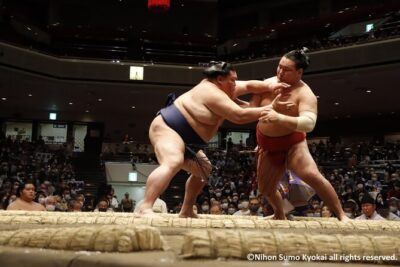
Tokyo Grand Sumo Tournament Viewing Tour with Tickets
Read our review →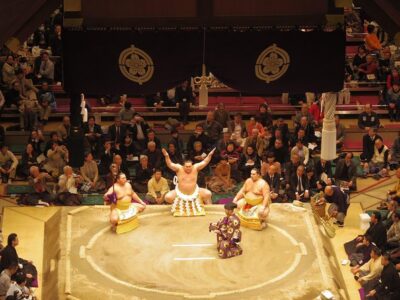
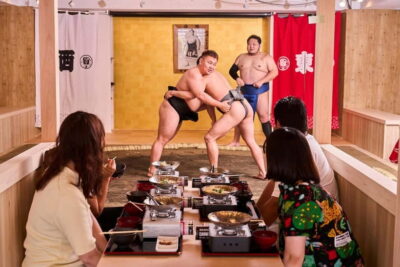
Tokyo:Luxury Sumo Show Experience & Japanese cuisine & Drink
Read our review →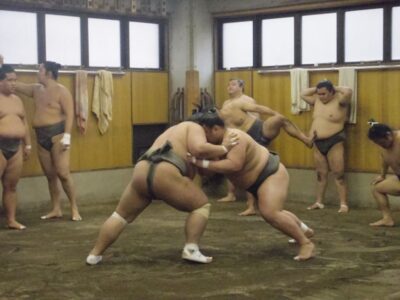
Tokyo Sumo Experience: Chanko & Mochi with a Former Pro
Read our review →This one also appears in