
Review · TOKYO
Tokyo: Family Sumo Workshop & Live Wrestling Show with Lunch
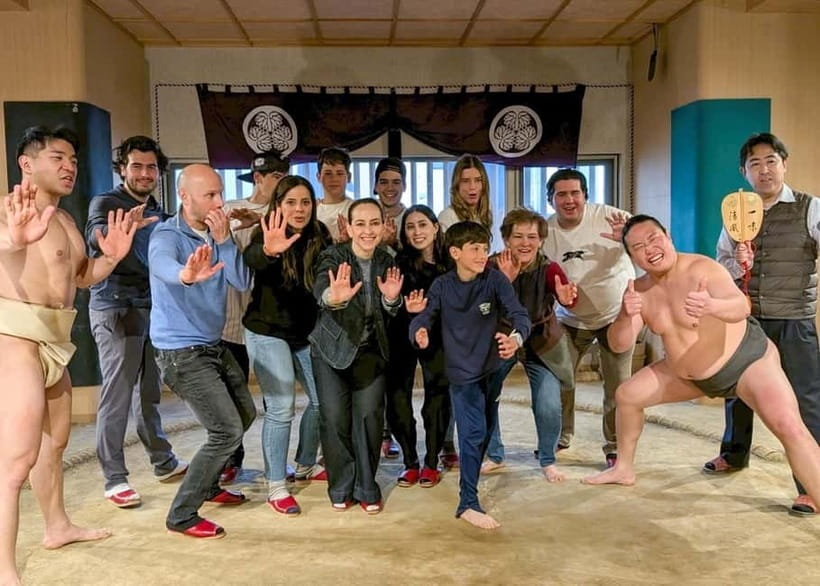
The best part of this Tokyo experience is the chance to leave the spectator seats and step into the sumo ring with former professional wrestlers. You watch the rituals and hard-hitting exhibition match up close, then try the footwork yourself or challenge a wrestler in a padded suit.
I like the mix of real cultural detail and good-natured comedy. I also like that the session works for a family: children can watch safely, adults can join the drills, and the hosts explain the rules in clear English. The main consideration is that this is a short entertainment workshop, not a full professional tournament, and the lunch is a mini serving rather than a long restaurant meal.
Key points at a glance
- Enter Ryogoku’s sacred dohyo: Step onto the clay ring where the training and challenges take place.
- Learn three basic drills: Try shiko leg stomps, teppo pushing practice, and suri-ashi sliding footwork.
- Watch former pros at close range: The exhibition bout brings real force, speed, and comic showmanship into a small venue.
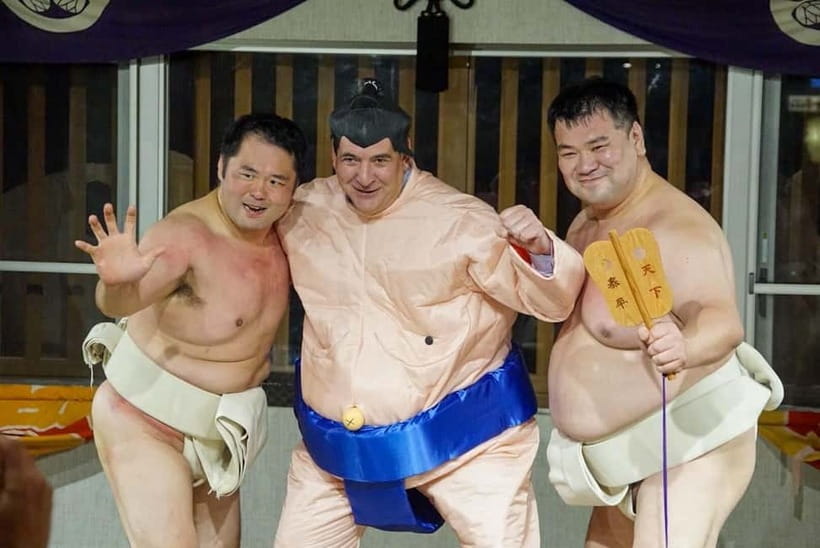
- Challenge a 160-kilogram wrestler: A padded suit makes the audience bout safe, funny, and optional.
- Finish with chanko nabe: The hotpot includes meat and vegetables, with vegan, vegetarian, halal-style, and allergy requests possible in advance.
- Expect strong value at $60: You get the show, ring access, instruction, photos, and lunch in 105 minutes.
Why the Ryogoku ring makes this more than a photo stop
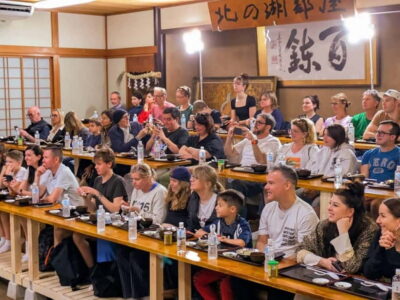
Ryogoku is Tokyo’s sumo district, so the setting fits the subject. This is not a distant view from the upper seats of a stadium. You sit close to the action, hear the slap of hands and the thump of bodies, and see how much control the wrestlers use even when the bout looks wild.
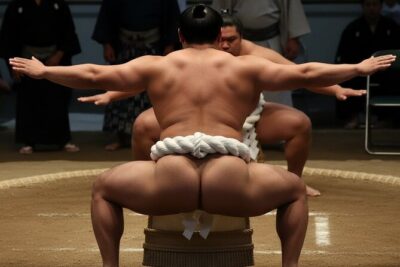
The hosts explain the meaning behind familiar sumo customs. You learn why wrestlers toss salt into the ring, what the shiko leg stomp represents, and how the sport’s rules shape each exchange. The presentation is designed for an international audience, with English commentary and Japanese sumo traditions explained without expecting you to know the sport beforehand.
That balance matters. Sumo can look simple at first glance: two large men push until one steps outside the ring. The workshop shows the skill underneath. Foot position, balance, timing, and the first charge all matter. You get a taste of the sport without needing to sit through a long formal tournament.
The two former wrestlers are also part of the appeal. They demonstrate the movements with serious strength, then turn friendly and playful when volunteers enter the ring. Hosts named Alisa, Alyssa, Rio, Yo, Ko, and others have led sessions, so the exact guide can vary. The common thread is an English-speaking MC who keeps the pace moving and makes room for questions.
More Sumo Experiences in Tokyo
- Tokyo: Sumo Show and Dining Experience
★ 4.8 · 2,742 reviews - the SUMO show
★ 5.0 · 1,960 reviews - Tokyo Shinjuku Sumo Show & Experience with Photo
★ 5.0 · 1,750 reviews
The first hour: shiko, teppo, and suri-ashi
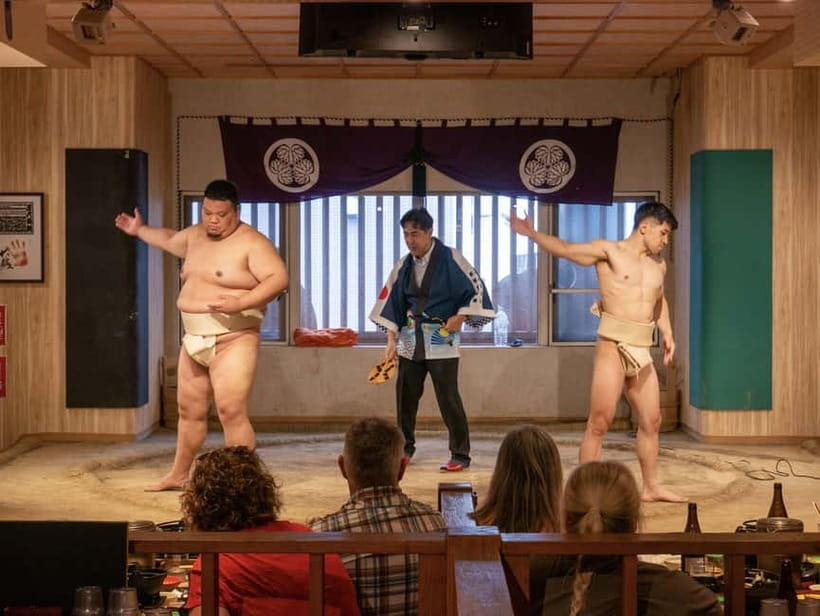
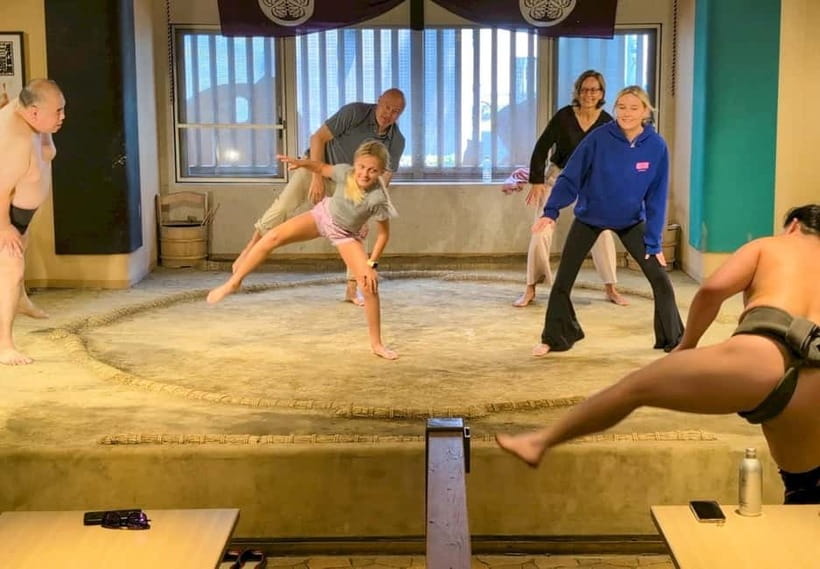
The workshop begins with the basics. You may be invited to copy shiko, the broad leg lift and stomp associated with sumo training. It looks theatrical, but it demands balance and leg strength. The explanation connects the movement to the ritual side of sumo, including the belief that stomping helps drive away evil spirits.
Next comes teppo, a pushing drill named after the practice post used by wrestlers. The session does not turn you into a professional, but it gives you a feel for how wrestlers train their hands, arms, and stance. You can see why a low center of gravity matters when a much larger opponent is trying to move you.
The third movement is suri-ashi, the sliding step. You keep your feet close to the floor rather than lifting them high. This is one of the most useful drills for understanding sumo movement because the wrestlers seem to glide while keeping their balance and pressure forward.
You do not need to join in. The drills are optional, and you can stay seated, watch, and film. That makes the experience easier for mixed groups. One parent may want the ring challenge while another prefers photos, and children can decide for themselves after seeing the demonstration.
Wear loose sportswear if you plan to participate. You remove your shoes before entering the ring, so simple clothing and socks are more practical than stiff travel clothes. Anyone who volunteers for a bout should be in good health. The padded equipment helps, but this remains a physical activity.
The exhibition bout brings real force and plenty of laughs
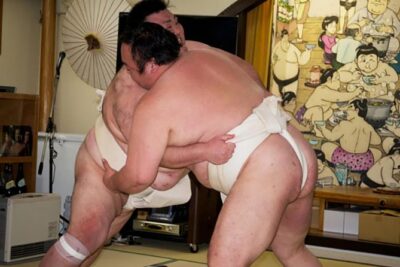
After the drills, the former wrestlers demonstrate a faster bout. This is the moment when the workshop shifts from lesson to show. You hear the impact, watch the wrestlers set themselves, and see how quickly a match can end once one person loses balance or steps beyond the ring.
The wrestlers also use humor to keep the mood easy. They are not presenting a solemn museum lecture. The tone is theatrical, friendly, and interactive, with the MC explaining what you are seeing as the action unfolds.
The demonstration helps you understand the audience challenge that follows. You are not expected to defeat a professional athlete. You are given a safe way to push, brace, and feel the difference between your strength and that of a trained wrestler. Several people describe the experience as a memorable highlight because it lets them share the ring rather than simply pose beside it.
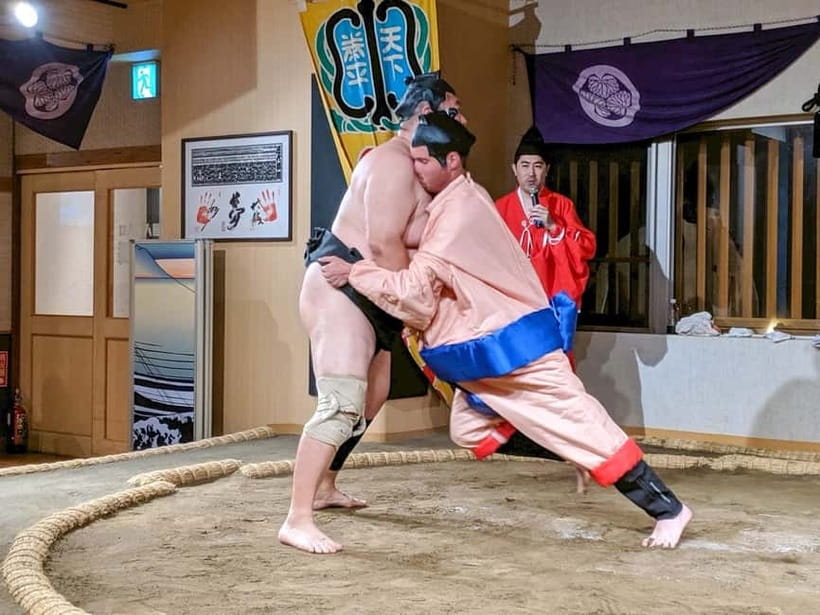
The padded sumo suit is the key prop. It turns the challenge into a comic contest and gives volunteers some protection from the wrestler’s body weight. Still, you should treat it as an optional physical activity, not a requirement. Spectators can film from their seats, and the show continues even if nobody wants to volunteer.
Taking the challenge in a padded suit
If you are the sort of person who likes to take part, this is the section you will remember. You put on the padded suit, enter the dohyo, and try to push the wrestler out. The size difference is part of the joke, but the strength difference is very real. Several people have found that the wrestler can stop or redirect them with little effort.
The best approach is to enjoy the moment rather than focus on winning. Listen to the instructions, keep your footing, and let the wrestler control the pace. Parents can film children or join the action themselves, though the child’s comfort and health should come first.
The activity works well for families because participation is flexible. A toddler can watch from a parent’s lap, an older child can try a drill, and an adult can accept the challenge. The information provided does not set a general minimum age for the ring activity, so use your judgment and follow the staff’s direction on the day.
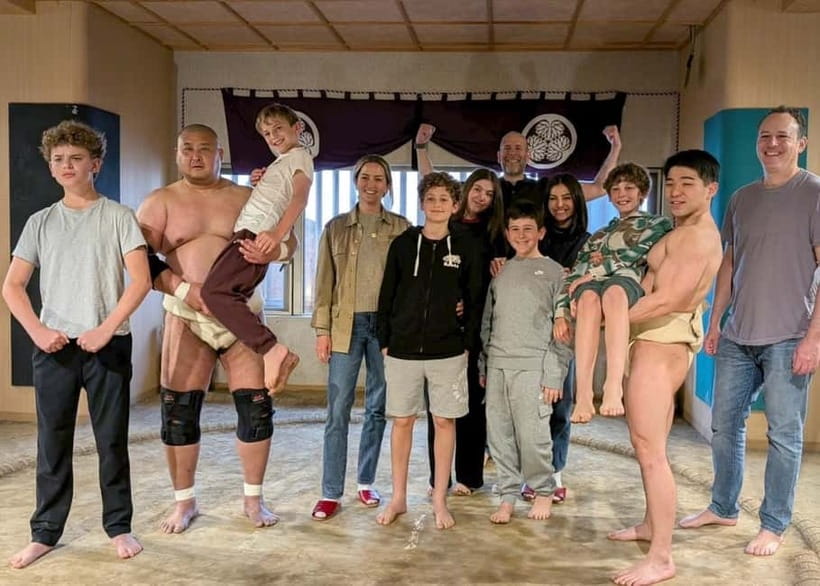
Photo time follows the action. You can use your own phone or camera for pictures with the wrestlers. This is more personal than a quick snapshot from behind a barrier, but remember that the session is shared with other people, so photo time moves at a group pace.
Same city, another way to catch the action:
- Tokyo: Sumo Show and Experience in Shinjuku
★ 4.8 · 1,001 reviews - Tokyo Grand Sumo Tournament Viewing Tour with Tickets
★ 5.0 · 692 reviews - Tokyo Sumo Wrestling Tournament Experience
★ 5.0 · 660 reviews - Tokyo:Luxury Sumo Show Experience & Japanese cuisine & Drink
★ 4.7 · 577 reviews
Chanko nabe: a hearty meal with a purpose
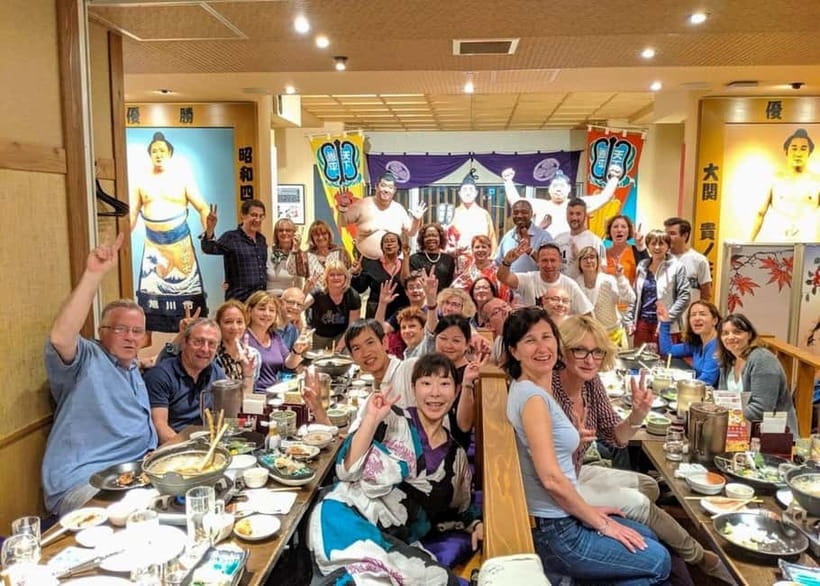
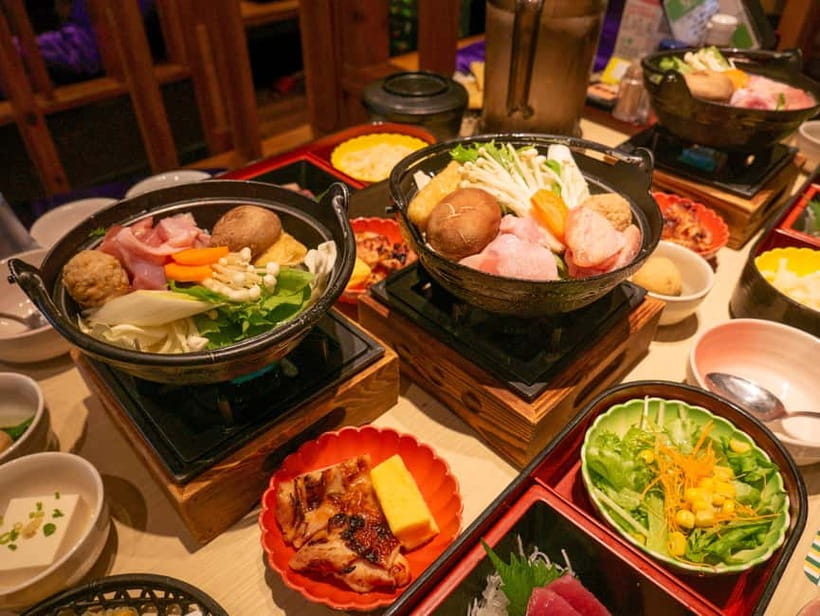
The second part of the visit centers on chanko nabe, the hotpot associated with sumo wrestlers. It is served with vegetables and protein, and the host explains how this filling meal fits the wrestlers’ training and daily food routine.
The portion is described as mini, but do not mistake that for light. People often find it more than enough after the workshop, and one useful tip is to avoid eating a large meal immediately beforehand. The hotpot is meant to be satisfying, not a token sample.
I like this part because it links the food to the sport. You are not simply handed a bowl of Japanese comfort food without context. You learn why chanko is associated with building and maintaining a wrestler’s physique, then eat the same general style of meal in a social setting.
Dietary planning is important. Vegan, vegetarian, and allergy-friendly requests can be arranged, but you should provide the details at least 48 hours ahead. Pork and alcohol can be avoided for halal-style requests, but the venue does not have official Halal certification. If you require strict protection from cross-contamination, the meal cannot be guaranteed.
Alcohol and extra menu items are not included. The advertised price covers the mini hotpot lunch, not drinks or additional orders.
Is $60 a fair price for 105 minutes?
At $60 per person, I consider this good value if you want an active cultural experience rather than a passive show. The price includes admission, the former wrestlers, English and Japanese commentary, the drills, padded challenge equipment, photo time, and lunch.
A professional sumo tournament offers a different experience and usually takes much longer. This workshop is not a replacement for tournament tickets. Its value comes from access: you enter the ring, ask questions, try the movements, and meet wrestlers at close range.
The short duration also helps with a busy Tokyo schedule. The advertised length is 105 minutes, so you can fit it into a morning or early afternoon without losing a full day. The program description divides the event into a ring session and a meal period, each described as about an hour, so allow enough time for the complete visit rather than planning a tight connection immediately afterward.
The trade-off is that the event depends on a minimum number of participants. If that minimum is not reached, the session may not run. A private reservation is offered for people who consider the event essential and want greater certainty.
Meeting point and practical details in Ryogoku
Transport to the venue is not included. You need to make your own way to the shop in Ryogoku and wait in front of the face-in-hole photo board. Do not enter before 10:00 AM if your session is scheduled then. The guide carries a smartphone displaying AlvaJapan, which makes the meeting point easier to identify.
If you get lost, the instructions say to contact the guide through WhatsApp. I would save the number and venue details before leaving your hotel, especially if you are arriving with children or a large group.
The activity is wheelchair accessible. Ring participation requires removing shoes and moving onto the dohyo, so the practical experience may differ depending on your mobility, but the accessible venue and seated viewing option make this more workable than many traditional sports activities.
English is the listed tour language. The commentary explains the demonstrations and customs, and the question period gives you a chance to ask about the rules, training, and life of a wrestler.
Children’s pricing needs careful attention. Children under five do not receive a meal under the child rate, so book them at the adult rate if they need lunch. Children aged six and older cannot be booked at the child rate. Since the age rules are unusually specific, check the booking details before paying.
Free cancellation is available up to 24 hours before the start, and you can reserve now and pay later. Those options help if your Tokyo schedule is still moving around.
Who will enjoy this sumo workshop most?
I would choose this for families who want one activity that adults and children can share. It has enough explanation for parents, enough physical comedy for kids, and enough food to make the morning feel complete. The option to watch without participating keeps the pressure low.
It also suits solo visitors. You do not need to arrive with a group to enjoy the show or join the ring challenge. The shared format gives you an easy way to take part, and the hosts keep the atmosphere open.
This is a particularly good pick if you have already seen Tokyo’s temples, shopping districts, and observation decks and want something tied to Japanese sport and daily culture. It gives you a basic understanding of sumo instead of just a photo beside a large wrestler.
I would be more cautious if you want a quiet, formal cultural lecture or a full tournament with official competition. The tone is lively, the audience takes part, and the wrestlers use jokes and theatrical moves. That is a strength for most families, but not the right fit for everyone.
Should you book the Alva Japan sumo experience?
Book it if you want close contact, clear English explanations, and a chance to participate. The combination of ring drills, a forceful exhibition match, optional wrestling, photos, and chanko lunch gives you a lot for $60.
Before booking, confirm your children’s rates, send dietary requests 48 hours ahead, and wear comfortable clothes. If you need strict halal certification or protection from cross-contamination, the lunch will not meet that need.
For most families, first-time visitors to Tokyo, and anyone curious about the human strength behind sumo, this is an easy recommendation. You leave with more than a staged photo: you understand the basic rituals, feel how difficult the footwork is, and share a meal linked to the wrestlers’ way of life.
FAQ
Where does the sumo workshop take place?
It takes place in Ryogoku, Tokyo, on Honshu, the traditional center of sumo in the city.
How long does the activity last?
The advertised duration is 105 minutes.
What is included in the price?
The $60 price includes venue admission, ring access, former professional wrestlers, English and Japanese commentary, interactive training, padded challenge equipment, photo time, and mini chanko hotpot lunch.
Do I have to wrestle a sumo wrestler?
No. Ring drills and audience challenges are optional. You may remain seated, watch, and film.
What exercises will I learn?
The workshop covers shiko leg stomps, teppo pushing practice, and suri-ashi sliding footwork.
Can children take part?
Children can attend and watch, and the activity is designed to include families. Ring participation is optional. Children under five do not receive meals under the child rate, while children aged six and older cannot be booked at the child rate.
Can I request a vegan or allergy-friendly meal?
Yes. Vegan, vegetarian, and allergy-friendly options can be arranged if you provide the request at least 48 hours in advance.
Is the meal officially halal?
No. The venue does not have official Halal certification. It can avoid pork and alcohol, but it cannot guarantee against cross-contamination for strict dietary requirements.
What should I wear?
Loose sportswear is recommended. You remove your shoes before entering the ring.
Where do I meet the guide?
Wait in front of the face-in-hole photo board at the shop. The guide will hold a smartphone displaying AlvaJapan. You should wait outside and not enter before 10:00 AM.
More classes and training sessions around Tokyo
- Bangkok: Muay Thai Boxing Introduction Class for Beginners
★ 4.8 · 394 reviews - Patong: Muay Thai Boxing Class at Rachai Muay Thai Gym
★ 4.9 · 197 reviews - Bangkok: Muay Thai Boxing Class for Beginners
★ 5.0 · 189 reviews - Ao Nang, Krabi: 90-Minute Muay Thai Lesson
★ 4.7 · 146 reviews
New on the fixture list around Tokyo
- Tokyo: Sumo Morning Practice Viewing Tour at a Real Stable★ 4.9 · 32 reviews
- Tokyo: Sumo Morning Practice -Stable Visit Tour with a Guide★ 4.8 · 16 reviews
- Tokyo: Watching Sumo and Ryogoku Area Walking Tour★ 4.0 · 5 reviews
- Tokyo Sumo Morning Practice: Witness the Life of a Wrestler★ 4.8 · 56 reviews
- Tokyo: Sumo Morning Practice Tour in Ryogoku and Photo Shoot★ 4.7 · 47 reviews
- Tokyo: Sumo Keiko Training Tour with Audio Guide & Photo★ 4.8 · 5 reviews
- Tokyo Highlights Tour: Sumo, Sushi, Tea, and Tokyo Tower★ 5.0 · 2 reviews
- Tokyo: Sanctuary Authentic Grand Sumo Experience & Training★ 5.0 · 7 reviews
More Sumo Experiences in Tokyo to weigh up.
Tokyo Shinjuku Sumo Show & Experience with Photo
Read our review →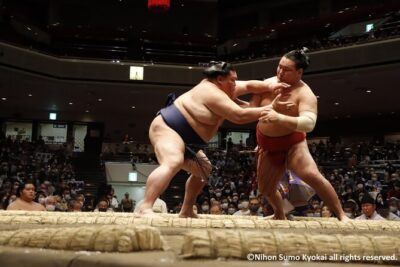
Tokyo Grand Sumo Tournament Viewing Tour with Tickets
Read our review →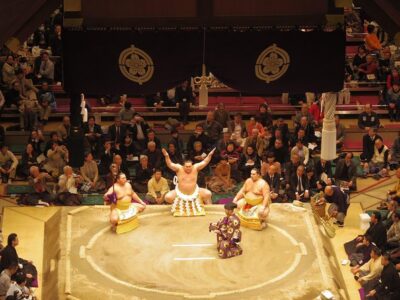
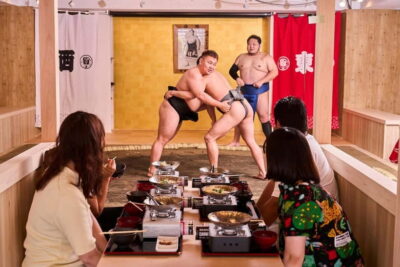
Tokyo:Luxury Sumo Show Experience & Japanese cuisine & Drink
Read our review →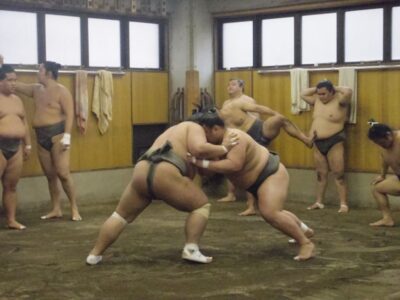
Tokyo Sumo Experience: Chanko & Mochi with a Former Pro
Read our review →This one also appears in