
Review · TOKYO
Experience the Sumo World in Tokyo
The best part of this Tokyo experience is not a staged bout. You sit close to a working sumo stable and watch wrestlers train, with the sharp thuds, repeated drills, and quiet concentration that make the sport more than a colorful spectacle. Afterward, you can try pushing a wrestler, ask questions, take photos, and share chanko nabe.
I like the front-row view of real practice and the guides who explain what you are seeing. Ryoko, Haru, Tomer, Tammy, and others have been praised for explaining sumo rules, customs, and daily life clearly. I also like the easy meeting point at Ueno Station. The drawback is the early start and two-train journey, plus the need to be very careful with meeting instructions.
What to know before booking
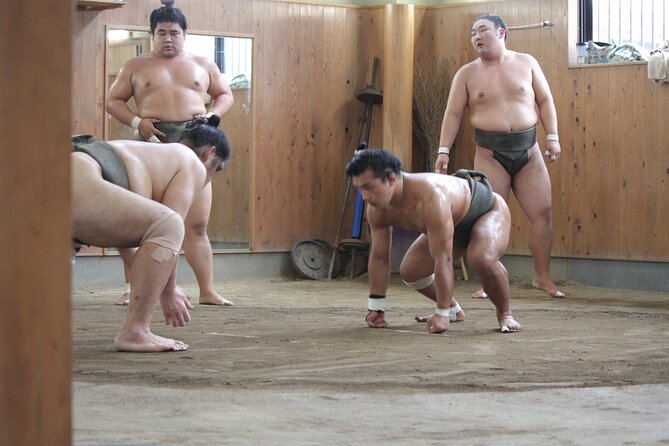
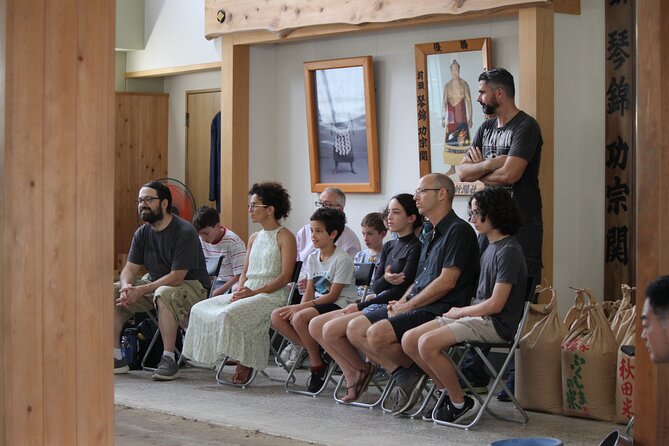
- Training happens at Asahiyama beya: You watch an actual practice session from chairs beside the training area.
- The morning starts at 7:45 AM: Arrive early at Ueno Station, since the group travels together to the stable.
- Two train rides are involved: The round trip costs ¥1,060, paid separately from the tour.
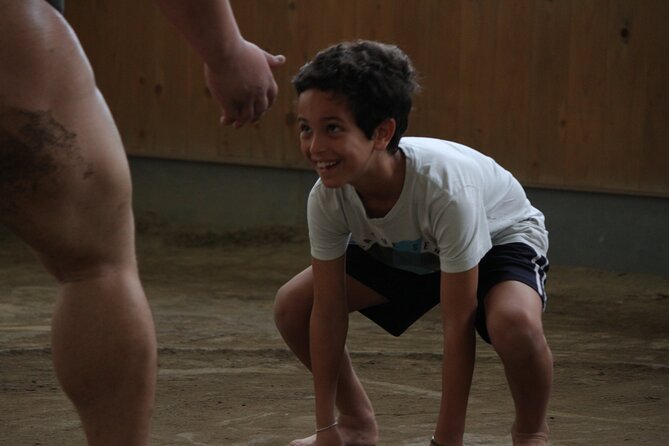
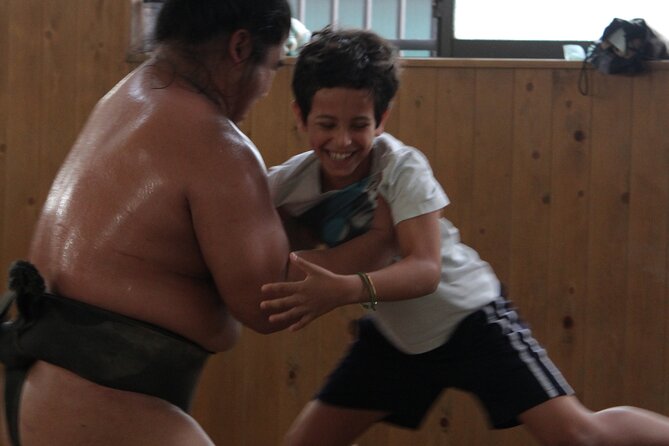
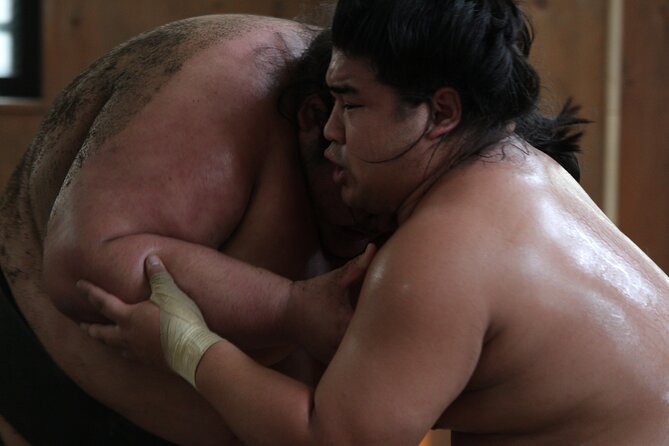
- The friendly wrestling tryout comes later: You may test your strength against a wrestler, though moving him is another matter.
- Chanko nabe is included: Vegetarian food is available if you request it at least three days ahead.
- The group can reach 26 people: The experience feels close-up, but it is not a private visit.
Why this is more than watching a sumo bout
A tournament gives you polished entrances, formal matches, and a large arena. This morning tour gives you a look at the work behind the sport. You see wrestlers train before the public spectacle begins, and the setting is a working stable rather than a theater built for sightseeing.
That difference matters. Sumo depends on ritual, strength, balance, agility, and repetition. Watching practice helps you understand why a wrestler’s body alone does not explain his success. The drills show timing and technique, while the stablemaster’s direction gives the session its serious tone.
The experience also has a warm social side. Once training ends, you can speak with the wrestlers, hear about their lives, and try a short, playful contest. The wrestlers are described as friendly and patient, including with children. You should not expect a full match, but you may get a memorable chance to brace yourself against someone who barely moves.
Meeting Ryoko, Haru, Tomer, and the morning guides
The meeting point is outside the JR Information area at Ueno Station at 7:45 AM. Ueno is a practical place to start because it is easy to reach by public transport, but large stations can still be confusing. Give yourself extra time to find the exact meeting spot.
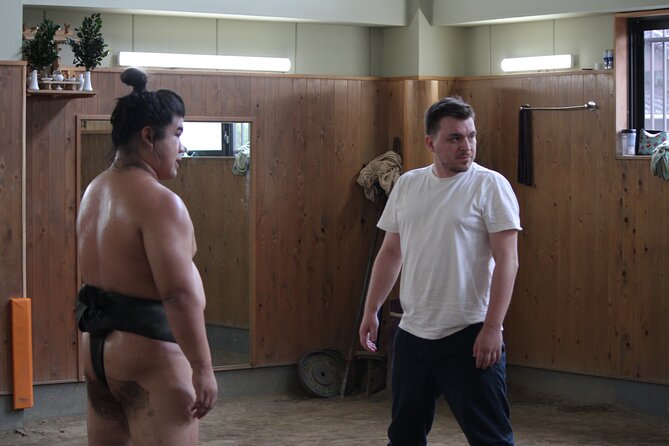
The guides are a major part of the experience. Ryoko is frequently singled out for her clear explanations and personal help, including directions for the rest of the day. Haru has guided groups alongside her, while Tomer has explained sumo terms and shared background during the train ride. Tammy has also led the morning and is described as attentive and well organized.
That train time is put to good use. Rather than saving every explanation for the stable, your guide can introduce the basic rules, traditions, and vocabulary while you ride. This helps you follow the training instead of simply watching large men collide.
One practical point deserves special attention: confirm how the guide will contact you and where you must meet before the morning of the tour. A communication problem caused one party to miss most of the practice after arriving late at Ueno and not receiving the stable address quickly enough. The operator said this was unusual, but the lesson is simple: do not rely only on a last-minute message, and do not assume you can travel directly to the stable if you miss the group.
More Sumo Experiences in Tokyo
- Tokyo: Sumo Show and Dining Experience
★ 4.8 · 2,742 reviews - the SUMO show
★ 5.0 · 1,960 reviews - Tokyo Shinjuku Sumo Show & Experience with Photo
★ 5.0 · 1,750 reviews
The two-train ride from Ueno to the stable
From Ueno, the group takes a JR train to Matsudo, a ride of about 19 minutes. From Matsudo, you continue by train to Kunugiyama, which takes about 15 minutes. The transfer adds some travel time, but it also gives the guide a chance to explain the sport before you arrive.
The train fares are not included. Plan on ¥1,060 for the round trip, about $7, and keep that cost in mind when comparing the total price. The ride itself is not a scenic excursion, so the value comes from reaching a place most visitors could not simply enter on their own.
The journey also means you should wear comfortable shoes and travel light. The morning has a fixed rhythm, and the group needs to move together. If you arrive late at Ueno, you risk missing the practice rather than merely joining the next stop.
Sitting beside a real training session
At Asahiyama beya, you sit on chairs close to the practice area. That seating is useful. You are near enough to see the wrestlers’ footwork, posture, and effort, but you do not need to sit on the floor for a long period.
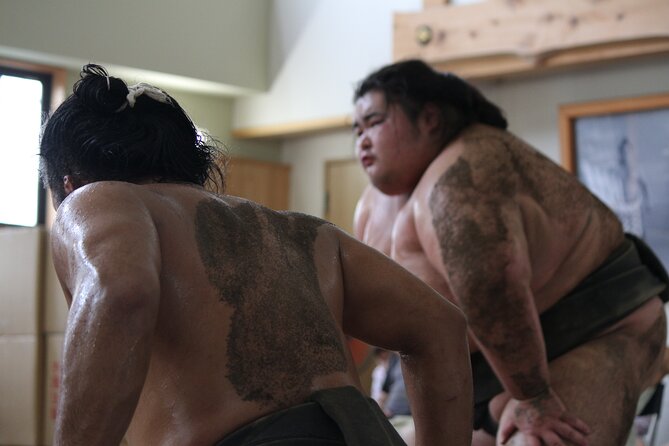
The training is the heart of the morning. Expect a serious session rather than a performance staged for the group. You may see repeated drills, bouts, stretching, and coaching. One account described about 45 minutes of training, though the full stable visit is listed at roughly two hours. The exact balance can change with the stable’s schedule.
This is where a guide makes a real difference. Sumo can be hard to read at first. A short clash may look simple until you learn to notice the initial charge, hand placement, foot position, and attempts to force an opponent out of the ring. Your guide can also explain the role of the stablemaster and the daily discipline required of the wrestlers.
The close distance brings a useful warning. This is not a quiet museum visit. Training includes heavy impacts and strong voices, and the room may feel intense. You are watching athletes work, not entertainers putting on a relaxed show.
The hands-on sumo moment after practice
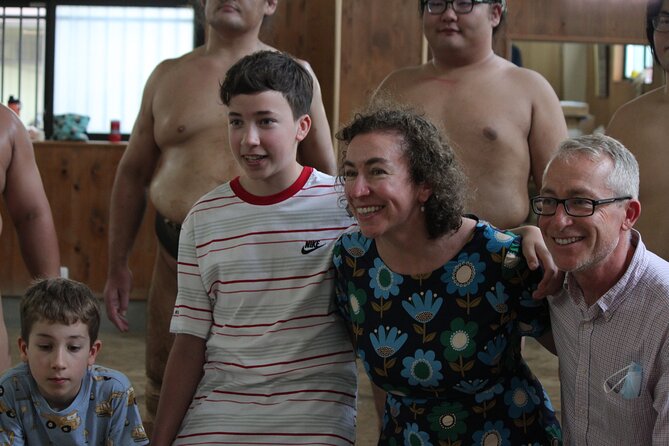
After the formal training, the tone changes. The wrestlers come out to meet the group, answer questions, and pose for photographs. Photography is allowed at the end of the session, so keep your phone or camera ready, but follow the guide’s instructions about when to use it.
The light wrestling tryout is one of the most memorable parts for families. You may step forward and try to push a wrestler. Children and adults can take part, and the point is humor and contact rather than competition. A child may feel he or she has won, though the wrestler may simply be showing extraordinary kindness.
This activity is optional in spirit, even if it is part of the planned experience. If you have mobility concerns or simply do not want physical contact, you can watch others and take photos instead. The information provided says most people can participate, but it does not promise that every person must take part in the push.
The wrestlers’ friendliness is important here. The activity lets you see the contrast between their power in training and their gentle manner afterward. That contrast gives the morning more meaning than a quick photograph with a performer.
Same city, another way to catch the action:
- Tokyo: Sumo Show and Experience in Shinjuku
★ 4.8 · 1,001 reviews - Tokyo Grand Sumo Tournament Viewing Tour with Tickets
★ 5.0 · 692 reviews - Tokyo Sumo Wrestling Tournament Experience
★ 5.0 · 660 reviews - Tokyo:Luxury Sumo Show Experience & Japanese cuisine & Drink
★ 4.7 · 577 reviews
Chanko nabe, the meal built for wrestlers
Lunch is chanko nabe, the stew associated with sumo stables. It is designed to provide energy for athletes and is often served as a shared pot with broth, vegetables, and meat. The meal adds a practical cultural detail: you are not only watching sumo life, you are tasting part of it.
The food has received especially warm attention. It has been described as a light broth with vegetables and chicken, and families have found it tasty and suitable for children. The precise ingredients may vary, so anyone with dietary restrictions should ask before booking rather than assume the dish will fit.
Vegetarian service is available, but you must request it at least three days in advance. That deadline matters because the meal is prepared as part of the stable visit, not selected casually from a restaurant menu on the day.
Lunch also gives you a slower chance to ask about the wrestlers’ routines and individual paths into sumo. Some conversations may depend on translation, and your guide helps bridge that gap. The meal is not a long restaurant stop, but it gives the morning a natural ending.
What the $105.71 price really buys
The listed price is $105.71 per person, with a tour lasting about four hours. Add roughly $7 for the JR train fare. That makes the total cost higher than simply buying a ticket to watch sumo during a tournament, but it is not paying for the same product.
You are paying for access to a working stable, a guide who explains what is happening, the sumo tryout, photographs, lunch, and help with the train journey. Public tournament tickets can show you the sport at its most formal, but they do not normally give you this close look at training or a shared meal with wrestlers.
I think the price is easiest to justify if sumo is a central interest, or if you want one cultural activity that feels personal rather than general. It is less convincing if you only have a small budget or mainly want to see a tournament match. The tour does not replace a day at the Kokugikan during a tournament season.
The group may include up to 26 people. That is small enough for guide explanations and a close view, but do not expect a private audience with the stablemaster or individual time with every wrestler.
Timing, comfort, and communication details
The early start is both a strength and a challenge. Training takes place in the morning, when the wrestlers are doing their real routine, so a later start would not offer the same access. On the other hand, 7:45 AM is demanding after a long flight or a late night in Tokyo.
The activity lasts about four hours and ends back at the original meeting point. Weather, transport, or the stable’s schedule can cause minor changes. The tour is near public transport, and most people can participate, but the train transfers and stable setting mean you should be ready for a fairly active morning.
You receive confirmation when booking, and the tour uses a mobile ticket. Free cancellation is available up to 24 hours before the start time. Changes or cancellations inside that window are not accepted for a refund, and the experience requires a minimum number of people. If the operator cancels for that reason, you are offered another date or a full refund.
Who will get the most from this morning
I would choose this for families with children, first-time visitors curious about sumo, and anyone who wants to understand the sport beyond its costumes and tournament rituals. The hands-on push gives children a clear memory, while the training and explanations give adults something more substantial.
It also suits people who value small cultural encounters. You do not merely watch a finished product. You see effort, routine, food, coaching, and the people behind the public image of sumo.
I would hesitate if you dislike early starts, group travel, or uncertain timing. The experience depends on the stable’s schedule, and the two-train journey requires you to stay with the group. It is also not the right choice if you expect a full competitive wrestling match or unlimited photography during practice.
Should you book the Sumo World experience?
Book it if you want a close look at sumo training and are willing to plan your morning carefully. The stable visit, helpful guides, wrestler conversations, playful push, and chanko nabe create a fuller picture than a tournament seat alone.
Before paying, confirm the 7:45 AM meeting details, the train fare, the communication method, and any food requests. Arrive early at Ueno, request vegetarian food at least three days ahead, and treat the stable as a working place first and a sightseeing stop second. Do that, and this can become one of the most personal cultural experiences in Tokyo.
FAQ
Where does the sumo tour begin?
It begins at the JR Information area at Ueno Station, 7 Chome-1 Ueno, Taito City, Tokyo, at 7:45 AM.
Where does the tour end?
The experience ends back at the original meeting point at Ueno Station.
How long does the experience last?
The tour lasts approximately four hours.
How do I reach the sumo stable?
The group takes a JR train from Ueno to Matsudo, then continues by train to Kunugiyama. The train journey takes about 19 minutes to Matsudo and about 15 minutes from Matsudo to Kunugiyama.
Is the train fare included?
No. The round-trip JR fare is ¥1,060, or about $7, and is paid separately.
Is lunch included?
Yes. Lunch is included and features chanko nabe.
Can I request vegetarian food?
Yes. Vegetarian service is available if you notify the operator at least three days in advance.
Can I take photographs?
Photography is allowed at the end of the training session.
Can I try sumo wrestling?
You can take part in a friendly push against the wrestlers after training. The activity is presented as a playful experience rather than a formal match.
How far in advance can I cancel?
You can cancel for a full refund up to 24 hours before the experience start time. Cancellations or changes made less than 24 hours before the start are not accepted for a refund.
New on the fixture list around Tokyo
- Tokyo: Sumo Morning Practice -Stable Visit Tour with a Guide★ 4.8 · 16 reviews
- Tokyo: Watching Sumo and Ryogoku Area Walking Tour★ 4.0 · 5 reviews
- Tokyo: Sumo Morning Practice Viewing Tour at a Real Stable★ 4.9 · 32 reviews
- Tokyo: Sumo Morning Practice Tour in Ryogoku and Photo Shoot★ 4.7 · 47 reviews
- Tokyo: Sumo Keiko Training Tour with Audio Guide & Photo★ 4.8 · 5 reviews
- Tokyo Sumo Morning Practice: Witness the Life of a Wrestler★ 4.8 · 56 reviews
- Tokyo Highlights Tour: Sumo, Sushi, Tea, and Tokyo Tower★ 5.0 · 2 reviews
- Tokyo: Sanctuary Authentic Grand Sumo Experience & Training★ 5.0 · 7 reviews
More Sumo Experiences in Tokyo to weigh up.
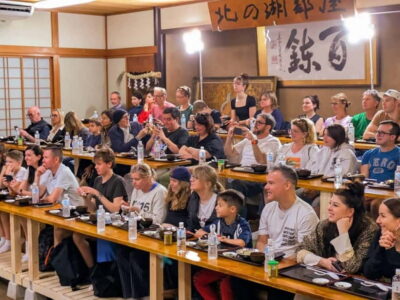
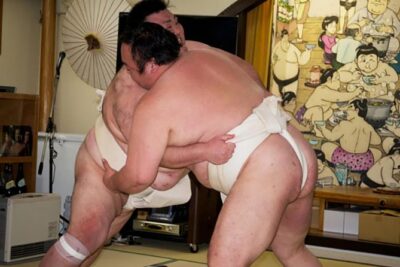
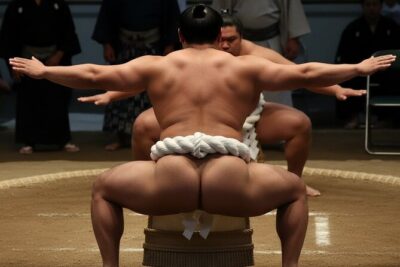
Tokyo Shinjuku Sumo Show & Experience with Photo
Read our review →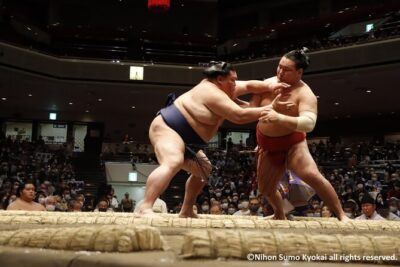
Tokyo Grand Sumo Tournament Viewing Tour with Tickets
Read our review →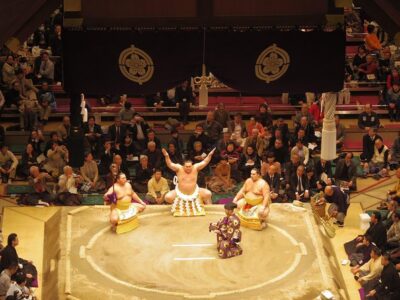
Tokyo:Luxury Sumo Show Experience & Japanese cuisine & Drink
Read our review →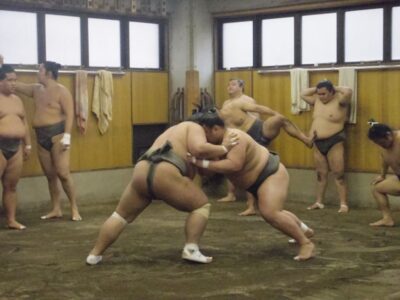
Tokyo Sumo Experience: Chanko & Mochi with a Former Pro
Read our review →This one also appears in