
Review · TOKYO
Tokyo: Sumo Practice Tour with Ring-Side Seat and Photoshoot
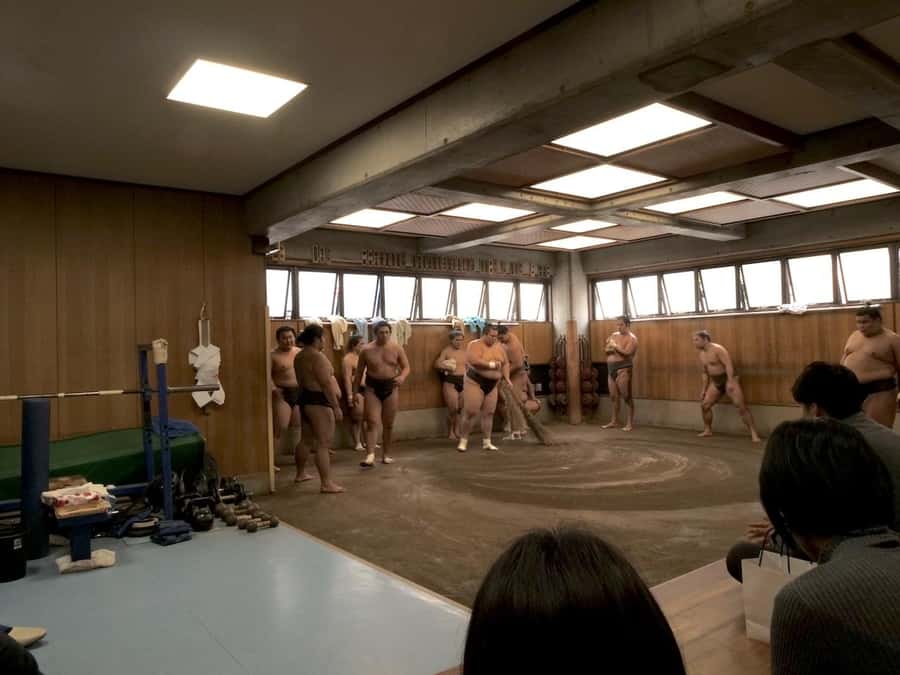
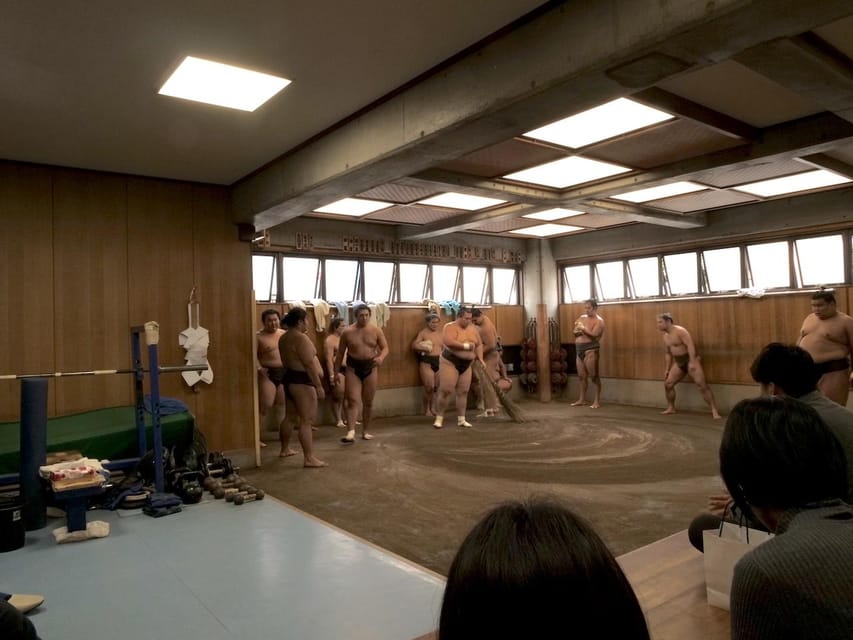
The most striking part of this Tokyo outing is the distance between you and the action. You sit close enough to hear the wrestlers breathe, slap their bodies, and collide during serious training bouts. This is not a staged demonstration or a tournament from the far side of a large arena. It is a working morning at a real sumo stable.
I like the small group of up to 10 people, which keeps the guide’s explanations useful and the view personal. I also like the chance to see the quiet routines behind the sport, then watch the practice grow more forceful. Guides including Marie, Sho, and Masao Hiramatsu have been praised for explaining rules, ranks, and customs clearly.
The main consideration is comfort. You may sit on tatami, stand for part of the two hours, or find that the seating arrangement depends on the stable. Children under 12 and wheelchair users cannot join, and late arrivals are not admitted.
Key points to know before you book
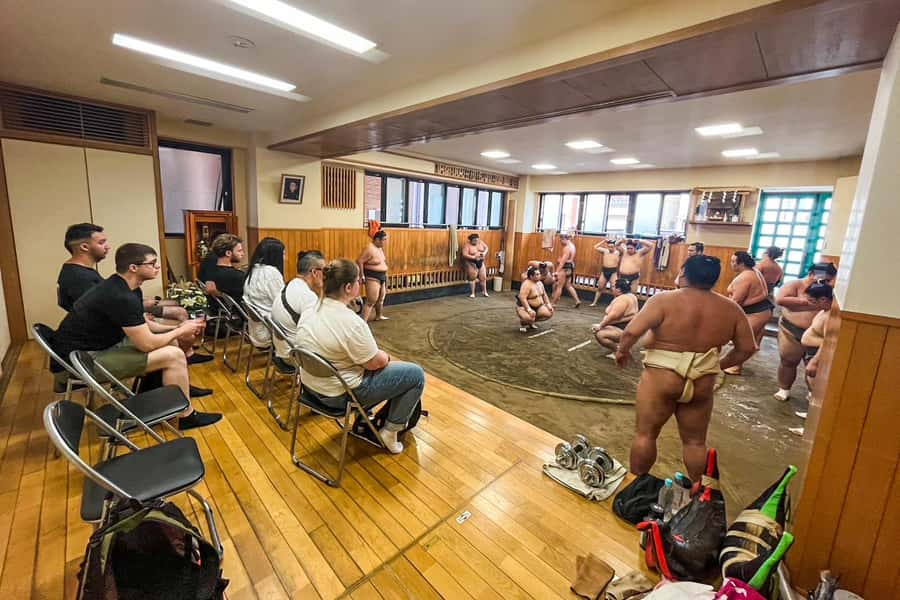
- A real morning practice: You watch wrestlers train at an active Tokyo stable, not a performance arranged for tourists.
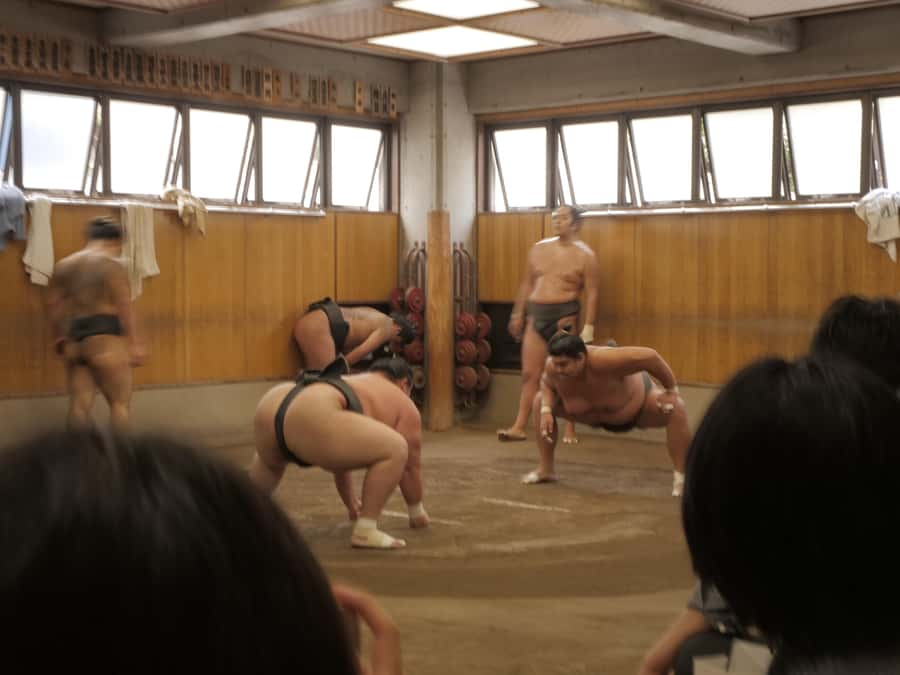
- Close-range viewing: The ring is nearby, so you can see footwork, body slaps, shoves, and full bouts at close quarters.
- Useful cultural context: Your English-speaking guide explains rules, rankings, stable discipline, and the wrestlers’ daily customs.
- Chairs are possible, not guaranteed: Some sessions offer rows of chairs, while others require sitting on tatami or standing.
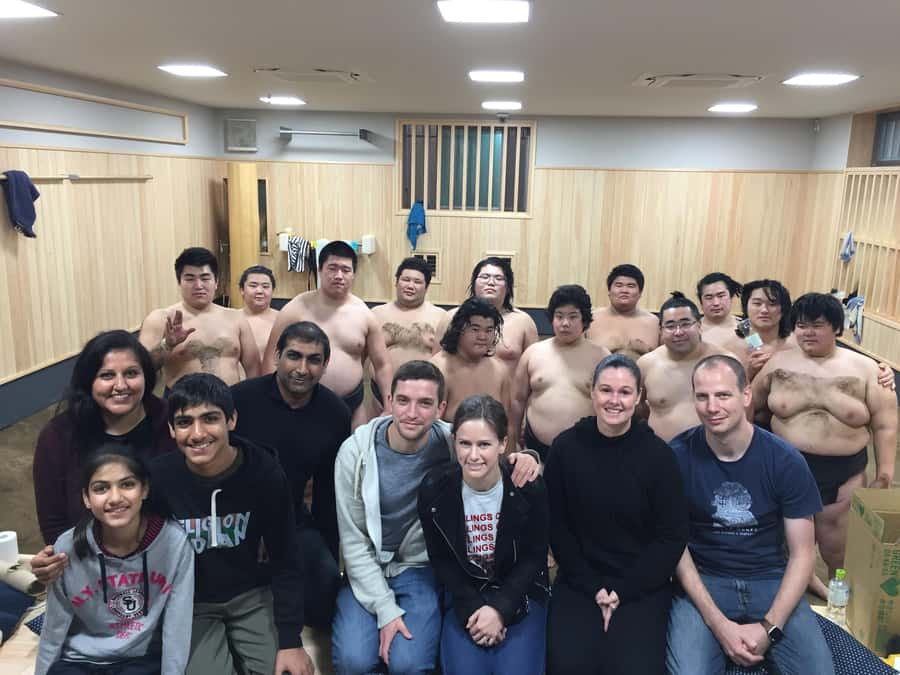
- A possible photo afterward: A group or individual photo may be offered, but the wrestler decides whether to take part.
- Strict timing matters: Meet at the A1 exit of Kiyosumi-Shirakawa Station and arrive early for the prompt start.
Seeing sumo before it reaches the tournament ring
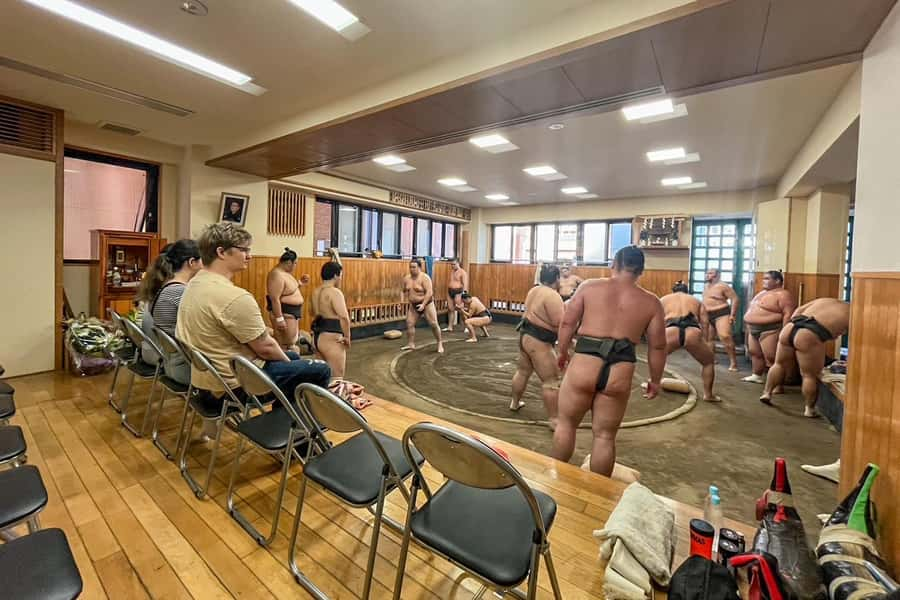
A sumo tournament gives you the drama of official bouts, formal entrances, and a packed schedule. This practice visit gives you something different: the work that prepares wrestlers for competition.
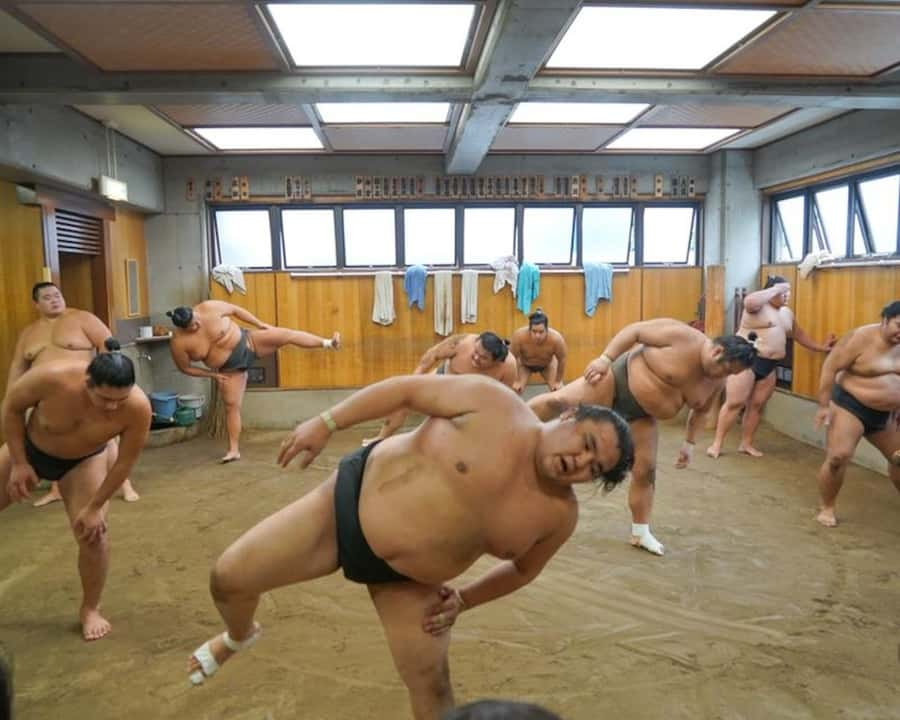
The session begins with routines and exercises rather than polished ceremony. You may see wrestlers preparing their bodies, repeating movements, and working through the customs that shape life inside a stable. As the practice continues, the pace and force increase.
That change is important. At first, the actions can look repetitive if you do not know what to watch for. Your guide helps you notice the purpose behind each movement. A shove against the edge of the ring, a low stance, a foot position, or a wrestler’s response to pressure begins to make more sense.
The most useful context concerns the structure of sumo itself. Your guide can explain the basic rules, the ranking system, and the roles inside a stable. A short Magical Trip Sumo Guidebook is included, with names and photographs of wrestlers, information about the stable, and a simple explanation of sumo traditions.
I would read the guidebook before the practice begins, then keep it nearby. It gives you something to follow when several bouts happen in quick succession. It can also help answer the kind of questions that naturally come up, such as how experienced a wrestler is, what a different colored loincloth may indicate, or how a young wrestler fits into the stable.
More Sumo Experiences in Tokyo
- Tokyo: Sumo Show and Dining Experience
★ 4.8 · 2,742 reviews - the SUMO show
★ 5.0 · 1,960 reviews - Tokyo Shinjuku Sumo Show & Experience with Photo
★ 5.0 · 1,750 reviews
Meeting at Kiyosumi-Shirakawa Station
The meeting point is the A1 exit of Kiyosumi-Shirakawa Station. Look for a guide holding a red or orange Magical Trip sign. From there, the stable is only a short walk, described as roughly two minutes by one participant.
That short transfer is a real advantage. You do not spend much of the two-hour booking moving between neighborhoods, and you can get from the station to the practice space quickly. Still, Tokyo stations can have several exits and busy underground passages, so I would arrive early and confirm that you are at the A1 exit rather than rushing in at the start time.
The tour starts promptly. If you arrive late, you cannot join the practice, and no refund or rescheduling is provided. This rule makes sense inside a working stable, where opening the door after practice begins could interrupt the wrestlers, but it gives you little room for delays.
The provided information includes Kiyosumi-Shirakawa as the meeting point and return point. The stable itself is listed at nearby addresses in Kiyosumi. Follow the meeting instructions you receive when booking, and plan extra time for the station.
Inside the stable, respect comes first
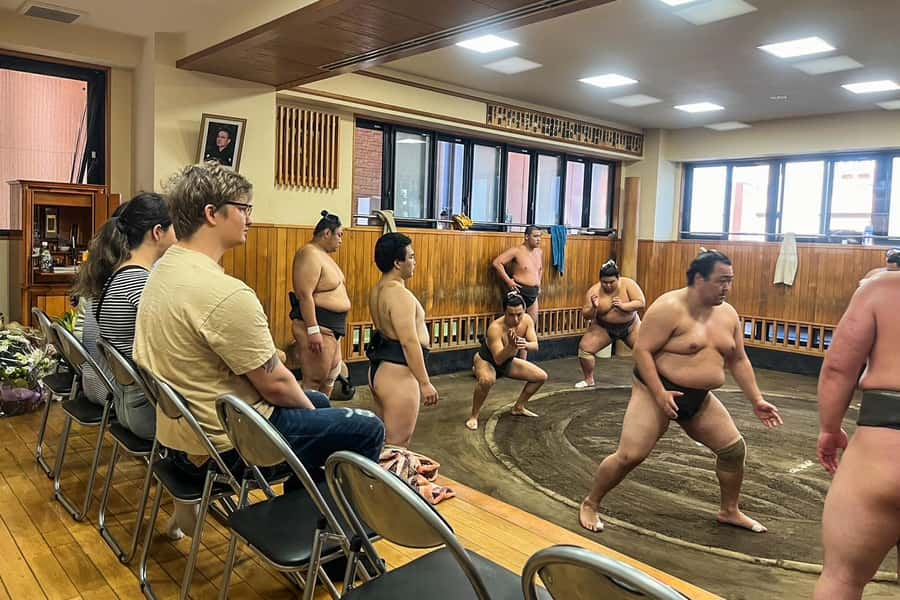
A sumo stable is not a theater. It is a place where wrestlers train, eat, sleep, and follow a strict hierarchy. You are entering a private working space, so the tone of the visit depends on quiet attention and good manners.
Your guide explains the stable’s rules before you go inside. This preparation is more than a formality. You need to understand where you may sit, which areas are off-limits, and how to behave while the wrestlers work.
Only the designated tatami viewing areas are accessible. Other parts of the stable are private. You should not wander, touch equipment, call out to wrestlers, or treat the session like a photo opportunity. The practice comes first.
That seriousness is one of the strengths of the experience. You are not watching a simplified cultural show. The wrestlers and stable master are carrying out a disciplined training program, and the visitors are expected to fit quietly into that setting.
This also means conditions can vary. One session may have three or four rows of chairs. Another may rely more heavily on cushions or tatami. One participant found chairs available and appreciated the relief for tired legs. Another reported standing for much of the practice because the view from the back rows was less useful.
I would not book this expecting guaranteed theater-style seating. Consider it a close look into a working room, where comfort depends on the layout and the stable’s own rules.
What the morning practice actually feels like
The wrestlers’ training can be much more physical than first-time viewers expect. Sumo is often presented through ceremony and size, but practice shows the strain behind the sport.
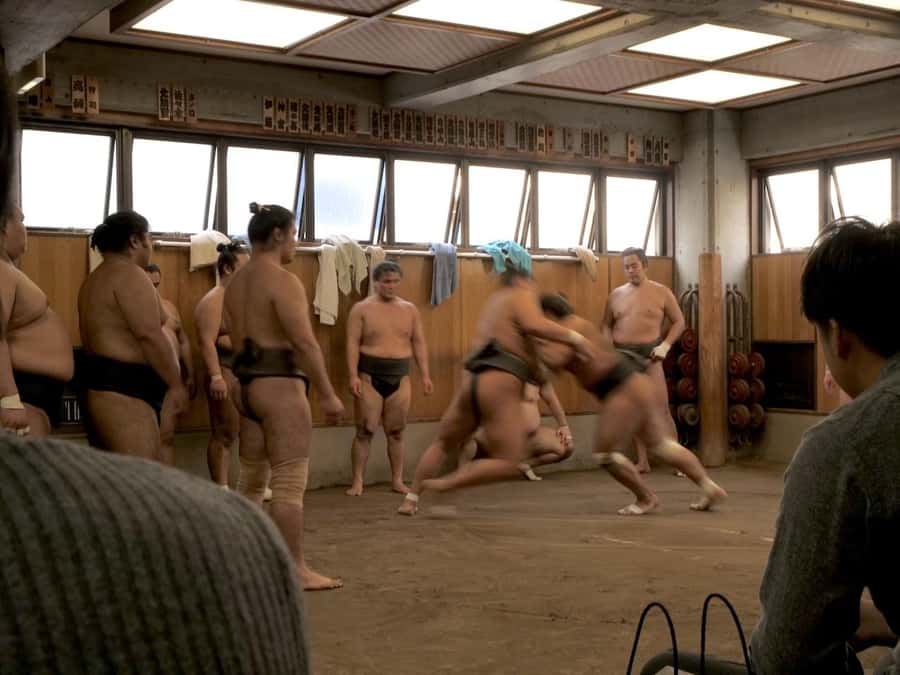
You may hear heavy breathing, body slaps, foot stamps, and the sound of wrestlers driving one another backward. The bouts can become intense, with repeated clashes and technical work. One participant described hearing the wrestlers breathe from close range, while another was surprised by how physically demanding the training looked.
The practice may feel repetitive at points. That is not necessarily a weakness. Repetition is part of the training, and the value comes from learning to see the small changes in balance, position, timing, and effort.
The session often becomes more compelling as it progresses. Early exercises prepare the wrestlers, while later bouts can show more force and competition. Your guide’s explanations give shape to what you are seeing, especially if you have never watched sumo beyond a short television clip.
The close view also changes your sense of scale. From a stadium seat, the athletes can seem like distant figures moving in a broad ring. Here, their physical presence is immediate. You see the concentration before a clash and the effort needed to recover after one.
Same city, another way to catch the action:
- Tokyo: Sumo Show and Experience in Shinjuku
★ 4.8 · 1,001 reviews - Tokyo Grand Sumo Tournament Viewing Tour with Tickets
★ 5.0 · 692 reviews - Tokyo Sumo Wrestling Tournament Experience
★ 5.0 · 660 reviews - Tokyo:Luxury Sumo Show Experience & Japanese cuisine & Drink
★ 4.7 · 577 reviews
The guide makes the difference
This experience depends heavily on the guide. The strongest part is not simply getting into the stable. It is understanding what you are seeing without interrupting the practice.
Marie has led sessions with clear explanations of sumo’s history, basic rules, and customs. Sho has explained rankings and the wider structure of the sport before the group entered the stable. Masao Hiramatsu has also guided this experience, with time for questions and helpful information beyond the practice itself.
Your guide should explain the rules of the stable before entry, then give you enough background to follow the training. The included guidebook adds a useful visual reference, especially when you want to identify wrestlers or remember the name of a stable tradition.
The guide can also answer questions that a tournament may not explain. You can ask about the difference between practice and competition, how wrestlers prepare, and where specific athletes fit within the sumo system. The quality of the answers may vary by guide and by the questions your group brings, but the small-group format helps.
A group of up to 10 is a good size here. You are less likely to lose the guide’s voice, and questions do not need to pass through a large crowd. It also helps keep the visit quiet and respectful.
Photos and the human side of the visit
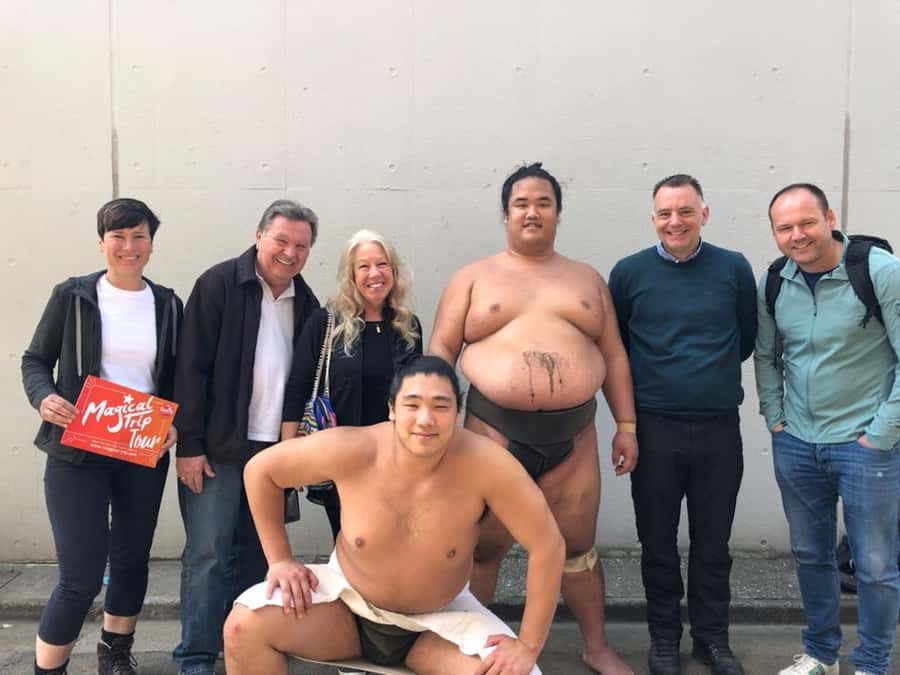
At the end, you may have a chance to take a photo with a sumo wrestler. A group photo may also be possible. Treat this as a courtesy, not a guaranteed part of the program.
The wrestler decides whether to participate. That detail matters because the athletes have just completed serious training and may need to return to their routine. A polite request and quick cooperation are the right approach.
The photo is a pleasant final moment, but it should not be the reason you book. The stronger memory comes from watching the practice itself and seeing how much discipline surrounds the sport.
The stable’s hospitality can also make the visit feel personal. You are not simply checking off a famous Japanese activity. You are being allowed a brief look at a place that most visitors cannot enter, under rules that protect the wrestlers’ daily work.
Is $96 a fair price?
At $96 per person, this is not a cheap two-hour activity. You are paying for access to a normally restricted setting, a small English-speaking group, cultural interpretation, entry, and the planning needed to arrange a visit to an active stable.
The value is strongest if you would otherwise struggle to attend a sumo tournament. Tournament tickets can be hard to arrange, and a tournament shows the finished contest rather than the long routine behind it. This practice gives you close viewing and a guide who explains what the wrestlers are doing.
The value is weaker if you want constant action, a guaranteed photo, or a polished show. Training includes repetition, waiting, and periods when the wrestlers are not fighting full bouts. You also cannot count on a chair or a fixed seating position.
For a first visit to Tokyo, I think the price is reasonable if sumo interests you even a little. The experience combines access and explanation in a way that is difficult to arrange independently. If you already plan to attend a tournament, this can still add a different side of the sport, but it is not a substitute for tournament day.
Who should book this sumo experience?
I would recommend it to adults and older children aged 12 and above who enjoy cultural experiences with a strong sense of place. It suits you if you want to understand how a traditional sport is practiced, not just take a quick photo beside a wrestler.
It is especially good for:
- First-time visitors who want a clear introduction to sumo
- Sumo fans who want to see training at close range
- Couples looking for an unusual Tokyo morning
- Small groups who prefer a guide and time for questions
- Visitors who missed out on tournament tickets
- People comfortable following strict rules in a private setting
I would think twice if you need guaranteed accessible seating, cannot sit on the floor, or dislike quiet observation. Wheelchair users cannot join, baby strollers are not allowed, and some areas are not accessible. Children under 12 are not permitted inside the stable.
The stable can also change or cancel practice at short notice because of a wrestler’s condition or tournament commitments. If the stable cancels, you receive a full refund. That uncertainty is part of arranging a visit to a real working stable rather than a fixed tourist attraction.
Final verdict: book it for access, not spectacle
Book this tour if you want to see the discipline, effort, and daily customs behind sumo. The close view is powerful, the guides add needed context, and the small group keeps the visit personal. The two hours can pass quickly once the bouts become more intense.
Skip it if you need guaranteed chairs, easy wheelchair access, or a non-stop show. For everyone else, this is a thoughtful way to meet sumo on its own terms: quiet, demanding, formal, and surprisingly physical.
FAQ
Where does the sumo tour meet?
Meet your English-speaking guide at the A1 exit of Kiyosumi-Shirakawa Station. The guide will hold a red or orange sign marked Magical Trip.
How long does the experience last?
The tour lasts two hours, including the walk to the stable, explanations, the morning practice, and the closing photo opportunity if available.
How large is the group?
The group is limited to 10 participants.
Is the tour conducted in English?
Yes. The tour includes an English-speaking live guide.
Are children allowed to join?
Only guests aged 12 and over may join. Children under 12 are not allowed inside the sumo stable, and participation may be denied without a refund if they are brought along.
Will I sit on a chair?
You may sit on chairs, but chairs are not guaranteed. Most stables may require you to sit on tatami, and some participants may need to stand depending on the seating layout.
Can wheelchair users join?
No. The activity is not suitable for wheelchair users, and some parts of the stable are not wheelchair accessible.
Is a photo with a sumo wrestler guaranteed?
No. A photo may be available after practice, but participation is at the wrestler’s discretion.
What happens if the stable cancels the practice?
A stable may cancel or adjust the practice schedule at short notice because of a wrestler’s condition or tournament commitments. If the stable cancels, a full refund is issued.
More sporting photo sessions around Tokyo
- Tokyo: Exclusive Access to Sumo Morning Practice with Photos
★ 4.8 · 107 reviews
New on the fixture list around Tokyo
- Tokyo: Sumo Morning Practice Viewing Tour at a Real Stable★ 4.9 · 32 reviews
- Tokyo: Sumo Morning Practice -Stable Visit Tour with a Guide★ 4.8 · 16 reviews
- Tokyo: Watching Sumo and Ryogoku Area Walking Tour★ 4.0 · 5 reviews
- Tokyo: Sumo Morning Practice Tour in Ryogoku and Photo Shoot★ 4.7 · 47 reviews
- Tokyo: Sumo Keiko Training Tour with Audio Guide & Photo★ 4.8 · 5 reviews
- Tokyo Sumo Morning Practice: Witness the Life of a Wrestler★ 4.8 · 56 reviews
- Tokyo Highlights Tour: Sumo, Sushi, Tea, and Tokyo Tower★ 5.0 · 2 reviews
- Tokyo: Sanctuary Authentic Grand Sumo Experience & Training★ 5.0 · 7 reviews
More Sumo Experiences in Tokyo to weigh up.
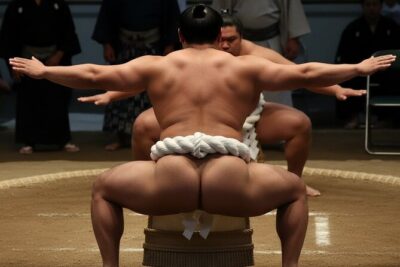
Tokyo Shinjuku Sumo Show & Experience with Photo
Read our review →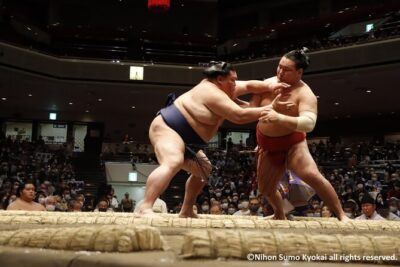
Tokyo Grand Sumo Tournament Viewing Tour with Tickets
Read our review →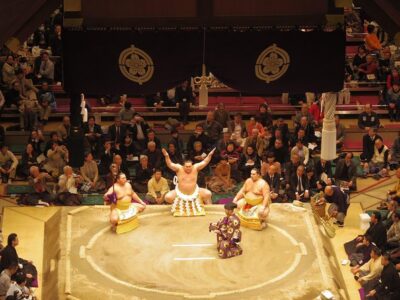
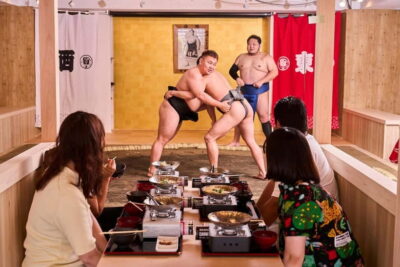
Tokyo:Luxury Sumo Show Experience & Japanese cuisine & Drink
Read our review →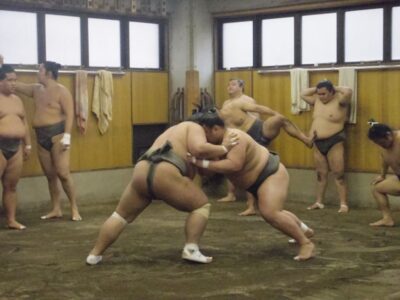
Tokyo Sumo Experience: Chanko & Mochi with a Former Pro
Read our review →This one also appears in