
Review · TOKYO
Tokyo: Sumo Morning Practice Tour at Sumida City
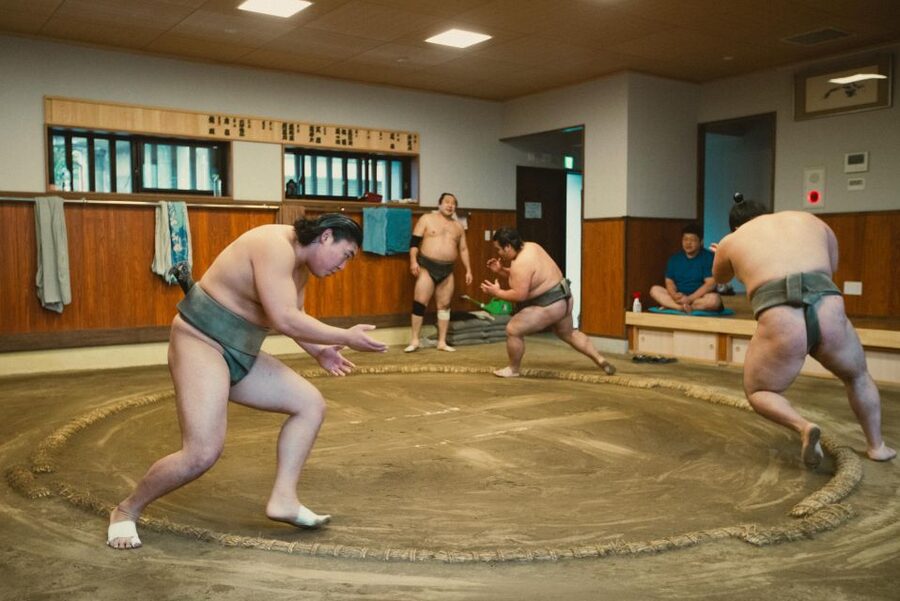
The most striking part of this Tokyo morning is the silence before the action. You sit close to the practice ring while large, powerful athletes repeat footwork, stretching, pushing, and bouts with total focus. This is not a staged show. You are watching a working training session, and that makes the sumo stable feel far more personal than a seat in a tournament arena.
I like the chance to ask the stable master about the wrestlers’ daily life, rules, and traditions. I also like the short walk from Oshiage Station, which places the activity near Tokyo Skytree and makes it easy to pair with sightseeing. The main drawback is physical: you sit on the floor for around 1.5 hours, with no chairs, and the practice may be lighter than expected around tournament periods.
Key points to know before booking
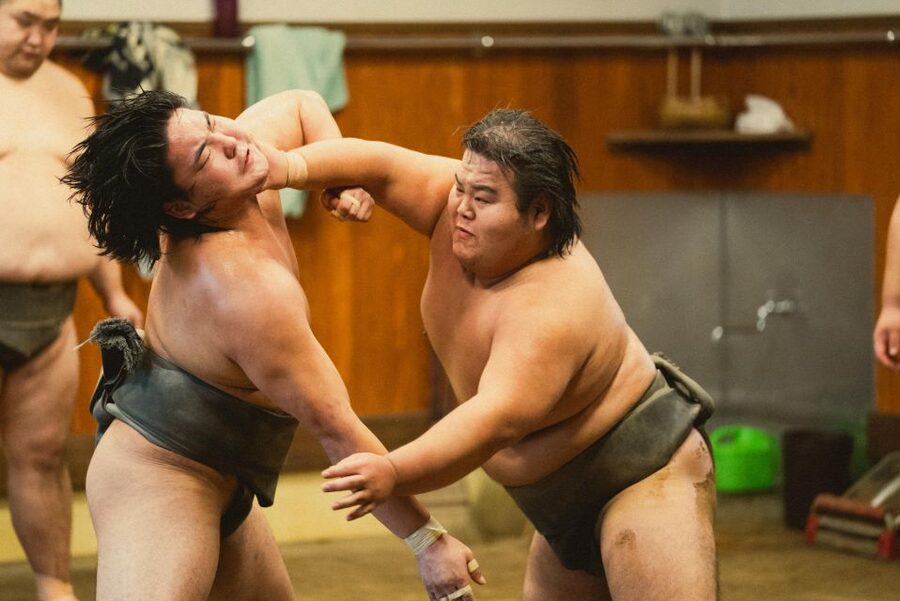
- Training, not theater: Watch wrestlers practice at close range, often including one-on-one bouts, stretching, and demanding drills.
- A quiet visit: You must watch without talking, flash photography, shutter sounds, food, hats, or other distractions.
- Floor seating only: Bring patience and flexibility. This is not suitable for people who cannot sit cross-legged on the ground.
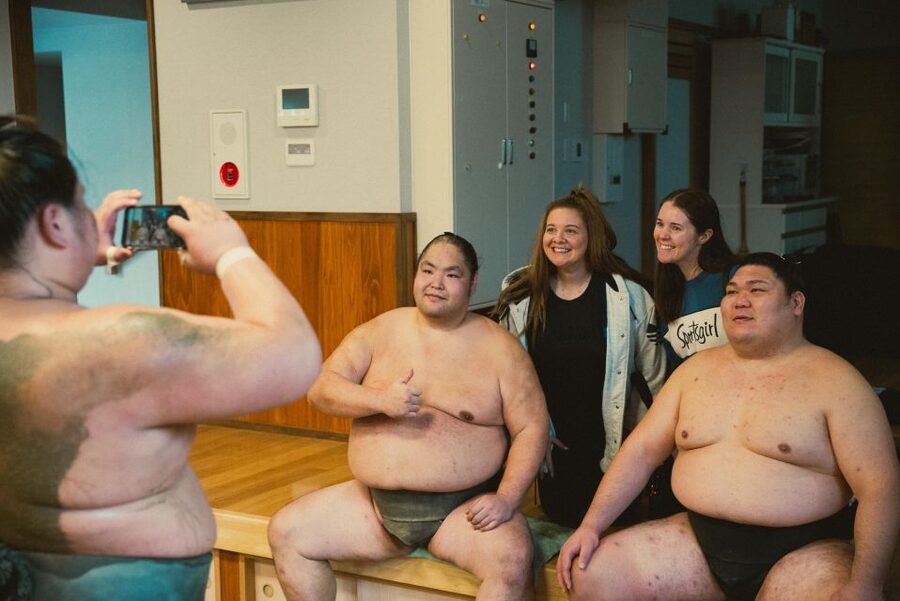
- The question period matters: After practice, the stable master may answer questions and allow a photo with the wrestlers.
- Early start: Meet at Oshiage Station A1 Exit at 7:15am for a 7:30am departure.
- Seasonal limits: Morning practice tours are not held in March, July, or November because major tournaments take place outside Tokyo.
Why this feels different from watching a sumo tournament
A tournament gives you the noise, ceremony, and excitement of a public contest. This visit gives you the work behind it. You see wrestlers prepare their bodies, repeat techniques, and test each other before a paying audience ever arrives.
That difference matters. The practice is not arranged for entertainment, so the pace can change. Some sessions include hard bouts, while others may focus more on drills and preparation. Around a tournament, the training can also be lighter. If you need a string of dramatic matches, this may disappoint you. If you want to understand the discipline behind sumo, it is a strong choice.
The setting is intimate. You sit close enough to notice the size of the wrestlers, but also their balance, agility, and flexibility. Several visitors were surprised by how quickly these athletes move. Sumo is not simply about mass. The repeated footwork, controlled posture, and explosive contact reveal a demanding sport.
The atmosphere also asks something of you. You are entering a place where wrestlers are working, not performing a welcome routine. Silence and restraint are part of the experience. That can feel strict at first, but it is also what keeps the visit authentic.
More Sumo Experiences in Tokyo
- Tokyo: Sumo Show and Dining Experience
★ 4.8 · 2,742 reviews - the SUMO show
★ 5.0 · 1,960 reviews - Tokyo Shinjuku Sumo Show & Experience with Photo
★ 5.0 · 1,750 reviews
Meeting at Oshiage Station before breakfast
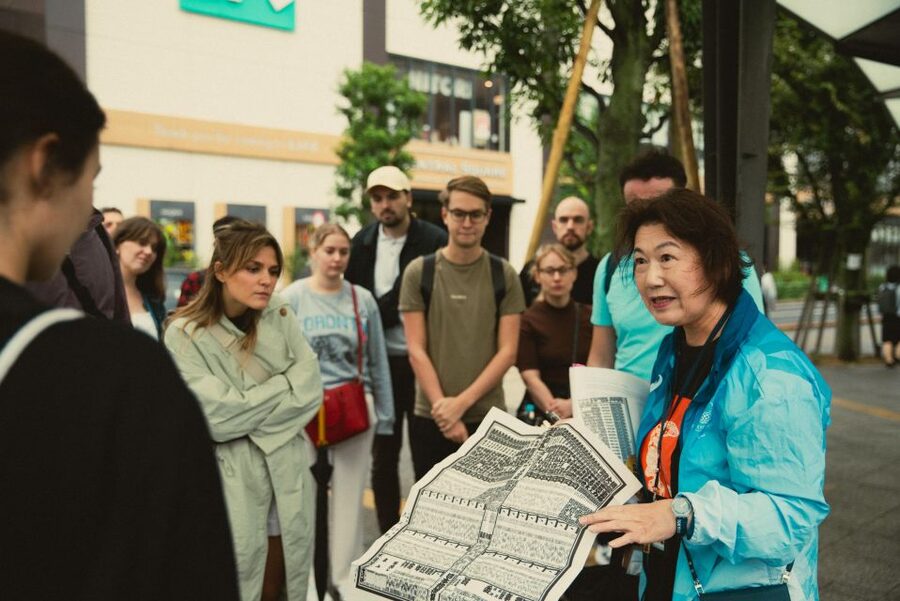
The meeting point is at Tokyo Metro Oshiage, also called Skytree Mae, and Toei Asakusa Line Oshiage Station, A1 Exit on the ground floor. You meet at 7:15am, and the tour starts at 7:30am.
Give yourself extra time to find the exit. Oshiage is a busy transport area, and the directions have caused confusion for some participants. Arriving 15 to 20 minutes early is sensible, especially if you are unfamiliar with Tokyo’s station system.
From the station, you walk for about 15 to 20 minutes to the stable. Tokyo Skytree Town is nearby, so the area is easy to recognize and useful for planning the rest of your morning. The walk is not long, but allow for weather. On a rainy day, bring a towel in case your feet get wet, since you will remove your shoes at the stable.
You do not get hotel pickup, and food and drinks are not included. Have breakfast before meeting if you need one, but do not bring food into the stable. The early time is part of the bargain. You are seeing wrestlers at the start of their workday, but you will need to organize your morning around it.
Inside the stable: rules that protect the practice
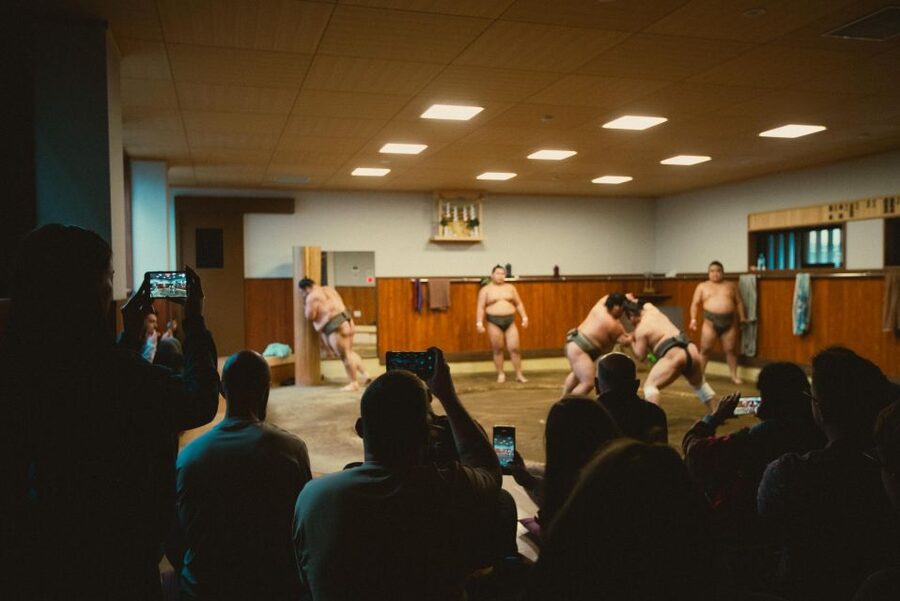
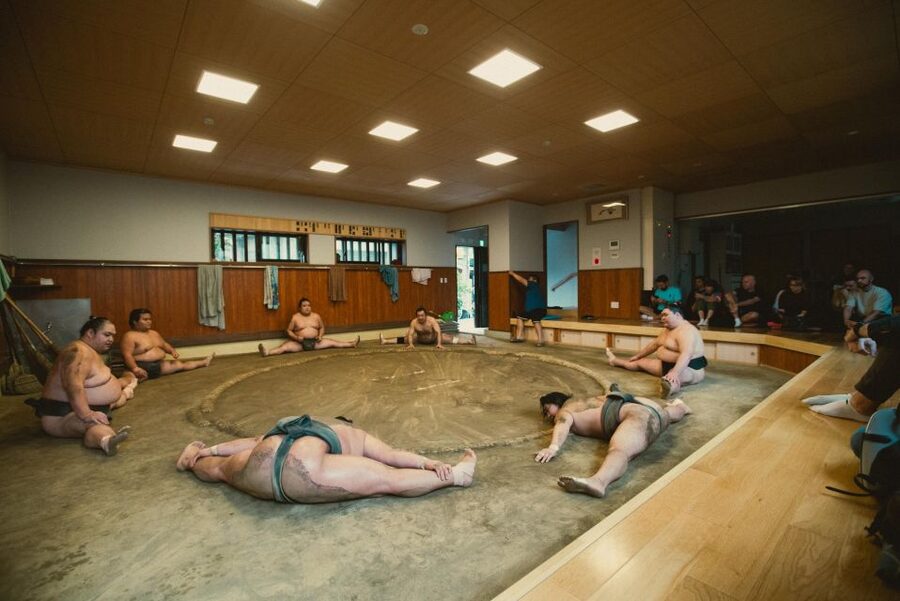
At the stable, you remove your shoes and take a place on the floor. There are no chairs. The viewing position can vary, and another group or visiting athletes may affect who gets the best angle. Some groups rotate positions, but you should not assume that every seat will offer the same view.
The most important rule is quiet. Do not chat during practice, move around unnecessarily, or distract the wrestlers. You may take photos and videos if flash and shutter sounds are turned off, but you cannot upload them to social media.
That restriction is worth taking seriously. The wrestlers are concentrating, and the practice is not a photo opportunity first. The possible picture at the end is a separate moment, after the training has finished and permission is given.
You also cannot use the toilet during practice, so go before the tour begins. Do not bring luggage or large bags, sunglasses, hats, strollers, or food. These are small details, but following them makes the visit smoother for everyone.
Ninety minutes of close-up training
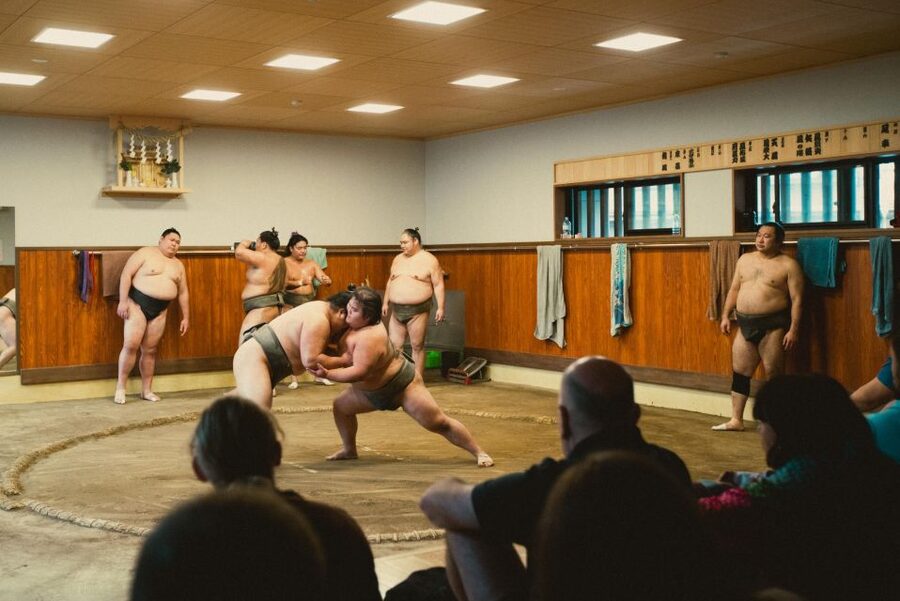
The practice usually lasts about 1.5 hours, with the total activity taking around two hours. During that time, your English-speaking guide helps explain what you are seeing, including sumo rules, rituals, traditions, and the life of the wrestlers.
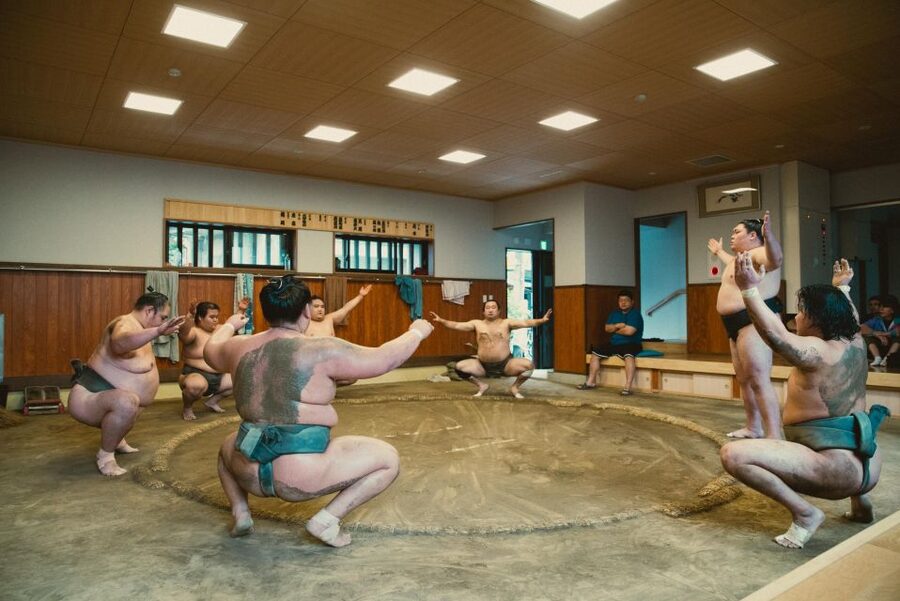
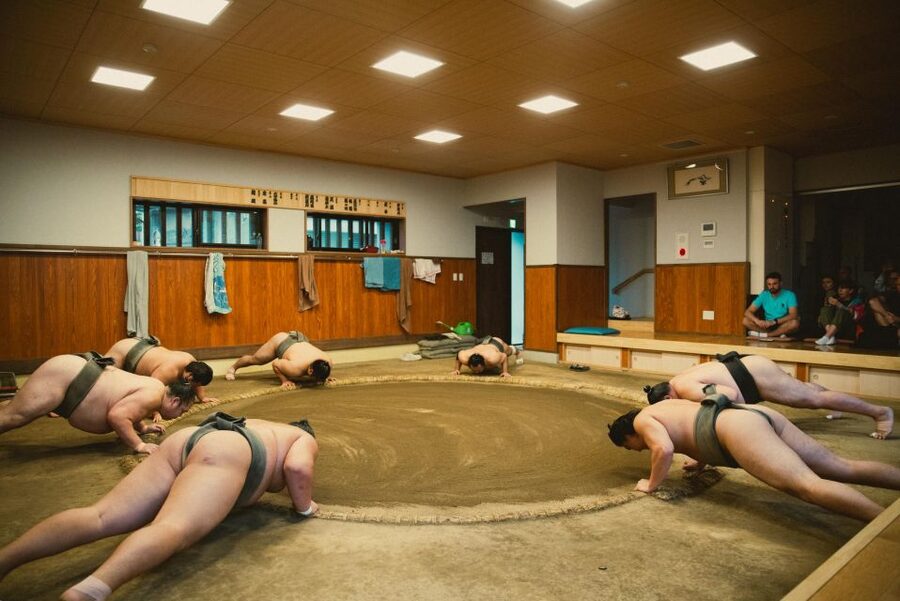
The action may include stretching, warmups, technique drills, and bouts between wrestlers. One participant described watching seven wrestlers train, while another especially enjoyed seeing one-on-one fights. The exact routine can change, so treat the session as a real practice rather than a fixed program.
You may also find that the guide’s role varies. Guides such as Yoko, Yukiko, Tadashi, Kiyomi, and Oku have been praised for explaining the customs and quietly helping groups understand what was happening. One useful point is that a guide does not need to fill every second with talk. During the practice, silence is part of the etiquette.
At times, hearing the guide can be difficult if the group is large. A soft voice may also be hard to follow at the station or inside the stable. If you care about detailed explanation, stay close to the guide before the practice starts and pay attention to the printed information provided.
The real reward is visual. You see how a wrestler handles his body, how quickly he shifts his weight, and how much force can come from a short movement. The contrast between their size and agility is one of the morning’s memorable lessons.
Same city, another way to catch the action:
- Tokyo: Sumo Show and Experience in Shinjuku
★ 4.8 · 1,001 reviews - Tokyo Grand Sumo Tournament Viewing Tour with Tickets
★ 5.0 · 692 reviews - Tokyo Sumo Wrestling Tournament Experience
★ 5.0 · 660 reviews - Tokyo:Luxury Sumo Show Experience & Japanese cuisine & Drink
★ 4.7 · 577 reviews
The stable master question period
After the training, the mood changes. You may have time to ask the stable master questions about the wrestlers, daily routines, rules, training, and the stable itself. This is often the most useful part for anyone who wants more than a quick look at sumo.
The stable master may be generous with time, but the length of the conversation can vary. Come with a few clear questions rather than expecting a formal lecture. You might ask about the wrestlers you saw, how training differs before a tournament, or what daily life is like inside the stable.
Some people found the question period more informative than the introduction. One participant noted that the guide offered written information before the practice, with little spoken explanation at that stage. If you want more background on the connection between sumo and religion or the sport’s older traditions, ask directly.
There may also be a chance for a photo with the wrestlers after practice. This is not guaranteed, so think of it as a bonus rather than the reason to book. The farewell can be warm and personal, but you should still follow the guide’s instructions and avoid treating the stable like a public attraction.
How the $116 price measures up
At $116 per person, this is not a cheap two-hour activity. You are paying for access to a place that is difficult to visit independently, an English-speaking guide, and an organized introduction to sumo etiquette.
The value depends on your goal. If you only want to see a sumo match, the price may feel high, especially since you are watching trainees rather than necessarily seeing elite tournament wrestlers. If you value access, cultural context, and a close view of real training, the cost is easier to justify.
The question period improves the value. So does the chance to watch without the distance and noise of a stadium. You are not buying a polished stage performance. You are paying for a carefully managed visit to a working stable, where the experience depends on the day’s training and the group’s behavior.
Some people also felt the practice was shorter or lighter than expected. One account described about 1 hour and 20 minutes of training, while another found the session less intense during a tournament period. Keep that in mind when comparing this with a longer sightseeing tour.
Who will enjoy this most
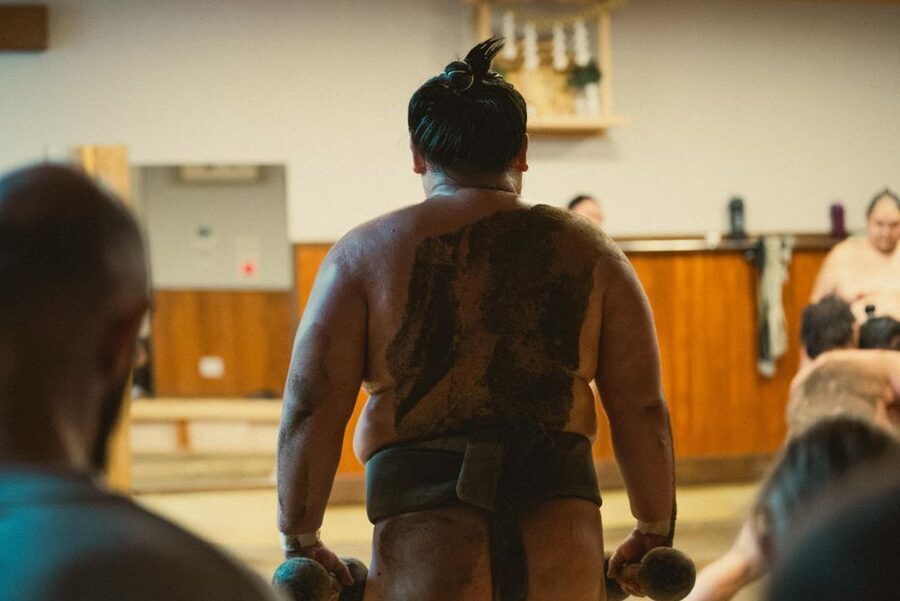
I would recommend this for adults, older children, and anyone curious about Japanese customs, sport, or daily discipline. You do not need to know sumo beforehand. The guide supplies enough basic explanation to help you follow the action, and the stable master adds a personal angle.
It works especially well for people who prefer access over spectacle. You will probably enjoy it if you can sit quietly, accept a changing practice schedule, and watch carefully for small details.
It is a poor fit for anyone with mobility problems or difficulty sitting on the ground. The minimum age is six, but young children must remain quiet and still. If a child talks, moves around, or cannot watch respectfully, the family may be asked to leave the stable.
Wear shoes that are easy to remove and put back on. Dress for an early morning walk, and bring a small towel if rain is possible. Avoid large bags and leave your breakfast for before or after the activity.
Timing your visit around the sumo calendar
The tour is not held in March, July, or November because Grand Sumo tournaments take place outside Tokyo during those months. Check availability about two months before your preferred date, since the schedule becomes known one to two months ahead.
The tournament calendar can also affect what you see in other months. Training may be less intense near a major event, and the stable may have special visitors or seating changes. That does not make the visit worthless, but it does mean you should not expect every morning to look the same.
January, April, May, August, September, October, December, and parts of February have produced opportunities for this activity, subject to availability. Book early once the schedule opens if your Tokyo dates are fixed.
Practical conduct inside the stable
Keep these points in mind:
- Arrive at the station meeting point by 7:15am.
- Do not enter the stable alone if you are late.
- Contact the provider, then wait outside for the guide.
- Never ring the stable’s doorbell.
- Use the restroom before the tour.
- Remove your shoes when asked.
- Keep phones silent and disable camera sounds.
- Do not use flash.
- Do not post photos or videos on social media.
- Keep children quiet and seated.
- Do not bring food, drinks, large luggage, hats, or sunglasses.
If you miss the group, the provider can send you the stable address, but you still cannot enter without meeting the guide. That rule protects the wrestlers’ concentration and prevents a late arrival from interrupting practice.
Should you book this sumo morning tour?
Book it if you want a close, respectful look at sumo as a way of life, not just a contest. The quiet training, floor-level view, and chance to question the stable master create a rare Tokyo experience. Guides such as Tadashi, Yoko, Yukiko, Kiyomi, and Oku have helped make the visit clear and organized.
Skip it if you need comfortable seating, guaranteed elite wrestlers, a full spoken lecture, or a fixed sequence of dramatic bouts. The $116 price is fair only if the access and atmosphere matter to you.
For the right visitor, this is one of Tokyo’s most memorable mornings. Arrive early, sit patiently, follow the rules, and let the practice unfold at its own pace.
FAQ
Where does the tour meet?
Meet at Tokyo Metro Oshiage, also called Skytree Mae, and Toei Asakusa Line Oshiage Station A1 Exit on the ground floor.
What time should I arrive?
The meeting time is 7:15am. The tour starts at 7:30am.
How long does the tour last?
The activity lasts about two hours, including the walk, practice, questions, and possible photos.
How far is the stable from the station?
It is about a 15 to 20 minute walk from the meeting point to the sumo stable.
Can I sit on a chair inside the stable?
No. There are no chairs, and you should be prepared to sit cross-legged on the floor for about 1.5 hours.
Can I take photos or videos?
You may take photos and videos without flash or shutter sounds. You cannot upload them to social media.
What happens if I arrive late?
Contact the provider for the stable address, then go there yourself and wait outside. Do not enter alone or ring the doorbell.
Is the tour held all year?
No. Morning practice and tours are not held in March, July, or November because Grand Sumo tournaments take place outside Tokyo during those months.
New on the fixture list around Tokyo
- Tokyo: Watching Sumo and Ryogoku Area Walking Tour★ 4.0 · 5 reviews
- Tokyo: Sumo Morning Practice Viewing Tour at a Real Stable★ 4.9 · 32 reviews
- Tokyo: Sumo Morning Practice -Stable Visit Tour with a Guide★ 4.8 · 16 reviews
- Tokyo: Sumo Morning Practice Tour in Ryogoku and Photo Shoot★ 4.7 · 47 reviews
- Tokyo: Sumo Keiko Training Tour with Audio Guide & Photo★ 4.8 · 5 reviews
- Tokyo Sumo Morning Practice: Witness the Life of a Wrestler★ 4.8 · 56 reviews
- Tokyo: Sanctuary Authentic Grand Sumo Experience & Training★ 5.0 · 7 reviews
- Tokyo Highlights Tour: Sumo, Sushi, Tea, and Tokyo Tower★ 5.0 · 2 reviews
More Sumo Experiences in Tokyo to weigh up.
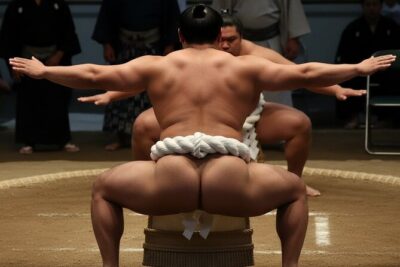
Tokyo Shinjuku Sumo Show & Experience with Photo
Read our review →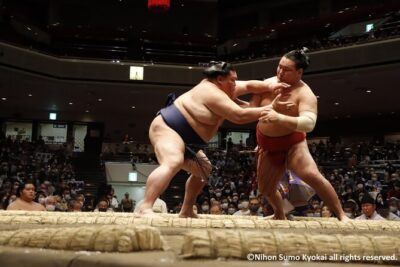
Tokyo Grand Sumo Tournament Viewing Tour with Tickets
Read our review →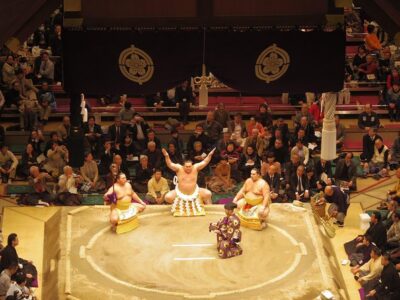
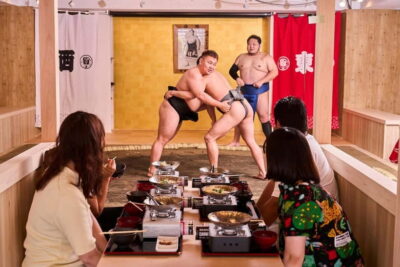
Tokyo:Luxury Sumo Show Experience & Japanese cuisine & Drink
Read our review →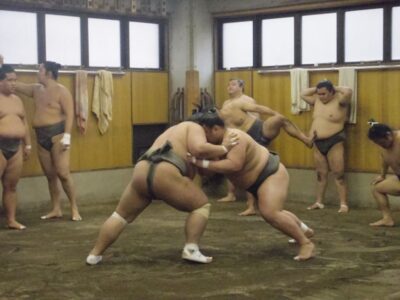
Tokyo Sumo Experience: Chanko & Mochi with a Former Pro
Read our review →This one also appears in