
Review · TOKYO
Tokyo: Morning Sumo Practice Viewing
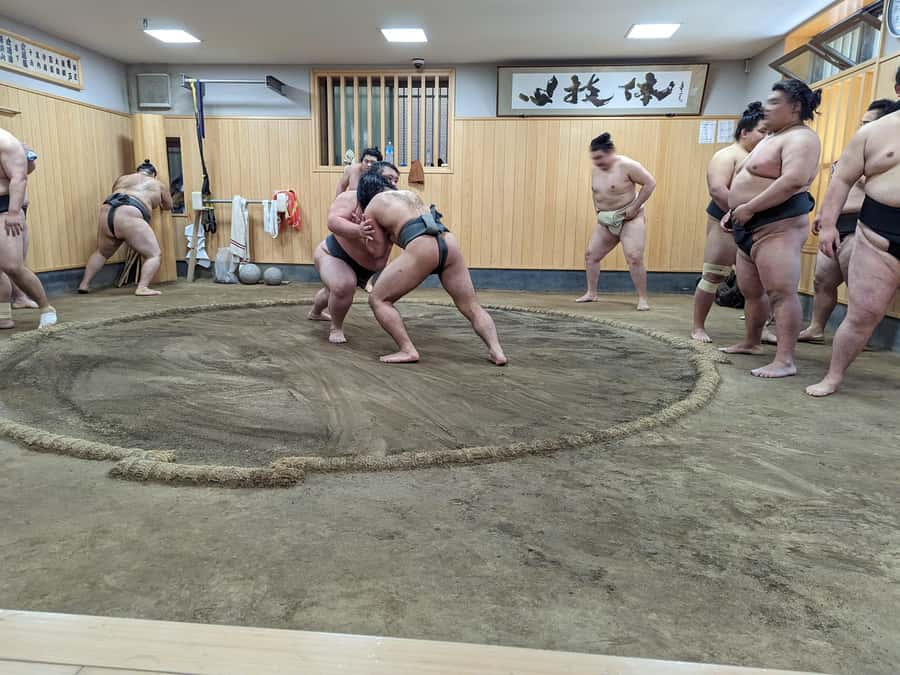
Entering a real sumo stable before breakfast gives you something a staged show cannot: the quiet pressure of professional training. The wrestlers are not performing for you. They are working to keep or improve their rank, and every bout has a serious edge.
I like two things especially. First, you sit close enough to notice the wrestlers’ speed, balance, and flexibility, not just their size. Second, the small group and English-speaking guide make it easier to understand the customs, ranks, and rules without turning the stable into a tourist theater.
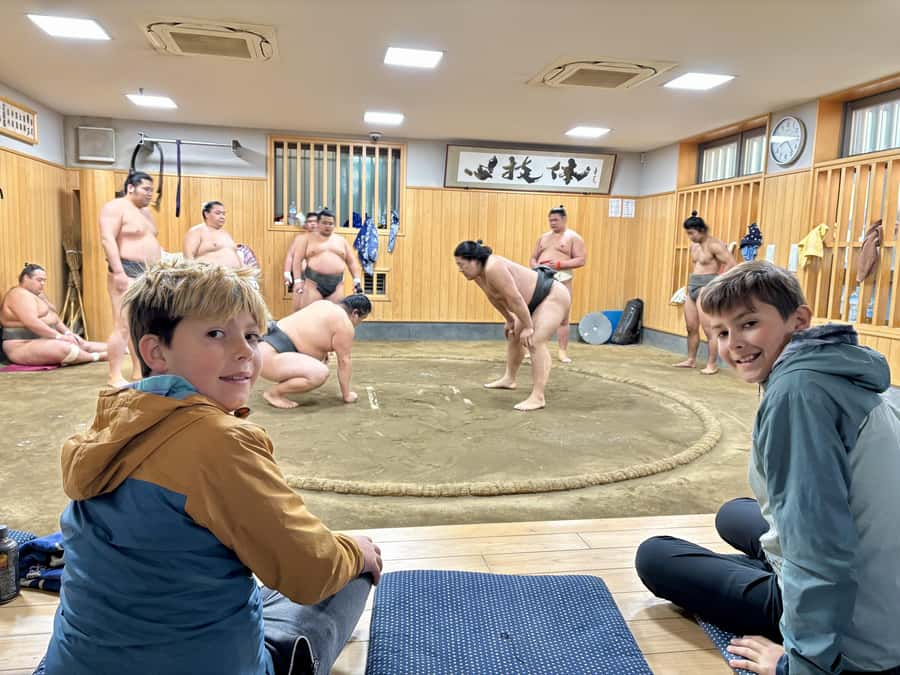
The main drawback is physical: you sit on a cushion on a flat floor, with no regular chairs provided. You must also stay still and quiet during practice, so this is not the right pick if you need a highly flexible sightseeing stop or a casual photo opportunity.
Key points to know before you book
- Professional wrestlers, not performers: The stable’s rikishi belong to Japan’s official professional sumo system and take part in the six annual grand tournaments.
- Two top-division wrestlers: You may watch lower-ranked wrestlers challenge established athletes in demanding practice bouts.
- A close, quiet view: The cushion seating puts you near the action, but silence and stillness are required while training continues.
- A useful English briefing: Guides such as Aki, Taka, Jeff, Dawn, and Sue explain stable etiquette, the ranking system, daily life, and sumo culture.
- Personal contact after practice: Once the formal training is over, wrestlers may be friendly and available for commemorative photographs.
- Three hours in a small group: The experience is limited to eight participants and begins at Hanami Zaka Square by Tokyo Skytree Station.
Why morning practice feels different from a sumo show
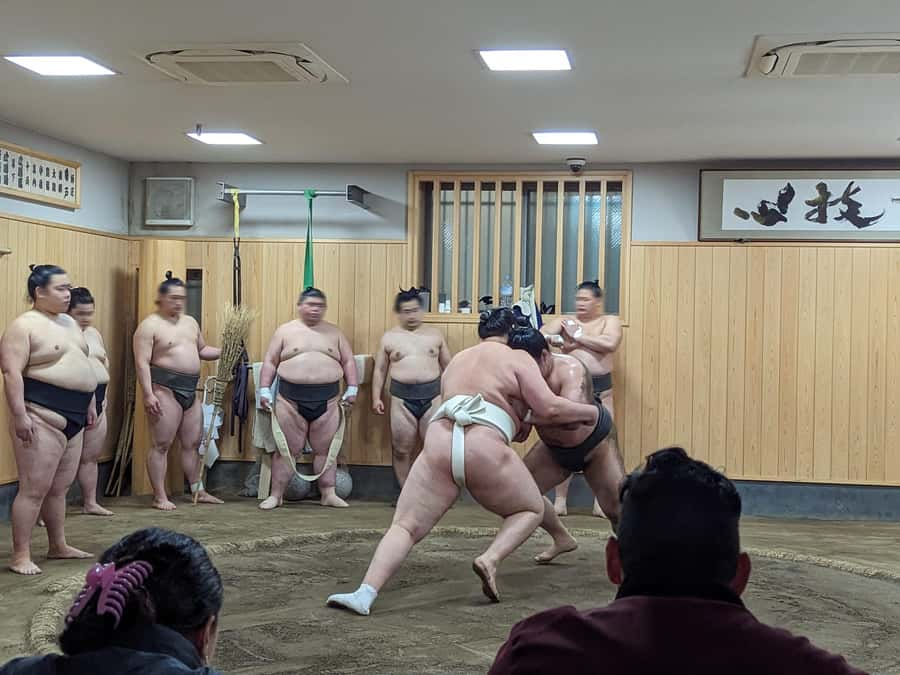
A sumo show is built for an audience. It may be funny, accessible, and a good choice if you want a light introduction to the sport. This visit serves a different purpose. You are watching a working stable during its daily practice, not a performance designed around applause.
That difference becomes clear as soon as you enter. The wrestlers are focused on the ring, their stablemates, and the instructions around them. There is no need to explain every move for spectators, and no one pauses to make the action easier to follow.
The stable belongs to the Japan Sumo Association, the governing body of professional sumo in Japan. The wrestlers you see are part of the system that leads to the grand tournaments held six times each year. You are not simply watching athletes dressed as rikishi. You are seeing professionals at a serious stage of their careers.
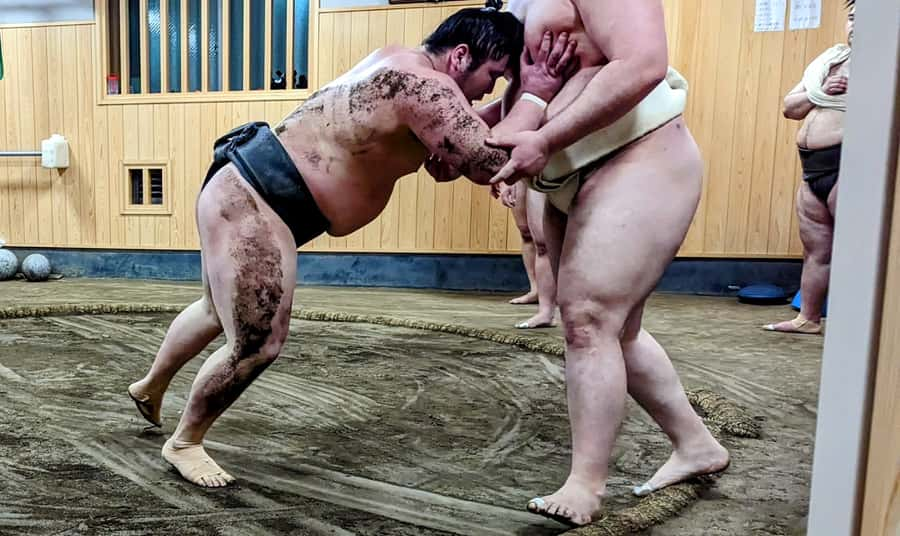
That seriousness is the heart of the experience. A lower-ranked wrestler may be trying to defeat one of the stable’s two top-division wrestlers. The practice can feel repetitive, but that repetition is the point. Strength, footwork, balance, flexibility, and stamina are built through constant work.
If you have attended only a tournament, this offers a useful second view of sumo. A tournament gives you the drama of official bouts, a large crowd, and a formal contest. Morning practice shows the work behind that polished event. You see the effort required before a wrestler ever steps into a major arena.
More Sumo Experiences in Tokyo
- Tokyo: Sumo Show and Dining Experience
★ 4.8 · 2,742 reviews - the SUMO show
★ 5.0 · 1,960 reviews - Tokyo Shinjuku Sumo Show & Experience with Photo
★ 5.0 · 1,750 reviews
Meeting at Tokyo Skytree Station
The meeting point is Hanami Zaka Square at Tokyo Skytree Station, on the Tobu Skytree Line, station TS02. The listed coordinates are 35.71030044555664, 139.80880737304688.
This detail matters because Tokyo Skytree Station can feel confusing if you are rushing in the morning. Give yourself enough time to find Hanami Zaka Square rather than assuming any point near the tower will do. The meeting instructions are described as clear, and one guide even helped locate a participant who had become lost near the station.
From the square, the walk to the stable is short. The guide leads the group rather than sending you to find the entrance on your own. That is useful because a sumo stable is not a normal attraction with a large sign and ticket booth. You enter as a quiet observer, under the stable’s rules.
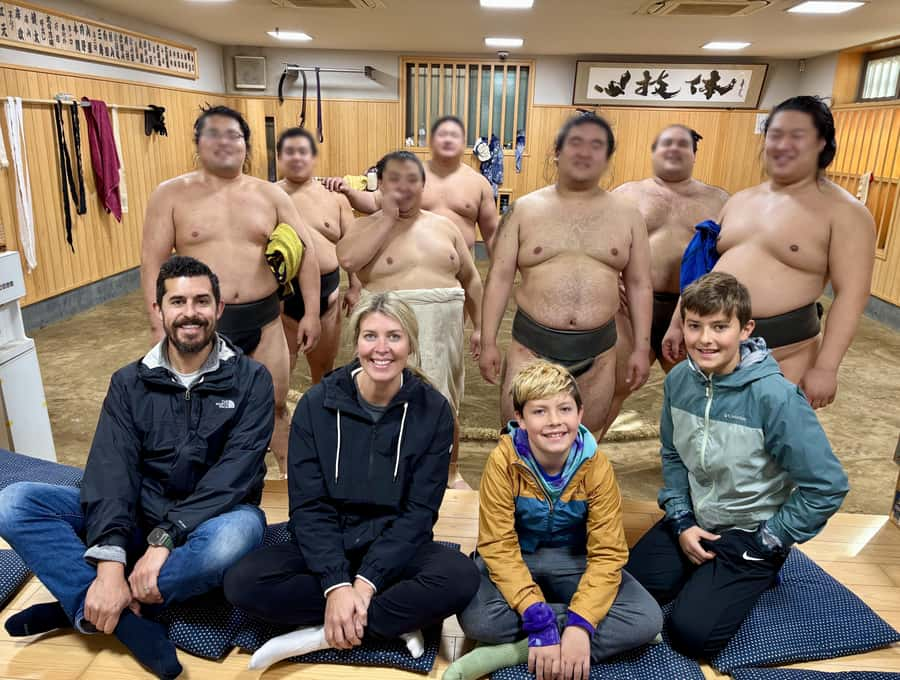
The group is limited to eight people. That size helps in two ways. You can hear the briefing, and you are less likely to block the view once everyone is seated. It also keeps the visit from feeling like a large excursion arriving at a private workplace.
The guide’s briefing makes the practice easier to read
Before entering, your guide explains what you are about to see and how you should behave. Guides used for this experience have included Aki, Taka, Jeff, Dawn, Sue, Yasu, and Akimi. The exact guide depends on the date, but the repeated strength of this tour is its human explanation before the quiet begins.
Expect background on the sumo association, tournament divisions, stable life, rituals, and the route from lower ranks toward the top division. Guides have also explained salary differences, how wrestlers become part of a stable, and how the divisions work. This is the sort of information that turns a series of collisions into a contest with stakes.
Taka and Jeff have been especially praised for clear explanations and patient answers. Aki has been described as enthusiastic about sumo, while Dawn has provided detailed introductions before the group entered. Sue has been noted for her enthusiasm and insight into the sport. These names do not guarantee who will lead your visit, but they show the range of the guide team.
The briefing is also where you learn the etiquette. During practice, you must remain still, avoid talking with other participants, and follow the guide’s instructions. Do not treat the stable like a theater where you can whisper, snack, or stand whenever you wish.
That rule may sound strict, but it protects the wrestlers’ concentration. You are entering a place where people train every day. Respectful silence is not decoration. It is part of what makes the visit authentic.
Sitting close to the ring on a floor cushion
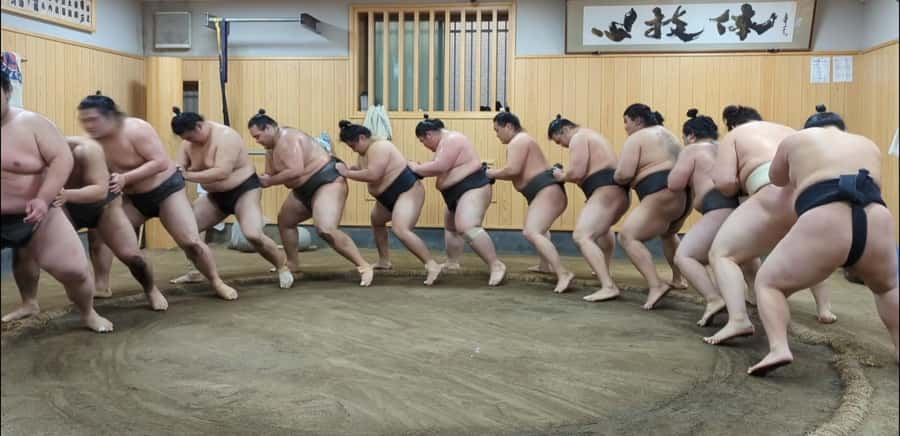
Inside, you sit on a cushion on a flat floor. No chairs are supplied by the stable. This gives you a close view, but it also creates the chief comfort issue of the morning.
If you have stiff knees, limited hip flexibility, or trouble getting up from the floor, think carefully before booking. One participant found the long cushion seating difficult because of personal inflexibility, although leaving for the restroom or asking about a chair was possible. The official information says the experience is not suitable for wheelchair users.
For most people, the floor seating is part of the setting rather than a flaw. You are not separated from the practice by stadium rows or a glass barrier. You sit low and close, watching the wrestlers work at a human scale.
Still, do not confuse close seating with freedom to move around. During training, you must stay in place and keep quiet. This is not the moment to change seats for a better photograph or lean into the ring.
Same city, another way to catch the action:
- Tokyo: Sumo Show and Experience in Shinjuku
★ 4.8 · 1,001 reviews - Tokyo Grand Sumo Tournament Viewing Tour with Tickets
★ 5.0 · 692 reviews - Tokyo Sumo Wrestling Tournament Experience
★ 5.0 · 660 reviews - Tokyo:Luxury Sumo Show Experience & Japanese cuisine & Drink
★ 4.7 · 577 reviews
Watching top-division wrestlers and their challengers
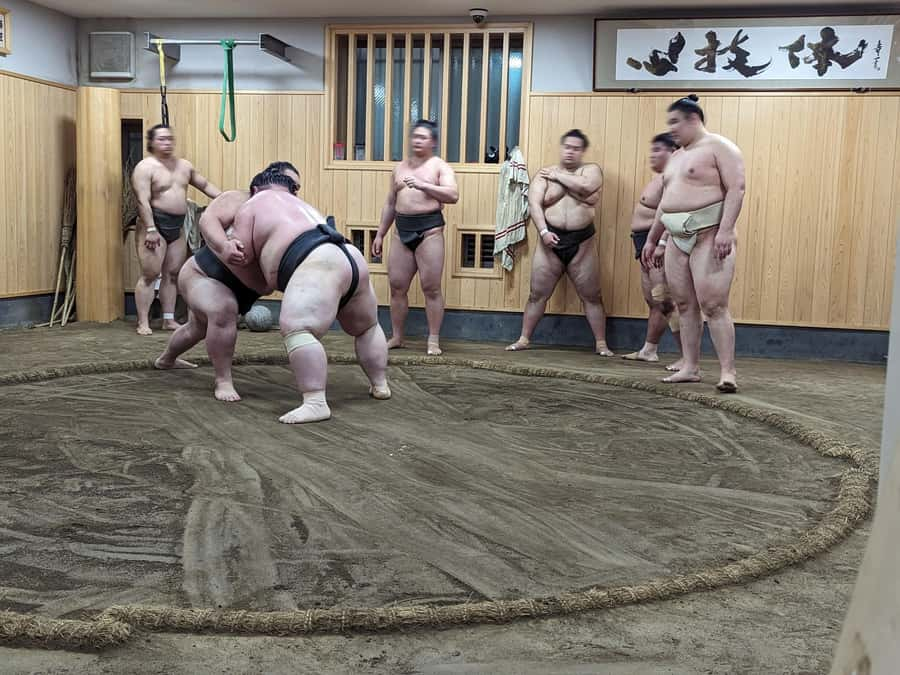
The most compelling part is the practice itself. The stable has two top-division wrestlers, and the lower-ranked rikishi work to challenge them. That setup gives the morning a clear internal drama, even if you know little about the ranking system at first.
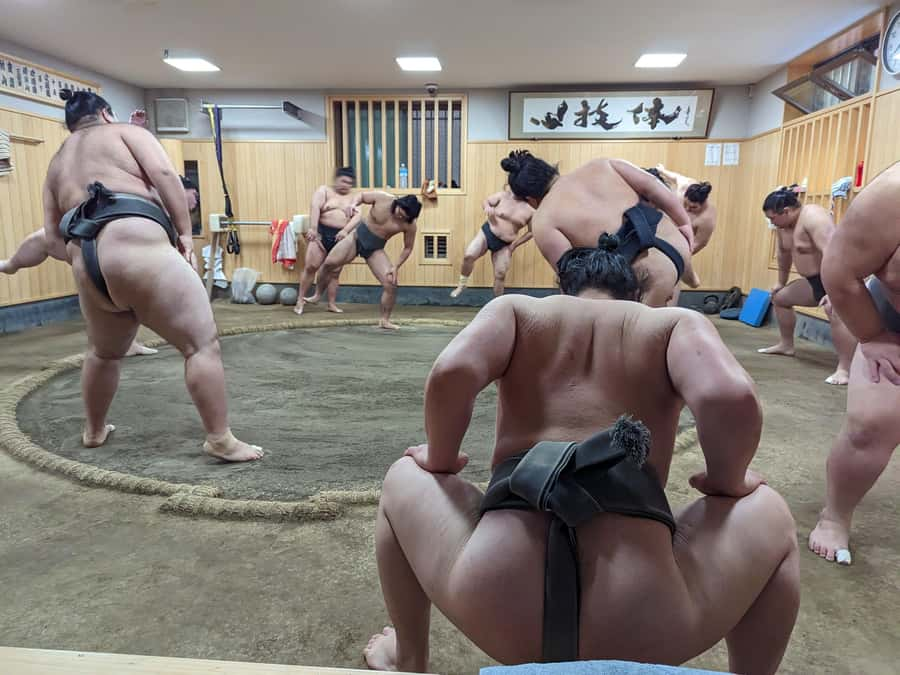
You may notice how quickly a large body can move. Size is only one part of sumo. The training reveals flexibility, timing, balance, and the ability to absorb force. Several people found the wrestlers’ speed and physical control surprising, especially during practice bouts.
The lower-ranked wrestlers are not there as supporting actors. They are trying to earn their place. Watching them face more established stablemates helps you understand that sumo is also a hierarchy of daily tests. A wrestler’s position is not protected by reputation alone.
The atmosphere can be tense and quiet. You may hear the impact of bodies and the rhythm of repeated exercises more clearly than you would in a tournament crowd. There is no need for a commentator to manufacture excitement. The work explains itself.
Do keep your expectations sensible. This is training, not a scheduled championship match. Some moments may be intense and fast, while others may involve routine exercises, preparation, or waiting. The value comes from seeing the full practice environment, not from expecting three hours of nonstop bouts.
What makes the wrestlers approachable afterward
During practice, the rikishi maintain an unapproachable focus. That is appropriate. You should not expect conversation, interruptions, or casual interaction while they are working.
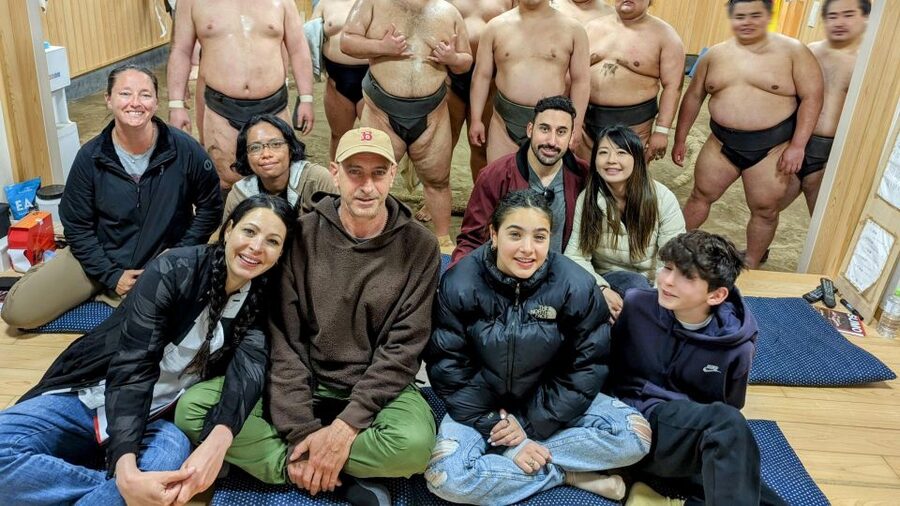
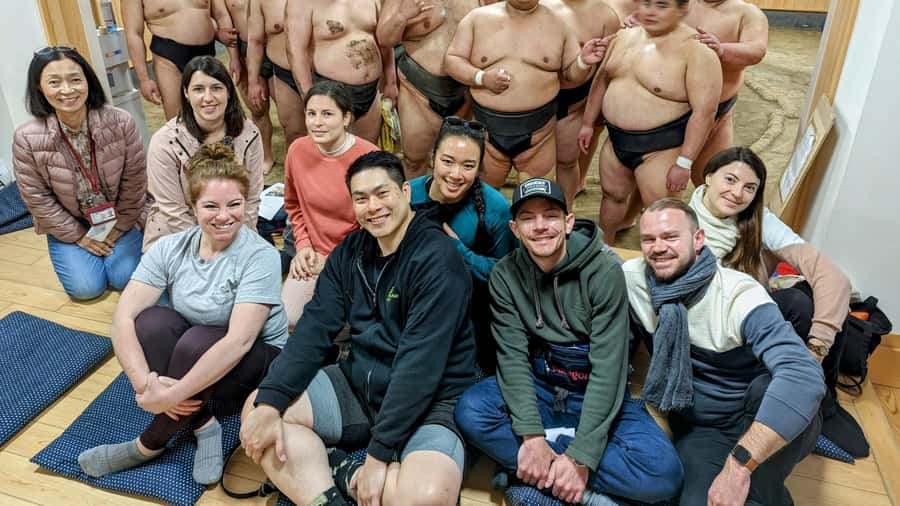
Once they are off the ring, the mood can change. The wrestlers may be friendly, and commemorative photographs may be possible after training. This contrast is one of the most memorable details of the visit: stern concentration during practice, then a more relaxed personal moment at the end.
Treat this as a possibility rather than a promise of a private meet-and-greet. The stable’s schedule and the wrestlers’ availability control what happens after practice. Your guide will direct you on what is appropriate.
The photo opportunity works best when you understand that it comes after the serious part. Do not plan the visit around a guaranteed pose. Plan it around the practice, and regard any personal contact afterward as an extra.
A useful alternative when no tournament is scheduled
The grand sumo tournaments take place six times a year, and your Tokyo dates may not line up with one. Morning practice gives you a way to see professional sumo outside the tournament calendar.
It is not a replacement for the full tournament atmosphere. You will not have the same arena scale, formal bouts, crowd energy, or complete day of matches. But you gain access to the part many casual spectators never see: the daily training that supports the public competition.
I would particularly consider this during an off-season visit. You still see wrestlers connected to the official professional system, and you get a closer look at their preparation. If your schedule allows both a tournament and this practice, they complement each other well. One shows the finished contest, while the other shows the labor behind it.
The tour also helps if sumo is new to you. The guide’s explanation of rankings and stable life gives you a better chance of understanding what you see later on television or at a tournament.
How much value do you get?
No price is provided here, so I cannot judge the exact deal without your booking date and rate. The value depends on what you want from a Tokyo morning.
This is a strong use of your money if you care about access, context, and a small group rather than a polished show. Your fee buys a guided visit to a working professional setting, a close view of training, and an explanation that would be hard to assemble on your own.
It is less attractive if you mainly want entertainment, a guaranteed wrestler photograph, or a flexible schedule. A staged sumo performance may suit you better if you prefer jokes, audience participation, and a less restrictive setting.
The three-hour length is reasonable for the experience. It includes meeting the guide, walking to the stable, receiving the briefing, observing practice, and handling the end-of-visit interaction. Since the start time varies, check availability carefully and expect an early morning commitment.
Free cancellation up to 24 hours before the activity and reserve-now, pay-later booking make it easier to fit into a changing Tokyo plan. Those policies are useful, but they do not change the physical demands or the stable’s rules.
Who should book this sumo experience?
I would choose this for someone who wants to see sumo as a living sport rather than a themed attraction. It suits first-time visitors who want a clear introduction, as well as martial arts fans who will appreciate the strength, discipline, and technique on display.
It is also a good fit for people who enjoy quiet observation. You are not being asked to join a bout or become part of a comedy routine. You are watching experts work at close range and learning how to read the setting.
Families with older children may enjoy it if everyone can sit quietly and follow instructions. The same applies to small groups of friends, couples, and solo visitors. The group cap of eight keeps the experience personal without making it private.
I would hesitate if you need step-free access, cannot sit on the floor, or want to come and go freely. The stable is a serious workplace, not a stop where you can browse, talk, and take pictures whenever you wish.
Should you book it?
Book this morning practice if you want the real working side of sumo. The combination of a short walk from Tokyo Skytree Station, a small English-speaking group, close cushion seating, and access to professional training offers far more context than a quick photo outside a tournament hall.
The strongest reason to go is the contrast between the wrestlers’ intense focus during practice and their possible friendliness afterward. You see both the discipline and the human side, but only if you respect the first part and wait patiently for the second.
Skip it if floor seating is a serious problem or if you need guaranteed interaction. For everyone else, especially during a period without a grand tournament, this is one of Tokyo’s more unusual cultural mornings and a practical way to understand what professional sumo demands.
FAQ
Where does the sumo practice tour meet?
The meeting point is Hanami Zaka Square at Tokyo Skytree Station, TS02, on the Tobu Skytree Line. The listed coordinates are 35.71030044555664, 139.80880737304688.
How long does the experience last?
The activity lasts three hours. Starting times vary, so check availability for your chosen date.
Is the tour offered in English?
Yes. The experience includes a live English-speaking guide.
How large is the group?
The activity is limited to eight participants.
Do I sit on a chair during practice?
No. You sit on a cushion on a flat floor, and the stable does not provide regular chairs.
Can I talk during the training?
You must stay still and refrain from talking with other participants during practice. Follow your guide’s instructions throughout the session.
Can I take photographs with the wrestlers?
Commemorative photographs may be possible after practice, when the wrestlers are off the ring. Interaction is not presented as guaranteed, and you should not interrupt them during training.
New on the fixture list around Tokyo
- Tokyo: Sumo Morning Practice -Stable Visit Tour with a Guide★ 4.8 · 16 reviews
- Tokyo: Watching Sumo and Ryogoku Area Walking Tour★ 4.0 · 5 reviews
- Tokyo: Sumo Morning Practice Viewing Tour at a Real Stable★ 4.9 · 32 reviews
- Tokyo: Sumo Morning Practice Tour in Ryogoku and Photo Shoot★ 4.7 · 47 reviews
- Tokyo: Sumo Keiko Training Tour with Audio Guide & Photo★ 4.8 · 5 reviews
- Tokyo Sumo Morning Practice: Witness the Life of a Wrestler★ 4.8 · 56 reviews
- Tokyo Highlights Tour: Sumo, Sushi, Tea, and Tokyo Tower★ 5.0 · 2 reviews
- Tokyo: Sanctuary Authentic Grand Sumo Experience & Training★ 5.0 · 7 reviews
More Sumo Experiences in Tokyo to weigh up.
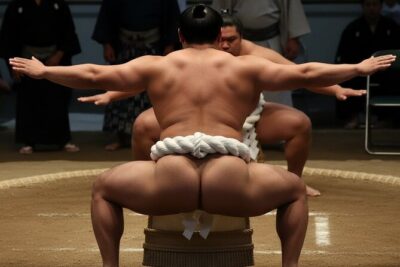
Tokyo Shinjuku Sumo Show & Experience with Photo
Read our review →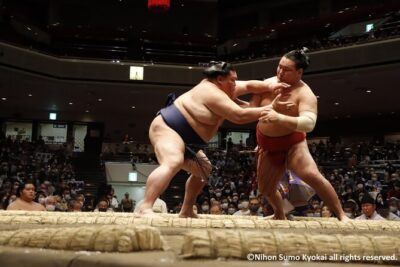
Tokyo Grand Sumo Tournament Viewing Tour with Tickets
Read our review →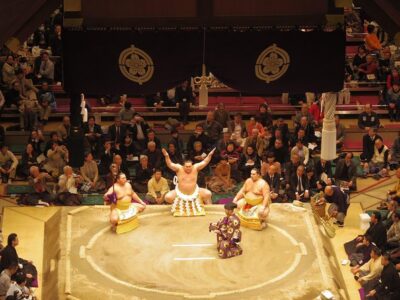
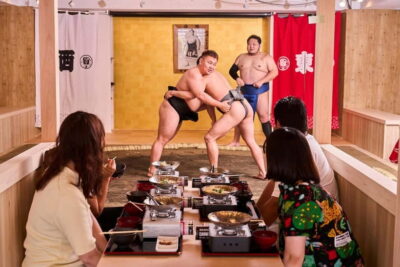
Tokyo:Luxury Sumo Show Experience & Japanese cuisine & Drink
Read our review →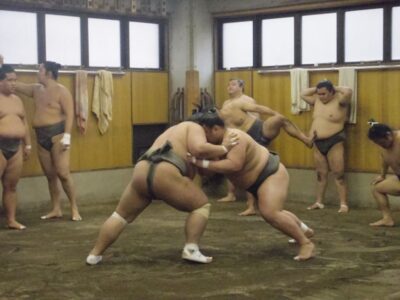
Tokyo Sumo Experience: Chanko & Mochi with a Former Pro
Read our review →This one also appears in