
Review · TOKYO
Tokyo: Sanctuary Authentic Grand Sumo Experience & Training
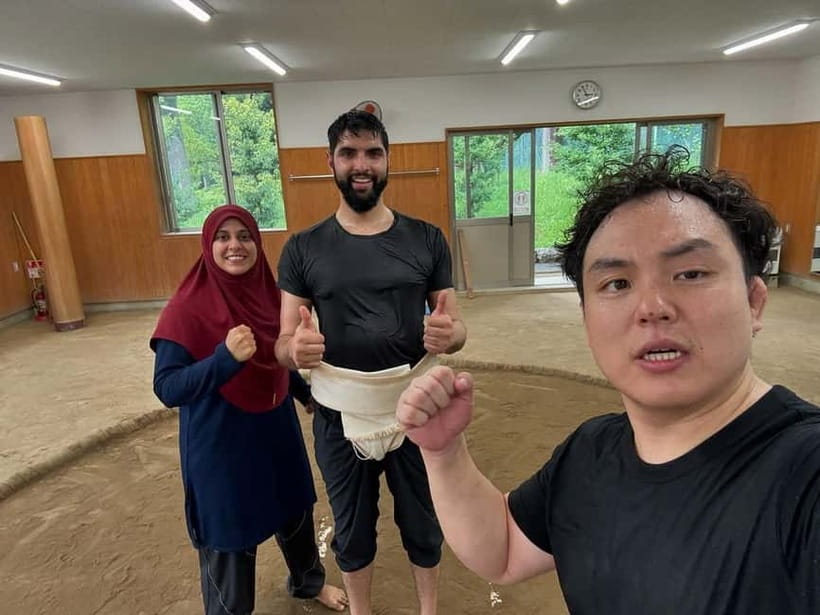
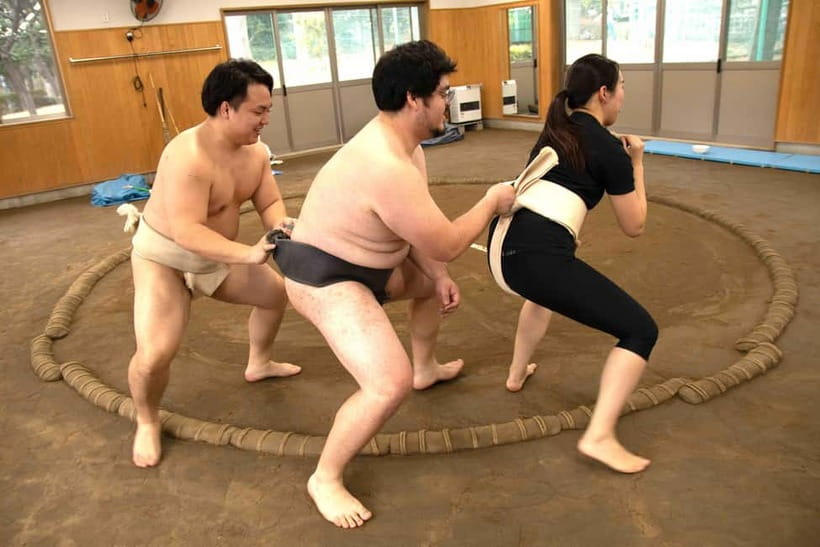
The rare thing here is simple: you do not just watch sumo, you step into a real dohyo and learn how wrestlers train. Takeshi leads the session in English and Japanese, covering warm-ups, rituals, rules, and basic movement before the friendly bouts begin.
I like the practical format, since you get a real mawashi at no extra cost and train with an actual sumo coach. I also like the way the session works for mixed groups, from families to complete beginners. The main drawback is the physical effort: bring plenty of water and two towels, because you will sweat.
Key points at a glance
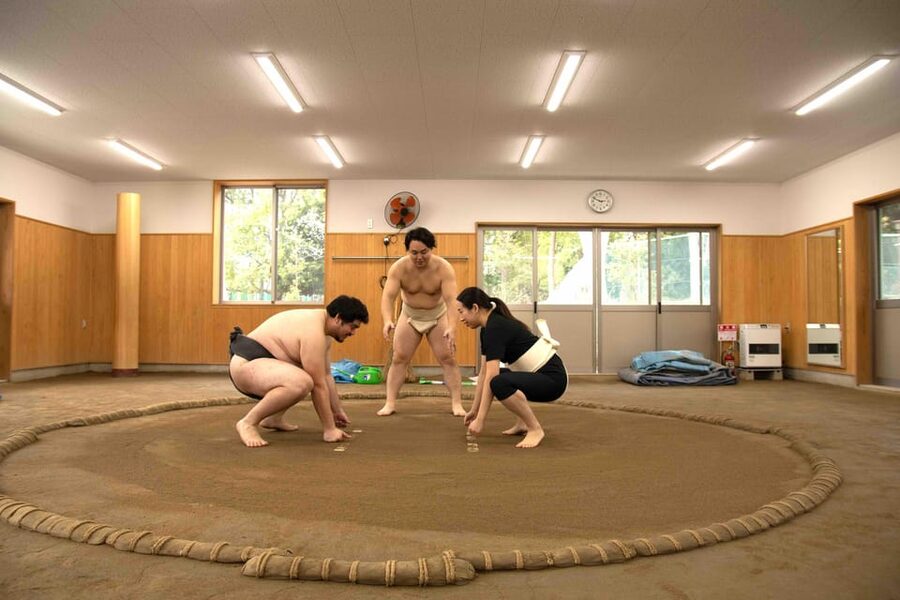
- Train in a real clay dohyo: This is a working sumo ring, not a stage built only for tourists.
- Wear a real mawashi: The traditional sumo belt is supplied, or you may keep your own clothes on if you prefer.
- Learn the rituals first: Shinto customs, ring etiquette, warm-ups, and basic rules come before wrestling.
- Wrestle friends or the coach: The final matches can be adjusted to suit your fitness and comfort level.
- Takeshi teaches in English and Japanese: His relaxed approach helps families and first-time participants follow along.
- Plan for a workout: Bring drinks and two towels, and allow ¥100 for a five-minute shower nearby if needed.
Why this Tokyo sumo session feels different
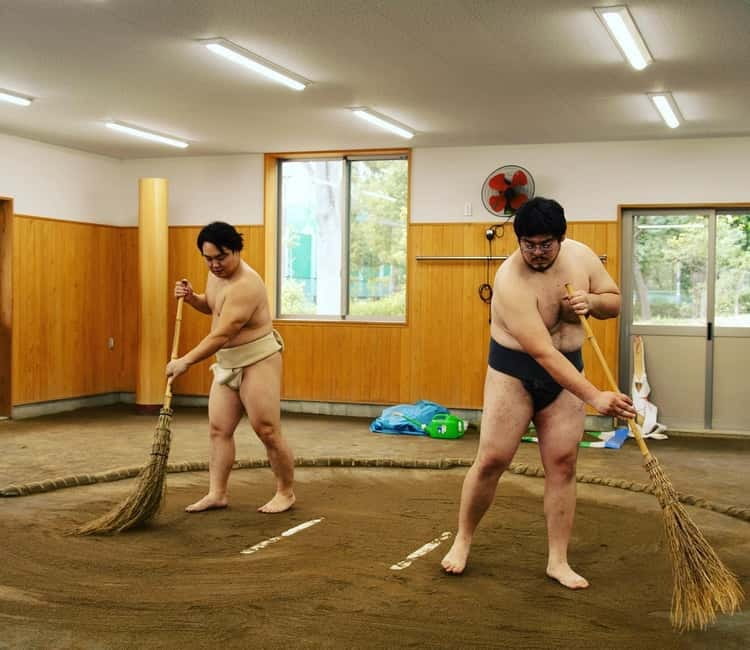
Tokyo offers many ways to encounter sumo. You can watch a tournament, visit a stable from outside, or see a stage performance built for an audience. This experience takes another route. You become part of the practice.
That distinction matters. Sumo is not only about pushing someone out of a ring. The sport carries formal gestures, rules, body positions, and religious customs linked to Shinto. Here, you first learn what you are doing, then try it yourself.
You are not expected to arrive as an athlete. The instructions say no experience is needed, and the session welcomes all genders, ages, and fitness levels. A parent can join with a child, friends can test their strength against one another, and a more confident participant can accept a bout with one of the coaches.
The tone appears friendly rather than severe. Takeshi is described as warm and easy-going, which is useful in a sport that can look intimidating from the outside. You will still be working hard, but the goal is learning and participation, not proving that you belong in a professional stable.
More Sumo Experiences in Tokyo
- Tokyo: Sumo Show and Dining Experience
★ 4.8 · 2,742 reviews - the SUMO show
★ 5.0 · 1,960 reviews - Tokyo Shinjuku Sumo Show & Experience with Photo
★ 5.0 · 1,750 reviews
Starting at Heiwanomori Park Sumo-jo
The meeting point is Heiwanomori Park Sumo-jo, at 2-1 Heiwanomorikoen in Ota City. You meet at the small office at the address, then begin the session at the dojo.
The nearest station is Heiwajima on the Keikyu Main Line, about a 10-minute walk away. This is not a central Tokyo sight, so allow time for the ride and the walk. The listed train times are useful when planning a day:
- From Shinagawa, about 22 minutes
- From Shimbashi, about 28 minutes
- From Nihonbashi, about 34 minutes
- From Shibuya, about 36 minutes
- From Ginza, about 40 minutes
- From Shinjuku, about 49 minutes
These times are approximate journey figures, and you should still check the route on the day. A taxi can be used, but the instructions warn that taxis will not normally come to the location unless you arrange one yourself. In practice, the station walk is the simpler plan.
The location also means this activity works best as a deliberate two-hour appointment rather than something you squeeze between major sights. If you are staying in southern Tokyo or near Shinagawa, the trip is fairly convenient. From Shinjuku, Shibuya, or the eastern sightseeing districts, allow extra time.
The first lesson: stretching, balance, and sumo basics
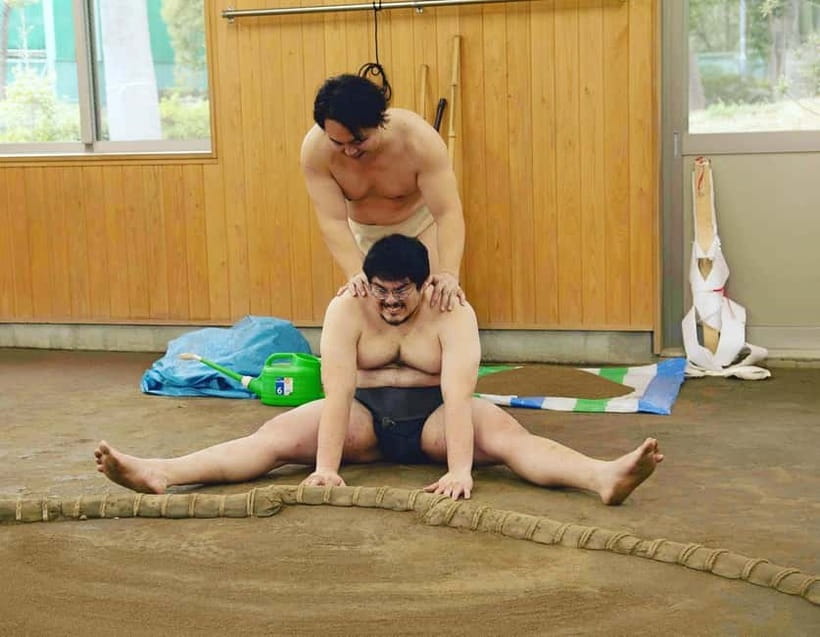
The training begins with stretches and warm-ups. This is more important than it might sound. Sumo uses low stances, wide leg positions, and sudden forward movement, so the warm-up gives you a safer introduction before anyone enters a bout.
You learn the basic ideas behind sumo movement and wrestling in the ring. The coach explains the rules for the dohyo and shows how participants should behave inside it. Instructions are given in Japanese and English, so you do not need to understand Japanese to follow the class.
The session is suitable for beginners partly because the progression is clear. You do not walk in and immediately face a large opponent. You learn the body positions and customs first, then build toward the wrestling.
The exact level of effort will depend on you. A family group can keep the pace gentle, while a fit adult may choose to push harder. That flexibility is one of the strongest reasons to choose this over a simple demonstration.
Shinto rituals before the wrestling begins
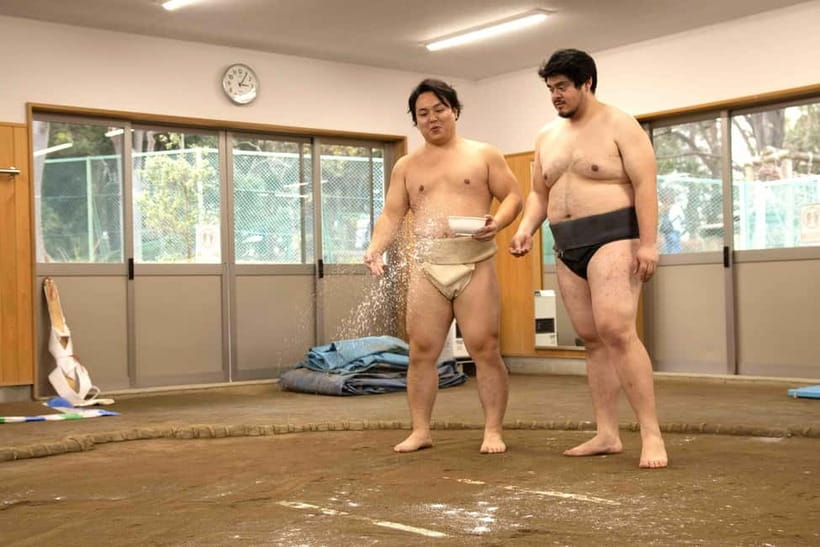
Sumo has a strong ceremonial side, and the training includes traditional sumo and Shinto rituals. These are not decorative extras. They help explain why the dohyo is treated as a special space and why sumo feels different from an ordinary wrestling class.
You will learn the meaning behind the rituals before taking part. This gives the physical activity a cultural frame. Instead of copying a gesture because someone tells you to, you understand that the customs are tied to respect, cleanliness, and the formal nature of the contest.
For me, this is one of the most useful parts of the two hours. A tournament can show you the ceremony from your seat, but this class explains it at close range and lets you perform the movements yourself.
The instructions also make clear that this is traditional training, not only a photo opportunity. You should expect some explanation and repetition. If you only want a quick picture in a sumo belt, this may feel too involved. If you want context, the added time is worthwhile.
Same city, another way to catch the action:
- Tokyo: Sumo Show and Experience in Shinjuku
★ 4.8 · 1,001 reviews - Tokyo Grand Sumo Tournament Viewing Tour with Tickets
★ 5.0 · 692 reviews - Tokyo Sumo Wrestling Tournament Experience
★ 5.0 · 660 reviews - Tokyo:Luxury Sumo Show Experience & Japanese cuisine & Drink
★ 4.7 · 577 reviews
Wearing the mawashi and entering the dohyo
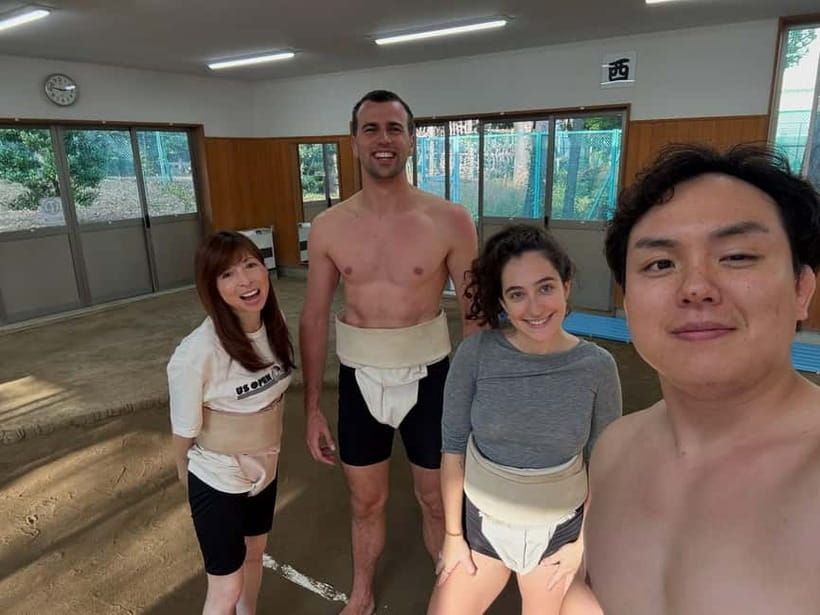
The organizers provide a mawashi at no extra cost. That is the traditional sumo belt, and wearing it gives the session a more authentic feel than practicing in ordinary gym clothes.
You may also choose to keep your own clothes on if you prefer. That choice matters for comfort and privacy, especially for anyone who feels uncertain about changing into a belt. The activity is designed to welcome beginners, not pressure you into a costume decision.
The ring itself is a real clay dohyo. You are not simply standing beside it while a coach performs. You train on the surface, learn the rules of the ring, and take part in the activity there.
The combination of belt and dohyo makes this more than a themed class. It also explains the price. At $199 per person, this is expensive compared with a standard museum visit or a short cultural demonstration. You are paying for direct instruction, access to a real training space, supplied equipment, and a small-group style experience where you take an active role.
That price will make sense for someone who wants a single memorable activity in Tokyo. It may not suit a budget-focused visitor, especially if your main goal is simply to see professional sumo. A tournament ticket or a free public sight can cost less, but neither gives you this same chance to train.
The matches with friends and coaches
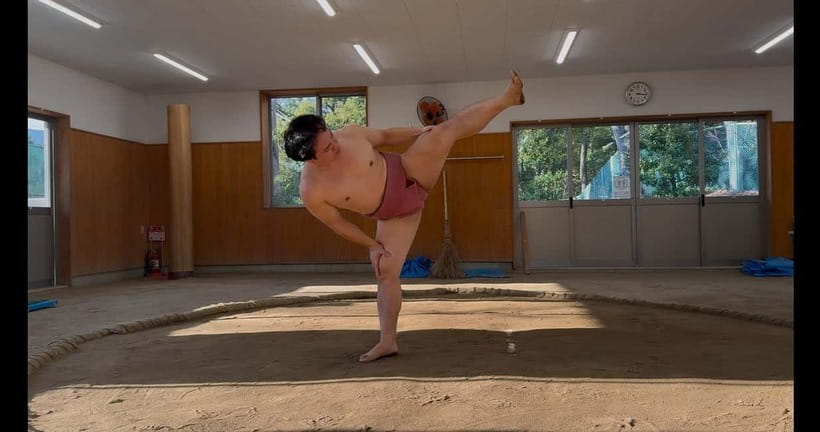
The final part lets you wrestle with your companions and, if you feel brave, with the coaches. This is the moment when the class shifts from instruction to play.
You do not need to be strong or competitive. The matches can be adapted to different abilities, and the activity information says all fitness levels are welcome. You can participate at a modest pace, while more confident adults can make a fuller effort.
Family groups are especially well suited to this format. A parent and child can learn together, siblings can face one another, and friends can turn the final section into a lighthearted challenge. One family included a son with five years of wrestling experience, so the class can also appeal to someone who already has a connection to the sport.
The more striking possibility is wrestling with a coach. One participant described facing a five-time Japanese national champion. That detail changes the character of the experience. You are not only practicing with another first-timer, but may have the chance to test your stance against someone with serious competitive ability.
Do not treat that as a promise that every participant will receive a full contest with a champion. The practical point is that the coaches can make the final matches memorable and adjust the challenge to the people in front of them.
How demanding is the two-hour workout?
The session is approachable, but it is not passive. The advice to bring many bottles of water and two towels is worth taking seriously. One towel is for training and one is for the shower, since you are likely to sweat heavily.
A shower room is located nearby and costs ¥100 for five minutes. That is a useful low-cost option after the class, but it is not included in the $199 price. Bring drinks with you, since no food is served and you should not expect refreshments as part of the activity.
You should also think about what you wear under or around the supplied belt if you choose the traditional option. The organizers allow you to remain in your own clothes, which gives you an easy alternative. The key is to arrive ready for movement and heat rather than treating this as a seated cultural talk.
The activity provider states that it is not responsible for injuries or accidents. That is a reminder to be honest about your limits. Follow the coach, do not force a movement, and tell the instructor if a bout feels too rough or tiring.
Who gets the most from this experience?
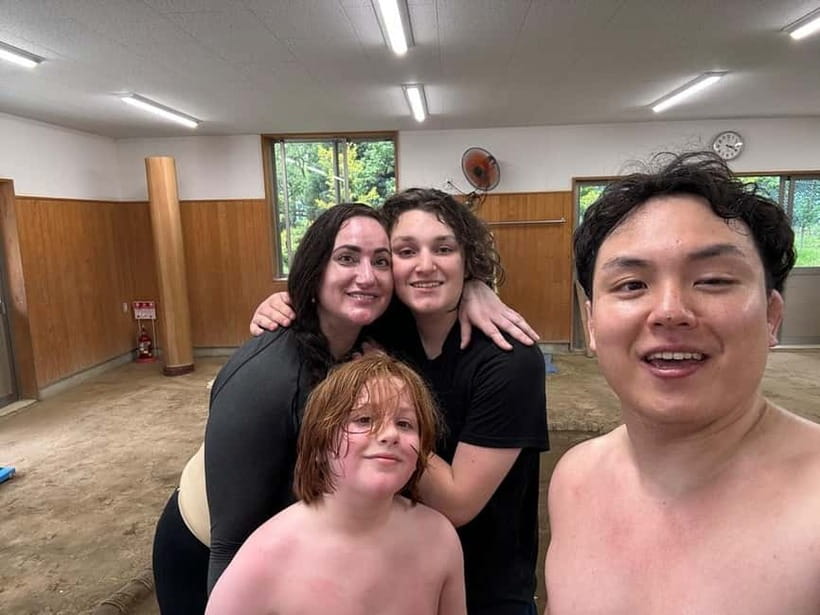
I would recommend this most strongly to people who want to take part in Japanese culture instead of only looking at it. It is a good match for:
- Families with children aged five or older
- Couples or friends looking for a hands-on Tokyo activity
- Martial arts fans and people curious about traditional sports
- Visitors who missed the chance to attend a formal sumo tournament
- Anyone comfortable with a physical, sweaty class
- People who want an activity that works across different fitness levels
Children under four may accompany you but can only observe. Children aged five and older may watch free of charge, but each child who participates needs a paid booking. That makes the rules fairly clear for families planning the day.
I would hesitate to recommend it to someone who dislikes close physical contact, changing into a mawashi, or exercise in general. It is also not the best pick if you want a quiet cultural lesson. The wrestling is central to the experience.
Practical planning for your visit
Book at least two days ahead, even though the online system may accept a booking as late as 12 hours before the start. The earlier timing gives the provider a better chance to prepare the session.
Cancellation is free up to 24 hours before the activity for a full refund. You can also reserve now and pay later, which helps if your Tokyo schedule is still moving around.
The session lasts two hours, and starting times depend on availability. Check the exact time before building the rest of your day. The station walk, changing, training, and shower can make this a larger time commitment than the advertised class length.
Photography and video are allowed, including social media sharing, but you must not interfere with other participants. Ask permission before filming anyone, and follow any instructions about people who may not be recorded. This is especially important during the matches, when it is easy to block the ring or distract someone.
Should you book the Amita Sumo Dojo experience?
Book it if you want to do sumo rather than watch sumo. The real dohyo, supplied mawashi, traditional rituals, bilingual coaching, and final bouts give you a much fuller experience than a short staged demonstration.
The $199 price is high, but the value improves if you are sharing the activity with family or friends and want one major hands-on memory from Tokyo. Takeshi’s friendly teaching style, the adjustable training, and the chance to face a coach make it suitable for beginners as well as people with some wrestling experience.
Skip it if you are mainly looking for a cheap way to see the sport, or if you do not want a sweaty physical activity. For everyone else, bring water, two towels, a little courage, and enough time to reach Heiwajima without rushing.
FAQ
Where does the sumo experience take place?
It takes place at Heiwanomori Park Sumo-jo, 2-1 Heiwanomorikoen, Ota City, Tokyo, 143-0005. You meet at the small office at that address.
How do I reach the dojo by train?
The venue is about a 10-minute walk from Heiwajima Station on the Keikyu Main Line.
How long does the activity last?
The sumo training experience lasts two hours.
Do I need previous sumo or wrestling experience?
No. The activity is designed for beginners, and no previous experience is needed.
Is a mawashi provided?
Yes. A real mawashi is provided at no extra cost. You may also choose to keep your own clothes on if you prefer.
Can children participate?
Children under four may accompany you but can only observe. Children aged five and older can observe free of charge, but each child who participates needs a separate booking.
What should I bring?
Bring drinks and a towel. Two towels are strongly recommended, one for the workout and one for the nearby shower. The shower costs ¥100 for five minutes, and no food is served.
New on the fixture list around Tokyo
- Tokyo: Sumo Morning Practice -Stable Visit Tour with a Guide★ 4.8 · 16 reviews
- Tokyo: Watching Sumo and Ryogoku Area Walking Tour★ 4.0 · 5 reviews
- Tokyo: Sumo Morning Practice Viewing Tour at a Real Stable★ 4.9 · 32 reviews
- Tokyo: Sumo Morning Practice Tour in Ryogoku and Photo Shoot★ 4.7 · 47 reviews
- Tokyo: Sumo Keiko Training Tour with Audio Guide & Photo★ 4.8 · 5 reviews
- Tokyo Sumo Morning Practice: Witness the Life of a Wrestler★ 4.8 · 56 reviews
- Tokyo Highlights Tour: Sumo, Sushi, Tea, and Tokyo Tower★ 5.0 · 2 reviews
- Tokyo Ginza : Sumo and Mikoshi Experience,Open from Sep.★ 5.0 · 8 reviews
More Sumo Experiences in Tokyo to weigh up.
Tokyo Shinjuku Sumo Show & Experience with Photo
Read our review →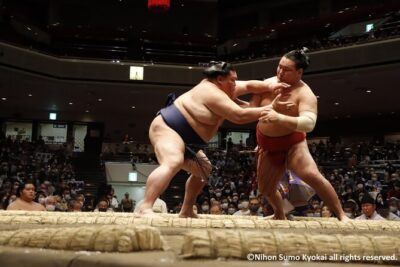
Tokyo Grand Sumo Tournament Viewing Tour with Tickets
Read our review →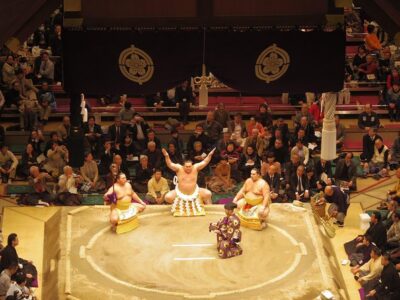
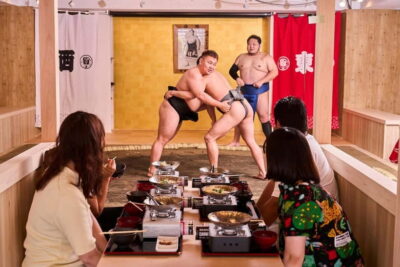
Tokyo:Luxury Sumo Show Experience & Japanese cuisine & Drink
Read our review →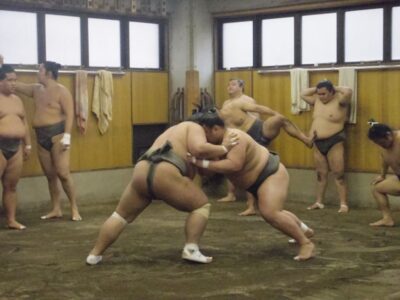
Tokyo Sumo Experience: Chanko & Mochi with a Former Pro
Read our review →This one also appears in