
Review · TOKYO
Tokyo Sumo Morning Practice Tour at Stable
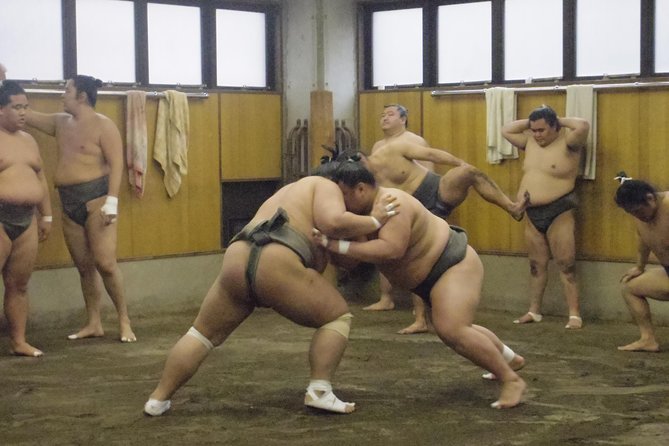
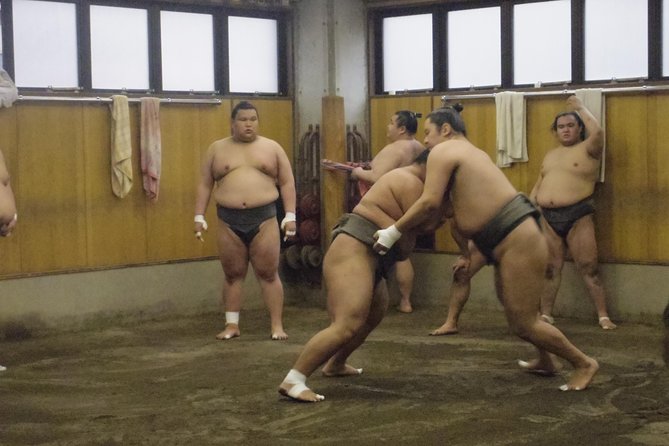
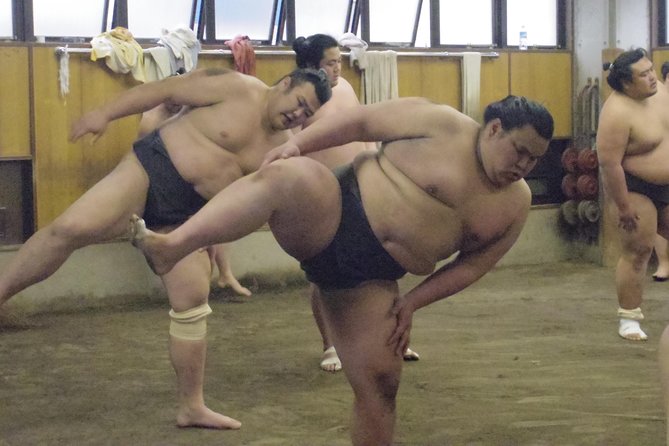
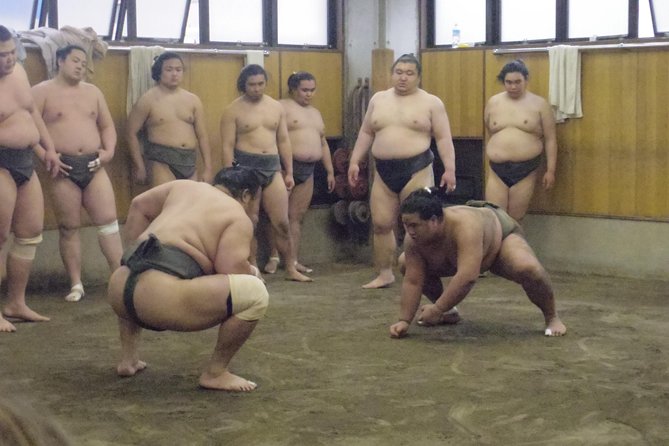
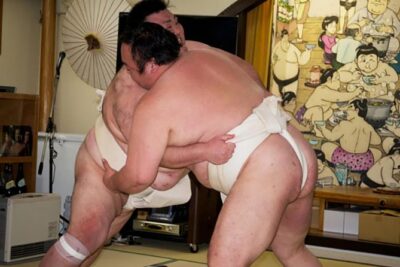
The most compelling part of this Tokyo experience is the setting: you watch professional sumo wrestlers train inside a working sumo stable, not in a staged dinner show or a museum display. The morning can include repeated practice bouts, stretching, ritual movements, and hard physical drills, all carried out at close range.
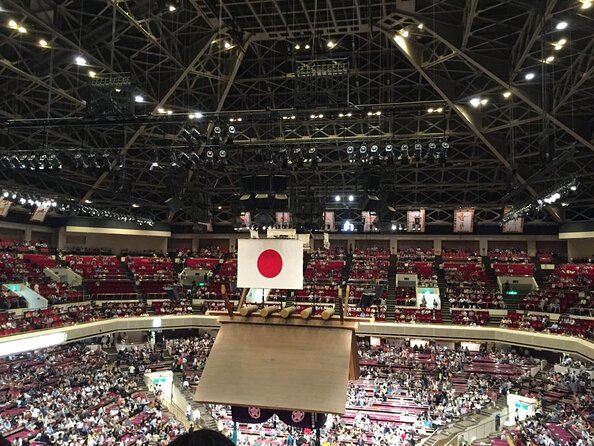
I like two things especially. First, you see far more continuous action than at a formal tournament, where ceremony and waiting take up much of the day. Second, the guide gives useful context on rankings, Shinto traditions, stable life, and the six annual grand tournaments. The main drawback is that you must sit quietly in a hot, tightly controlled room, and the headset commentary can be hard to hear.
Key points to know before booking
- Real morning practice: Watch wrestlers train inside an active stable used to prepare athletes for official competitions.
- Early start: Meet near Ryogoku Station at 7:45am, then walk or take a train to the stable.
- Close views: Seating is near the practice area, though the best spots may go to people who arrive early.
- Useful guide commentary: Guides such as Seiji, Yumi, Cameo, Noriko, and Nobu have explained the sport and rituals in clear English.
- Strict stable manners: No video, flash, food, or casual movement. Phones must be silent.
- Summer warning: The stable has no air conditioning. Bring an ice pack or cold towel, and water is allowed in summer.
Why sumo practice is more revealing than a tournament
A tournament is the polished public face of sumo. Morning practice shows the work behind it. You watch wrestlers repeat movements, push through strain, and test one another without the showy presentation of a major event.
That difference matters. At a tournament, you see official bouts, rankings, ceremonies, and a large crowd. At practice, you may see many exchanges in a short time. One morning can include dozens of bouts, with the wrestlers going at it again and again. It gives you a much clearer sense of the sport’s physical demands.
You also get to see that sumo is more than two large men trying to shove each other out of a ring. The athletes train balance, timing, leg strength, grip, and stamina. Their preparation is repetitive by design. The same basic movements are drilled until they become instinctive.
The setting makes the experience feel unusually direct. This is not an attraction built for a foreign audience. You enter a place where wrestlers are carrying out their normal morning routine, and your role is to watch without interrupting.
More Sumo Experiences in Tokyo
- Tokyo: Sumo Show and Dining Experience
★ 4.8 · 2,742 reviews - the SUMO show
★ 5.0 · 1,960 reviews - Tokyo Shinjuku Sumo Show & Experience with Photo
★ 5.0 · 1,750 reviews
Meeting at Ryogoku Station before 8am
The tour begins at about 7:45am near the Ryogoku Station Gallery. Ryogoku is Tokyo’s sumo district, so the location fits the subject. From there, your guide leads the group to the stable. Depending on the arrangement, you may walk or take a train.
Allow extra time to find the meeting point. One person found that Google Maps placed the location about a block away, while another had trouble locating the guide at the station. The provider says the meeting point can vary by booking option, so check your confirmation email carefully rather than relying only on the general tour description.
The early hour is part of the deal. It is not the right choice if you want a leisurely breakfast first. On the other hand, morning practice is when the stable is active, and the early start lets you see the wrestlers at work rather than at a staged demonstration.
Use the restroom before meeting the guide. You may not have a convenient chance once inside, and the stable asks people to avoid leaving during practice.
Entering a working sumo stable
A stable, or heya, is the training and living base for a group of wrestlers. The tour takes you into one of roughly a dozen stables in the local area that prepare athletes for regular competitions around Japan.
Before you take your seat, the guide explains what you are about to see. Sumo has links to Shinto, and its rituals preserve elements of that tradition. The sport’s origins reach back at least 1,500 years, while its modern competitive form has developed into a major national spectacle.
The guide also explains the annual tournament schedule. Japan holds six 15-day grand tournaments each year: three in Tokyo, plus one each in Osaka, Nagoya, and Fukuoka. This background helps you understand why the athletes train so intensely and how a stable fits into the larger sumo system.
You may hear about rankings and the way wrestlers progress through the sport. That information adds meaning to the practice. You are not just watching anonymous athletes. You begin to understand that each wrestler has a rank, a role, and a place within the stable.
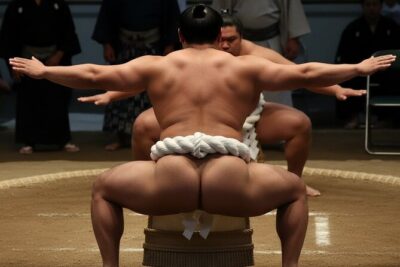
The atmosphere is quiet and serious. The ring and sandy area are sacred to the wrestlers, so you cannot step onto them. Do not stretch your legs toward the ring, since showing the soles of your feet is considered rude. These rules are not decoration. They help you behave properly in a place where training and ritual are taken seriously.
Watching the wrestlers train at close range
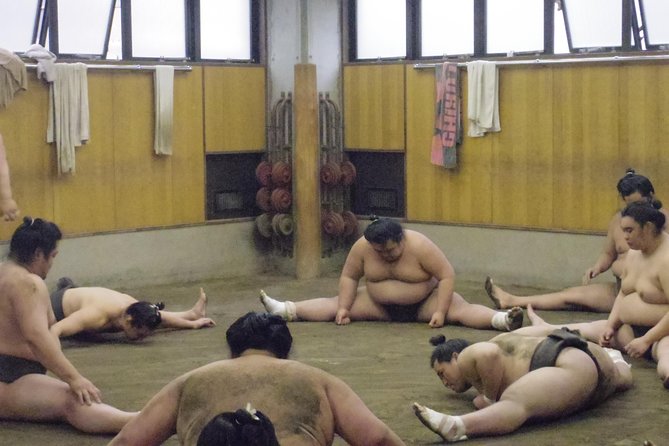
Once practice begins, your job is simple: sit still, stay quiet, and watch. The athletes may stretch, perform exercises, practice techniques, or face one another in repeated bouts.
You are close enough to see the force of each movement. A wrestler may lose balance, be driven backward, or rise and begin again almost immediately. The lack of ceremony between practice bouts makes the session feel more demanding than a formal match.
The amount of wrestling can vary. A sponsor or other important visitor may extend the practice, while another morning may finish sooner. The advertised duration is about two hours, but the practice itself can run a little shorter or longer depending on what is happening inside the stable.
This unpredictability is both a strength and a limitation. You are seeing a real training session, not a fixed stage performance. That means you may get an unusually long and intense practice, but you cannot expect the exact same sequence every time.
Seating also deserves a realistic note. You are near the action, but your view depends on where you sit. Some places may have reserved front seating for sponsors or other important people. Arriving early can improve your position, and one useful tactic is to line up promptly so you have a better chance at a second-row seat.
The seating arrangement may include low stools rather than floor mats, though the setup can vary. If sitting on the ground is difficult, do not assume the arrangement in advance. Check the conditions when booking and be prepared for a simple, traditional space.
Same city, another way to catch the action:
- Tokyo: Sumo Show and Experience in Shinjuku
★ 4.8 · 1,001 reviews - Tokyo Grand Sumo Tournament Viewing Tour with Tickets
★ 5.0 · 692 reviews - Tokyo Sumo Wrestling Tournament Experience
★ 5.0 · 660 reviews - Tokyo:Luxury Sumo Show Experience & Japanese cuisine & Drink
★ 4.7 · 577 reviews
What the guide adds to the morning
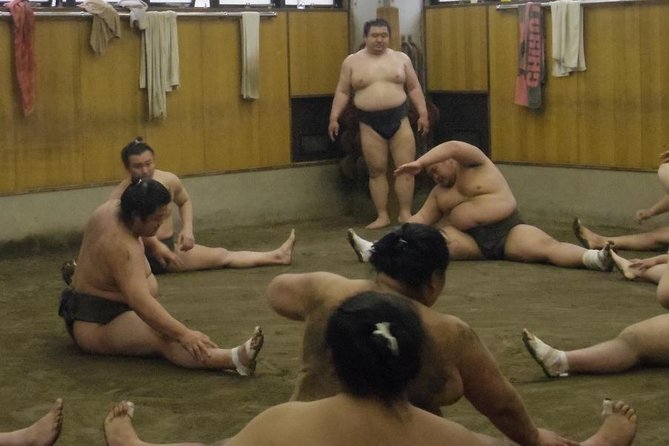
Without explanation, sumo practice can be powerful but confusing. The guide helps you understand what you are seeing, including the sport’s history, rituals, rankings, training methods, and tournament system.
Several guides have received strong praise for their personal approach. Seiji has been described as warm and clear, while Yumi has provided discreet commentary through an earpiece. Cameo has been praised for explaining the rules before practice and answering questions afterward. Noriko has helped visitors understand the visit before seating them, and Nobu has also guided the experience.
The commentary is meant to be delivered through a headset so the guide does not disturb the stable. That is a sensible arrangement, but the audio is not perfect every time. Some people have found static or difficulty hearing the guide, and trying to watch the action while listening can feel distracting.
My advice is to treat the headset as support rather than the main event. Watch the wrestlers first. Use the commentary to identify important movements, explain the setting, and fill in the larger picture. If the audio works well, it adds a lot. If it does not, the practice remains worth watching, but you may leave with unanswered questions.
The best version of this tour includes a chance to ask questions after the practice. That is not guaranteed in the same way every morning, so prepare a few questions in advance and ask the guide when an appropriate moment appears.
Photo opportunities and stable etiquette
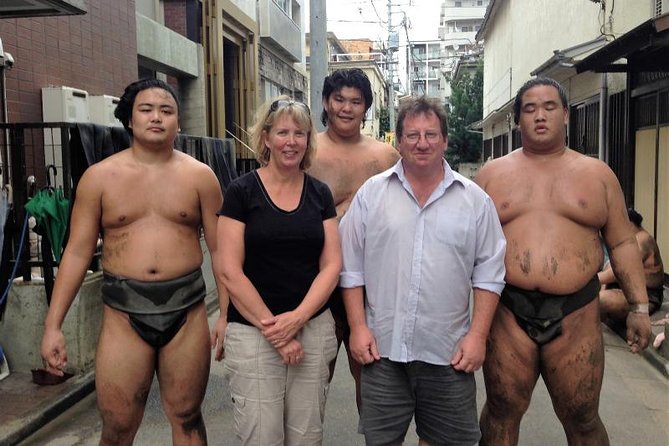
A short photo opportunity may take place after practice. Some sessions have allowed small groups to photograph themselves with wrestlers, which can be a memorable end to the morning. Do not count on a long meet-and-greet. The photo period may last only a few minutes, and you may be moved out soon afterward.
During practice, do not ask wrestlers to pose. Their concentration matters, and interrupting them is not acceptable. Photos are allowed only without flash or shutter sounds. Videos are not allowed, and you must respect privacy and image rights when using any photographs.
The rules are strict but easy to follow:
- Keep your phone on silent.
- Do not eat or drink inside, except for water or sports drinks during summer.
- Do not wear sunglasses or hats in the stable.
- Do not step onto the ring or sandy practice area.
- Avoid leaving in the middle of practice.
- Do not re-enter once you leave.
These instructions are a sign that you are entering a working place, not a theater. Your cooperation helps keep the visit possible.
Heat, clothing, and the two-hour time commitment
Tokyo summers can be very hot, and the stable has no air conditioning. Bring a cold towel or ice pack. During summer, water and sports drinks are permitted, but eating is not.
Wear clothing that will let you sit comfortably for an extended period. You will need to remove sunglasses and hats inside. Since the room can feel warm and the group must remain quiet, this is not a good activity if you are feeling unwell.
The tour takes about two hours, including the meeting process, explanations, practice, and return to the original departure area. The actual observation may be longer or shorter depending on the training session.
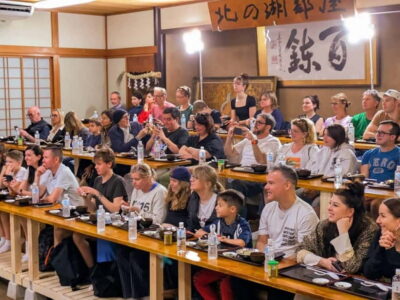
The group can include up to 20 people. That is small enough for the guide to manage, but it is not a private visit. Your view and the quality of the audio can depend partly on where you sit and how well the group follows the rules.
Is the $83.57 price fair?
At $83.57 per person, this is not a cheap sightseeing stop. You are paying for access to a working stable, a guide, translation and explanation, and the chance to observe professional athletes from close range.
The value depends on what you want. If you only need a quick look at sumo, the price may feel high, especially if the commentary is difficult to hear or your seating is not ideal. The short photo period can also leave you feeling rushed.
I think the price makes more sense if you care about authentic access and want to understand the sport. You are not simply watching a performance. You are entering a place most visitors would not find easy to enter on their own, and you are seeing a part of sumo that a tournament ticket cannot provide.
The experience is also useful for first-time visitors because the guide explains the rules and customs before you watch. If you already know sumo well, the main value is the access to practice itself, not the basic history lesson.
Who should book this sumo experience?
I would recommend it to adults and children aged 12 or older who are curious about Japanese culture, sports, ritual, or daily life. It suits you especially well if you prefer a real working environment to a polished tourist show.
It is a strong choice if you have already seen a tournament and want a different view of sumo. It is also a good substitute if tournament tickets are unavailable, though it does not offer the same sense of public spectacle or official competition.
You may want to skip it if you need flexible movement, air conditioning, frequent bathroom access, or an interactive tour where you can ask questions throughout. It is also a poor fit for anyone who dislikes early mornings or quiet observation.
The minimum age is 12, and children 11 and under cannot enter the stable. Most people can participate, but you should consider the floor-level or low seating and the warm indoor conditions.
Booking advice and cancellation terms
Confirm your exact meeting location before leaving your hotel. Different booking options may use different meeting points, and the station meeting process has caused occasional confusion. Save the confirmation email and arrive early.
The tour includes a mobile ticket. Free cancellation is available up to 24 hours before the local start time. Cancellations or changes made less than 24 hours before departure are not accepted for a refund.
Should you book the Tokyo Sumo Morning Practice Tour?
Book it if you want to see the discipline behind sumo, not just the sport’s public image. The close seating, repeated bouts, and working-stable setting can give you a sharper appreciation for how much effort goes into each official match.
Go in with sensible expectations. The room may be hot, the session may vary, the photo time may be brief, and the headset may not always be easy to hear. Arrive early, sit quietly, bring something to cool yourself in summer, and watch the wrestlers before worrying about getting every word of commentary.
For a first look at sumo in Tokyo, this is one of the more direct options. At $83.57, it earns its price when the access and explanation matter to you. If you want a comfortable, highly polished show, choose something else. If you want to watch real athletes train in a real stable, this morning is worth serious consideration.
FAQ
Where does the sumo practice tour begin?
The standard meeting point is near the Ryogoku Station Gallery. Meet the guide at about 7:45am, then continue to the stable. Your confirmation email is the final reference because the meeting location can differ by booking option.
How long does the experience last?
The tour lasts about two hours. The practice portion can be a little shorter or longer depending on the content and length of that morning’s training.
How old must children be to join?
The minimum age is 12. Children aged 11 and under cannot enter the sumo stable.
Can I take photographs inside the stable?
Yes, photos are allowed without flash or shutter sounds. Videos are not allowed, and you must respect privacy and image rights when using photographs.
Can I take a photo with the wrestlers?
A short photo opportunity may be available after practice, depending on the session. You cannot ask wrestlers to pose while practice is still taking place.
Can I eat or drink inside?
Eating and drinking are not allowed in general. During summer, water and sports drinks are allowed because the stable has no air conditioning.
Is the tour available in English?
The tour includes a guide who explains the history, traditions, training, rankings, and tournament system in English. Commentary may be provided through a headset.
Can I leave during practice?
You should make every effort to stay until practice ends. Once you leave the stable, you cannot re-enter.
What happens if I need to cancel?
You can cancel for a full refund up to 24 hours before the experience begins. Cancellations or changes made less than 24 hours before the local start time are not accepted.
New on the fixture list around Tokyo
- Tokyo: Sumo Morning Practice Viewing Tour at a Real Stable★ 4.9 · 32 reviews
- Tokyo: Sumo Morning Practice -Stable Visit Tour with a Guide★ 4.8 · 16 reviews
- Tokyo: Watching Sumo and Ryogoku Area Walking Tour★ 4.0 · 5 reviews
- Tokyo Sumo Morning Practice: Witness the Life of a Wrestler★ 4.8 · 56 reviews
- Tokyo: Sumo Morning Practice Tour in Ryogoku and Photo Shoot★ 4.7 · 47 reviews
- Tokyo: Sumo Keiko Training Tour with Audio Guide & Photo★ 4.8 · 5 reviews
- Tokyo Highlights Tour: Sumo, Sushi, Tea, and Tokyo Tower★ 5.0 · 2 reviews
- Tokyo: Sanctuary Authentic Grand Sumo Experience & Training★ 5.0 · 7 reviews
More Sumo Experiences in Tokyo to weigh up.
Tokyo Shinjuku Sumo Show & Experience with Photo
Read our review →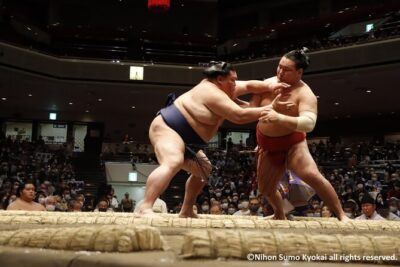
Tokyo Grand Sumo Tournament Viewing Tour with Tickets
Read our review →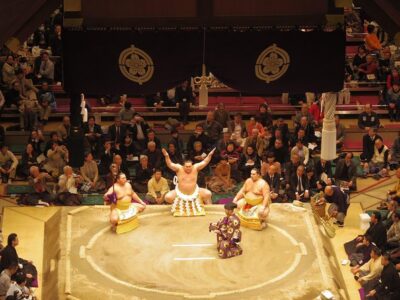
Tokyo:Luxury Sumo Show Experience & Japanese cuisine & Drink
Read our review →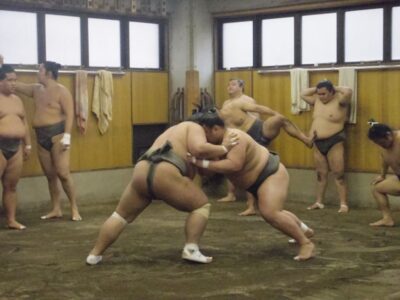
Tokyo Sumo Experience: Chanko & Mochi with a Former Pro
Read our review →This one also appears in