
Review · TOKYO
Tokyo Sumo Morning Training/ Sumo Practice with Wrestlers
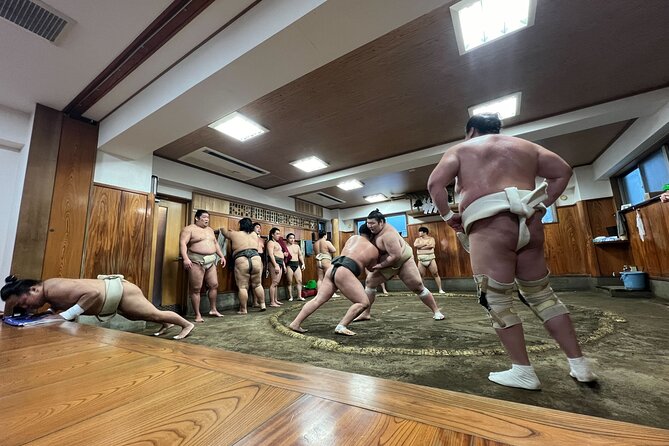
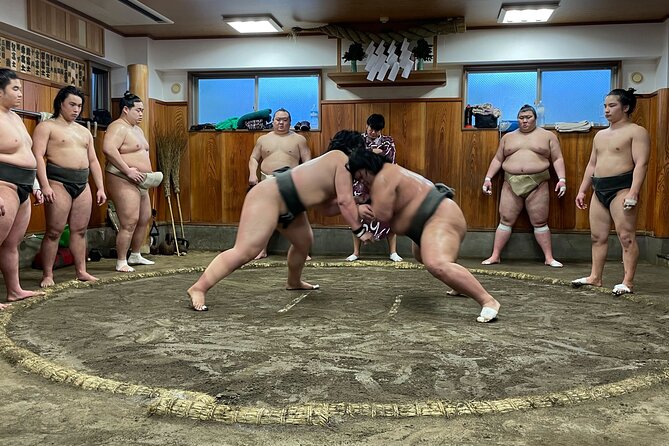
The remarkable part of this Tokyo experience is the setting. You are not watching a tournament from a distant seat. You enter a sumo stable, sit close to the practice area, and watch wrestlers repeat the hard, disciplined work behind the public bouts. The room is quiet, spare, and serious.
I like the close view of training and the guide’s explanations, which help you understand the rituals, rules, and daily routine. I also like that the experience usually includes time for a photo with a wrestler. The main drawback is that you must stay quiet and remain until practice ends, and conditions can be chilly or less comfortable than expected.
Key points to know before booking
- You watch real training at close range, not a staged tournament performance.
- The guide explains the action, with English commentary sometimes provided through a headset or written notes.
- The stable location and start time can change, so check your messages after booking.
- Silence and patience matter: phones stay silent, videos are not allowed, and you cannot leave midway.
- Expect Japanese-style seating: some stables have no chairs, so you may sit on the floor.
- The $99.10 price buys access to a rare setting, but value depends on how much you enjoy observation rather than hands-on activity.
Inside a working Tokyo sumo stable
Sumo practice is not built for an audience. That is precisely why this visit can feel special. You enter a place where wrestlers train as part of their daily life, rather than performing a show designed for tourists.
After meeting your guide, you receive a short explanation about sumo and walk to the stable. The meeting point is listed at 1-chōme-2-8 Chitose in Sumida City, though the exact location and time can change with the date. You receive the confirmed details after booking, so check your messages carefully.
The first briefing takes about five minutes. It gives you enough background to follow what happens inside, though one practical issue has come up: if the guide explains things beside a busy road or near a station, traffic noise can make the talk hard to hear. A headset or written notes may help, but you should stay close to the guide.
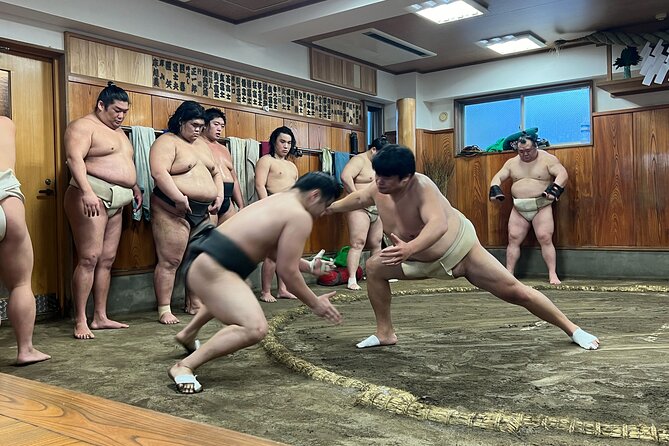
Once inside, the mood changes. Practice is quiet and focused. You watch wrestlers warm up, work through drills, and perform repeated bouts. The purpose is not entertainment in the usual sense. You are seeing strength, repetition, balance, and ritual woven into a demanding training session.
More Sumo Experiences in Tokyo
- Tokyo: Sumo Show and Dining Experience
★ 4.8 · 2,742 reviews - the SUMO show
★ 5.0 · 1,960 reviews - Tokyo Shinjuku Sumo Show & Experience with Photo
★ 5.0 · 1,750 reviews
What you actually watch during the 55-minute visit
The scheduled stable visit lasts about 55 minutes, making the total experience roughly one hour. Practice itself can be shorter or longer, depending on the stable’s schedule and what the wrestlers are working on that day.
You might see the full rhythm of a morning session, including warmups and bouts. Some sessions reported in the supplied material lasted close to two hours, so the timing is not fixed in every case. A coming Grand Tournament can also change the training schedule, and practice may finish earlier than usual.
This variation is important. If you need a perfectly timed one-hour activity before lunch or a train, leave plenty of space afterward. If the session ends early, it may be because the wrestlers’ schedule changed, not because the visit was poorly run.
The close distance is the chief attraction. From your designated place, you can notice details that disappear in a tournament arena: the controlled footwork, the pauses before a bout, the force of impact, and the concentration required between rounds. You may also gain a better sense of how much preparation goes into a match that can last only seconds.
Do not expect constant action. There will be pauses, explanations, rituals, and stretches of quiet observation. If you want a fast-paced show, this may feel slow. If you enjoy watching skilled people repeat a craft with precision, the quiet pace is part of the point.
The guide makes the difference
Sumo has its own vocabulary, customs, ranks, and rules. Without context, you might see two large athletes pushing and wonder what separates one technique from another. A good guide helps you see the structure in the movement.
The tour includes explanations about sumo’s background, the rules, the wrestlers’ daily lives, and the training process. English commentary has sometimes been delivered through a headset, while notes may be passed to the group during practice. This is useful because the session itself must remain quiet.
The guide also helps you understand when to take photos and how to behave inside the stable. That role matters more here than it would on an ordinary sightseeing walk. The group must observe without interrupting the wrestlers’ concentration.
There is one balance to keep in mind. Some people may find the commentary too long or too talkative, especially when they are eager to watch the action. Others will value the explanations because a silent practice can be difficult to interpret on its own. Your enjoyment will depend partly on how much background you want.
Respect the rules inside the stable
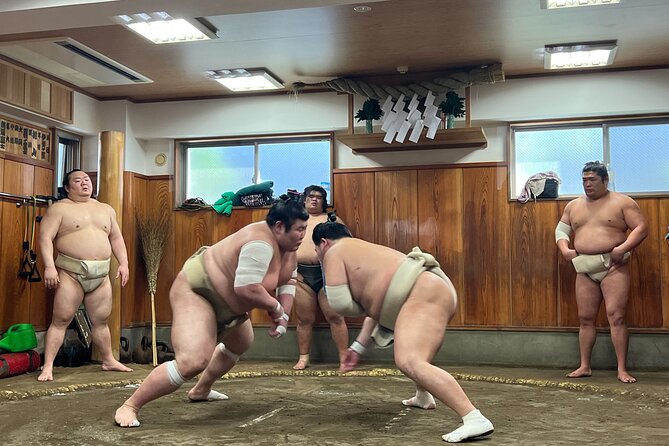
This is not a place for casual sightseeing behavior. You are entering a working training space, and the instructions are strict for good reason.
Keep your cellphone on silent. Photos are allowed, but flash and shutter sounds are not. Video recording is forbidden. Do not stretch your legs toward the ring, since showing the soles of your feet to the wrestlers is considered impolite.
You cannot leave the stable halfway through practice and then return. Once you leave, re-entry is not allowed. Use the restroom before the meeting point, since you are asked not to interrupt the session.
Eating is forbidden inside. Water and sports drinks are allowed. If you feel unwell, do not join the tour, since leaving during practice is not an option.
These rules may sound demanding, but they protect the atmosphere. The wrestlers are not stopping their training every few minutes for a visitor group. Your reward for following the rules is a much more genuine look at their routine.
Same city, another way to catch the action:
- Tokyo: Sumo Show and Experience in Shinjuku
★ 4.8 · 1,001 reviews - Tokyo Grand Sumo Tournament Viewing Tour with Tickets
★ 5.0 · 692 reviews - Tokyo Sumo Wrestling Tournament Experience
★ 5.0 · 660 reviews - Tokyo:Luxury Sumo Show Experience & Japanese cuisine & Drink
★ 4.7 · 577 reviews
Floor seating, cold rooms, and what to wear
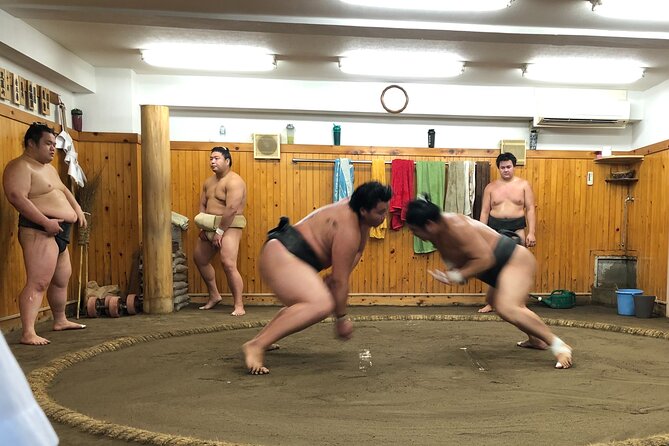
Comfort is a practical issue. Some stables have chairs, but others require you to sit on the floor. One extended session involved sitting cross-legged for more than two hours, which can be difficult if your knees or hips are stiff.
Wear comfortable clothes, especially if your visit is sold as the Sumo Practice with Wrestlers option. You must remove your shoes before entering the practice areas. Men must remove their shoes before stepping onto the dohyo, the raised sumo ring.
The room may also be chilly. A December visit on a cold, rainy day involved waiting outside in the rain and sitting in a cool stable. Check the forecast and dress in layers. A small towel or extra layer can make the waiting period more pleasant, though the provided information does not promise a cloakroom or indoor waiting area.
Women are welcome on this option, but cultural and religious traditions at the facility mean women cannot enter the dohyo. Women can still watch the training fully from the designated seating areas. This rule is worth knowing before you book, particularly if the chance to step onto the ring is your main reason for coming.
The photo with a wrestler
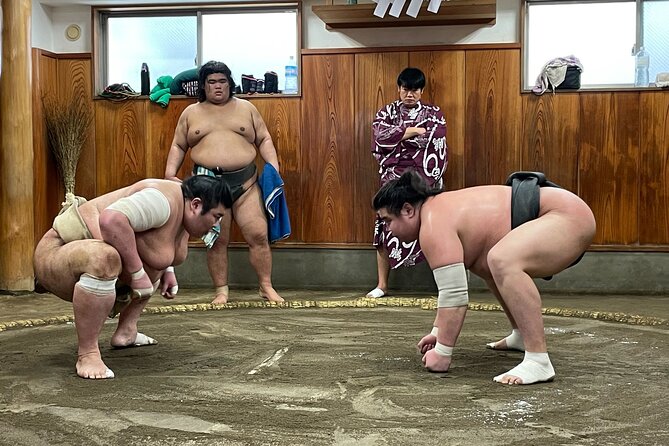
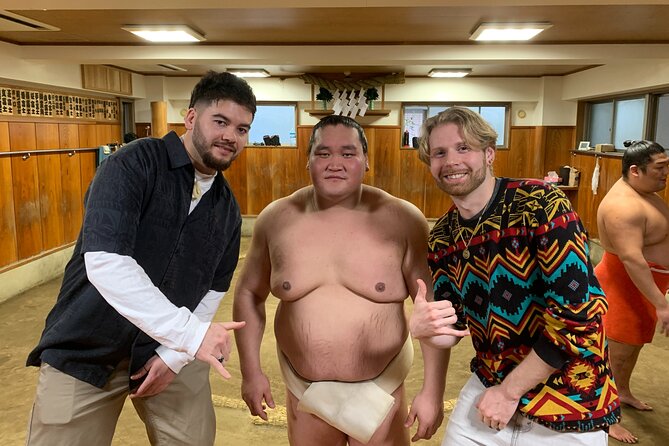
The photo opportunity is a pleasant finish. After practice, wrestlers may pose with the group, giving you a tangible memory of an otherwise quiet and highly controlled visit.
You should treat this as a scheduled courtesy, not a long personal meeting. The wrestlers have trained, and the timing depends on the stable and the people present that day. Keep your requests simple and follow the guide’s instructions.
Some sessions also allow brief conversation with wrestlers afterward. That can be the most personal part of the experience, but it should not be confused with a full training lesson or extended meet-and-greet.
Be careful about expectations concerning famous names. The stable may be one where a Yokozuna trains, but you will not know until the morning whether that wrestler is present. A former Yokozuna, including Hakuho in one particularly fortunate visit, may sometimes be seen, but no individual wrestler’s appearance is guaranteed.
How authentic is the experience?
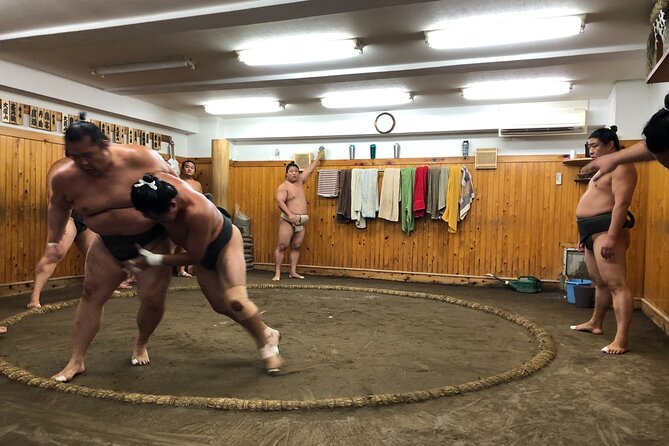
The answer depends on the option and the date. The main description presents access to a sumo stable and observation of daily practice. Several highly positive accounts describe watching professional wrestlers train at close range, including high-ranking competitors. That is the strongest reason to book.
At the same time, not every session will match the image of a top-ranked professional stable in full morning action. One account described retired sumo wrestlers and taxi drivers rather than the professional wrestlers expected. Another described only a very brief amount of amateur sumo and found the activity poor value.
This mixed possibility deserves plain treatment. Confirm exactly which product you are booking. The Sumo Practice with Wrestlers option may involve more interaction or participation than a pure observation visit, while the stable observation experience is centered on watching practice. The supplied information combines details from both, so read the option name and confirmation carefully.
If you want a guaranteed tournament bout, this is the wrong activity. If you want a close look at training and accept that the wrestlers, schedule, and length can vary, it offers something a formal match cannot.
Is $99.10 a fair price?
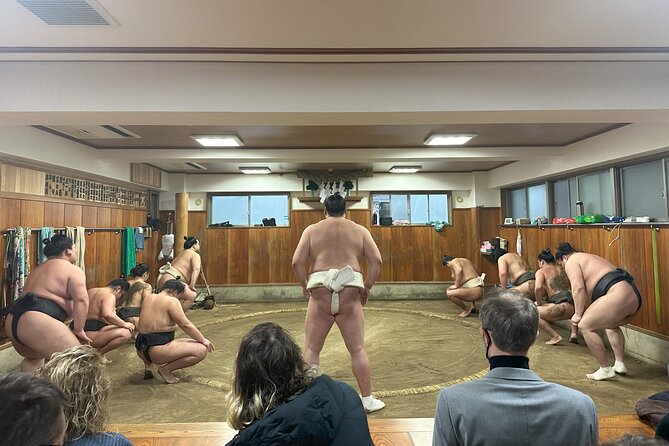
At $99.10 per person, this is not a cheap one-hour attraction. You are paying for access to a place that is normally closed to casual sightseeing, along with a guide, interpretation, and a photo opportunity.
The price makes more sense if sumo is high on your Tokyo list. Watching a professional training session from nearby can be a major trip highlight, especially if you have already seen a tournament and want to understand the work behind it. The guide also adds value by explaining what you are seeing rather than leaving you to guess.
The value is weaker if you expect a performance, a long lesson, or guaranteed access to famous wrestlers. You may spend much of the time sitting quietly, and the practice may end sooner than expected. The possibility of cancellations with little notice is another practical concern. One booking was canceled shortly before the scheduled start because of a stable scheduling conflict, so do not place an important connection immediately afterward.
The stated group maximum is 25 people. That is not tiny, but the stable setting and quiet rules may make the group feel manageable. Your exact view can depend on where you are seated, and chairs are not guaranteed.
Who will enjoy this most?
I would choose this for a visitor who already has some curiosity about sumo and wants to see the daily work behind the sport. It also suits first-time viewers because the guide supplies the basic rules and customs.
Families can enjoy it, provided children can sit quietly and remain in place. The no-food rule, no-video rule, and requirement to stay until the end may be difficult for very young children.
It is a good fit for photographers who can work without flash or shutter sounds. It is not a good fit if filming is important to you.
I would also recommend it to anyone who values cultural access over comfort. You may sit on a hard floor, wait outside in poor weather, and watch rather than participate. In return, you get a view into a private part of Japanese sporting life.
Booking details that can save you trouble
The activity uses a mobile ticket, and confirmation is sent at booking. Because the stable and meeting time may vary, do not rely only on the original reservation page. Check your messages from Japan Wonder Travel, especially on the day before the visit.
If you do not receive the meeting details, contact the provider. Arriving late or missing the meeting point without checking the messages is not covered for compensation or a refund.
Free cancellation is available when you cancel at least 24 hours before the local start time. Within 24 hours, changes are not accepted and the payment is not refunded. The provider can also cancel because of stable scheduling, so keep your schedule flexible and avoid booking a nonrefundable transfer directly afterward.
The activity ends back at the meeting point. Public transportation is nearby, but the exact stable location can change, so use the final instructions rather than assuming the listed address is always the day’s entrance.
Should you book the Tokyo sumo training visit?
Book it if you want close observation of real sumo practice, can sit quietly, and are willing to accept changes in timing and participants. The best sessions offer a rare view of serious training, useful explanations, and a memorable photo afterward.
Skip it if you want a polished show, guaranteed Yokozuna appearances, video footage, or a hands-on class with a fixed schedule. At $99.10, the experience asks you to pay for access and atmosphere, not nonstop action.
For the right person, that is a fair trade. Sumo’s power is easy to see in a tournament. Its discipline becomes clearer in the stable, where repetition, silence, and respect matter just as much as the collision in the ring.
FAQ
How long does the Tokyo sumo training experience last?
The advertised duration is about one hour, including a short briefing and roughly 55 minutes inside the stable. Practice can be shorter or longer depending on the stable’s schedule.
Where does the activity begin and end?
The listed meeting point is 1-chōme-2-8 Chitose, Sumida City, Tokyo 130-0025, Japan. The activity ends back at the meeting point, but the location and time may vary by date.
Can I take photos inside the sumo stable?
Yes. Photos are allowed without flash or shutter sounds. Video recording is not allowed.
Can I leave the stable during practice?
No. You cannot leave in the middle of practice and return. Once you leave the stable, re-entry is not allowed, so use the restroom beforehand.
Is eating allowed inside the stable?
No. Eating is not allowed. Water and sports drinks are permitted inside.
Do I need to remove my shoes?
Yes. You must remove your shoes before entering the practice areas. Men must remove their shoes before stepping onto the dohyo.
Can women join the sumo practice experience?
Yes. Women can participate fully from the designated seating areas, but cultural and religious traditions at the facility do not permit women to enter the dohyo.
What happens if a Yokozuna is training there?
The stable may be one where a Yokozuna trains, but you will not know until the morning whether that wrestler is present. The appearance of any particular wrestler is not guaranteed.
New on the fixture list around Tokyo
- Tokyo: Sumo Morning Practice -Stable Visit Tour with a Guide★ 4.8 · 16 reviews
- Tokyo: Watching Sumo and Ryogoku Area Walking Tour★ 4.0 · 5 reviews
- Tokyo: Sumo Morning Practice Viewing Tour at a Real Stable★ 4.9 · 32 reviews
- Tokyo: Sumo Morning Practice Tour in Ryogoku and Photo Shoot★ 4.7 · 47 reviews
- Tokyo: Sumo Keiko Training Tour with Audio Guide & Photo★ 4.8 · 5 reviews
- Tokyo Sumo Morning Practice: Witness the Life of a Wrestler★ 4.8 · 56 reviews
- Tokyo Highlights Tour: Sumo, Sushi, Tea, and Tokyo Tower★ 5.0 · 2 reviews
- Tokyo: Sanctuary Authentic Grand Sumo Experience & Training★ 5.0 · 7 reviews
More Sumo Experiences in Tokyo to weigh up.
Tokyo Shinjuku Sumo Show & Experience with Photo
Read our review →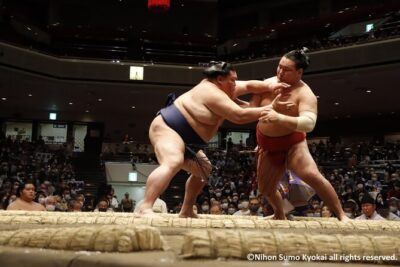
Tokyo Grand Sumo Tournament Viewing Tour with Tickets
Read our review →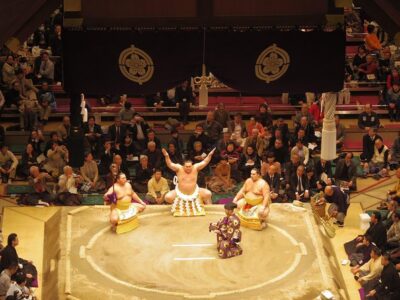
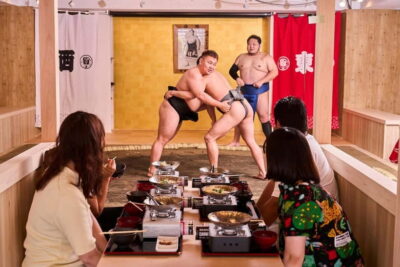
Tokyo:Luxury Sumo Show Experience & Japanese cuisine & Drink
Read our review →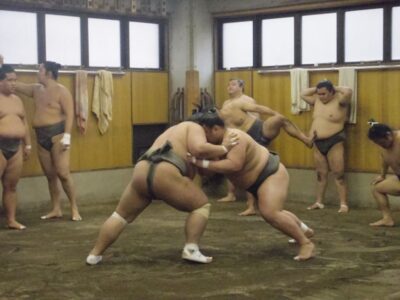
Tokyo Sumo Experience: Chanko & Mochi with a Former Pro
Read our review →This one also appears in