
Review · TOKYO
Tokyo Ryogoku Sumo Morning Practice + Photo Shoot with Wrestlers
Seeing sumo wrestlers train only a few feet away is the heart of this experience. This is not a staged show. You sit quietly on tatami flooring while athletes stretch, warm up, and clash in serious practice. I like the close view of real training and the chance to understand sumo life before entering the stable. I also like the small group size, capped at seven, which gives the guide room to explain what you are seeing.
The main catch is that the stable controls the rules. Photos, posed shots, seating, practice times, and even the stable you visit can change. You may sit on the floor for 90 minutes or longer, and late arrival means no entry or refund.
Key points to know before you book
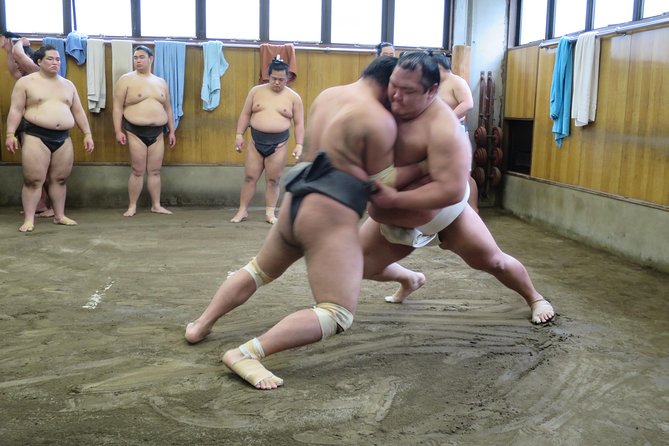
- Real morning practice: You watch wrestlers train for upcoming bouts, not a performance arranged for an audience.
- Only seven people: The small maximum can make the guide’s explanations more useful and the group easier to manage.
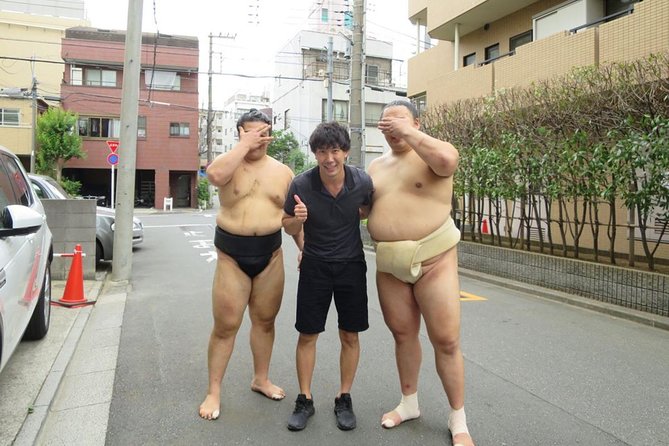
- Photos are not guaranteed: Some stables allow pictures during practice or posed photos afterward, while others do not.
- The floor is your seat: Most stables offer no chairs, so plan for a long period on tatami.
- Ryogoku is sumo country: The walk includes a look at the district around Ryogoku Kokugikan, Tokyo’s best-known sumo neighborhood.
- Age and timing rules are strict: The tour is for people aged 12 and older, starts at 8:00 a.m., and does not accept late arrivals more than 15 minutes after the required meeting time.
Why morning sumo practice feels different from a tournament
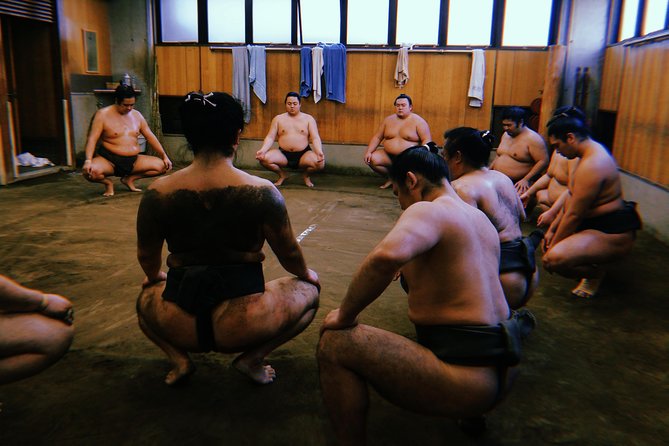
A tournament gives you the drama of a formal match, with banners, rituals, noise, and a packed arena. This tour gives you the quieter world behind the bout. You see the repetitive work that builds strength, balance, timing, and endurance.
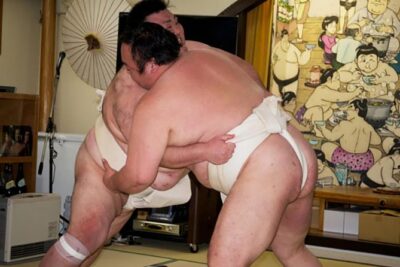
The practice can include warmups, exercises, and actual wrestling between stablemates. The wrestlers are not performing for you. They are preparing for competition, and that difference matters. The mood may be quiet and serious rather than theatrical.
You might see wrestlers working through intense drills at close range. The physical effort is easy to miss when watching a tournament from distant seats. Here, the slap of bodies, the force of a shove, and the careful control of footwork are much clearer.
I also like that the experience can reveal parts of sumo that a match alone does not show. Guides have explained stable rankings, the daily life of wrestlers, the rules of the sport, and the path toward becoming a professional. Some have also pointed out details about hygiene, hierarchy, discipline, and the business side of sumo.
That explanation is important. Without it, you may simply see large men pushing each other on a dirt ring. With a good guide, the practice becomes a lesson in a highly structured Japanese sport and way of life.
More Sumo Experiences in Tokyo
- Tokyo: Sumo Show and Dining Experience
★ 4.8 · 2,742 reviews - the SUMO show
★ 5.0 · 1,960 reviews - Tokyo Shinjuku Sumo Show & Experience with Photo
★ 5.0 · 1,750 reviews
Meeting at Ryogoku Station at 8:00 a.m.
The meeting point is outside the east exit of Ryogoku JR Station, near Re.Ra.Ku Ryōgoku Ekimae. Your guide holds a red or orange MagicalTrip board.
Pay close attention to the station name. Ryogoku has two stations, and the meeting point is not Ryogoku Station on the Toei Oedo Line. This is one of the easiest ways to lose time before the tour even begins.
I would arrive early. The official start is 8:00 a.m., but the instructions require you to meet 10 minutes before the tour begins. If you are more than 15 minutes late, you cannot join, receive a refund, or reschedule. That strict rule makes sense inside a working stable, where a late group could interrupt practice, but it leaves no room for a relaxed morning.
The station area is easy to reach by public transportation. Before leaving, use the toilet and buy water if needed. You may not be allowed to leave for the toilet once practice begins.
The walk to the stable can change
After meeting your guide, you walk through Ryogoku to a sumo stable. The walk can take around five to 30 minutes, depending on which stable is available that day.
That variation is worth understanding. You are not booking a fixed address with a guaranteed stable. Sumo stables control their practice schedules, and the available location can change. If the group is large, it may also be split between different stables.
The walk gives your guide time to explain what you are about to see. The best guides use this period well. Mayu, Masao, Ayaka, and Yumiko have each been praised for giving useful background before the group entered the stable. A strong introduction can make a major difference because there is little talking once practice starts.
One weakness is that the initial explanation may happen outdoors near the station, where traffic and people can make it hard to hear. If you cannot catch something important, ask your guide to repeat it before entering the stable.
Entering a working sumo stable
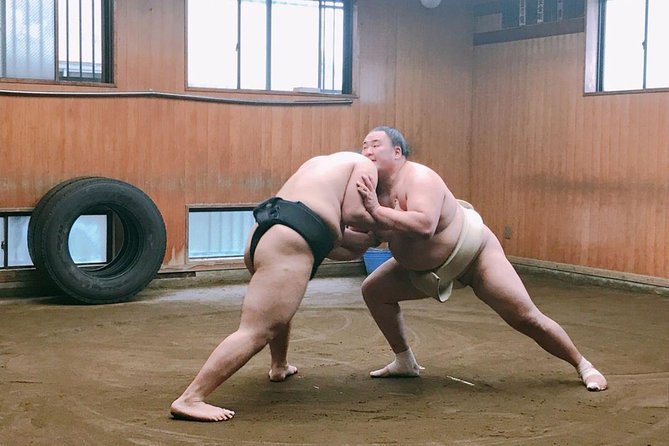
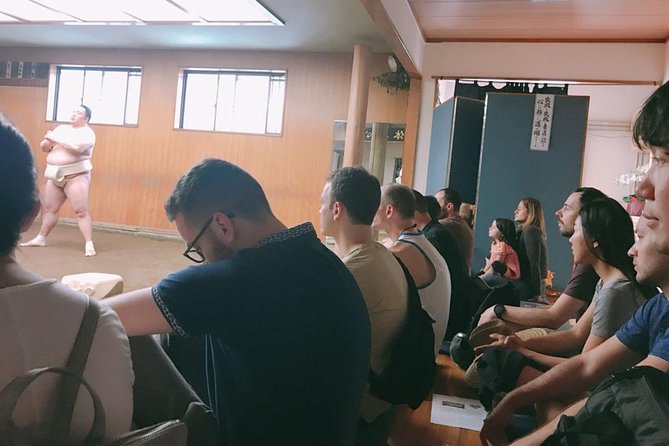
Inside, you sit in the tatami area and watch practice. All other parts of the stable are off-limits. This is not a museum or a visitor center, so you must follow the stable’s instructions closely.
Expect to sit on the floor. Chairs are uncommon, and the practice can last about an hour and 30 minutes. It may run longer, sometimes close to two hours. If you have stiff knees, back problems, or difficulty sitting on the floor, think carefully before booking.
The seating is first come, first served. Arriving late can mean sitting two or three rows behind the front. You may still see the action well, but the close-range feeling is strongest from the front. One practical tip is to arrive at the meeting point early and stay with the group from the start.
During practice, you may be required to remain silent. Do not assume that rules applied to another group will apply to yours. The stable may require masks, prohibit photography, or ask you to sit in a particular way. Follow the guide’s instructions even if another person appears to be doing something different.
This is one place where the tour’s value goes beyond simply finding a door. Your guide helps you enter in the right way and explains the etiquette. Still, the final experience depends heavily on the stable and the guide assigned that morning.
Same city, another way to catch the action:
- Tokyo: Sumo Show and Experience in Shinjuku
★ 4.8 · 1,001 reviews - Tokyo Grand Sumo Tournament Viewing Tour with Tickets
★ 5.0 · 692 reviews - Tokyo Sumo Wrestling Tournament Experience
★ 5.0 · 660 reviews - Tokyo:Luxury Sumo Show Experience & Japanese cuisine & Drink
★ 4.7 · 577 reviews
What you may see during the 90-minute session
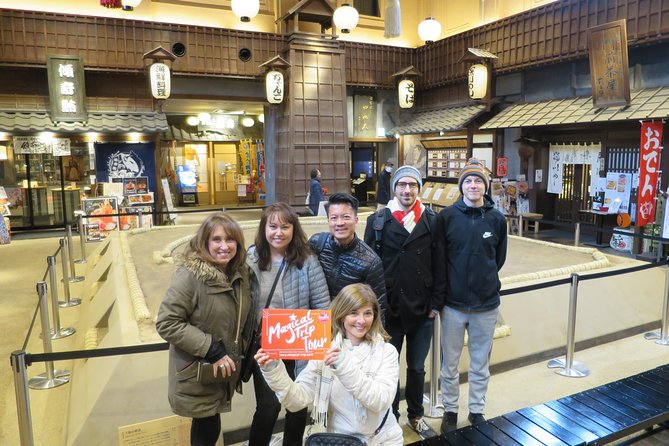
The practice is not one single event. It can move through several types of work. You might see warmups and general exercises first, followed by more demanding drills and practice bouts.
The wrestlers train intensely. You may see them work on technique and balance, then take part in full-contact clashes. The scale is impressive, but the detail is more interesting: how they prepare their bodies, how they reset after a bout, and how strictly the stable operates.
The quiet is part of the experience. You are not there to cheer, chat, or ask questions in the middle of a bout. For some people, that makes the session feel serious and respectful. For others, sitting silently for more than an hour can feel long.
I would not book this expecting constant action. Practice may include pauses, repetition, and routines that make sense to the wrestlers but not immediately to an outsider. That is also the point. You are seeing work, not entertainment.
The length can vary. Practice may already be underway when you arrive, and it can end earlier than expected if the stable changes its schedule or a wrestler is injured. The provider can cancel if the stable cancels or changes the practice, with a full refund in that case.
Photos with wrestlers depend on the stable
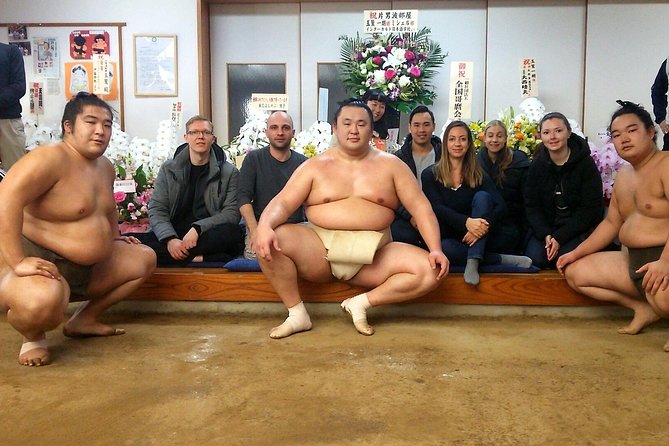
The experience includes tour photos in its description, but you should treat photography as a possibility rather than a promise.
Each stable decides if you can photograph practice and if you can pose with wrestlers afterward. Some groups have been allowed to take pictures during training and stand with wrestlers at the end. In other cases, photography has been restricted or prohibited.
This is not a small detail. If a posed photograph is the main reason you want to book, you may be disappointed. The stable’s daily work comes first, and the guide cannot override its rules.
When photos are allowed, the post-practice moment can be special. Wrestlers may answer questions and pose with the group. It gives you a personal souvenir, but the chance depends on the stable, the day’s schedule, and the wrestlers’ willingness.
Keep your camera or phone ready but do not use it until the guide gives permission. A silent, respectful visit is more important than getting one extra picture.
A short look at Ryogoku Kokugikan
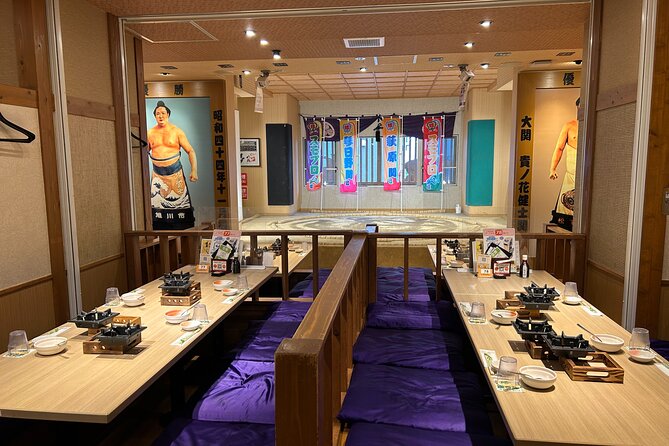
After practice, the guide takes you around Ryogoku, the neighborhood associated with sumo. The route includes a short stop near Ryogoku Kokugikan, the city’s major sumo arena.
This part lasts about 10 minutes, so keep your expectations modest. It is a neighborhood orientation, not an arena tour or a museum visit. The value is that your guide connects the stable you just visited with the larger sumo world around it.
Some guides may add a nearby cultural stop. One group visited Ekōin Temple, a place connected with memorial observances. Do not count on that exact detour, since the route can vary, but the area offers more than the practice alone.
The tour then walks back to the station, ending where it began. There is no lunch included, and you should not expect a sumo match ticket or a full-day sightseeing program.
What the $98.16 price is really paying for
At $98.16 per person, this is not a cheap way to spend two hours. You are not paying for a formal ticketed spectacle with guaranteed seating, a fixed stable, or guaranteed photographs.
You are paying for access and organization. A local guide helps you find a stable, explains the customs, manages the meeting and walking route, and helps you avoid behavior that could offend the stable. For someone unfamiliar with Tokyo or Japanese customs, that support has real value.
The price makes more sense if you care about sumo and want to see the training process close up. It is less convincing if you only want a quick photo or a general introduction to Japanese sport. You might find a brief explanation and the practice itself enough, but the tour is not designed as a bargain activity.
The small maximum of seven people helps. A tiny group is easier to move quietly into a stable, and the guide can answer more questions before and after practice. Still, the group may be combined with other visitors at the stable, and seating remains first come, first served.
I would compare this with the cost and availability of attending an official tournament. If you cannot fit a tournament into your schedule, morning practice offers a very different but worthwhile alternative. You see the athletes at work rather than in a formal contest.
Who will enjoy this, and who may not
This tour suits you if you:
- Have a strong interest in sumo or Japanese culture
- Want to see athletes train at close range
- Can sit quietly on the floor for at least 90 minutes
- Are comfortable with an early start and a changing schedule
- Prefer a small guided experience to a large group visit
- Understand that photos and stable access are controlled by the stable
It may not suit you if you need chairs, frequent toilet access, or a fixed itinerary. It is also a poor choice if you dislike strict punctuality or expect the guide to provide a constant stream of commentary during practice.
Children under 12 cannot enter. Everyone in the group must be at least 12 years old.
Summer requires extra care. Tokyo can be hot and humid, so bring water and wear a hat for the walk and time outside. The practice itself is indoors, but the morning can still become uncomfortable before and after the stable visit.
Tips that can make the visit better
Arrive at least 10 minutes early, and confirm that you are going to the JR station east exit rather than the Oedo Line station. Keep the confirmation details available on your phone, since the tour uses a mobile ticket.
Use the toilet before meeting the group. Once practice begins, you may not be allowed to leave.
Wear clothing that lets you sit comfortably on the floor. Avoid planning another appointment immediately afterward, since practice can run longer than the estimated two hours.
Do not plan your morning around a guaranteed photograph. Be pleased if pictures are allowed, but judge the experience by the practice itself.
Listen carefully during the pre-visit briefing. Once inside, you may need to stay silent, so this is your best chance to ask about rankings, training, stable life, or the rules of sumo.
The tour offers free cancellation up to 24 hours before the start time. Changes or cancellations made within 24 hours are not refunded. If the provider cancels because of the stable’s schedule or poor weather, you should be offered another date or a full refund.
Should you book the Ryogoku sumo morning practice?
I would book it if seeing authentic sumo training is high on your Tokyo list. The close view, serious atmosphere, and chance to learn about stable life can make this one of the city’s most memorable two-hour activities.
Go in with the right expectations. You may sit on a hard floor, remain silent, arrive after practice has started, sit toward the back, or leave without photos. The stable may change the time, location, or access at short notice.
If those conditions sound acceptable, the $98.16 fee can be fair for guided access that is difficult to arrange on your own. If you mainly want a posed picture or a polished show, choose a tournament or another sumo-focused attraction instead.
FAQ
Where does the tour meet?
The meeting point is Re.Ra.Ku Ryōgoku Ekimae at the east exit of JR Ryogoku Station. Your guide holds a red or orange MagicalTrip board. Do not go to Ryogoku Station on the Oedo Line.
What time does the tour start?
The start time is 8:00 a.m. You must arrive in time for the meeting before the tour begins. Arrivals more than 15 minutes late cannot join and are not eligible for a refund or rescheduling.
How long does the experience last?
The advertised duration is about two hours. Sumo practice itself takes around one hour and 30 minutes, but it can sometimes last longer and delay the finish.
Can children join?
Only people aged 12 and older can join. Children under 12 are not allowed inside the sumo morning practice and will be denied entry without a refund.
Are photographs with wrestlers guaranteed?
No. The sumo stable decides if photography during practice or posed photos with wrestlers are allowed. You may not be able to take either type of picture.
Do I need to sit on the floor?
Yes, you may need to sit on tatami flooring because most stables do not provide chairs. Plan to remain seated for an extended period, often at least 90 minutes.
What happens if the practice is canceled?
The stable may change or cancel practice because of its tournament schedule or the wrestlers’ condition. If the provider cancels the booking for that reason, you should receive a full refund.
New on the fixture list around Tokyo
- Tokyo: Sumo Morning Practice -Stable Visit Tour with a Guide★ 4.8 · 16 reviews
- Tokyo: Watching Sumo and Ryogoku Area Walking Tour★ 4.0 · 5 reviews
- Tokyo: Sumo Morning Practice Viewing Tour at a Real Stable★ 4.9 · 32 reviews
- Tokyo: Sumo Morning Practice Tour in Ryogoku and Photo Shoot★ 4.7 · 47 reviews
- Tokyo: Sumo Keiko Training Tour with Audio Guide & Photo★ 4.8 · 5 reviews
- Tokyo Sumo Morning Practice: Witness the Life of a Wrestler★ 4.8 · 56 reviews
- Tokyo Highlights Tour: Sumo, Sushi, Tea, and Tokyo Tower★ 5.0 · 2 reviews
- Tokyo: Sanctuary Authentic Grand Sumo Experience & Training★ 5.0 · 7 reviews
More Sumo Experiences in Tokyo to weigh up.
Tokyo Shinjuku Sumo Show & Experience with Photo
Read our review →
Tokyo Grand Sumo Tournament Viewing Tour with Tickets
Read our review →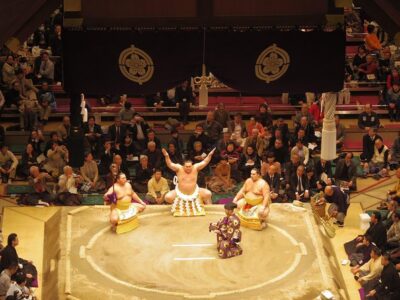
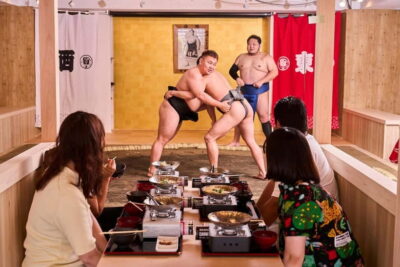
Tokyo:Luxury Sumo Show Experience & Japanese cuisine & Drink
Read our review →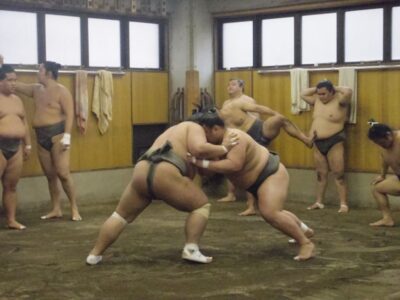
Tokyo Sumo Experience: Chanko & Mochi with a Former Pro
Read our review →This one also appears in