
Review · TOKYO
Morning Sumo Practice Viewing in Tokyo
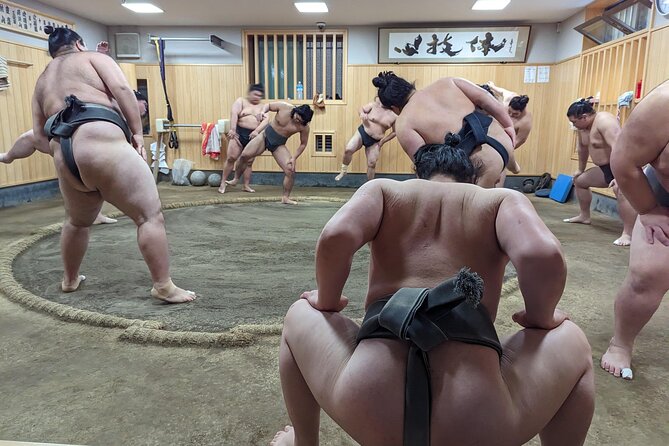
The best part of this early-morning Tokyo experience is the setting: you sit inside a working sumo stable, close enough to watch wrestlers warm up, practice throws, and test one another without the noise of a stadium crowd. The stable is a serious training space, not a staged show, so the mood can shift from quiet ritual to hard physical effort in seconds.
I like the short briefing at Tokyo Skytree, which gives you enough basic rules to follow the action. I also like that part of your $99.08 fee goes to the stable as a donation. The main drawback is comfort: you sit on a cushion on a flat floor for roughly two hours, with no chairs available.
- Morning access to a working stable: See practice before most of Tokyo is fully awake.
- A close view of training: Watch warmups and practice bouts from inside the stable.
- Useful pre-visit briefing: Learn basic moves, rules, and stable etiquette before entering.
- Small-group format: The group is capped at 10 people, allowing time for questions.
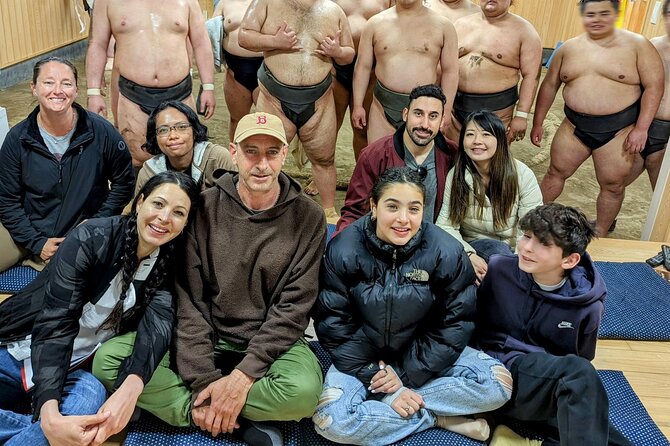
- Possible wrestler photos: A photo session will most likely follow practice, but it is not presented as a firm guarantee.
- Donation included: Your ticket helps support the stable rather than paying only for sightseeing services.
Why This Sumo Visit Feels Different
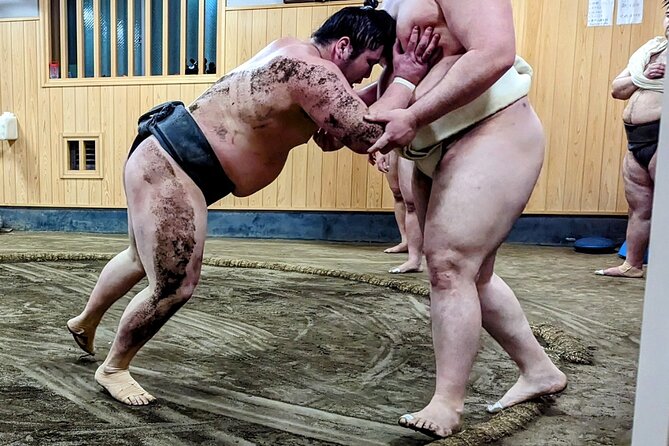
A professional sumo tournament is polished, public, and easy to understand as a spectator event. Morning practice is more intimate. You watch wrestlers repeat movements, work through training bouts, and prepare under the eye of the stable master.
That difference matters. You are not simply watching a match with a crowd. You are seeing the daily work behind the sport. Sumo’s Shinto roots, formal gestures, and strict customs make more sense when you see them inside the place where wrestlers train and live their routines.
The setting also keeps the experience grounded. There is no large arena, no dramatic presentation, and no promise that every moment will be exciting. Some stretches may be quiet or repetitive. That is part of the value. You are watching practice, not a performance built for tourists.
Access to a stable can be difficult to arrange on your own. This tour handles the introduction, explains the rules, and helps you enter without having to work out the etiquette yourself. For someone curious about Japanese culture but unsure how to approach sumo, that guidance is a real benefit.
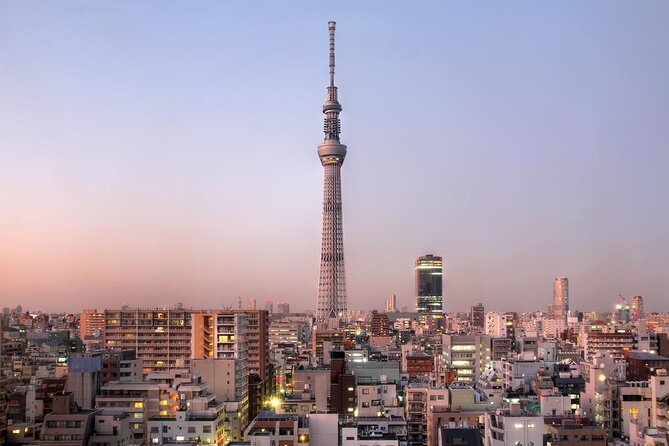
7:30 am at Tokyo Skytree
The meeting point is Tokyo Skytree Station at 1-chōme-1-4 Oshiage in Sumida City. Start time is 7:30 am, so you need to plan your train ride carefully and allow time to find the guide.
Tokyo Skytree is a useful landmark. The tower is easy to recognize, and the guide uses the first 30 minutes to explain how to watch practice and what behavior is expected inside the stable. This is not a sightseeing stop with a tower admission included. The Skytree functions mainly as a clear meeting point and a place for your orientation.
I like this arrangement because sumo has many small rules that would be easy to miss. You may not know when to speak, how to react to a bout, or why a wrestler performs a certain movement. A short introduction gives you a way to watch with purpose instead of trying to copy the people around you.
The guide provides English-language help throughout the experience. Past guide names connected with this activity include Joji, Dawn, Jeff, and Aki. The exact guide is not guaranteed, but the format gives you a local certified guide who can explain the sport before you enter.
More Sumo Experiences in Tokyo
- Tokyo: Sumo Show and Dining Experience
★ 4.8 · 2,742 reviews - the SUMO show
★ 5.0 · 1,960 reviews - Tokyo Shinjuku Sumo Show & Experience with Photo
★ 5.0 · 1,750 reviews
Walking Into the Sumida Stable
From Tokyo Skytree, the experience moves into Sumida, where you visit Naruto-beya Sumo Stable at 1-chōme-22-16 Mukōjima. The tour ends at the stable, so you will need to arrange your own onward transportation afterward.
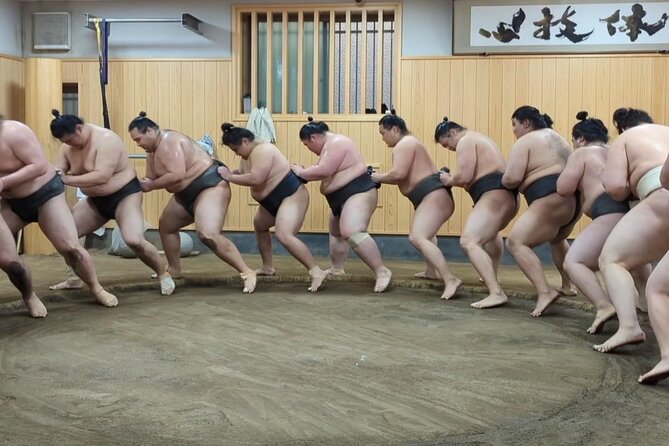
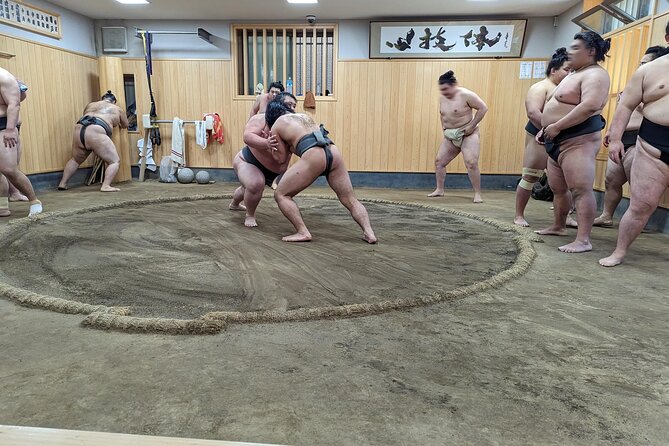
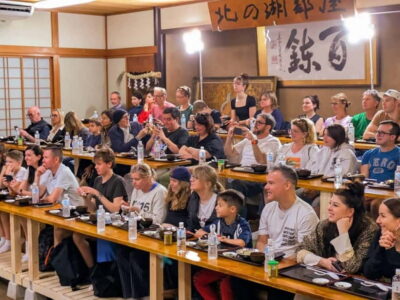
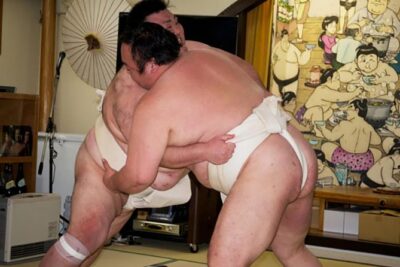
The stable is the heart of the experience. You sit inside and watch the morning training session for about two hours. The wrestlers warm up and take part in practice bouts, giving you a close view of the sport’s physical demands.
This is also where you need to adjust your expectations. Practice does not follow a sightseeing timetable designed around constant action. You might see long periods of preparation, repeated exercises, or bouts that move quickly and end suddenly. The guide helps you understand what is happening, but the rhythm remains that of a real training session.
The group limit of 10 people is helpful here. A large crowd would change the mood and make it harder to see. A small group also gives you a better chance to ask about the wrestlers, the rules, and the rituals without turning the stable into a noisy tour stop.
What You Will Learn Before the Bouts
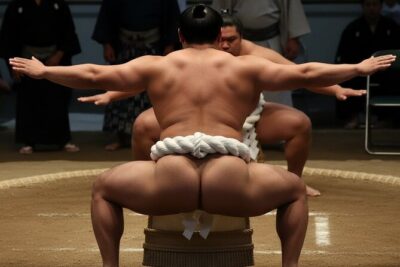
The briefing covers simple sumo rules and the conduct expected while watching practice. You will also learn about the sport’s traditional Shinto connections, which add meaning to the gestures and rituals around the bouts.
You do not need prior knowledge of sumo. The guide’s explanations are meant to help beginners follow the action. Aki, for example, has been noted for explaining the moves in advance and providing written information. That kind of handout can be useful because sumo bouts are short, and you may not remember every term after hearing it once.
The tour also gives you basic profiles of the wrestlers in training, according to the experience details. This can make the session more personal. Instead of seeing a line of large athletes with no context, you have some idea of who you are watching and what role each person has within the stable.
Guides such as Joji and Jeff have been praised for making the history and rules easy to follow. Dawn has also been highlighted for explaining the sport during the practice session. You should still remember that guide assignments vary, so treat those names as examples of the people who may lead the tour, not as a promise.
Sitting Close to the Training
The seating is simple. Everyone sits on a cushion on a flat floor, and there are no chairs. You should be comfortable with floor seating for about two hours before booking.
This is the clearest practical issue with the activity. If you have trouble getting down to the floor, rising again, or sitting with bent legs for a long period, the format may be hard. The available information says most people can participate, but it does not promise chair seating or special arrangements.
There are also no toilets at the stable, so use facilities before the practice begins. This is an easy detail to overlook when you are leaving early in the morning, but it matters during a two-hour session.
The reward for accepting the basic seating is proximity. You are not watching from a distant grandstand. The stable setting lets you see the concentration before a bout, the force of contact, and the repeated nature of training. One of the memorable details reported about this experience is a child sitting close to the stable master, which shows how near some seats can be.
Same city, another way to catch the action:
- Tokyo: Sumo Show and Experience in Shinjuku
★ 4.8 · 1,001 reviews - Tokyo Grand Sumo Tournament Viewing Tour with Tickets
★ 5.0 · 692 reviews - Tokyo Sumo Wrestling Tournament Experience
★ 5.0 · 660 reviews - Tokyo:Luxury Sumo Show Experience & Japanese cuisine & Drink
★ 4.7 · 577 reviews
Photos, Food, and What Is Not Guaranteed
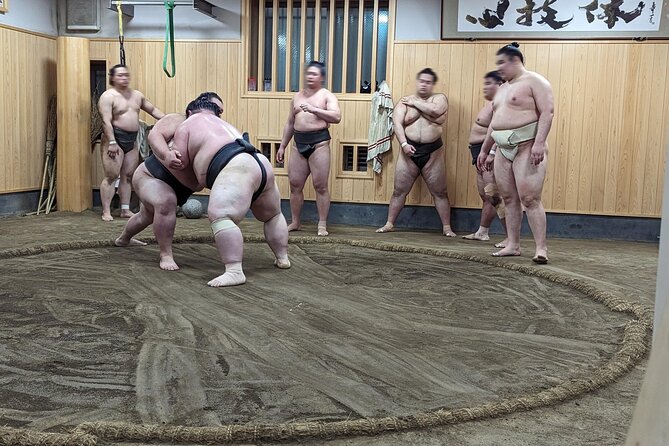
After practice, you will probably have the chance to take photos with sumo wrestlers. The wording matters: the photo session is likely, but it is not presented as a guaranteed part of every visit.
The overview also mentions the possibility of lunch with chanko nabe, the traditional stew associated with sumo wrestlers. Chanko nabe is an appealing cultural detail, but it is not listed among the included items. Do not book this tour expecting a guaranteed meal unless the operator confirms it for your date.
The confirmed inclusions are donations to the stable and English guiding by a local certified expert. Hotel pickup and drop-off are not included. The tour ends at Naruto-beya, so your day continues from the stable rather than returning you to Tokyo Skytree or your hotel.
This arrangement can work well if you plan another Sumida activity afterward. It is less convenient if you need to return to a hotel on the other side of Tokyo immediately. Since the tour begins early and ends at the stable, check your route before booking your next appointment.
Is $99.08 Good Value?
At $99.08 per person, this is not a low-cost Tokyo attraction. The value depends on what you want from a sumo experience.
If you only want to see the sport once, a tournament ticket or televised match may be a simpler choice. If you want access to a working stable, basic instruction, a small group, and a donation included in the price, the cost becomes easier to justify. Arranging stable access alone can be difficult, especially if you do not speak Japanese or know the customs.
I see the strongest value in the access and setting. You are paying for an organized introduction to a place that is not designed for casual drop-in visits. The guide also saves you from arriving without context and wondering what you are allowed to do.
The price is less attractive if you mainly want photos, a guaranteed meal, or a theatrical show. Photos are only most likely, lunch is not clearly included, and practice can be quiet or repetitive. This is a culture and sport visit first, with possible extras afterward.
Group discounts are available, and the group is limited to 10 people. For families or small parties, that may improve the price per person. Mobile tickets also make the booking process easier, especially for an early start when you want to avoid printing anything.
Who Will Enjoy This Morning Best
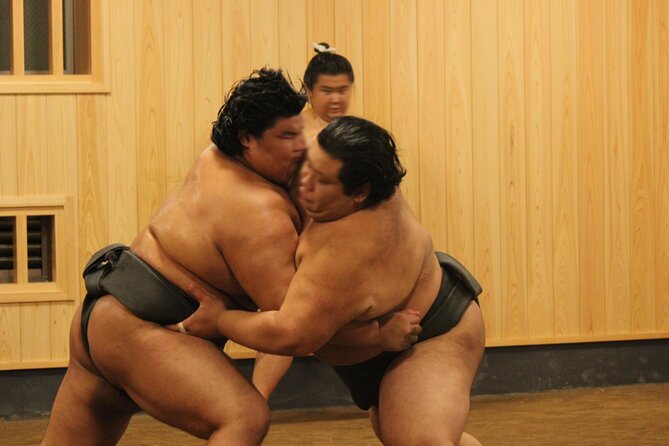
I would choose this experience for you if you have a real interest in sumo, Japanese customs, or behind-the-scenes sports training. It also suits first-time visitors who want something more local than a major sightseeing platform.
It is a particularly good fit for:
- People who want close access to a real training session.
- Visitors who enjoy learning rules before watching a sport.
- Families with older children who can sit quietly on the floor.
- Sports fans interested in training methods and ritual.
- Visitors who value a small group over a large commercial tour.
- Anyone willing to start early for a less common Tokyo experience.
I would think twice if you need a chair, require regular toilet access, dislike quiet observation, or want a guaranteed lunch. The activity asks you to respect the stable’s routine. You cannot treat it like a stadium event where you arrive, cheer loudly, and come and go freely.
The early start is another factor. You meet at 7:30 am, and the tour lasts about three hours in total, with two hours inside the stable. That can be a smart use of your morning, but only if you are prepared to get across Tokyo early.
Practical Tips for a Better Visit
Arrive ready to sit on the floor. Wear clothing that allows comfortable movement, and avoid planning a tight appointment immediately after the tour. The stable portion alone lasts about two hours, and the exact pace of practice is not something you control.
Use a toilet before entering. Since facilities are not available at the stable, this small step can make the session much easier.
Read or review the basic rules during the briefing. Sumo bouts can finish in seconds, so knowing the main movements beforehand helps you understand what you just saw. Pay attention to the explanations about stable etiquette as well. The goal is to observe without interrupting the wrestlers’ work.
Keep your expectations flexible about the photo session and chanko nabe. Both are appealing possibilities, but the confirmed core of the tour is the guided stable visit and morning practice.
Finally, plan your route from Naruto-beya after the tour. Hotel transfers are not included, and the experience ends at the stable. The location is near public transportation, but you are responsible for continuing your day from there.
Cancellation and Weather Notes
You can cancel at least 24 hours before the 7:30 am start for a full refund. Changes or cancellations made less than 24 hours before the start time are not accepted for a refund.
The activity also requires good weather under its stated policy. If poor weather causes cancellation, you will be offered another date or a full refund. The policy uses local Tokyo time for its cutoff, so keep that in mind if you are booking from another time zone.
Should You Book This Sumo Experience?
Book it if you want the real working side of sumo rather than a quick photo stop or a formal stadium match. The small group, English briefing, stable donation, and close view of training give you access that is difficult to arrange alone.
Skip it if floor seating is a problem, if you need a guaranteed meal, or if you prefer a fast-moving attraction with fixed entertainment. For the right visitor, though, this is a memorable early morning in Sumida: quiet at first, physical once practice begins, and full of cultural details that a standard Tokyo sightseeing day may miss.
FAQ
Where does the sumo experience begin?
It begins at Tokyo Skytree Station, at 1-chōme-1-4 Oshiage, Sumida City, Tokyo.
What time does the tour start?
The start time is 7:30 am.
How long does the activity last?
The experience lasts about three hours, including the briefing and the stable visit.
Where does the tour end?
The tour ends at Naruto-beya Sumo Stable at 1-chōme-22-16 Mukōjima, Sumida City, Tokyo.
Will I sit on chairs during practice?
No. All participants sit on cushions on a flat floor, and no chairs are available.
Is hotel pickup and drop-off included?
No. Hotel pickup and drop-off are not included.
Is a photo with a sumo wrestler guaranteed?
No. A photo session will most probably be available, but it is not stated as guaranteed.
Can I cancel for a full refund?
Yes, if you cancel at least 24 hours before the experience start time. Cancellations made less than 24 hours before the start are not refunded.
New on the fixture list around Tokyo
- Tokyo: Sumo Morning Practice Viewing Tour at a Real Stable★ 4.9 · 32 reviews
- Tokyo: Sumo Morning Practice -Stable Visit Tour with a Guide★ 4.8 · 16 reviews
- Tokyo: Watching Sumo and Ryogoku Area Walking Tour★ 4.0 · 5 reviews
- Tokyo: Sumo Keiko Training Tour with Audio Guide & Photo★ 4.8 · 5 reviews
- Tokyo Sumo Morning Practice: Witness the Life of a Wrestler★ 4.8 · 56 reviews
- Tokyo: Sumo Morning Practice Tour in Ryogoku and Photo Shoot★ 4.7 · 47 reviews
- Tokyo Highlights Tour: Sumo, Sushi, Tea, and Tokyo Tower★ 5.0 · 2 reviews
- Tokyo: Sanctuary Authentic Grand Sumo Experience & Training★ 5.0 · 7 reviews
More Sumo Experiences in Tokyo to weigh up.
Tokyo Shinjuku Sumo Show & Experience with Photo
Read our review →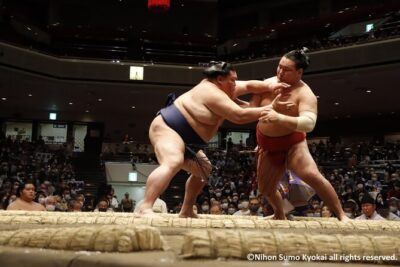
Tokyo Grand Sumo Tournament Viewing Tour with Tickets
Read our review →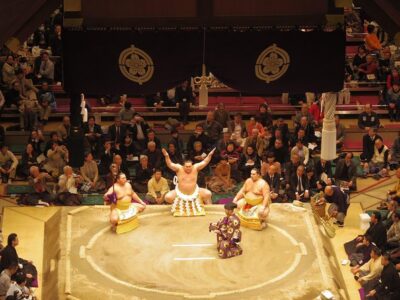
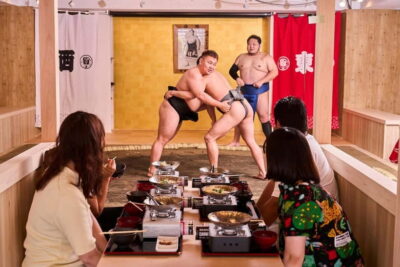
Tokyo:Luxury Sumo Show Experience & Japanese cuisine & Drink
Read our review →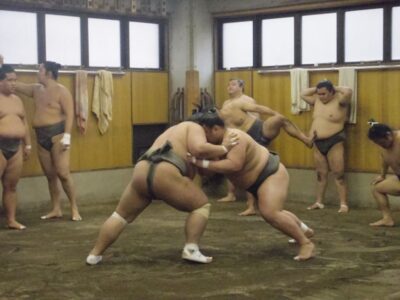
Tokyo Sumo Experience: Chanko & Mochi with a Former Pro
Read our review →This one also appears in