
Review · OSAKA
Osaka: Sumo Wrestling Tournament with Chair Seat Tickets
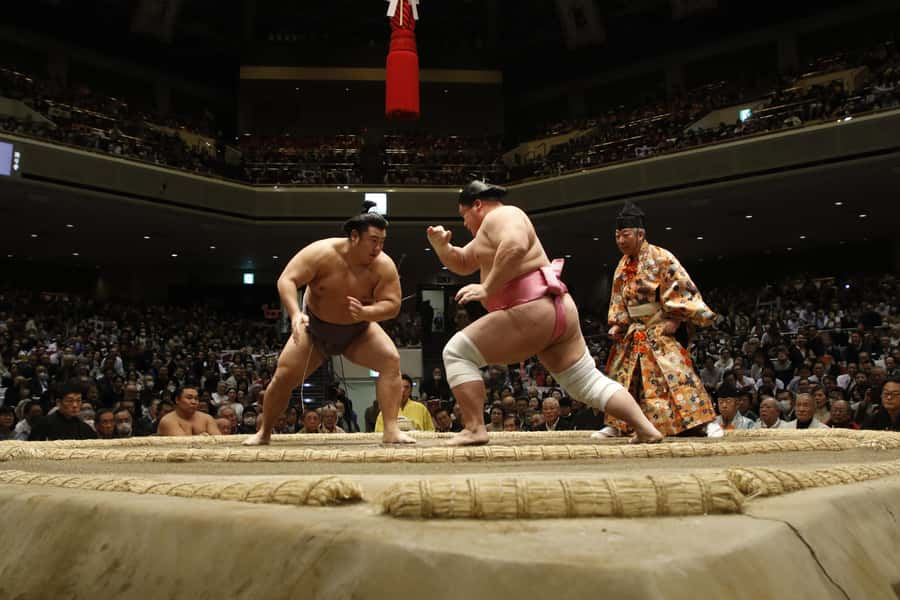
Sumo is not a quick photo stop. It is a full afternoon of short, powerful bouts, long pauses, ritual, and crowd drama. This Osaka experience gives you an included tournament ticket and an English-speaking guide who can explain why a match matters before the wrestlers crash into each other.
I like the guide-led format, especially when your guide brings printed notes on rankings, records, and wrestlers to watch. I also like the chance to see the salt purification, ring-entering ceremony, and local excitement around Osaka’s March tournament. The main drawback is price: at $122 per person, it can cost much more than an official ticket, and your seat may be near the back.
Key points before you book
- The guide turns fast bouts into understandable sport: Guides such as Tadashi, Yoko, Keiko, and Yuji have explained rules, rankings, rivalries, and wrestler backgrounds in clear English.
- The afternoon focuses on the serious action: The strongest wrestlers appear around 3:30 pm for the dohyo-iri ring-entering ceremony and later bouts.
- Your ticket is included: Chair categories range from S through D, but you cannot select a particular seat.
- The experience lasts about 210 minutes: Expect roughly three hours at Edion Arena Osaka, with short matches and substantial waiting between them.
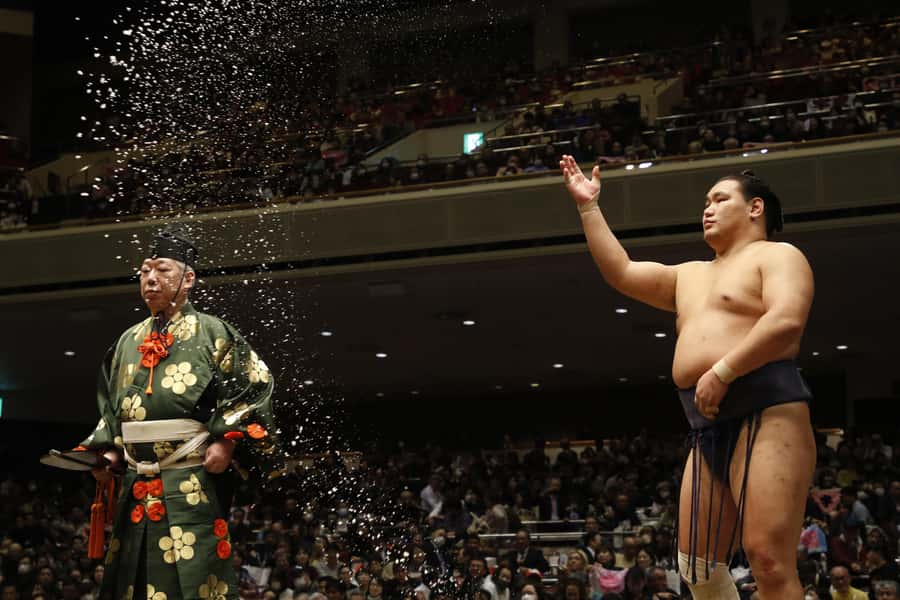
- The atmosphere is part of the show: Salt, bowing, ceremony, local favorites, and the packed arena give the sport its traditional setting.
- Seats are compact and luggage is restricted: Large bags cannot go into the seating area, and wheelchairs and baby strollers are not suitable.
Why Osaka sumo feels different from a regular sports event
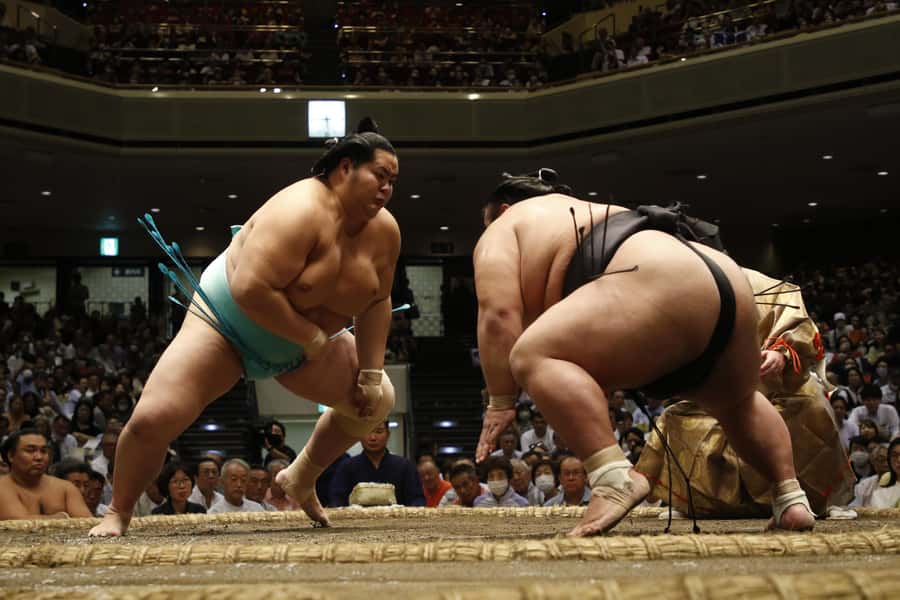
Sumo looks simple at first: two wrestlers, one circular ring, one push or throw. The bout itself may last less than a minute. Yet the real event includes ceremony, preparation, rankings, chants, gestures, and long pauses that give each match weight.
Sumo is tied to Shinto, Japan’s native religious tradition. The sport is believed to have begun as a performance for the gods, then became part of rituals connected with good harvests. You can still see that older role in the salt thrown into the ring, the formal movements, and the respect shown to the dohyo, or sumo ring.
During the Edo period, from 1603 to 1868, sumo also became popular entertainment for ordinary people. Today it is both a professional sport and a living piece of Japanese tradition. A guide helps you see both sides instead of treating the tournament as a series of unexplained collisions.
The March tournament is held in Osaka, one of six major tournaments staged in Japan each year. That timing matters. The event is not available every month, and official tickets can sell quickly. If your Osaka visit matches the tournament dates, this is one of the few chances to see the sport in its proper competitive setting.
More Sumo Experiences in Japan:
- Tokyo: Sumo Show Experience with Chicken Hot Pot and a Photo
★ 4.8 · 6,678 reviews - Tokyo: Sumo Show and Dining Experience
★ 4.8 · 2,742 reviews - the SUMO show
★ 5.0 · 1,960 reviews
Meeting at Namba Post Office at 2:15 pm
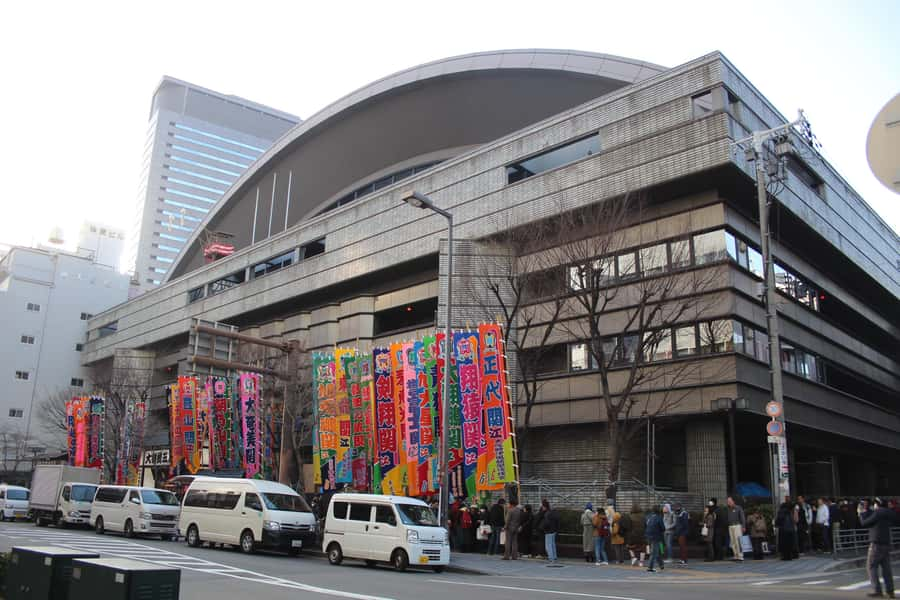
The meeting point is in front of Osaka Namba Post Office. It is a one-minute walk from the third-floor North Exit of the Nankai Line and about two minutes from Exit 5 of the Osaka Metro.
Your guide carries a Japan Wonder Travel signboard. Osaka’s Namba station area has several levels, exits, and railway operators, so I would arrive early rather than try to find the post office at the last second. One person specifically wished the meeting directions had been clearer, and that is fair advice. Give yourself extra time if you are unfamiliar with Namba.
The meeting time also tells you what this tour is designed to offer. You are not joining the tournament at 8 am to watch the lowest-ranked bouts. You are meeting in the afternoon, when the higher-ranked wrestlers begin to appear. That saves you from an all-day commitment, but it also means you miss the early portion of the program.
From the meeting point, the group proceeds to Edion Arena Osaka. The stated tour duration is 210 minutes, and the tour finishes at the arena. The guide handles the ticket handoff on the day, so you do not need to arrange a separate ticket collection.
What happens inside Edion Arena Osaka
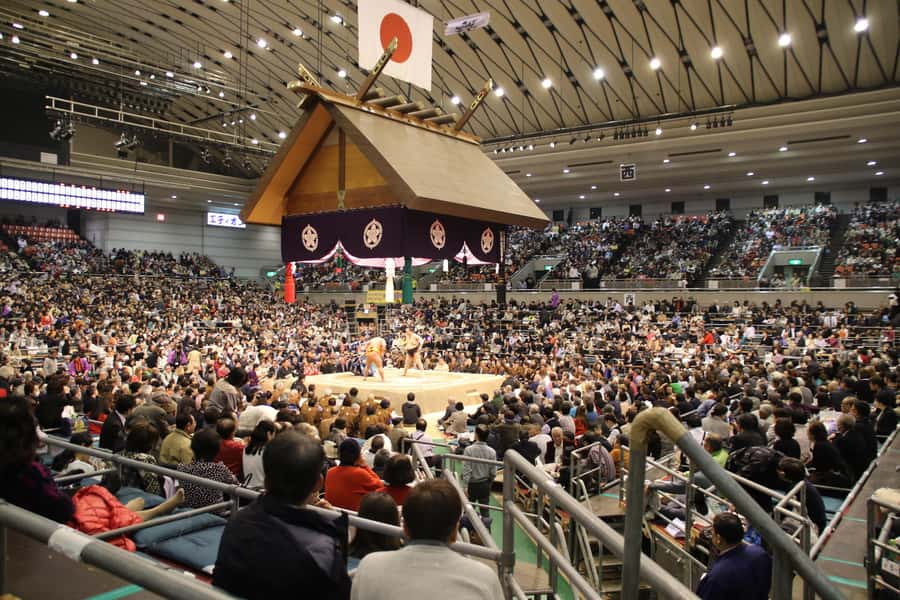
Once seated, you will watch the tournament rather than follow a continuous guided lecture. The guide’s job is to help you make sense of the action as it happens.
That distinction matters. Sumo matches are short, and the guide cannot spend every minute beside every person in the group. Some guides move around so they can answer questions from different families and small groups. This can work well, but if your group is spread across a long row, you may miss some of the running commentary.
Guides have used printed sheets with the top matches, wrestlers to watch, current win and loss records, and tournament rankings. That kind of preparation is useful because the sport has its own vocabulary and structure. You can ask why one wrestler is favored, why a particular bout matters, or which competitor has local support.
Several guides received especially warm praise for their command of the sport and their English. Tadashi Okumura prepared laminated sheets and detailed tournament notes. Yoko moved around the group, answered questions, suggested wrestlers to watch, and helped with photographs. Keiko used booklets and a clear briefing on rules and history. Yuji knew competitors’ backgrounds and rankings well enough to give the event a personal sense of context.
The exact guide varies, so you should not book expecting one particular person. The useful point is that the tour assigns a guide whose role is to explain the event, not simply lead you to the door.
The dohyo-iri and the rhythm of a sumo bout
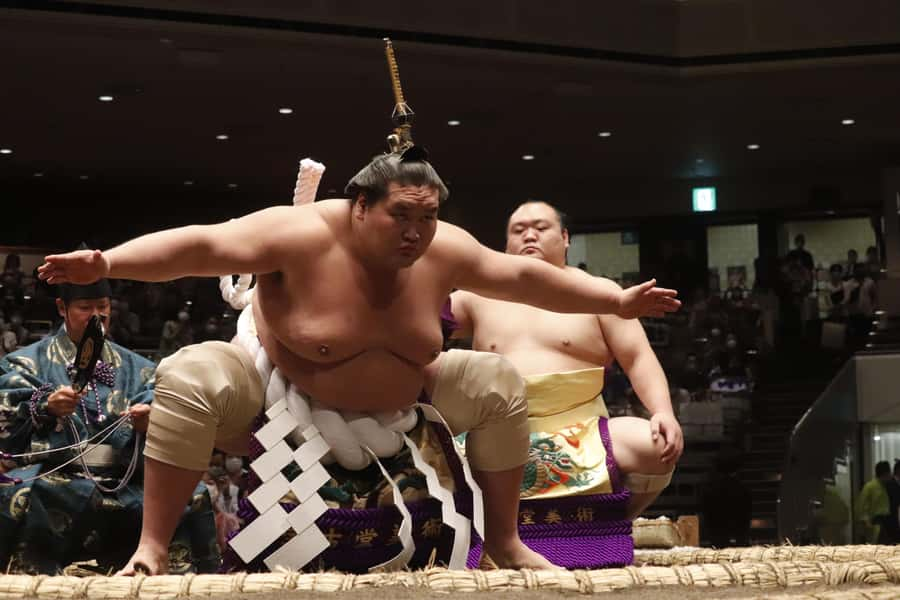
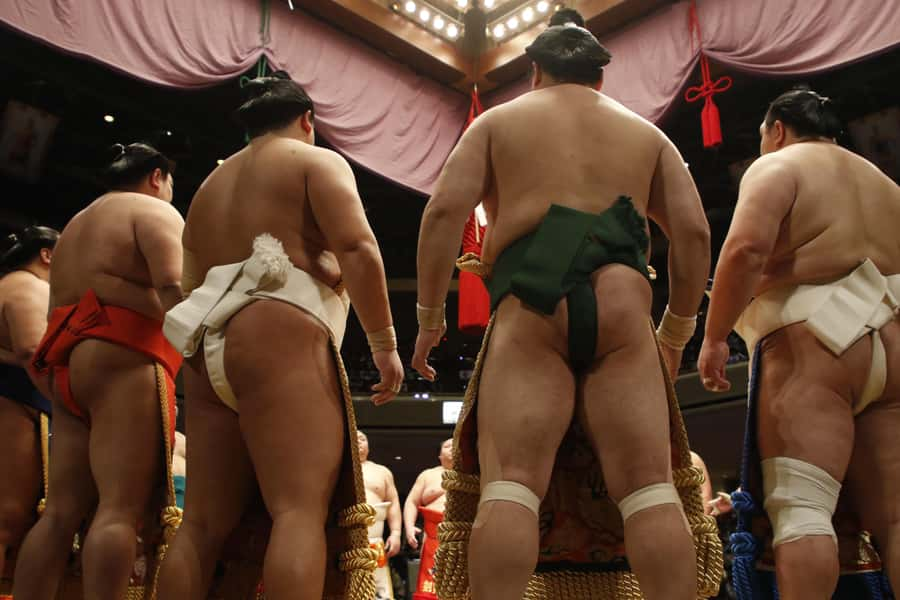
The stronger wrestlers enter the ring at around 3:30 pm for the dohyo-iri ceremony. This is a key moment of the afternoon. The wrestlers step into the ring in rank order, perform formal movements, and share the stage before the bouts begin.
The ceremony can seem slow if you are expecting nonstop sport. That is part of the point. Sumo gives equal importance to the match and to the ritual around it. The salt, stamping, bowing, and deliberate preparation connect the modern competition to its Shinto roots.
You should also prepare for plenty of waiting. A bout may last less than a minute, followed by time for the next wrestlers to prepare. Some people enjoy this rhythm because it lets them watch entrances, study the crowd, and discuss the wrestlers with the guide. Others lose patience, especially children or anyone who prefers continuous action.
I would not book this as a casual filler activity if you dislike sports. You are watching a real tournament, not a staged demonstration. The attraction is the combination of competition, tradition, and atmosphere.
More sporting days out around Japan:
- Tokyo Shinjuku Sumo Show & Experience with Photo
★ 5.0 · 1,750 reviews - Tokyo Sumo Entertainment Show with Chicken Hot Pot and Photo
★ 5.0 · 1,205 reviews - Tokyo: Sumo Show and Experience in Shinjuku
★ 4.8 · 1,001 reviews - Tokyo: Sumo Tournament Tour with Chair Seat Tickets
★ 4.6 · 753 reviews
Chair seating and what your $122 buys
The ticket includes chair seating, with categories listed as S, A, B, C, and D depending on the option you choose. The precise seat is not selectable, and some options provide second-floor chair seats.
Do not assume that a B or C category guarantees a close view. One booking with B seats ended up in the last two rows, while another person with the most distant seats still found the view very good. The arena is arranged so you can follow the ring from a distance, but you will not have the same closeness as someone seated near the dohyo.
The chairs are compact. That is normal for a major sporting event, but it is worth knowing before you arrive. Large luggage cannot be brought into the seating area, so leave big bags at your accommodation or make another plan. Baby strollers are not allowed, and the activity is not suitable for wheelchair users.
At $122, the value depends on your ticket situation. If you can buy an official ticket directly, it may be cheaper. One person specifically advised checking the official site first. But official tickets can sell out quickly, especially for a major tournament day. If you fail to get one, this tour gives you a practical way to attend while adding English explanations.
You are paying for more than the chair. The cost includes ticket access, help reaching the arena, and a guide who can explain the tournament. Still, the markup is real. If you care mainly about being inside and can manage the booking yourself, compare prices before paying.
Why the guide makes such a difference
Without help, sumo can be hard to follow. You may understand who wins each bout, but not why a wrestler matters, how rankings affect the tournament, or why a certain match draws more attention.
The guide can explain the current records and the background of the wrestlers. This changes the afternoon from a sequence of brief shoves into a competition with stakes. You begin to recognize the top contenders, local favorites, and wrestlers trying to improve their position.
The strongest feedback has centered on this human element. Tadashi, Yoko, Keiko, Yuji, Midori, Satsuki, Yoshi, and other guides were praised for their enthusiasm, clear English, and willingness to answer questions. The best guides do more than recite facts. They point out the wrestler to watch, explain a tactic, and help you join the crowd when a popular competitor enters.
Your experience can vary with group size and seating arrangement. A group of nine people found that the guide was at one end of the row, making it hard for everyone to hear the extra explanations during the bouts. If you have a question, ask early and directly. The guide may be moving between several groups.
A good afternoon for families, with limits
Children aged three and under may enter free, but they do not receive their own seat. They must sit on an adult’s lap. Children aged four and older need their own tickets.
The event can be a memorable family introduction to Japan, but do not assume every child will enjoy it. The bouts are brief, and the intervals are long. Compact chairs, a formal setting, and several hours of watching can test a young child’s patience.
Adults who are curious about Japanese customs, sports, or history are likely to get the most from the experience. You do not need to know sumo before arriving. The guide will explain the basic rules and traditions. You do need some interest in sitting through a live sporting event.
The tour also suits solo visitors and couples who want a structured way into a difficult-to-book event. If you are nervous about finding the arena, understanding the ceremony, or identifying the main wrestlers, the guide removes much of that uncertainty.
Practical details for a smoother visit
Meet at 2:15 pm in front of Osaka Namba Post Office, not directly at the arena. Look for the Japan Wonder Travel signboard and leave extra time to navigate Namba’s railway exits.
Wear something comfortable for several hours of seated viewing. Keep your bags small, since large luggage cannot enter the seating area. Food can be bought at the arena, although the available choice may be limited, and bringing food may be possible.
The guide speaks English. The tour has free cancellation up to 24 hours before departure and allows you to reserve now and pay later, which helps if your Osaka schedule is still changing. Check the selected ticket category carefully, since the seat level affects how close you are to the ring.
The booking page lists a duration of 210 minutes, but the entire tournament day begins much earlier. This tour joins in the afternoon, around the time the higher-ranked wrestlers become the focus. That makes it easier to fit into a sightseeing day, though you will not see the opening lower-ranked matches.
Should you book the Osaka sumo tour?
Book it if you want a real tournament but could not secure an official ticket, or if you want help understanding what you are seeing. The guide, included ticket, printed tournament notes, and afternoon timing make this a sensible choice for first-time sumo spectators.
Think twice if you are very price-conscious, need a close seat, dislike waiting between short matches, or plan to bring a stroller or large bag. Check official ticket prices first, then decide if the added cost for access and English guidance is worth it.
For me, the strongest reason to choose this experience is not simply watching two wrestlers collide. It is learning to notice the ritual, the rankings, the local favorites, and the quiet tension before the bout. If that sounds more interesting than nonstop action, this is a memorable way to see sumo in Osaka.
FAQ
Where does the sumo tour meet?
Meet your guide at 2:15 pm in front of Osaka Namba Post Office. The guide will hold a Japan Wonder Travel signboard.
How do I reach the meeting point?
Namba Post Office is a one-minute walk from the third-floor North Exit of the Nankai Line and a two-minute walk from Exit 5 of the Osaka Metro.
Where does the tour finish?
The tour finishes at Edion Arena Osaka, where the sumo tournament takes place.
Is the sumo ticket included?
Yes. A sumo tournament ticket is included, with available chair categories listed as S, A, B, C, and D depending on the option selected.
Can I choose my specific seat?
No. Depending on the option, you may receive a second-floor chair seat, but you cannot choose the exact seat. The guide hands out tickets on the tour date.
Can young children attend?
Children aged three and under can enter free, but they do not have their own seat and must sit on an adult’s lap. Children aged four and older need their own tickets.
Is the tour suitable for wheelchair users or people with strollers?
No. The activity is not suitable for wheelchair users, and baby strollers are not allowed. Large luggage also cannot be brought into the seating area.
New on the fixture list around Japan
- Tokyo: Sumo Morning Practice Viewing Tour at a Real Stable★ 4.9 · 32 reviews
- Tokyo: Sumo Morning Practice -Stable Visit Tour with a Guide★ 4.8 · 16 reviews
- Tokyo: Watching Sumo and Ryogoku Area Walking Tour★ 4.0 · 5 reviews
- Tokyo: Sumo Morning Practice Tour in Ryogoku and Photo Shoot★ 4.7 · 47 reviews
- Tokyo: Sumo Keiko Training Tour with Audio Guide & Photo★ 4.8 · 5 reviews
- Tokyo Sumo Morning Practice: Witness the Life of a Wrestler★ 4.8 · 56 reviews
- Tokyo Highlights Tour: Sumo, Sushi, Tea, and Tokyo Tower★ 5.0 · 2 reviews
- Tokyo: Sanctuary Authentic Grand Sumo Experience & Training★ 5.0 · 7 reviews
More Sumo Experiences to weigh up.
Tokyo: Sumo Show Experience with Chicken Hot Pot and a Photo
Read our review →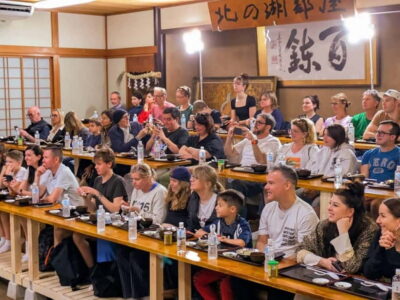
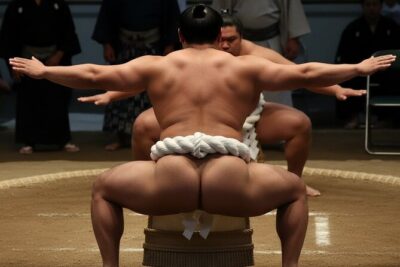
Tokyo Shinjuku Sumo Show & Experience with Photo
Read our review →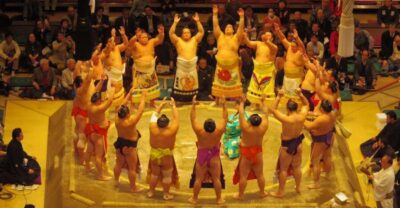
Tokyo: Sumo Tournament Tour with Chair Seat Tickets
Read our review →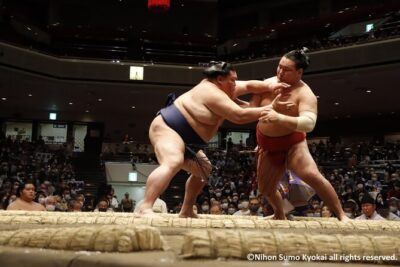
Tokyo Grand Sumo Tournament Viewing Tour with Tickets
Read our review →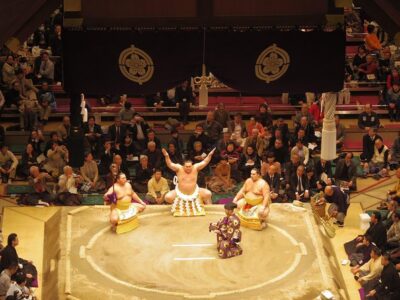
Osaka: Sumo Show & Experience w/ Optional Kimono & Hot Pot
Read our review →This one also appears in