
Review · OSAKA
Osaka: Sumo Stage Show with Bento or Snack + Fight & Photo
Sumo takes center stage in a lively one-hour show where former professional wrestlers demonstrate their strength, explain the rules, and sometimes pull audience members into the action. I like the mix of clear sumo instruction and broad comedy, and I like that the evening ends with a photo alongside the wrestlers. The bento and drink add a distinctly Japanese touch, too.
The main thing to understand is that this is theater, not a professional tournament. The matches are demonstrations with playful staging, audience participation, lights, and sound. That makes it easy and fun for first-time visitors, though the $93 price can feel high for an hour if you expect serious competitive sumo.
Key points at a glance
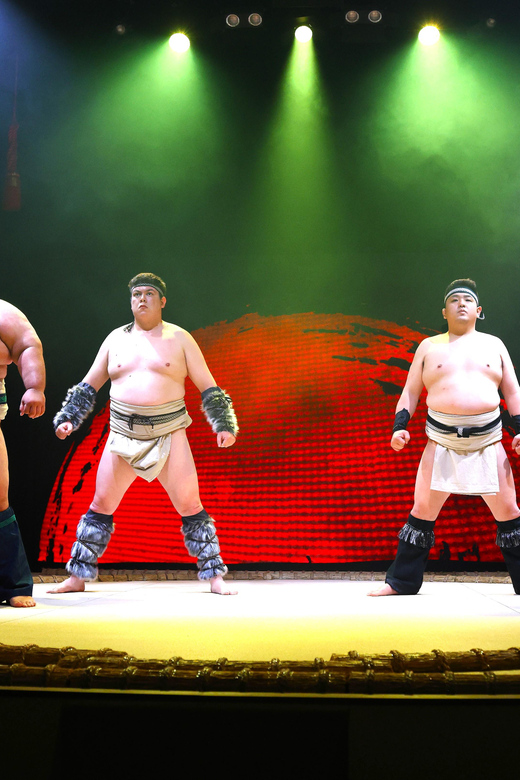
- Former professional wrestlers: Watch trained sumo wrestlers demonstrate techniques and take part in short, good-natured matches.
- Rakugo before the show: A professional rakugo storyteller hosts the 10 minutes before the main performance begins.
- Bento and one drink: The selected show option includes a room-temperature food box or snack bag, plus one drink.
- Audience participation: You may learn simple movements, answer questions, or see a selected audience member challenge a wrestler.
- Photo with the wrestlers: After the 60-minute show, you can take a commemorative picture.
- Namba Parks location: The hall is on the 8th floor, so allow time to find the correct level before the start.
What the Osaka sumo show really is
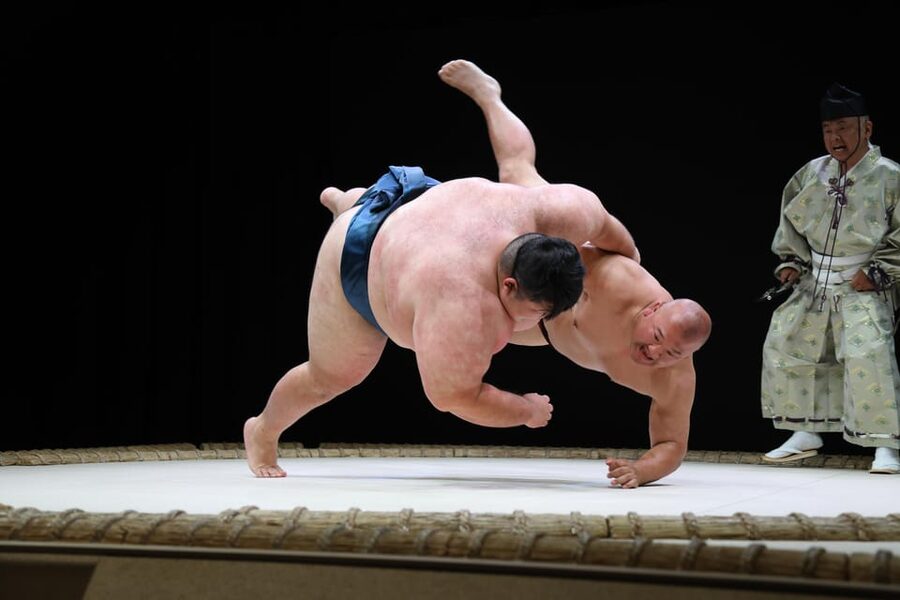
This experience presents sumo as an evening of entertainment and introduction. You are not attending a formal honbasho, the official tournament format held during Japan’s sumo season. Instead, you watch former professional wrestlers put on short demonstrations that explain the sport while keeping the mood light.
That distinction matters. The show uses music, lighting, visual effects, humor, and audience interaction. The wrestlers demonstrate their size, balance, footwork, and pushing techniques, but the bouts are not intended to decide an official champion.
I think this format works well if you have limited time in Osaka or if you want an easy introduction to sumo without planning around a tournament schedule. You get the spectacle of the ring, the rituals and movements, and a chance to meet the performers afterward, all inside one compact program.
More Sumo Experiences in Japan:
- Tokyo: Sumo Show Experience with Chicken Hot Pot and a Photo
★ 4.8 · 6,678 reviews - Tokyo: Sumo Show and Dining Experience
★ 4.8 · 2,742 reviews - the SUMO show
★ 5.0 · 1,960 reviews
Finding THE SUMO HALL HIRAKUZA OSAKA
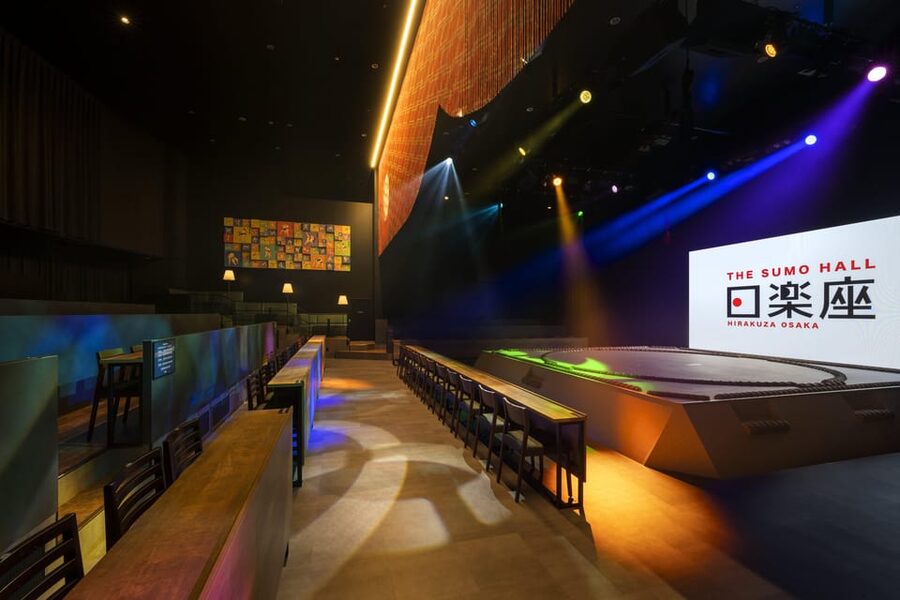
The venue is inside Namba Parks Shopping Center on the 8th floor. Namba is a convenient part of Osaka for food, shopping, and evening entertainment, but a large shopping complex can still take a few minutes to navigate.
I would not arrive at the last second. The instructions ask you to enter at least 30 minutes before the performance, and that is sensible. Find the shopping center, locate the lifts or escalators, and check that you are heading to 8F. Once inside, follow signs for THE SUMO HALL HIRAKUZA OSAKA.
The show times listed for the Sumo Show are 6 p.m. and 8 p.m. The performance itself lasts about one hour. The rakugo storyteller appears roughly 10 minutes before the official start, so arriving early gives you more than a practical buffer. It also lets you settle before the first explanation begins.
The location is useful for planning an evening. You can eat, shop, or have a drink elsewhere in Namba before or after the show, rather than traveling across Osaka for a separate activity.
The opening: rakugo, rules, and sumo basics
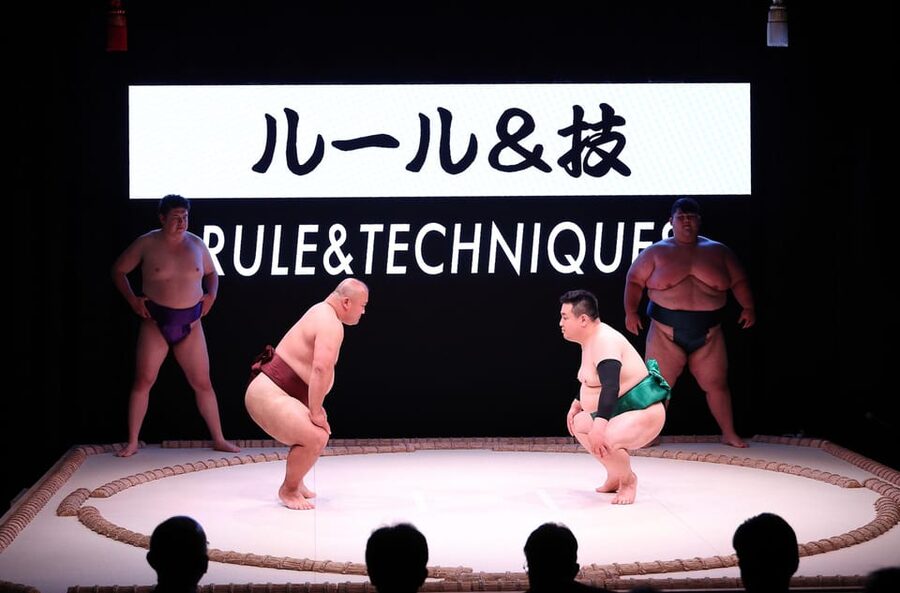
A professional rakugo storyteller serves as the MC before the show begins. Rakugo is a traditional Japanese storytelling form in which one performer uses voice, timing, and small gestures to play different characters. Here, it helps set a comic and welcoming tone before the wrestlers enter the main action.
The first portion of the program explains sumo in a theatrical way. You learn basic rules, techniques, movements, and elements of the sport’s long tradition. The commentary is aimed at people who may know little about sumo, and the format gives you useful context before the matches start.
This opening is one of the show’s strongest features. Sumo can look simple from a distance: two large wrestlers push, pull, and try to force one another outside the ring. The demonstrations help you notice the footwork, balance, stance, and timing that make the sport more demanding than it first appears.
The pace may feel slow if you came mainly for physical action. Some visitors have found the opening explanation longer than expected, while others appreciated learning the basics. I would treat this section as the price of understanding what you are about to watch.
The matches: athletic demonstration with plenty of comedy
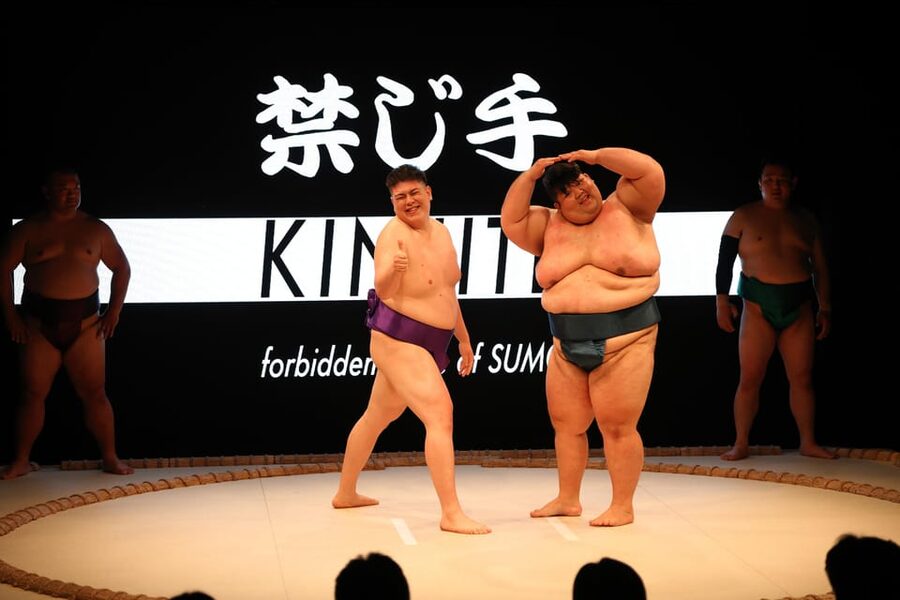
The second half brings the wrestlers into the ring for short demonstrations and mock-level bouts. You see the force of sumo at close range, but the atmosphere remains friendly and theatrical rather than tense.
The wrestlers show techniques and styles while the MC explains what is happening. The humor is broad and accessible, which helps families and groups enjoy the performance even if they have never followed Japanese sport.
At times, audience members are invited to take part. A lottery may offer someone the chance to challenge a wrestler in the ring. The result is meant to be funny, not a fair contest. A person with no sumo training is not going to overpower a former professional wrestler, but the contrast creates some of the evening’s biggest laughs.
Participation is not guaranteed for every person, so do not book this expecting to wrestle. You should think of it as a possible extra, not the central promise. Even from your seat, the interaction between the wrestlers, MC, and audience keeps the program moving.
The demonstrations are generally mild compared with a full professional bout. If you want a serious competition with official rankings and tournament pressure, this is the wrong format. If you want to understand the basics, see the wrestlers up close, and enjoy a relaxed show, it does the job well.
More sporting days out around Japan:
- Tokyo Shinjuku Sumo Show & Experience with Photo
★ 5.0 · 1,750 reviews - Tokyo Sumo Entertainment Show with Chicken Hot Pot and Photo
★ 5.0 · 1,205 reviews - Tokyo: Sumo Show and Experience in Shinjuku
★ 4.8 · 1,001 reviews - Tokyo: Sumo Tournament Tour with Chair Seat Tickets
★ 4.6 · 753 reviews
The food: a cultural touch with mixed value
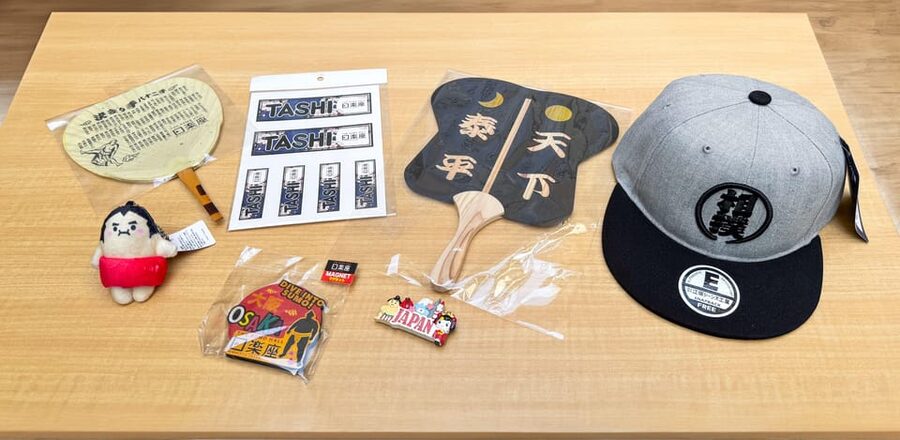
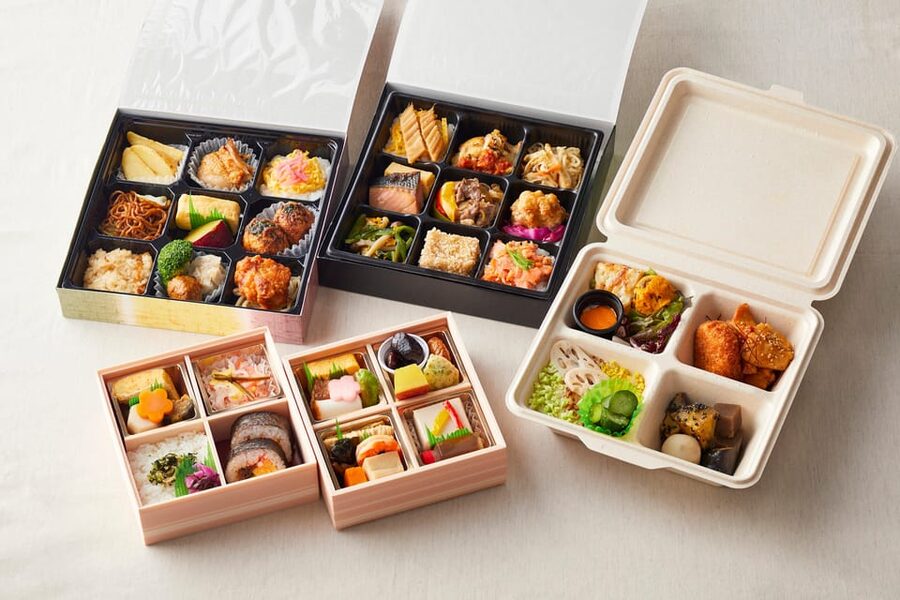
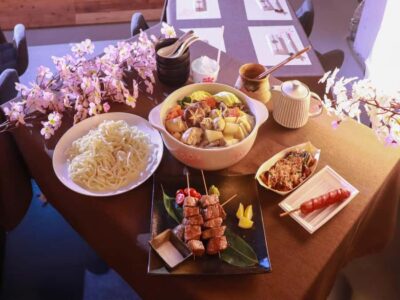
The Sumo Show option includes a standard food box or snack bag and one drink, depending on the package selected. The bento is served at room temperature. That is normal for many Japanese boxed meals, and eating it during a performance has a familiar place in Japanese entertainment culture.
The quality is less consistent as a selling point. Some people have enjoyed the assortment of traditional foods, while others found the bento average, cold, or unappealing. If you have particular dietary needs or are simply picky about prepared food, I would treat the meal as a convenience rather than a reason to pay the admission price.
The included drink adds some value, but additional drinks cost extra. Since the program lasts only an hour, you may prefer to eat before arriving and view the bento as part of the cultural setting. That also prevents disappointment if the food is not the highlight of your evening.
The workshop option is different. It includes one drink and a bowl of chanko nabe, the hearty dish associated with sumo wrestlers. Do not assume the workshop meal is included with the standard evening show, since the two programs have different schedules and inclusions.
Meeting the wrestlers after the performance
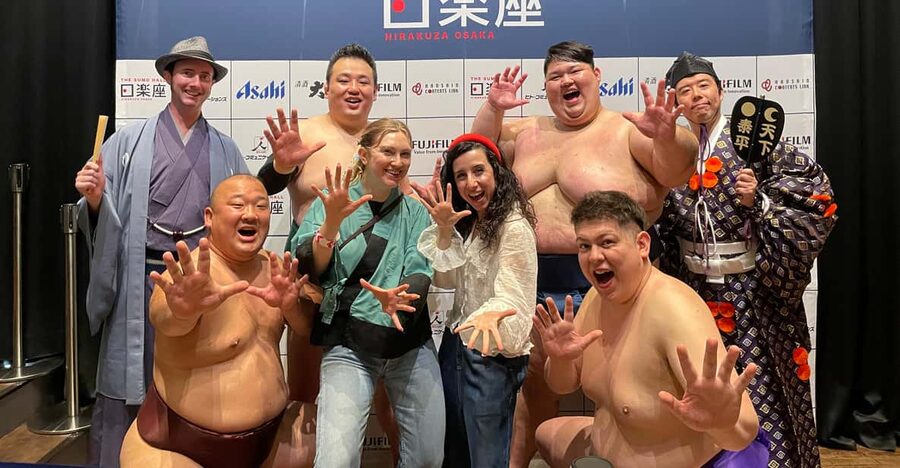
After the 60-minute show, you have the chance to take a commemorative picture with the sumo wrestlers. This is a useful closing moment because it turns the experience from a stage performance into something you can remember and share.
The wrestlers also answer questions during the program, giving you a direct connection with the people demonstrating the techniques. The photo opportunity is especially appealing for families and first-time visitors who want a clear souvenir of the evening.
You should expect a group-style photo opportunity rather than a long private meeting. The details of the photo process can depend on the venue’s arrangements, but the included commemorative picture is one of the more concrete benefits of the ticket.
The optional Sumo Workshop at 1:30 p.m.
The venue also offers a separate Sumo Workshop Experience at 1:30 p.m. It is not the same as the evening Sumo Show.
For the workshop, you arrive 15 minutes early and begin with an introduction to sumo traditions and techniques. You then watch a live match featuring former professional wrestlers before trying some sumo training yourself.
A lottery may select participants to challenge a wrestler wearing full gear. Again, selection is not assured, but the possibility gives the workshop a more hands-on feel than the evening show.
The workshop ends with a bowl of chanko nabe, one drink, and a commemorative photo. If your main goal is participation and the traditional sumo meal, this may suit you better than the standard show. If you prefer a compact evening program with a bento, the 6 p.m. or 8 p.m. Sumo Show is the simpler choice.
Is $93 good value for one hour?
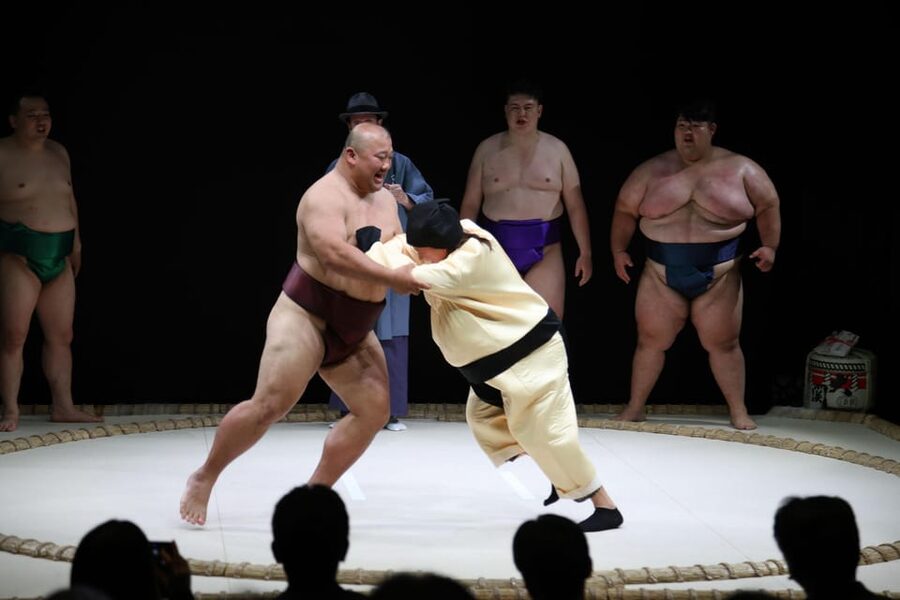
At $93 per person, this is not a cheap way to fill an hour. The price covers the show, guide or commentary, one drink, the standard food box or snack bag when selected, and the commemorative photo. You are also paying for a purpose-built performance with former professional wrestlers, not simply a short demonstration in a public space.
The value depends on what you want from sumo. I think the price is easier to justify if you want a scheduled cultural show in English-friendly surroundings, dislike complicated planning, or are traveling with family members who need entertainment as well as explanation.
The value is weaker if you expect a real tournament or a substantial dinner. The bento may not satisfy every appetite, the matches are staged demonstrations, and the entire program lasts about one hour. Several audience members have felt that the experience was expensive for its length, even while enjoying the performance.
For a visitor who has always wanted to see sumo but cannot arrange a tournament visit, the convenience may be worth it. For a serious sumo fan, I would set expectations carefully and think of this as an introduction rather than a substitute for professional competition.
Who will enjoy this most?
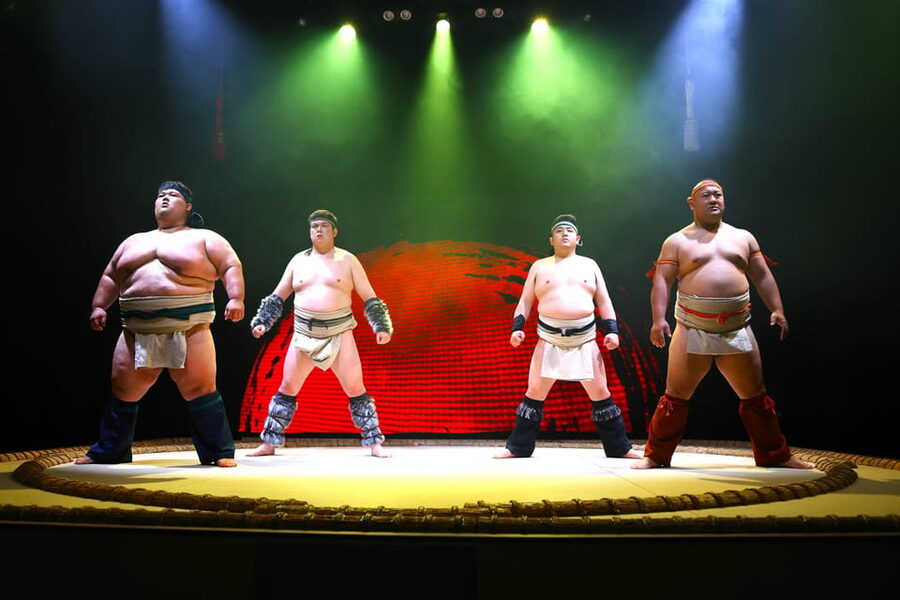
I would recommend the show to:
- First-time visitors who want a simple introduction to sumo.
- Families looking for a lively activity with audience participation.
- People who enjoy comedy and stage production alongside cultural explanation.
- Visitors staying near Namba who want an evening plan without a long journey.
- Anyone who wants a photo with former professional wrestlers.
- Travelers who prefer a scheduled, one-hour activity rather than a full evening commitment.
I would be more cautious if you want quiet cultural study, a formal sporting event, or a generous meal. The show is commercial and designed for an international audience. That is not necessarily a flaw, but it is central to the experience.
Practical details before you book
The activity is wheelchair accessible, and small-group availability is listed. Unaccompanied minors are not allowed. Weapons and sharp objects, smoking, and littering are prohibited.
The activity is non-refundable, so check the date and start time carefully before booking. Plan to arrive at least 30 minutes before the show. The meeting point can vary by option, but the main venue is THE SUMO HALL HIRAKUZA OSAKA on the 8th floor of Namba Parks.
If you are running late, contact the operator rather than assuming you can walk in after the start. One audience member was moved to a later showing after arriving late, but that should be treated as a kindness, not a promise.
Should you book the Osaka sumo show?
Book it if you want accessible sumo, lively humor, and a close-up encounter with former wrestlers. The clear explanations, friendly performers, audience participation, and closing photo make it a memorable introduction to an important part of Japanese culture.
Do not book it expecting a real tournament, serious competition, or a premium dinner. The show is deliberately theatrical and tourist-friendly, and the $93 cost is high for one hour.
My advice is simple: choose the Sumo Show for an entertaining evening near Namba, and choose the workshop if trying sumo and eating chanko nabe matter more to you. Go in knowing what you are buying, and the experience is likely to feel fun rather than misleading.
FAQ
Where is THE SUMO HALL HIRAKUZA OSAKA?
The venue is on the 8th floor of Namba Parks Shopping Center in Osaka. You can find it on Google Maps under THE SUMO HALL HIRAKUZA OSAKA.
How long does the Sumo Show last?
The performance lasts approximately one hour from the scheduled start time. A professional rakugo storyteller performs for about 10 minutes before the show begins.
What time does the Sumo Show start?
The listed Sumo Show times are 6 p.m. and 8 p.m. Check availability for the specific date and starting time you want.
How early should I arrive?
You should enter at least 30 minutes before the scheduled start. This allows time to find the hall on the 8th floor and settle into your seat.
Is this a real professional sumo tournament?
No. The event features former professional wrestlers in demonstrations and staged matches. It is an entertainment show that explains sumo and includes audience interaction.
Is food included?
The Sumo Show option can include a standard room-temperature food box or snack bag and one drink. The exact food inclusion depends on the option selected.
What is included in the Sumo Workshop?
The workshop includes one drink, one bowl of chanko nabe, a commemorative picture, and the workshop program with sumo instruction, a live match, and training.
Can I wrestle a sumo wrestler?
Audience members may be selected by lottery to challenge a wrestler. Participation is not guaranteed for every person.
Do I get a photo with the wrestlers?
Yes. A commemorative picture with the sumo wrestlers is included.
Is the activity wheelchair accessible?
Yes, the activity is listed as wheelchair accessible. Unaccompanied minors are not allowed.
New on the fixture list around Japan
- Tokyo: Sumo Morning Practice Viewing Tour at a Real Stable★ 4.9 · 32 reviews
- Tokyo: Sumo Morning Practice -Stable Visit Tour with a Guide★ 4.8 · 16 reviews
- Tokyo: Watching Sumo and Ryogoku Area Walking Tour★ 4.0 · 5 reviews
- Tokyo: Sumo Keiko Training Tour with Audio Guide & Photo★ 4.8 · 5 reviews
- Tokyo Sumo Morning Practice: Witness the Life of a Wrestler★ 4.8 · 56 reviews
- Tokyo: Sumo Morning Practice Tour in Ryogoku and Photo Shoot★ 4.7 · 47 reviews
- Tokyo Highlights Tour: Sumo, Sushi, Tea, and Tokyo Tower★ 5.0 · 2 reviews
- Tokyo: Sanctuary Authentic Grand Sumo Experience & Training★ 5.0 · 7 reviews
More Sumo Experiences to weigh up.
Tokyo: Sumo Show Experience with Chicken Hot Pot and a Photo
Read our review →
Tokyo Shinjuku Sumo Show & Experience with Photo
Read our review →
Tokyo: Sumo Tournament Tour with Chair Seat Tickets
Read our review →
Tokyo Grand Sumo Tournament Viewing Tour with Tickets
Read our review →
Osaka: Sumo Show & Experience w/ Optional Kimono & Hot Pot
Read our review →This one also appears in