
Review · JAPAN
Tokyo: Sumo Show Experience with Chicken Hot Pot and a Photo
Tokyo sumo becomes a lively dinner show at Asakusa Sumo Club, where a real dohyo sits in the middle of the room. You’ll watch retired professional wrestlers demonstrate rituals, exercises, and techniques, then face off in a playful best-of-three match.
I like the clear bilingual commentary, which gives first-time visitors a useful grasp of sumo rules without turning the evening into a lecture. I also like the audience challenge, especially for families: a few people get to step into the ring and test their strength.
The main thing to understand is that this is entertainment, not an active stable visit or a serious tournament bout. The meal is generous for some, though one portion of feedback found the food selection limited, so book this for the show first and dinner second.
Key points to know before you book
- A real dohyo anchors the room, giving every seat a close view of the action.
- Retired professional wrestlers perform, so the matches are fun and theatrical rather than official competition.
- Lala and the commentary team keep the pace moving, mixing sumo facts with jokes and audience interaction.
- A geisha dance opens the program, adding a traditional performance before the wrestling begins.
- Chicken chanko-nabe is served all-you-can-eat, along with Japanese side dishes and one complimentary drink.
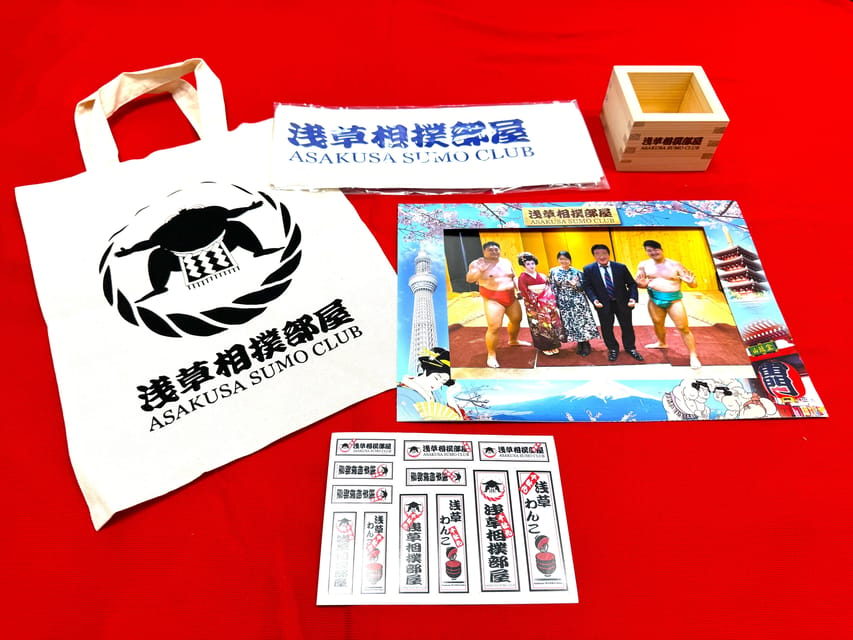
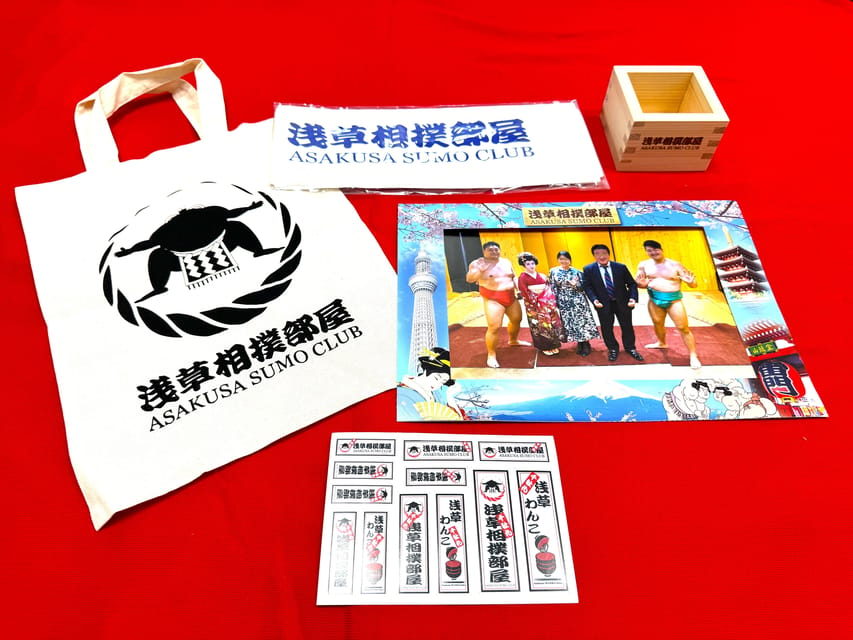
- A printed photo and souvenir set are included, so you leave with more than dinner and a memory on your phone.
What kind of sumo experience is this?
The Asakusa Sumo Club show is designed for visitors who want to understand sumo while having a relaxed, social evening. It is not a morning practice session at an active stable, and it is not a ticket to a professional tournament.
That distinction matters. At a tournament, you watch wrestlers compete under strict sporting rules, often from a larger arena. Here, the purpose is to explain the customs and techniques in an intimate room, then entertain you with retired wrestlers who know how to work an audience.
I think this format suits most first-time visitors better than a formal match if your group includes children, grandparents, or people who know little about sumo. The explanations are in English and Japanese, and the host uses humor to make unfamiliar rituals easy to follow.
The experience lasts about two hours. That is long enough for a proper meal and a full program, but short enough to fit neatly into an Asakusa sightseeing day.
More Sumo Experiences in Japan:
- Tokyo: Sumo Show and Dining Experience
★ 4.8 · 2,742 reviews - the SUMO show
★ 5.0 · 1,960 reviews - Tokyo Shinjuku Sumo Show & Experience with Photo
★ 5.0 · 1,750 reviews
Entering the room and finding the dohyo
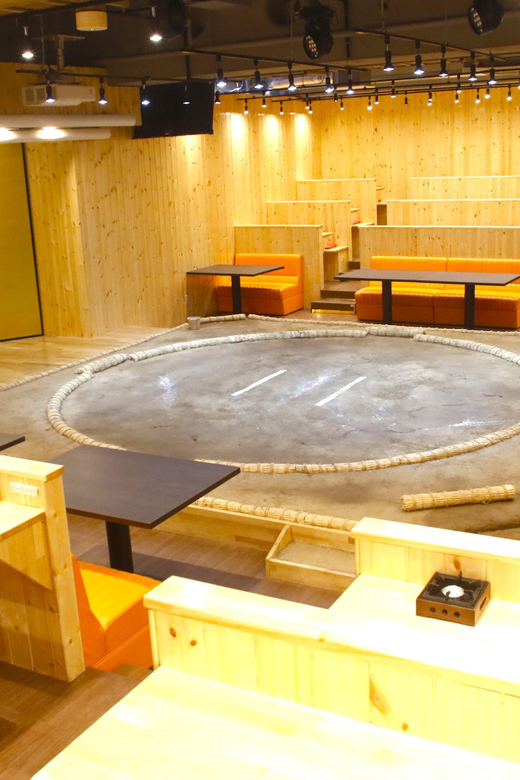
The centerpiece is a genuine sumo ring, called a dohyo. Seating surrounds it, giving the show a more personal feel than a large stadium performance.
Standard seats provide a clear view. VIP seats are in the front row, while VVIP seats offer premium central positions with the most direct and open view of the ring. If seeing footwork, hand slaps, and ceremonial movements close up matters to you, the upgrade may be worth considering.
You may be seated with other parties. That can make the event feel more social, but it also means the seating arrangement may not feel like a private dinner. Wheelchair-accessible seating is available in limited numbers, so mention that need when booking.
The meeting point depends on the option you select. Check the exact location and seating category before setting off, particularly if you are comparing standard, VIP, and VVIP tickets.
The geisha dance sets the tone
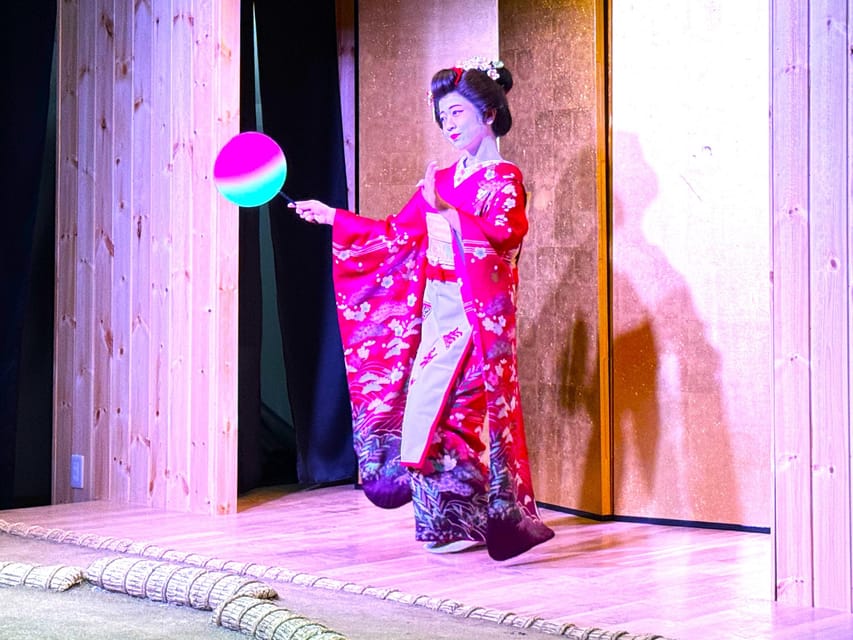
Before the sumo show begins, a geisha performs a traditional Japanese dance in an elegant kimono. It is a brief but distinctive opening, and it gives the evening more cultural range than a wrestling demonstration alone.
I like this part because it creates a contrast. The dance is quiet and formal, while the sumo program that follows is louder, comic, and highly interactive. You get two different performance traditions in one sitting.
The geisha is also included in the final photo opportunity. That helps make the souvenir feel tied to the whole evening rather than only to the wrestlers.
Learning sumo through movement and commentary
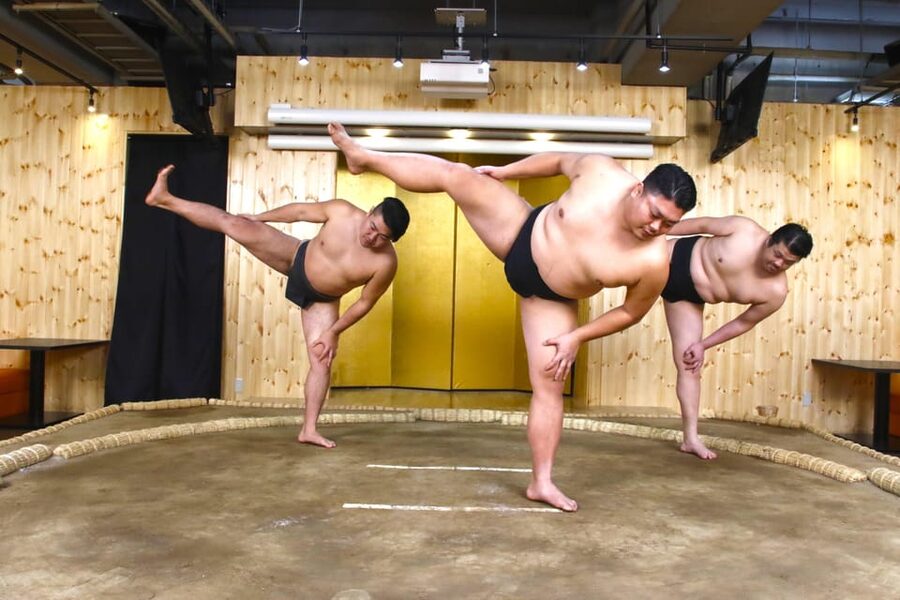
The program explains sumo history, rules, rituals, and basic techniques through live demonstrations. You’ll see morning exercises and classic movements, followed by explanations of the proper do’s and don’ts of sumo.
The bilingual moderator translates the action into plain English and Japanese. That is important because sumo can look simple at first glance: two large wrestlers push, pull, and try to force each other out of the ring. The demonstrations show that balance, timing, grip, and foot placement matter just as much as size.
The host Lala is frequently praised for keeping the presentation funny and active. Benjamin is also mentioned as part of the team. The tone is casual, with jokes and audience involvement, but the program still gives you useful context about sumo culture.
I would not expect a detailed scholarly lesson. Think of it as an accessible introduction that helps you recognize the purpose of the rituals and understand what you are seeing during the match.
More sporting days out around Japan:
- Tokyo Sumo Entertainment Show with Chicken Hot Pot and Photo
★ 5.0 · 1,205 reviews - Tokyo: Sumo Show and Experience in Shinjuku
★ 4.8 · 1,001 reviews - Tokyo: Sumo Tournament Tour with Chair Seat Tickets
★ 4.6 · 753 reviews - Tokyo Grand Sumo Tournament Viewing Tour with Tickets
★ 5.0 · 692 reviews
The best-of-three match with retired wrestlers
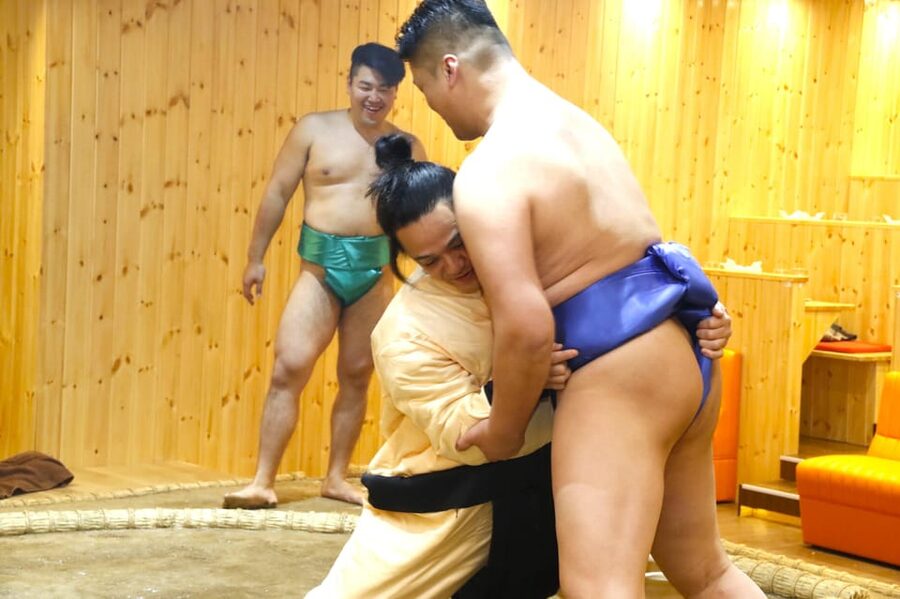
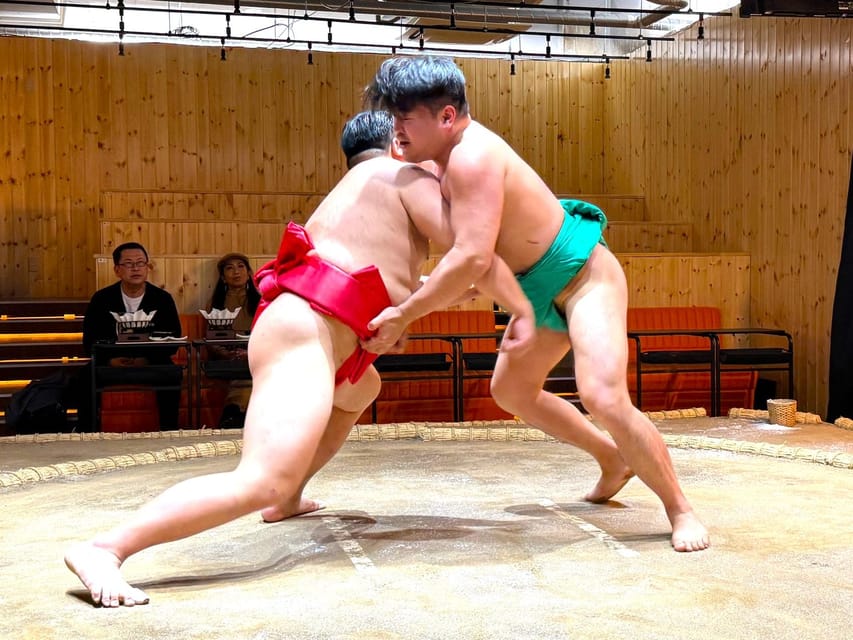
The central performance is a best-of-three bout between retired professional sumo wrestlers. These men bring the size, movement, and ceremony of professional sumo, but the event is built for fun rather than sporting suspense.
The wrestlers interact with the room, play up their personalities, and make the action approachable for children. Their comic timing is a major part of the appeal. You might cheer, laugh, and learn a few sumo terms in the same few minutes.
This is also the point where expectations matter most. If you want a serious contest between active wrestlers, this is not the right product. If you want an entertaining demonstration led by experienced former professionals, it offers good value.
The format works well for mixed-age groups. Children can follow the physical comedy, adults can appreciate the explanations, and older family members do not need to know anything about sumo in advance.
The sumo challenge: fun, but not guaranteed
A few people from the audience can enter the dohyo and challenge a sumo wrestler. This is one of the most memorable parts of the program, especially when a child or willing adult steps forward.
The challenge spots are limited. If too many people apply, participants are selected by lottery, so you should not book this experience expecting a personal match. The chance to participate is included, but it is not guaranteed.
You also do not need to be a fitness enthusiast to enjoy the moment. The point is participation and laughter, not proving that you can defeat a retired professional wrestler. The audience gets involved by cheering, and even those who stay in their seats have something to watch.
Families should note that children have enjoyed the challenge, but the supplied information does not promise a specific age or size requirement. Ask staff on the day if you have a child who wants to volunteer.
Chicken chanko-nabe and Japanese side dishes
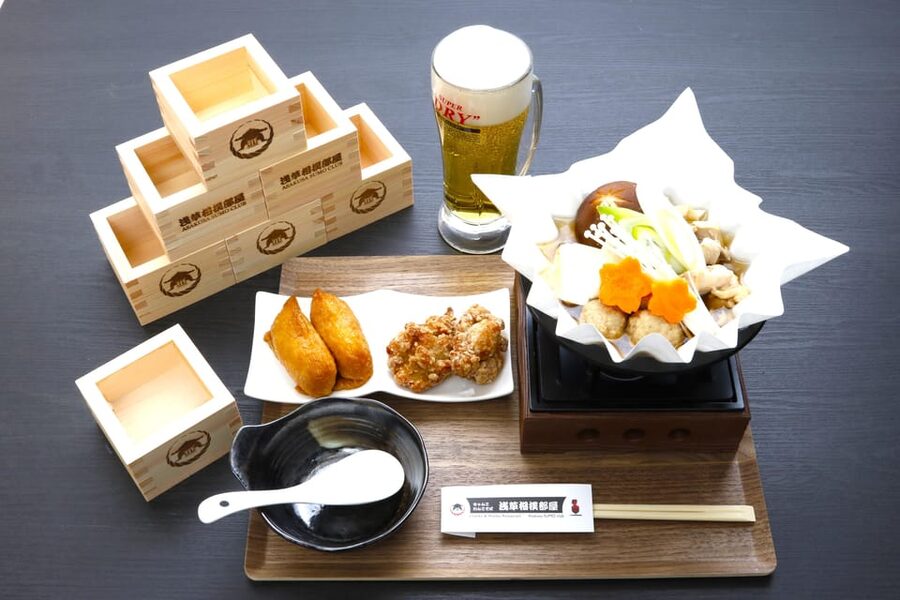
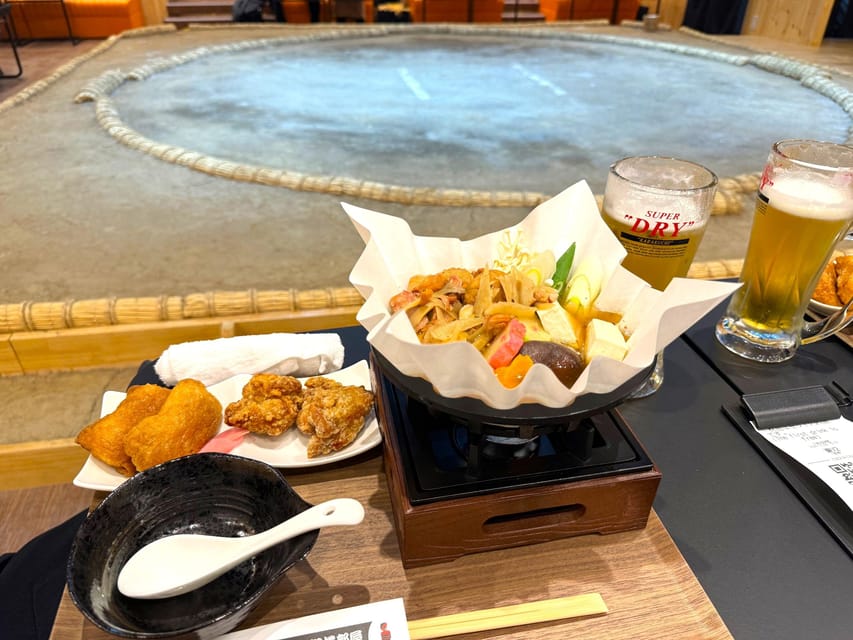
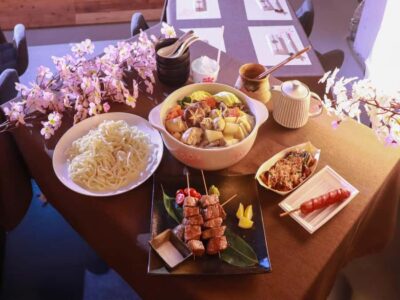
The meal centers on chanko-nabe, the traditional hot pot associated with sumo wrestlers. It is served as an all-you-can-eat meal, and additional servings can be ordered using a QR code.
The menu also includes Japanese side dishes. Examples reported from the experience include edamame, inari sushi, and sweet rolls. One drink is included, with beer and other additional drinks available to buy.
I see the meal as a strong part of the package, especially at a price of $103 per person. You are not paying for a short stage show alone. You receive the entertainment, the food, a drink, the photo, and the souvenir set in one visit.
Still, food expectations vary. The chicken hot pot receives strong praise, but one person found the overall food selection limited. If you are booking mainly for an elaborate Japanese dinner, you may prefer a restaurant with a larger menu. If you want a filling meal while watching the program, the hot pot makes practical sense.
The hot pot is served at the table, and one person found the paper bowls over the open flame slightly unsettling. If that setup concerns you, ask staff for guidance and handle the cooking vessel carefully.
Vegetarian and vegan meals can be arranged if requested at least two days ahead. Gluten-free and halal meals are not available, though you may bring your own food for those dietary needs. Infants do not receive meals, seating, or souvenirs, and babies under one year are not suitable for the activity.
The photo and souvenir set at the end
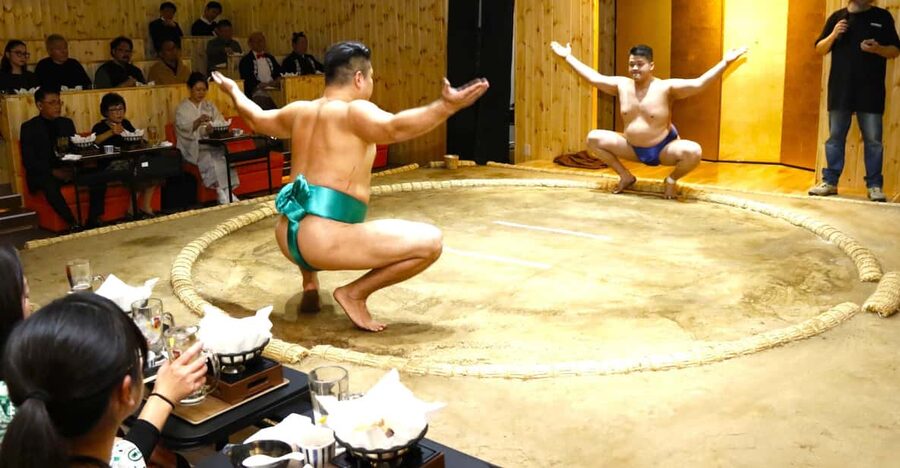
After the performance, you can take a printed photo with the sumo wrestlers and geisha. A souvenir gift bag or set is also provided, although the contents can change with the season.
This is a small detail, but it improves the value. You do not have to rely on a hurried phone photo taken from your seat. The printed picture gives families a simple keepsake, and children often enjoy receiving the gift bag at the end.
The farewell also gives the evening a clear finish. After the challenge, final match, and meal, you have a short moment to meet the performers and collect the memento before leaving.
Is VIP seating worth the extra cost?
The base price is $103 per person, though the final amount can vary with the seating option. Standard seats should suit anyone mainly interested in the overall program, since all seating offers a view of the dohyo.
VIP is more appealing if you want to watch the wrestlers at close range or take clearer photos. VVIP is aimed at people who want the most central and unobstructed position.
I would choose standard seating for a family focused on the food and interaction. I would consider VIP for a special occasion, a keen sumo fan, or anyone who values proximity over saving every yen. One person specifically felt a VIP upgrade was worth the money, but that is a personal choice rather than a rule.
Because the room is intimate, even standard seating should feel more direct than a large arena. The upgrade buys you the best angle, not a completely different show.
Who will enjoy this most?
This works especially well for:
- Families with children who enjoy physical comedy and audience participation
- First-time visitors who want a simple explanation of sumo customs
- Adults looking for an evening activity that combines dinner and entertainment
- Three-generation groups, since the program does not demand much walking
- Visitors who could not arrange a visit to an active sumo stable
- Anyone who wants a souvenir photo rather than only a stage performance
It may not suit you if your main goal is to see active wrestlers in serious competition or observe a private morning practice. It is also less suitable if you need gluten-free or halal food that cannot be brought from outside.
The show is wheelchair accessible, but accessible seating is limited. Contact the provider when booking so the right place can be arranged.
Practical timing and cancellation details
The activity lasts two hours, with starting times depending on availability. It is sensible to allow extra time to reach the meeting point because the location can vary with the option booked.
Free cancellation is available up to 24 hours before the activity for a full refund. You can also reserve now and pay later, which helps if you are building a Tokyo schedule around weather, museum visits, or a changing family itinerary.
If the main show is fully booked, a sister venue next door may offer a luxury sumo show with deluxe Japanese cuisine. That is a separate experience, so check the name and inclusions carefully before booking.
Should you book the Asakusa Sumo Club show?
Book it if you want accessible, funny, hands-on sumo rather than a serious sporting event. The retired wrestlers, bilingual commentary, geisha dance, hot pot, audience challenge, printed photo, and souvenir set create a full two-hour package.
I especially recommend it for families and mixed-age groups. The format has enough education for adults, enough action for children, and enough food to make the $103 price feel reasonable.
Skip it if you are seeking an active stable visit, a formal tournament, or a refined multi-course dinner. For everyone else, this is a practical way to add sumo to a Tokyo itinerary without needing specialist knowledge or a long commitment.
FAQ
Is this a real sumo tournament?
No. The show is performed by retired professional sumo wrestlers and is designed as family-friendly entertainment. It includes demonstrations, explanations, and a best-of-three performance match.
Is English commentary available?
Yes. A moderator provides live commentary in English and Japanese, explaining sumo rules, techniques, rituals, and customs.
Can I challenge a sumo wrestler?
You can apply to enter the ring and challenge a wrestler. The number of challengers is limited, and participants may be chosen by lottery if there are too many applicants.
What food is included?
The ticket includes all-you-can-eat chicken chanko-nabe and Japanese dishes, plus one complimentary drink. Extra drinks can be purchased, and additional food can be ordered using a QR code.
Can vegetarian or vegan meals be arranged?
Yes. Vegetarian and vegan meals are available if requested at least two days in advance. Gluten-free and halal meals are not available, though you may bring your own food.
Is the experience wheelchair accessible?
Yes, but wheelchair-accessible seating is limited. Inform the provider when booking if you require accessible seating.
New on the fixture list around Japan
- Tokyo: Watching Sumo and Ryogoku Area Walking Tour★ 4.0 · 5 reviews
- Tokyo: Sumo Morning Practice Viewing Tour at a Real Stable★ 4.9 · 32 reviews
- Tokyo: Sumo Morning Practice -Stable Visit Tour with a Guide★ 4.8 · 16 reviews
- Tokyo: Sumo Morning Practice Tour in Ryogoku and Photo Shoot★ 4.7 · 47 reviews
- Tokyo: Sumo Keiko Training Tour with Audio Guide & Photo★ 4.8 · 5 reviews
- Tokyo Sumo Morning Practice: Witness the Life of a Wrestler★ 4.8 · 56 reviews
- Tokyo Highlights Tour: Sumo, Sushi, Tea, and Tokyo Tower★ 5.0 · 2 reviews
- Tokyo: Sanctuary Authentic Grand Sumo Experience & Training★ 5.0 · 7 reviews
More Sumo Experiences to weigh up.
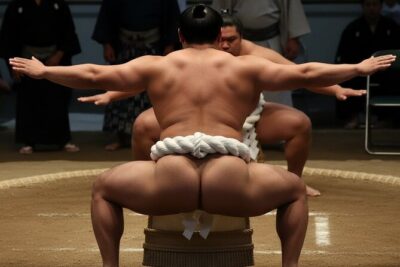
Tokyo Shinjuku Sumo Show & Experience with Photo
Read our review →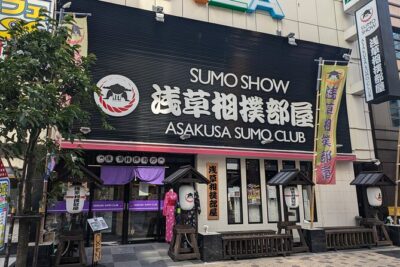
Tokyo Sumo Entertainment Show with Chicken Hot Pot and Photo
Read our review →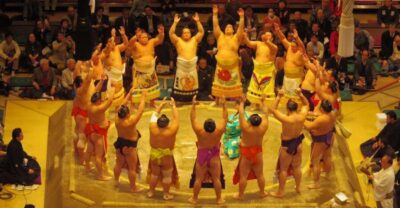
Tokyo: Sumo Tournament Tour with Chair Seat Tickets
Read our review →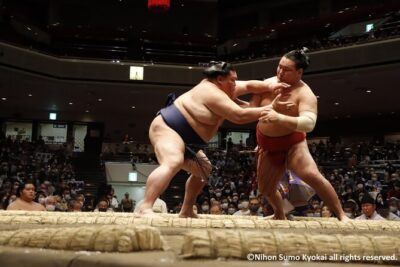
Tokyo Grand Sumo Tournament Viewing Tour with Tickets
Read our review →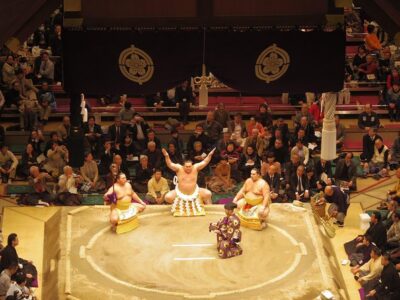
Osaka: Sumo Show & Experience w/ Optional Kimono & Hot Pot
Read our review →This one also appears in