
Review · JAPAN
Fukuoka: Sumo Wrestling Tournament Chair Seats & ExpertGuide
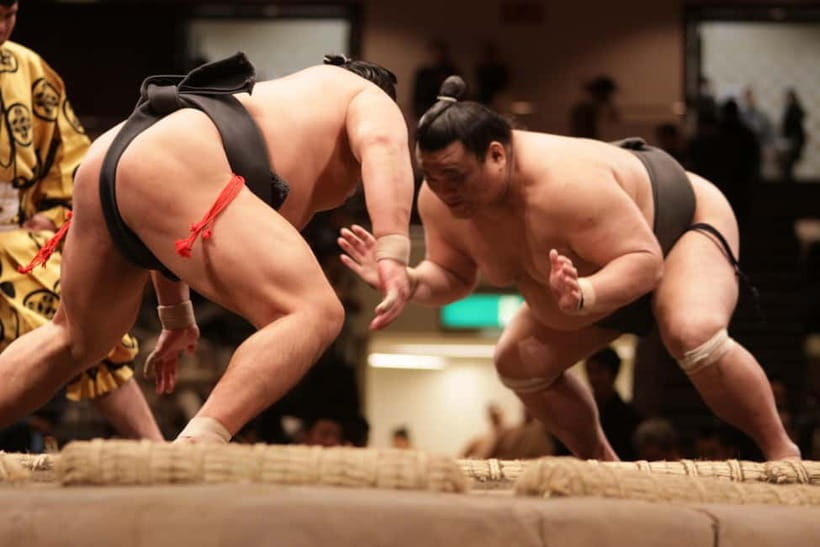
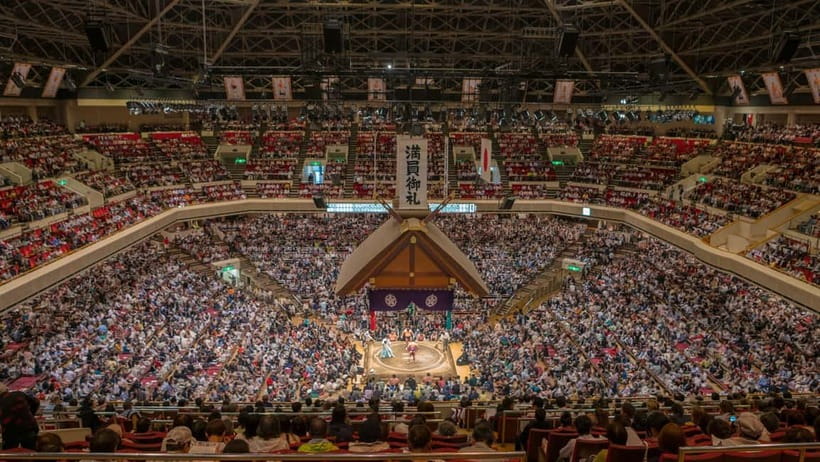
Fukuoka’s sumo tournament comes alive in the late afternoon, when the strongest wrestlers enter and the arena noise rises. From second-floor A or B chair seats, you get a broad view of the ring, the crowd, and the formal ceremony before the top bouts.
I like two things here: the small group of up to seven keeps the explanations personal, and the English-speaking guide gives you the rules and customs before the action gets serious. Guide Hiro Matsuo is noted for being punctual, friendly, and generous with useful photo spots.
The main drawback is the fixed schedule. You must meet at 2:00 PM and stay with the group session timetable, so this is not the right choice if your Fukuoka plans are loose or you want to arrive only for the headline matches.
Key points at a glance
- Top bouts from 4:00 to about 6:00 PM: This is when the strongest wrestlers compete and Japanese television coverage begins.
- Second-floor panoramic view: A or B chair seats let you see the full arena rather than only the action in front of you.
- Personal guidance for a small group: Up to seven people receive an English explanation of sumo rules, history, culture, and codes.
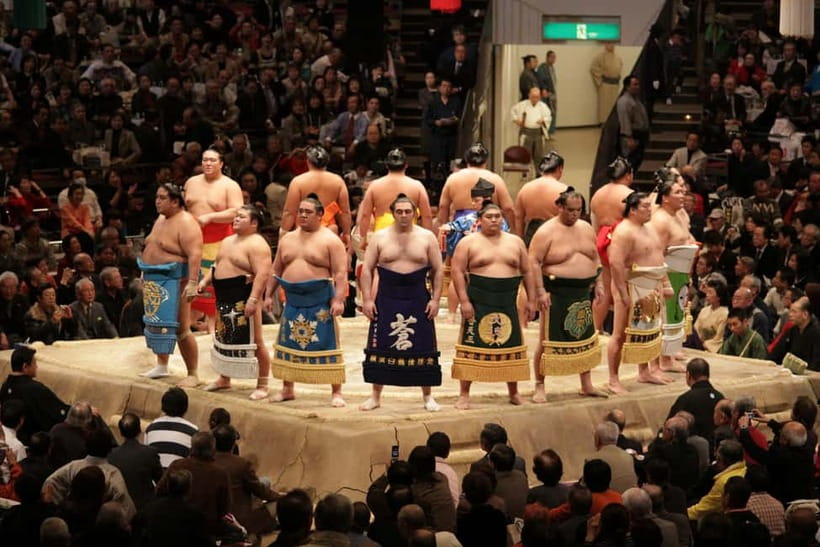
- Nakabi around 3:20 PM: You see the ceremony that comes before the matches featuring especially strong wrestlers.
- One re-entry per day: You may leave and return once, but tell the guide first.
- $162 per person: The price includes the tournament ticket and guide service, but not private transportation or snacks.
Why an afternoon sumo session works so well
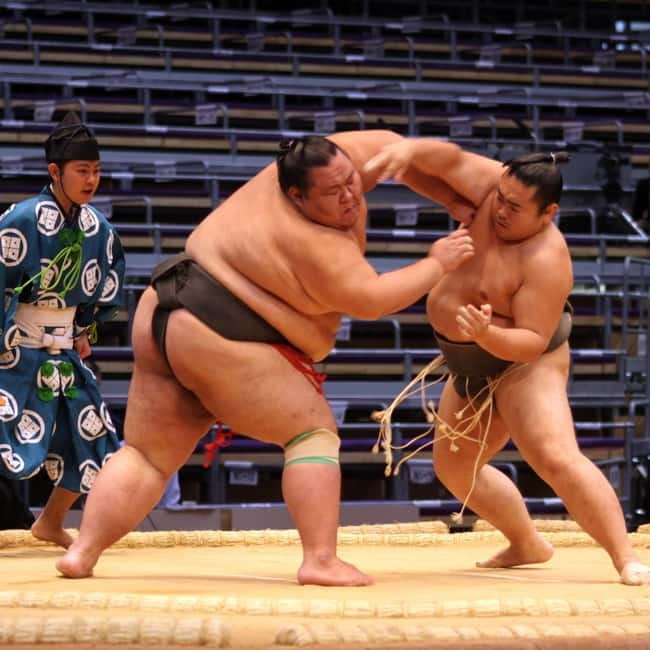
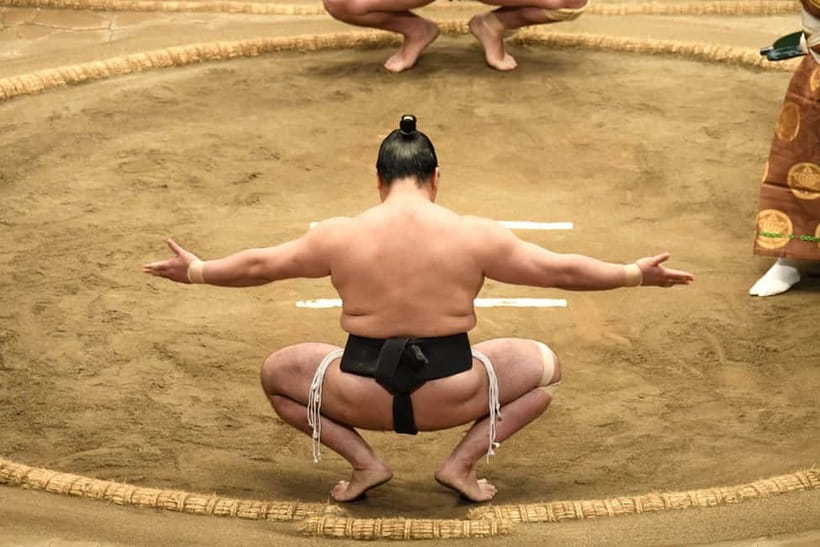
Sumo is easy to misunderstand if you only see a few short clips. The wrestlers may spend more time entering, stamping, and preparing than actually pushing, but those rituals are part of the sport. The ceremony, posture, gestures, and waiting all carry meaning.
This experience gives you time to get oriented before the best bouts begin. You enter at 2:00 PM, hear an explanation of the rules and sumo culture, then settle into your chair seats. By the time the main matches arrive, you can follow more than just the impact at the center of the ring.
That timing matters. The early part of a tournament session can feel slower, especially if you came expecting nonstop bouts. The reward is seeing the day build toward its climax rather than dropping into the arena for only the final hour.
I also like that the guide remains part of the experience without controlling every minute. After reaching your seat, you are free to move around. You can watch from your assigned chair, take in the arena, and look for photo opportunities while still having an English-speaking interpreter nearby.
More Sumo Experiences in Japan:
- Tokyo: Sumo Show Experience with Chicken Hot Pot and a Photo
★ 4.8 · 6,678 reviews - Tokyo: Sumo Show and Dining Experience
★ 4.8 · 2,742 reviews - the SUMO show
★ 5.0 · 1,960 reviews
Meeting at 2:00 PM near the main entrance
The stated meeting point is to the left of the ticket counter at the main entrance at 2:00 PM. Another instruction identifies the area to the left of the Akira Suisan sign, marked by a red sun motif. The exact meeting details are sent two or three days before the event, so check your messages carefully rather than relying only on a general map pin.
Look for a friendly English-speaking interpreter. Hiro Matsuo is one guide associated with this experience, and his role includes explaining the rules, history, culture, and codes of sumo.
The meeting time is not a suggestion. This is a guided group session, and the time cannot be changed. If you have a dinner reservation, a day trip returning late, or another timed activity, build in enough room to reach the entrance by 2:00 PM.
Private transportation is not included. You handle your own way to the venue and back. That keeps the package simple, but you need to plan the journey yourself and allow time to find the correct entrance.
The first explanation makes the wrestling easier to follow
Once inside, the guide explains how sumo works and gives you the cultural background needed to read the action. You will learn the basic rules and codes rather than simply watching two wrestlers collide.
That introduction is especially useful if this is your first tournament. Sumo has plenty of details that are not obvious from the seats. The ceremonies, movements, and formal behavior can look mysterious until someone explains what you are seeing.
A good guide also helps you notice the difference between the early bouts and the later ones. You may find the opening matches less intense, but they give you a clear look at the rhythm of a tournament day. As the afternoon progresses, the wrestlers become stronger and the atmosphere grows more charged.
The small group size helps here. With no more than seven people, the explanation should feel more like a personal orientation than a large lecture. You can listen, ask questions, and then continue watching without a crowd gathered around you.
What your second-floor chair seat gives you
The experience uses A or B class chair seats on the second floor. These are not the floor-level box seats, so you should not expect the closest possible view of the ring. The tradeoff is a broader angle and a more comfortable, panoramic view of the arena.
From higher up, you can watch the full setting. You see the ring, the surrounding seating, and the movement of the ceremony across the venue. That wide view helps you understand sumo as a formal public event, not merely a series of short physical contests.
Chair seating also makes a long afternoon easier. You are not sitting on a hard floor box, and you have a defined seat for the session. The precise position can vary between A and B class, so the ticket category is important, but the experience promises one of these two chair sections rather than a single guaranteed seat location.
After you arrive at your seat, you are free to move around. If you leave the venue, re-entry is possible once that day, but you must inform the guide. Do not assume you can come and go repeatedly without notice.
More sporting days out around Japan:
- Tokyo Shinjuku Sumo Show & Experience with Photo
★ 5.0 · 1,750 reviews - Tokyo Sumo Entertainment Show with Chicken Hot Pot and Photo
★ 5.0 · 1,205 reviews - Tokyo: Sumo Show and Experience in Shinjuku
★ 4.8 · 1,001 reviews - Tokyo: Sumo Tournament Tour with Chair Seat Tickets
★ 4.6 · 753 reviews
The 3:20 nakabi ceremony
Around 3:20 PM, the nakabi begins. This is the ceremony before the matches involving particularly strong wrestlers. It is an important change of pace in the day, since the tournament is moving toward its most anticipated bouts.
You watch this ceremony from your chair seats. The guide’s earlier explanation gives you a better chance of understanding why the formal procession and gestures matter, rather than treating them as filler between matches.
This is also a good time to take in the arena as a whole. The second-floor view helps you see the ceremony in context, with the ring at the center and the audience responding around it.
If your main goal is to see only the biggest names wrestle, the nakabi may feel like an extra wait. If you want to understand sumo as a sport with strict ritual and presentation, it is one of the most useful parts of the afternoon.
The strongest matches from 4:00 to 6:00 PM
The headline period begins around 4:00 PM and continues until about 6:00 PM. This is when the particularly strong wrestlers begin their intense matches, and Japanese television broadcasts start as well.
You can expect the mood in the arena to change during this stretch. The bouts remain brief, but the importance and skill level rise. The quick nature of sumo is part of its appeal: a match can turn in seconds, so you need to stay alert.
The guide has already given you the basic rules, which lets you focus on the details. Watch the initial charge, the balance, the footwork, and the effort to force an opponent out of the ring. You do not need to know every technical term to feel the tension, but a few simple explanations make the action more satisfying.
The tour finishes around 6:00 PM after the final match. This is a useful end time for an evening meal, but do not book anything too close to six. The session ends at the meeting point, and you will still need to leave the venue and make your way onward.
Is $162 a fair price?
At $162 per person, this is not a budget ticket. The value depends on how much help you want with a Japanese sporting event that can be difficult to interpret on your own.
The price includes the tournament ticket, an English-speaking interpreter, and explanations of sumo culture, rules, and codes. You are paying for more than a seat. You are also buying a planned introduction and the ease of having someone meet you, guide you inside, and help you understand the key parts of the afternoon.
That can be worthwhile for a first visit, especially if you do not speak Japanese. The small group is another part of the value. A group capped at seven should feel more direct than a large coach tour, and the guide can point out places for memorable photos.
The price does not include private transportation or snacks. Budget separately for food and drinks, and do not assume refreshments are part of the ticket package. The experience information describes time to relax with drinks and snacks, but the included items list does not cover snacks, so plan to purchase anything you want at your own cost.
If you already understand sumo and only want a seat, booking a ticket without a guide may suit you better. This package makes the most sense when you value interpretation, a small group, and help with the customs around the matches.
What the guide adds to the day
The strongest praise connected with this experience centers on the guide’s timing, friendliness, detailed introduction, and help finding good places for photos. Those are practical benefits, not vague extras.
A punctual meeting matters because the session has a fixed start. A clear explanation matters because the event contains long formal sections between short bouts. Photo guidance matters because the arena offers different angles, and you may not know where to look once you are free to move around.
Hiro Matsuo is specifically associated with this experience. You can expect an English-speaking interpreter rather than a Japanese-language tour with only a short translation. The exact guide may depend on the date, but the service is designed for English speakers.
The guide does not replace your own time in the arena. After you reach your seat, you can watch independently and move around. That balance is useful: you get context when you need it, then space to enjoy the matches at your own pace.
Who should book this sumo experience?
I would recommend it to a first-time sumo spectator who wants the rules explained without committing to a large group. It also suits visitors who want a broad second-floor view and a full afternoon rather than a quick appearance for the final bouts.
Families and mixed-interest groups may appreciate the structure. The guide gives everyone a starting point, while the chair seats and freedom to move around make the afternoon less rigid once you are inside.
It is less suitable for someone who wants total flexibility. You cannot change the group session time, and the 2:00 PM meeting is mandatory for the planned experience. It is also not ideal if you want ringside or floor-level seating, since the package uses A or B class chair seats.
You should also think about your own interest level. If you care about the rituals, rules, and build-up to the top matches, the long session has real value. If you only want to see a few famous wrestlers, you may find the early hours too slow for the price.
Booking details worth knowing
You can reserve now and pay later, which helps if your Fukuoka plans are still taking shape. Cancellation is allowed up to 24 hours in advance for a full refund.
If your schedule is unusual, contact Smile Vista at [email protected] before booking. The operator does not sell sumo tickets separately, so you cannot use this service simply to arrange a seat without the guided session.
The activity is offered in English. Re-entry is allowed once per day, but inform the guide before leaving. The session ends back at the meeting point after the final match.
Should you book it?
Book this experience if you want a clear introduction to sumo, a small English-speaking group, and A or B chair seating with a wide view of the arena. The best part is the combination of context and live action: the guide helps you understand the ceremony, then you watch the strongest matches from about 4:00 to 6:00 PM.
Skip it if you need a flexible arrival time, want only a ticket, or are set on floor-level seats. For a first sumo tournament in Fukuoka, though, the fixed afternoon schedule and detailed guidance make the $162 price easier to justify.
FAQ
Where does the sumo experience begin?
You meet at 2:00 PM to the left of the ticket counter at the main entrance. The meeting area may also be described as the left of the Akira Suisan sign with the red sun motif. Final meeting details are provided two or three days before the event.
What time does the session run?
The group session runs from 2:00 PM until about 6:00 PM. It ends after the final match and disbands back at the meeting point.
What kind of seats are included?
The ticket provides A or B class chair seats on the second floor. These seats offer a panoramic view of the arena.
Is the guide available in English?
Yes. The experience includes an English-speaking interpreter. Hiro Matsuo is one guide associated with the activity.
How large is the group?
The small group includes up to seven people.
What does the guide explain?
The guide explains sumo history, culture, rules, and codes. The explanation takes place after entering the venue and before you watch the main part of the tournament.
When does the main sumo action begin?
The strongest matches begin from around 4:00 PM and continue until about 6:00 PM. Japanese television broadcasts also begin during this period.
What is the nakabi ceremony?
The nakabi is the ceremony before the matches involving particularly strong sumo wrestlers. It begins around 3:20 PM and is viewed from your seats.
Can I leave and re-enter the venue?
Yes. Re-entry is possible once per day. Tell the guide if you need to leave the venue.
Are transportation and snacks included?
No. Private transportation and snacks are not included. The ticket fee and friendly interpreter are included.
Can I change the session time?
No. This is a guided group session, and the session time cannot be changed. For schedule concerns, contact Smile Vista at [email protected].
What is the cancellation policy?
You can cancel up to 24 hours in advance for a full refund. You may also reserve and pay later.
New on the fixture list around Japan
- Tokyo: Sumo Morning Practice -Stable Visit Tour with a Guide★ 4.8 · 16 reviews
- Tokyo: Watching Sumo and Ryogoku Area Walking Tour★ 4.0 · 5 reviews
- Tokyo: Sumo Morning Practice Viewing Tour at a Real Stable★ 4.9 · 32 reviews
- Tokyo: Sumo Morning Practice Tour in Ryogoku and Photo Shoot★ 4.7 · 47 reviews
- Tokyo: Sumo Keiko Training Tour with Audio Guide & Photo★ 4.8 · 5 reviews
- Tokyo Sumo Morning Practice: Witness the Life of a Wrestler★ 4.8 · 56 reviews
- Tokyo: Sanctuary Authentic Grand Sumo Experience & Training★ 5.0 · 7 reviews
- Tokyo Highlights Tour: Sumo, Sushi, Tea, and Tokyo Tower★ 5.0 · 2 reviews
More Sumo Experiences to weigh up.
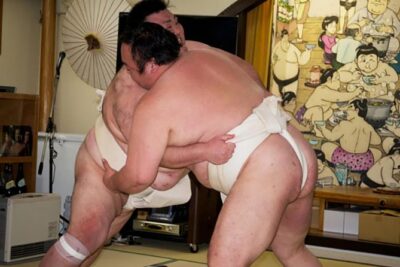
Tokyo: Sumo Show Experience with Chicken Hot Pot and a Photo
Read our review →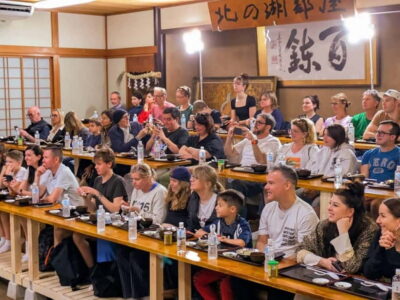
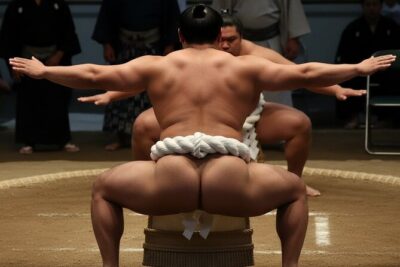
Tokyo Shinjuku Sumo Show & Experience with Photo
Read our review →
Tokyo: Sumo Tournament Tour with Chair Seat Tickets
Read our review →
Tokyo Grand Sumo Tournament Viewing Tour with Tickets
Read our review →
Osaka: Sumo Show & Experience w/ Optional Kimono & Hot Pot
Read our review →This one also appears in