
Review · OSAKA
Osaka Sumo Experience with Live Show and Audience Challenge
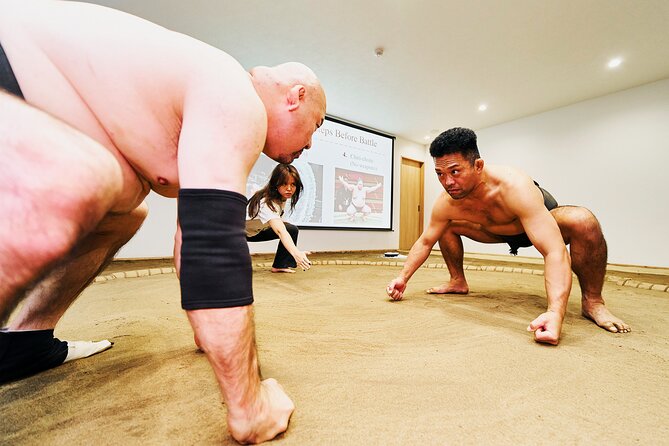
Sumo is much more than two huge athletes pushing at each other. This 90-minute Osaka show explains the rituals, rules, and training before retired wrestlers stage a dramatic tachiai match. If you are brave, you can even step into the ring for a bout of your own.
I like the clear English explanation and the chance to see techniques up close. I also like the audience challenge, which turns a passive performance into a funny, memorable part of your Osaka day. The main consideration is that volunteer clothing may not fit everyone well, and the show is less formal than a tournament in a major sumo arena.
Key points
- Retired wrestlers demonstrate authentic techniques: You see training movements, rituals, and the explosive tachiai at close range.
- Audience participation is built in: Limited volunteers can enter the ring and wrestle a sumo athlete.
- English support keeps the traditions clear: The guide explains the rules, customs, and background in accessible English.
- A compact 90-minute activity: It fits neatly into a busy Osaka itinerary and ends where it starts.
- Small enough to feel involved: The group limit is 50 people, so the presentation is not designed as a giant stadium event.
- Good value at $55.50: You get a cultural explanation, live demonstrations, and a chance to participate without paying for transport or a meal.
What happens during the 90-minute Osaka show
The experience takes place at AI Building, at 1-chōme 5-1 Asahi in Osaka’s Nishinari Ward. You meet there, attend the full presentation, and return to the same point when it ends.
The format is simple and well suited to a short city break. You are not spending half a day crossing Osaka or waiting around between attractions. Instead, the show gives you a focused look at sumo, with the talking, demonstrations, match, and audience challenge all held in one place.
That compact plan matters. Osaka has plenty of major sights, food stops, and shopping areas competing for your time. A 90-minute activity can fit before lunch, between sightseeing plans, or into an evening schedule. You will need to arrange your own route to the meeting point, since private transportation is not included.
The group can include up to 50 people. That is large enough to create a lively audience, but still small compared with a major public sporting event. If you hope to volunteer, keep in mind that only limited spots are available. Participation is offered to selected audience members rather than promised to every person who attends.
More Sumo Experiences in Japan:
- Tokyo: Sumo Show Experience with Chicken Hot Pot and a Photo
★ 4.8 · 6,678 reviews - Tokyo: Sumo Show and Dining Experience
★ 4.8 · 2,742 reviews - the SUMO show
★ 5.0 · 1,960 reviews
Sumo explained before the action begins
The first useful feature is the explanation. Sumo has rules and customs that can look mysterious if you only see short clips or a few minutes of a tournament. The English-speaking guide helps put the movements into context, explaining how the sport developed and why its rituals matter.
You can expect attention to the sacred side of sumo as well as its physical side. The presentation covers traditional rituals, training practices, and legendary techniques. That balance makes the show more than a comedy wrestling demonstration. You get a basic cultural framework before the action starts.
I especially like this approach for first-time viewers. You do not need prior knowledge of ranking systems, match rules, or sumo vocabulary to follow along. The explanations are intended for newcomers, while the live techniques give experienced fans something to watch closely.
The English support is another practical plus. Several parts of the experience depend on timing and detail. Without clear explanations, the ritual movements could become a series of unfamiliar gestures. Here, you can understand what you are seeing rather than simply watching large athletes collide.
The tone is also welcoming. The activity suits families, couples, solo visitors, and groups of friends who want something different from another temple, shopping street, or food tour. Most people can participate as audience members, though stepping into the ring is an optional extra.
Training movements and the dramatic tachiai
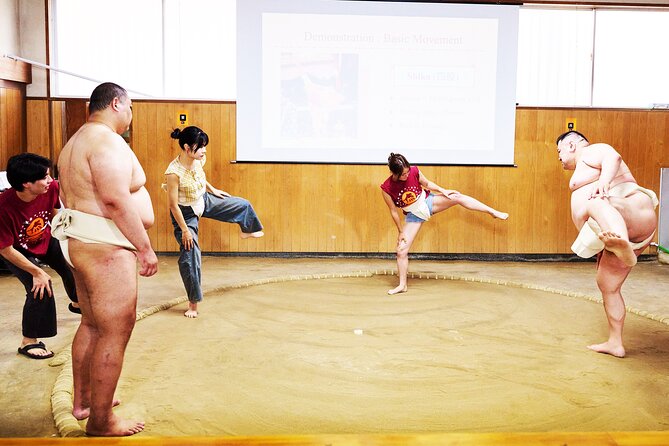
The demonstrations show how sumo wrestlers prepare and how specific techniques work. You will see training examples and traditional movements before the featured match. This helps you notice the balance, footwork, stance, and timing involved in a bout.
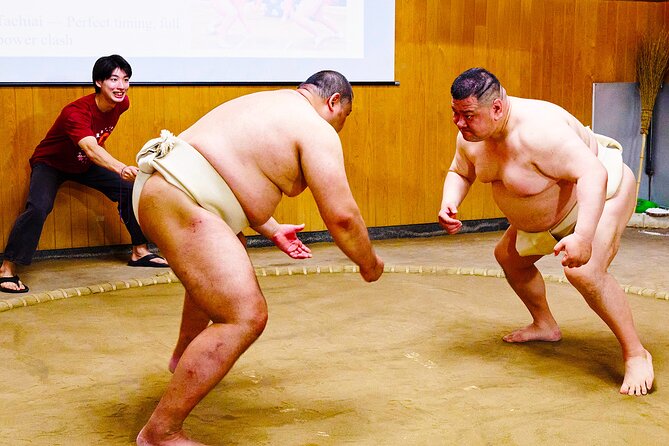
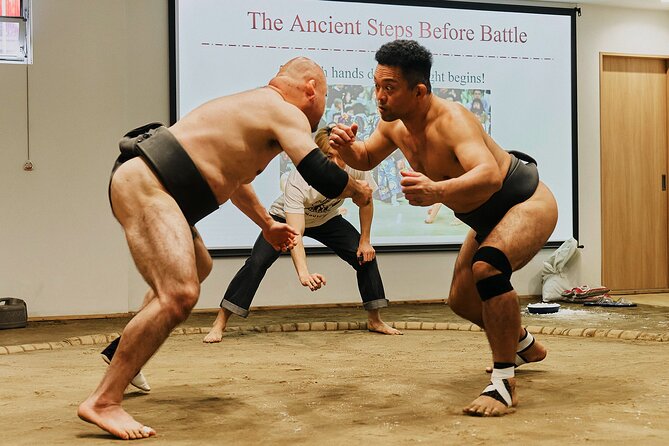
The tachiai is the major theatrical moment. It is the initial charge when two wrestlers meet at the start of a match. On screen, it can look like a quick burst of force. In person, the movement gives you a better sense of how much control and preparation go into those first seconds.
Retired sumo wrestlers perform the match, bringing real experience to the demonstration without presenting it as a formal professional tournament. That distinction is important. This is a cultural show built around education and entertainment, not a substitute for attending an official competition.
You should expect the atmosphere to be lively and accessible. There is room for laughs, but the sport is treated with respect. The wrestlers demonstrate their skill, and the guide explains what is happening instead of leaving the audience to guess.
This part will appeal most to anyone who wants a little more substance than a photo opportunity. You are not only seeing costumes and stage action. You are watching former professionals show techniques connected to a centuries-old Japanese sport, with enough explanation to make the movements meaningful.
The audience challenge puts you in the ring
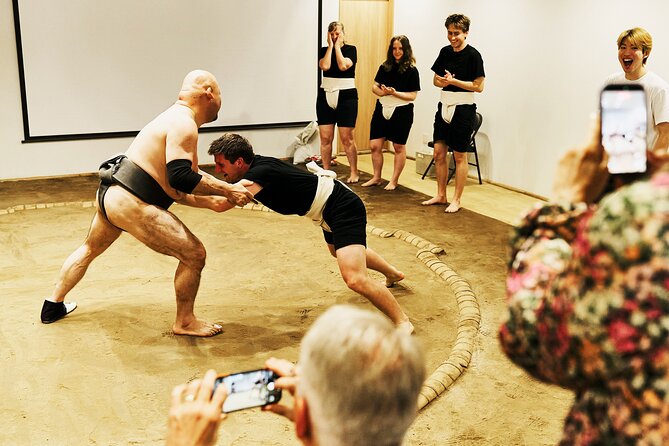
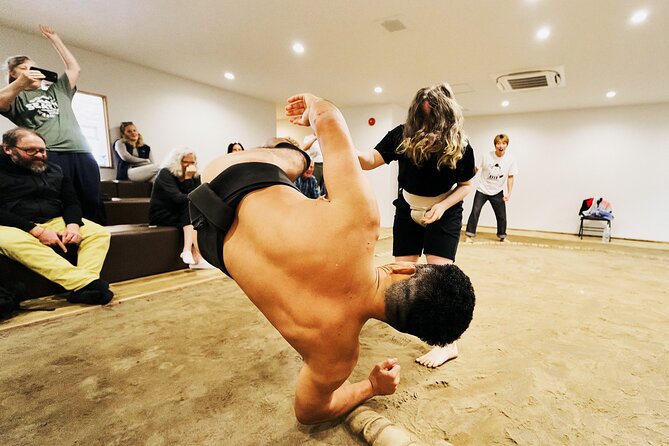
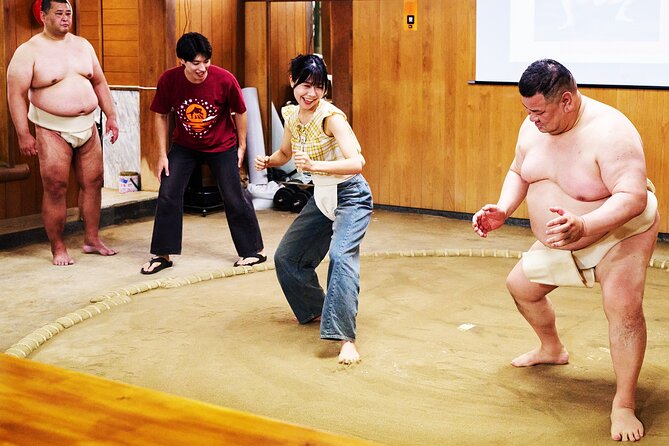
The most unusual part of the experience is the chance to wrestle a sumo athlete yourself. A limited number of audience members can volunteer, put on the provided clothing, and attempt a bout with a real sumo wrestler.
This is where the show becomes personal. You quickly learn that pushing a large trained athlete is much harder than it looks. The challenge is designed for fun, but it also gives you a direct lesson in balance, leverage, and strength.
You do not need to volunteer to enjoy the activity. Watching other people try can be just as entertaining, especially because the audience gets to see how quickly the wrestler can control the exchange. If you are traveling with friends or family, the volunteer portion can become the shared story you remember long after the show ends.
There is one practical warning. Clothing supplied for the wrestling segment may not be large enough for every body type, and one participant specifically found the clothes and sandals too small. If you hope to take part, keep this in mind. The available information does not give clothing sizes or explain whether alternate sizes can be requested, so participation may be more comfortable for some people than others.
The limited number of challengers also means you should not book this expecting a guaranteed personal match. The show includes the audience challenge, but the chance to enter the ring depends on availability and selection.
More sporting days out around Japan:
- Tokyo Shinjuku Sumo Show & Experience with Photo
★ 5.0 · 1,750 reviews - Tokyo Sumo Entertainment Show with Chicken Hot Pot and Photo
★ 5.0 · 1,205 reviews - Tokyo: Sumo Show and Experience in Shinjuku
★ 4.8 · 1,001 reviews - Tokyo: Sumo Tournament Tour with Chair Seat Tickets
★ 4.6 · 753 reviews
Why the English guide makes a difference
An English-speaking guide is included, and that is a central part of the experience rather than a minor add-on. Sumo has layers of etiquette, ritual, and terminology. A guide who can explain those points as the action unfolds makes the show easier to follow.
You will hear about the sport’s background, rules, and customs in plain English. That helps you understand why the wrestlers perform certain movements and how the match is decided. The guide also helps connect the demonstration to the wider place of sumo in Japanese culture.
The staff are described as welcoming, and the English communication is particularly strong. That matters during the audience portion, when instructions need to be clear and quick. It also helps keep the mood relaxed for people who have never watched sumo before.
I would choose this activity over a silent demonstration if you want cultural context. A live display can be impressive, but a good explanation gives you tools to keep noticing details after the show. The next time you see sumo on television or in a tournament setting, you will have a better idea of what to watch.
Is $55.50 a fair price?
At $55.50 per person, the experience is not the cheapest short activity in Osaka. The value depends on what you want from it. You are paying for a live cultural presentation, retired wrestlers demonstrating authentic skills, an English-speaking guide, and the possibility of taking part yourself.
There is no meal included, so you should not compare the price with a dinner show. Private transportation is also not included. On the other hand, the activity lasts only about 90 minutes, which keeps the time cost low and lets you add it to a fuller Osaka day.
For a first introduction to sumo, the price is reasonable if you value explanation and audience participation. You are not simply watching a staged contest. You get a lesson in rituals and techniques, a live tachiai, and a chance to see how difficult the sport is from close range.
The value is weaker if you only want to watch a formal tournament. This show does not replace the experience of sitting in a large arena during an official competition. It is better understood as an approachable cultural performance with real sumo skill at its center.
I would also factor in the group size. With a maximum of 50 people, the room should feel more personal than a major public show, though it is not a private lesson. You get a shared audience atmosphere, which suits the jokes and volunteer challenge but means you will not receive one-on-one instruction.
Getting there and planning your time
The meeting point is AI Building, 1-chōme 5-1 Asahi, in Nishinari Ward, Osaka, postal code 557-0032. The experience is near public transportation, but your booking does not include a private vehicle or transfer.
Plan enough time to reach the address without cutting it close. The activity starts and ends at the same location, so you can make a straightforward plan around it. You might schedule a nearby meal afterward, since food is not part of the experience, but allow yourself a little extra time if you are navigating an unfamiliar part of the city.
A mobile ticket is provided, which keeps the check-in process simple. Confirmation arrives when you book. It is still sensible to have the ticket ready on your phone and to check the meeting address before leaving.
The free cancellation policy gives you some flexibility. You can cancel for a full refund if you do so at least 24 hours before the local start time. Cancellations or changes made within 24 hours are not accepted for a refund.
Who will enjoy this sumo experience most?
I would recommend this activity to first-time sumo viewers who want an easy introduction without committing to a full tournament day. The guide-led format gives you enough background to understand the action, while the live demonstrations keep the pace lively.
It also works well for families and groups of friends. The audience challenge gives people something to talk about, and the humor comes naturally when volunteers discover how difficult sumo really is. You can enjoy the show even if nobody in your group wants to wrestle.
Fans of Japanese culture may appreciate the attention to rituals and customs. The experience connects the sport’s physical force with its traditional side, which is important if you want more than a staged athletic display.
I would be more cautious if you need guaranteed personal participation, specific clothing sizes, or a formal tournament setting. The challenge has limited places, supplied clothes may be restrictive for some people, and the show is designed as an interactive cultural event rather than official competition.
The activity is also a good fit for a tight schedule. At roughly an hour and a half, it does not demand a whole day. You get a distinct Japanese experience, then return to the rest of your Osaka plans.
What to know before you book
Bring curiosity, comfortable clothes, and a willingness to join in if selected. The show is intended to be friendly and interactive, but you can remain in the audience and still receive the full explanation and demonstrations.
Do not book it only because you expect to wrestle. The personal bout is a limited option, not a guaranteed part for every participant. Book it because you want to learn about sumo, watch retired wrestlers perform, and enjoy the possibility of an audience challenge.
You should also plan your own meal and transport. The meeting point is accessible by public transportation, but neither private transportation nor food is included. Since the activity ends where it starts, it is easy to build the experience into a larger Osaka day.
Should you book the Osaka Sumo Experience?
Yes, if you want a friendly, informative introduction to sumo with real audience involvement. The strongest parts are the clear English guidance, the traditional rituals and techniques, the retired wrestlers, and the dramatic tachiai. At $55.50, it offers solid value for a focused 90-minute cultural activity.
Book with realistic expectations. This is not an official tournament, a private class, or a guaranteed wrestling match. If you understand that it is a lively show with limited audience participation, it is an easy recommendation for first-time sumo viewers and anyone looking for a distinctly Japanese experience in Osaka.
FAQ
Where does the Osaka Sumo Experience take place?
It begins and ends at AI Building, 1-chōme 5-1 Asahi, Nishinari Ward, Osaka, Japan, 557-0032.
How long does the sumo experience last?
The activity lasts approximately 1 hour and 30 minutes.
Is an English-speaking guide included?
Yes. An English-speaking guide is included and explains the history, rules, rituals, and techniques.
Can I wrestle a sumo wrestler?
There are limited opportunities for audience members to step into the ring and wrestle a sumo wrestler. Participation is not guaranteed for every person attending.
Is transportation included?
Private transportation is not included. The meeting point is near public transportation.
Are meals included?
No. Meals are not included in the experience.
Can I cancel for a full refund?
Yes. You can cancel for a full refund if you cancel at least 24 hours before the experience start time. Changes or cancellations made less than 24 hours before the start time are not refunded.
New on the fixture list around Japan
- Tokyo: Sumo Morning Practice Viewing Tour at a Real Stable★ 4.9 · 32 reviews
- Tokyo: Sumo Morning Practice -Stable Visit Tour with a Guide★ 4.8 · 16 reviews
- Tokyo: Watching Sumo and Ryogoku Area Walking Tour★ 4.0 · 5 reviews
- Tokyo Sumo Morning Practice: Witness the Life of a Wrestler★ 4.8 · 56 reviews
- Tokyo: Sumo Morning Practice Tour in Ryogoku and Photo Shoot★ 4.7 · 47 reviews
- Tokyo: Sumo Keiko Training Tour with Audio Guide & Photo★ 4.8 · 5 reviews
- Tokyo Highlights Tour: Sumo, Sushi, Tea, and Tokyo Tower★ 5.0 · 2 reviews
- Tokyo: Sanctuary Authentic Grand Sumo Experience & Training★ 5.0 · 7 reviews
More Sumo Experiences to weigh up.
Tokyo: Sumo Show Experience with Chicken Hot Pot and a Photo
Read our review →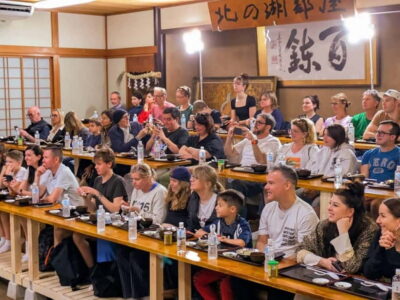
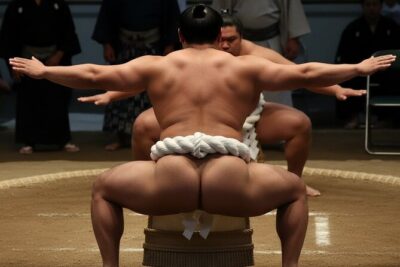
Tokyo Shinjuku Sumo Show & Experience with Photo
Read our review →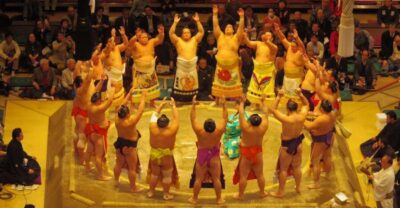
Tokyo: Sumo Tournament Tour with Chair Seat Tickets
Read our review →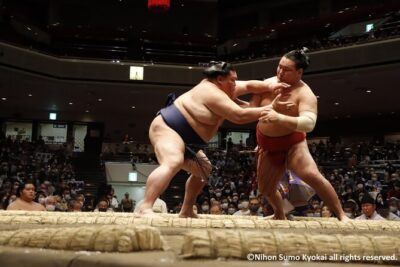
Tokyo Grand Sumo Tournament Viewing Tour with Tickets
Read our review →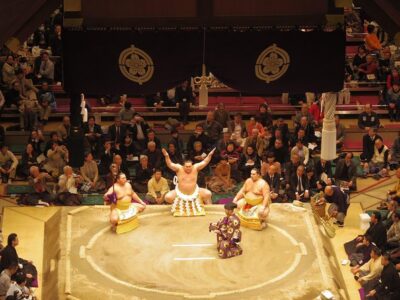
Osaka: Sumo Show & Experience w/ Optional Kimono & Hot Pot
Read our review →This one also appears in