
Review · ROME
Olympic Stadium Tour with Expert Guide in Rome
The most surprising part of this Rome tour is not the football pitch. It is the political story carved into the stone around it. At Foro Italico, you’ll see a Mussolini-era sports complex, a 36-meter marble obelisk, and the Stadio dei Marmi, ringed by 60 athletic statues. Then you enter the Olympic Stadium through the official athletes’ entrance and follow the route toward the field.
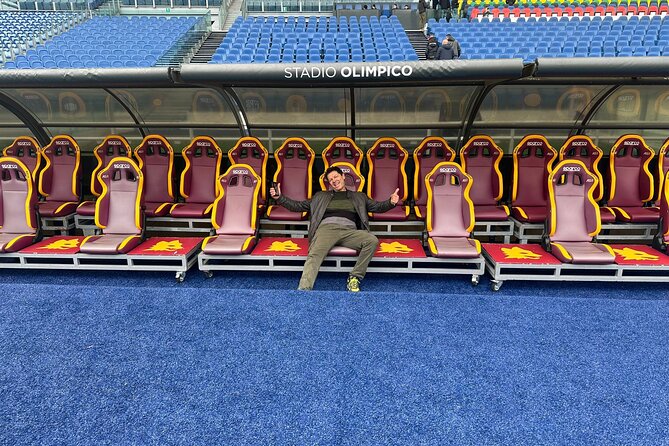
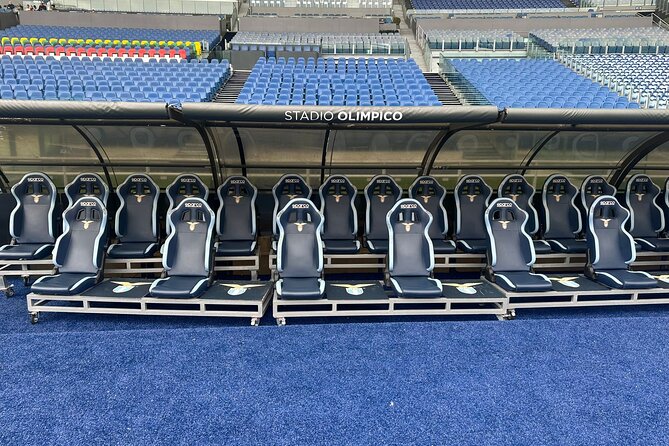
I like the combination of sport and 20th-century history, and I like that guides such as Angelica, Camilla, Simone, and Beatrice bring both subjects into the conversation. The tour also gives you access to areas most city walks cannot reach, including the players’ tunnel, locker room, press room, and Hall of Triumph.
The main caution is that stadium access can change around concerts or other events. One booking became an outdoor history walk plus a VIP suite and shop visit when the pitch and locker rooms were unavailable. You should also meet carefully at the obelisk and confirm the correct stadium entrance, since taxi drop-offs can cause confusion.
Key points before you book
- See the Stadio dei Marmi: Sixty white Carrara marble statues surround this striking 1930s athletic stadium.
- Enter through the athletes’ route: The tour normally uses the Monte Mario gate and official players’ entrance before leading toward the pitch.
- Learn the uncomfortable history: Foro Italico connects Italian sport with Mussolini’s fascist building program.
- Expect about 80 minutes: Ten minutes are set aside for the Stadio dei Marmi, followed by about an hour inside the Olympic Stadium.
- English is available inside: The outdoor portion can also be offered in Spanish and French.
- Check event conditions: Concerts or stadium closures may limit access to the field, locker rooms, or other interior areas.
Why Foro Italico is more than a football stop
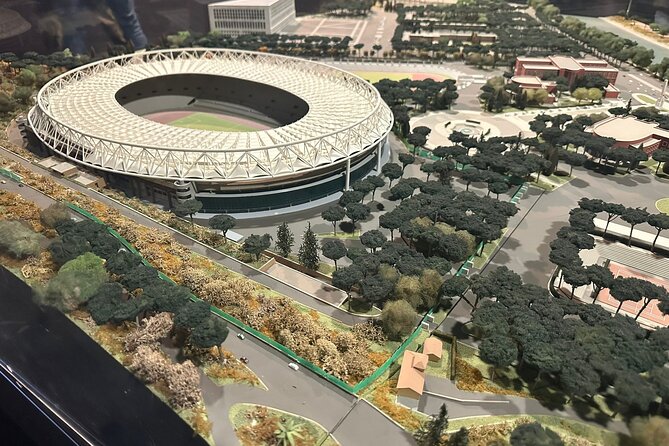
Rome has no shortage of ancient ruins, but Foro Italico takes you into a different chapter of the city. Built in the 1930s, this monumental sports complex was designed to project physical strength, national unity, and political power.
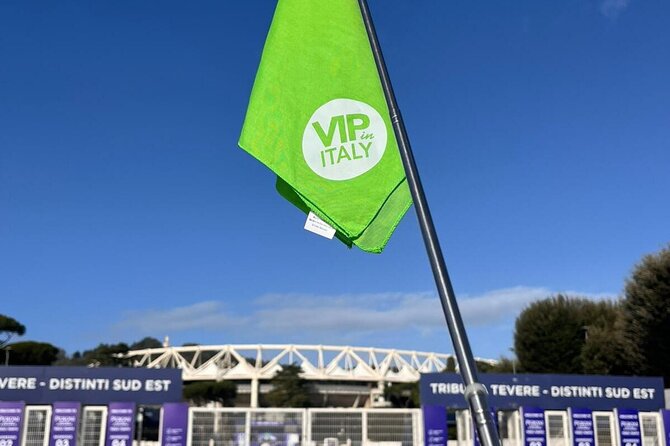
The approach begins near the Mussolini Obelisk, also called the Obelisco Mussolini. Made from Carrara marble, it rises 36 meters and carries the name of the dictator who ordered the complex. The monument is not a side detail. It helps explain why this tour matters beyond football.
Your guide connects the architecture with the period in which it was built. You’ll hear about the way sport, monumental design, and fascist messaging were placed together. That context gives the stadium a sharper edge than a simple behind-the-scenes sports visit.
You can also admire the Tiber River from the area. The outdoor section gives you time to get oriented before entering the stadium, though the setting is open and exposed, so hot sun or rain can affect your comfort.
The group may include as many as 40 people. That is a reasonable size for a short guided visit, but it is not an intimate private tour. If you want to ask many questions, stay close to the guide and listen carefully during the outdoor introduction.
More Stadium Tours in Italy
- Rome: Navona Underground & Domitian Stadium Guided Tour
★ 4.6 · 36 reviews - Milan: San Siro Stadium and Museum Guided Tour
★ 4.3 · 5,567 reviews - Milan: San Siro Stadium and Museum Official Guided Tour
★ 4.1 · 962 reviews
Stadio dei Marmi and its sixty marble athletes
The Stadio dei Marmi is the first major stop. It is made of white Carrara marble and surrounded by 60 statues of athletes, each about four meters high. The figures are arranged in rings around the stadium, creating a formal display of strength and movement.
The statues were donated by different Italian provinces. Their purpose was to represent national unity through sport, with each region contributing to a single monumental setting.
You have about ten minutes here. That is enough for a close look and photographs, but not enough for a long architectural study. I would pay attention to the repetition of the figures, the pale stone, and the way the statues frame the stadium rather than treating this as a quick photo stop.
This is also one of the best places to understand the visual language of the entire complex. The scale is grand, the materials are expensive, and the athletic body is treated almost like a political symbol. Your guide can explain that connection in a way that photographs alone cannot.
The short stop may feel brief if you are especially interested in architecture. Still, it adds real value to the tour because you are not simply walking into a modern football venue. You are seeing the older setting that gives the Olympic Stadium its political and artistic context.
Entering the Olympic Stadium through the players’ route
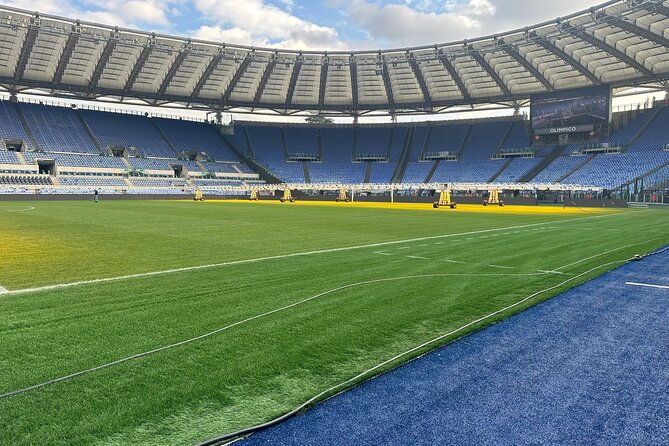
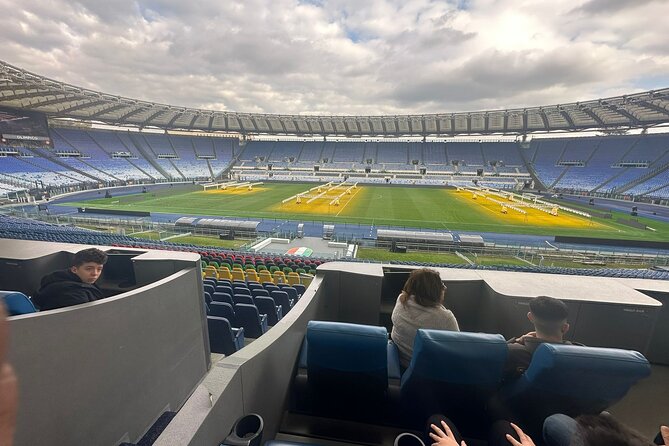
After the outdoor portion, you head to the Olympic Stadium. The intended entry is through the official athletes’ entrance, near the Monte Mario gate. From there, you follow the route used by players toward the field.
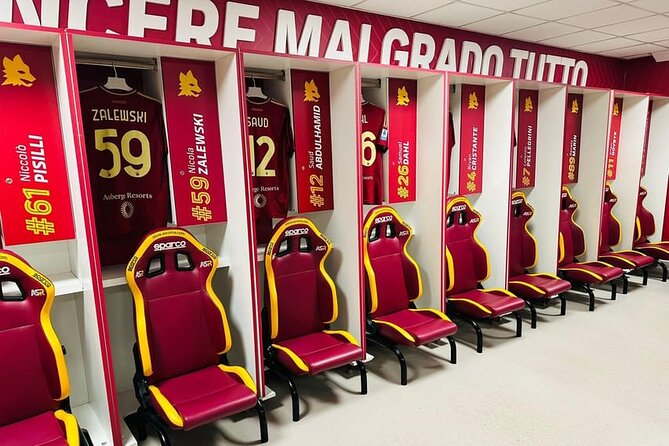
The tunnel is a key moment. It lets you experience the narrow passage between private preparation areas and the public arena. You can picture the pause before a major match, when players move from the locker room toward thousands of spectators.
Football fans will get the most from this section, especially supporters of Roma or Lazio. The guides can discuss both clubs and the stadium’s role in Italian football. But you do not need to follow football closely to enjoy the visit. The route also works as a lesson in how a major public venue is organized.
The field itself is an important qualification. Normal access may include the tunnel and views toward the pitch, but entry onto the actual playing surface is not guaranteed. Stadium events can close parts of the building, and one scheduled visit was changed because of a concert.
Ask your guide at the start what areas are open that day. This simple question can prevent disappointment, particularly if you are booking mainly for the field or locker rooms.
Locker rooms, press room, and Hall of Triumph
The interior portion is designed around the spaces behind the public spectacle. You may visit the locker room, where athletes prepare, and the press room, where matches and events are discussed after the action.
The Hall of Triumph is intended to display trophies and memorabilia from Italian sporting victories. This is the part most likely to appeal to visitors who want objects and stories connected to winning teams.
Access can vary, however. One account specifically noted that the trophy room was not included and that more memorabilia from past players would have improved the visit. That is useful to keep in mind. The tour description presents these spaces as part of the experience, but event schedules and operational changes can affect what you actually see.
I would treat the backstage rooms as an important bonus, not the only reason to book. The outdoor Foro Italico section and the stadium’s political background remain worthwhile even if one interior stop is unavailable.
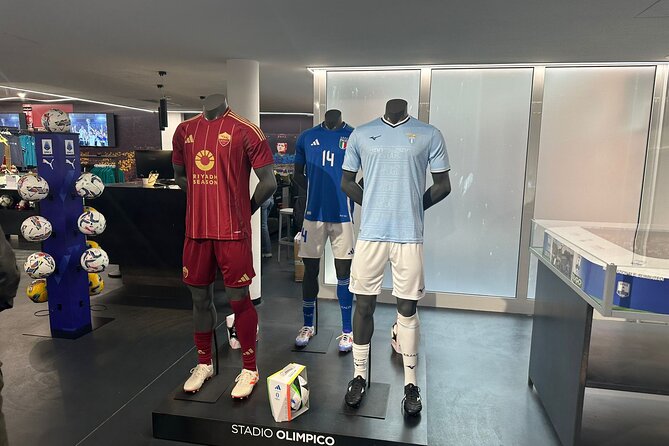
The tour ends at the Olympic Stadium, with a shop visit included in the broader experience. If you want a football shirt or other souvenir, bring money for that. If you are not interested in shopping, you can simply regard it as the final stop rather than a major part of the tour.
More Olympic Venues in Rome:
- Tickets and Guided Tour of the Olympic Stadium in Rome and Foro Italico
★ 4.5 · 404 reviews - Berlin: Olympia Stadium Entrance Ticket
★ 4.3 · 789 reviews - The Olympic Museum Entrance Ticket in Lausanne
★ 4.5 · 211 reviews - Lausanne: The Olympic Museum Entry Ticket
★ 4.7 · 123 reviews
What the guides add to the visit
The quality of this tour depends heavily on the person leading it. Angelica has been praised for making the history clear and keeping the tone light. Camilla has been noted for explaining Roma, Lazio, and the wider story of Rome. Simone has been singled out for making the stadium interesting even for people who are not visiting only for football.
Beatrice has guided the outdoor history section and has worked alongside a trainee guide. The stadium portion may be led by a different guide from the one who meets you outside. That means the experience can have two voices, one focused on Foro Italico and another focused on the stadium itself.
Inside, the guide is available in Italian or English. The outdoor part is also available in Spanish and French. If you need a language other than English, confirm the arrangement when booking because the language options are not identical for both sections.
A good guide makes the connection between the monuments and modern sport clear. Without that explanation, the obelisk can look like a large stone marker and the statues can seem like decoration. With context, you see how the entire site was designed to send a political message.
The $66.37 price and what you receive
At about $66.37 per person, this is not a bargain-priced stadium look-around. The value depends on what you want from your time in Rome.
If you mainly want to step onto the pitch and take a few football photographs, the price may feel high, especially if an event prevents access to the field or locker rooms. The tour lasts about 1 hour and 20 minutes, so it is also a fairly compact activity for the cost.
I find the price easier to justify if you care about architecture, fascist-era Rome, and football together. You are paying for a guide, access to restricted stadium areas, and an outdoor introduction that most match-day visitors never receive.
The tour is also useful for visitors who have already seen Rome’s ancient center and want a different side of the city. You will not get the Colosseum or Renaissance churches here. Instead, you get a modern Italian monument with a complicated past and a continuing sporting role.
The maximum group size is 40. That keeps the tour organized, but the experience may feel less personal than a small-group visit. The published schedule averages about 80 minutes, with ten minutes at the Stadio dei Marmi and around an hour at the Olympic Stadium.
Finding the meeting point without missing the start
The meeting point is at the Mussolini Obelisk, at Piazza Lauro de Bosis. The tour ends at the Olympic Stadium on Viale dei Gladiatori.
This detail matters because the Olympic Stadium is large. Several people have become confused when a taxi dropped them at a side entrance. One nearly missed the start after going to the wrong part of the building.
I would allow extra time, identify the obelisk before the appointed hour, and avoid assuming that the nearest stadium entrance is the meeting point. The correct starting place is the monument area, not simply any gate around the stadium.
The area is near public transportation, which makes it possible to reach without relying on a taxi. Since the tour moves from the outdoor complex into the stadium, comfortable shoes are sensible, though the provided information does not specify a required dress code or a particular amount of walking.
Confirmation is provided at booking, and the experience is listed as suitable for most people. If you have concerns about mobility or need a specific accommodation, ask before paying because detailed accessibility information is not provided.
Weather, closures, and the main booking risk
The outdoor section includes the obelisk and Stadio dei Marmi, so weather can affect the first part of the tour. One account praised the guide despite difficult conditions, but you should still check the forecast and dress accordingly.
The bigger issue is the stadium calendar. Concerts, matches, or other events can close the pitch, locker rooms, or additional interior areas. If those spaces are the central reason for your booking, contact the provider close to the visit and ask what access is expected on your date.
A change of date can also create trouble. One booking was moved after the stadium closed, but the replacement visit still had reduced access because of an upcoming concert. That kind of substitution can be disappointing, especially for a child who is excited to see the playing area.
The experience includes free cancellation up to 24 hours before the start time for a full refund. Changes or cancellations made less than 24 hours before the start are not accepted for a refund, and the cutoff uses Rome local time.
Children’s pricing also deserves attention. Ages 0 to 5 enter free, while ages 6 to 16 require a reduced ticket. Have the child’s correct date of birth ready when booking. A mismatch can lead to a request for an additional payment later.
Who will enjoy this Olympic Stadium tour most
I would recommend it most strongly to football fans who want more than a match-day view. You get the official entrance, players’ route, tunnel, and behind-the-scenes rooms, along with useful context about Roma and Lazio.
It also suits people interested in 20th-century Italian politics and architecture. The Foro Italico visit makes this more than a sports attraction, and the guide’s explanation helps you read the monuments instead of simply photographing them.
Families can enjoy it, especially if children are interested in football. Keep in mind that access can change and that the group may be large. If your child expects to run onto the pitch, explain before booking that the playing surface is not guaranteed.
I would be less enthusiastic for visitors with no interest in football, stadium design, or modern Italian history. Rome offers many shorter and cheaper sights, and the value here rests on the combination of guided context and restricted access.
Should you book it?
Book this tour if you want to see Rome through its sports architecture and political past, not just through ancient ruins. The Stadio dei Marmi, Mussolini Obelisk, athletes’ entrance, tunnel, and stadium interiors create a varied visit in a short amount of time.
Before paying, confirm the meeting point, language, and expected access to the field and locker rooms. If a concert or match is scheduled near your date, ask what will remain open.
For a committed football fan, the experience is a strong choice. For a casual visitor, it is worth the price only if the Foro Italico story interests you as much as the stadium itself. Go in expecting a guided history and architecture visit with football access, not a guaranteed pitch-side experience.
FAQ
How long does the Olympic Stadium tour last?
The tour lasts approximately 1 hour and 20 minutes. About 10 minutes are allocated to the Stadio dei Marmi, followed by roughly 1 hour at the Olympic Stadium.
Where does the tour begin?
The meeting point is at the Mussolini Obelisk, Piazza Lauro de Bosis, in Rome. The tour ends at the Olympic Stadium on Viale dei Gladiatori.
What can I see at the Stadio dei Marmi?
You can see a white Carrara marble stadium surrounded by 60 statues of athletes. Each statue is about four meters high, and the statues were donated by different Italian provinces.
Is the tour available in English?
Yes. The guide inside the stadium is available in Italian or English. The outdoor portion is also available in Spanish and French.
Does the tour include the football pitch?
The tour normally takes you through the athletes’ entrance and tunnel toward the field, but access to the actual pitch is not guaranteed. Concerts or other stadium events can change the available areas.
Can I visit the locker room and press room?
These areas are included in the planned stadium experience, along with the Hall of Triumph. Access may change if the stadium is closed or being prepared for an event.
How many people can join the tour?
The maximum group size is 40 people.
How much does the tour cost?
The listed price is $66.37 per person. Children ages 0 to 5 enter free, while children ages 6 to 16 require a reduced ticket.
Can I cancel for a full refund?
Yes. You can cancel at least 24 hours before the experience begins for a full refund. Cancellations or changes made less than 24 hours before the start time are not accepted for a refund.
More Stadium Tours in Rome
- Madrid: Tour Bernabéu Entry Ticket
★ 4.5 · 21,573 reviews - Liverpool: Liverpool Football Club Museum and Stadium Tour
★ 4.8 · 10,764 reviews - Amsterdam: Johan Cruijff ArenA Tour with Optional Guide
★ 4.6 · 8,954 reviews - London: Emirates Stadium Entry Ticket and Audio Guide
★ 4.7 · 5,513 reviews
New on the fixture list around Rome
- Rome: Full Experience Colosseum Arena Tour (MAX 10 PEOPLE)★ 5.0 · 8 reviews
- Rome: Navona Underground & Domitian Stadium Guided Tour★ 4.6 · 36 reviews
- Rome: Colosseum Arena Tour with Forum and Palatine Access★ 4.6 · 13 reviews
- Private golf-cart tour in Rome★ 5.0 · 2 reviews
- Rome: Stadium of Domitian Entry and City of Rome Audioguide★ 4.3 · 12 reviews
- Colosseum Arena Tour, Palatine Hill and Roman Forum★ 5.0 · 4 reviews
- Rome: Guided Group Tour of Colosseum, Palatine Hill & Roman Forum★ 5.0 · 65 reviews
- Full day private guided tour of Rome by golf-cart & Colosseum and Roman Forum★ 5.0 · 65 reviews
More Stadium Tours in Italy to weigh up.
Milan: San Siro Stadium and Museum Guided Tour
Read our review →
Turin: Juventus Museum entry ticket & Stadium Tour
Read our review →
Milan: Official San Siro Stadium and Museum Tour
Read our review →
Milan: San Siro Stadium Entry Ticket and Optional Bus Ticket
Read our review →
Naples: Maradona Stadium Guided Exterior Walking Tour
Read our review →
Rome: Navona Underground & Domitian Stadium Guided Tour
Read our review →
Cagliari Stadium Experience with Sardinian Aperitif
Read our review →This one also appears in