
Review · GERMANY
Berlin: Olympia Stadium Entrance Ticket
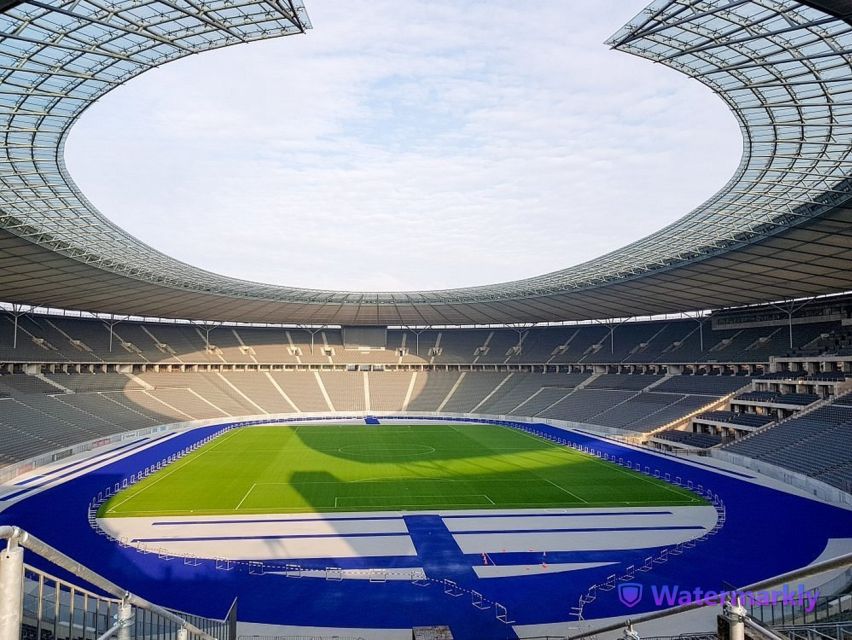
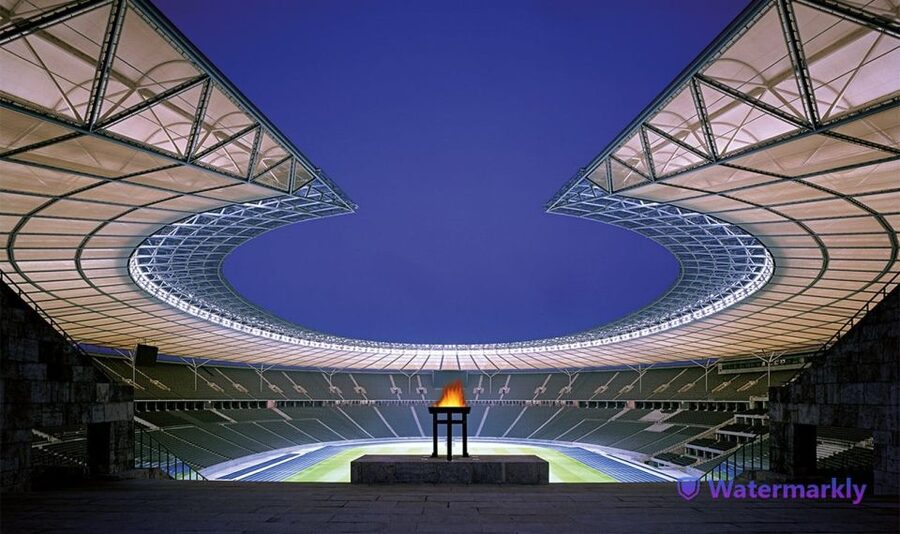
Berlin’s Olympiastadion is far more than a football ground. Built for the 1936 Olympic Games, it is a monumental stadium where modern sport and Germany’s difficult past remain visible side by side. With your ticket, you can walk through the public stadium areas, reach the pitch level, and look across all 74,475 seats.
I like two things here: the freedom to explore without being tied to a group, and the chance to see a major UEFA category four stadium for a modest price. The open seating areas also make this a fine stop for photographers and sports fans. The catch is important: the basic ticket is entrance only, not a full guided tour, and areas such as dressing rooms may require an upgrade.
Key points to know before you go
- The basic ticket is self-guided: You wander through the permitted stadium areas at your own pace.
- The scale is the main event: From the seating blocks, you can take in the full 74,475-seat capacity.
- The past is addressed directly: Information boards explain the stadium’s history, including its darker chapters.
- A guided upgrade may add much more: English guided tours have been available at times, and guides such as Nino have led visitors into places not open on the basic visit.
- Public transport is easy: The stadium can be reached by U-Bahn or S-Bahn.
- Allow time to look around: Some people spend a few hours here, while a quiet early visit can feel almost private.
Why the Olympiastadion feels different from an ordinary football ground
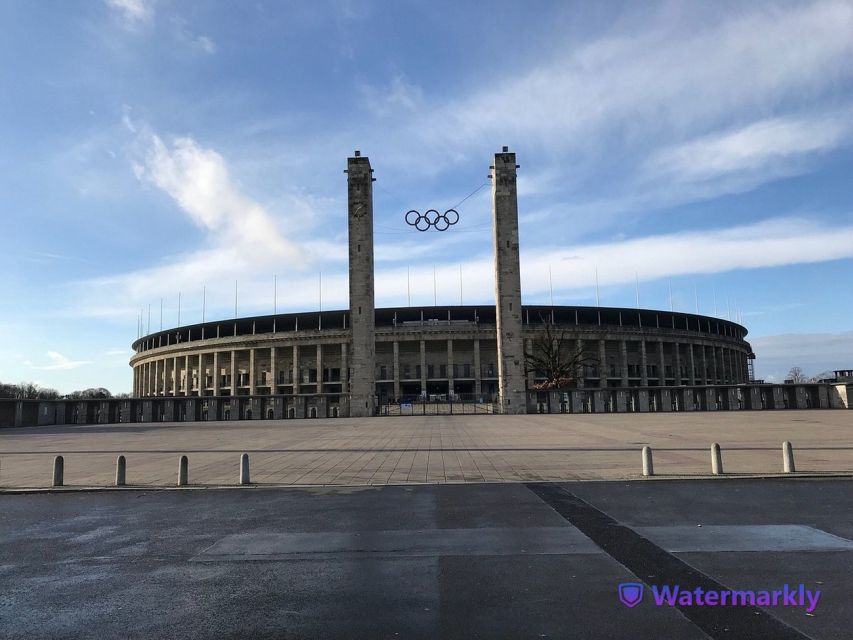
I find the Olympiastadion interesting because its design carries so much weight. This is not a modern arena built mainly for commercial comfort. It is an enormous stone and concrete structure created for the 1936 Olympics, later used for major football and sporting events, and still active today.
The stadium’s past is not brushed aside. Displays around the grounds explain its place in German sport and its connection to the 1936 Games. You will not get a polished story that skips the uncomfortable parts. The information presents the site as a place with both sporting importance and a troubling political past.
That balance matters. You can admire the structure, the scale, and the sporting memories without confusing architectural interest with approval of the ideology behind its original use. I appreciate that the displays allow you to think about both sides.
The venue is also unusual in how freely the basic ticket lets you look around. You are not pushed along a fixed path with a group. You can stop for photographs, sit in the stands, climb toward the upper tier, and study the stadium from several angles within the areas open that day.
More Olympic Venues in the world:
- Tickets and Guided Tour of the Olympic Stadium in Rome and Foro Italico
★ 4.5 · 404 reviews - The Olympic Museum Entrance Ticket in Lausanne
★ 4.5 · 211 reviews - Lausanne: The Olympic Museum Entry Ticket
★ 4.7 · 123 reviews
Entering through the visitor centre
Your visit begins at the visitor centre. Bring the QR code from your booking app if that is how you reserved your ticket. The entry process has been described as straightforward, but the signs for the tour and visitor areas are not always as clear as they should be.
That lack of direction is one of the few practical annoyances. Building work around the stadium has sometimes made the route less obvious, and you may need to pay attention when finding the correct entrance. If you arrive expecting a traditional guided stadium tour, check the instructions before you set off so you know you have booked basic entry.
The ticket is valid for one day, with available starting times shown during booking. You can cancel up to 24 hours in advance for a full refund, and the reserve now, pay later option can help if your Berlin plans are still changing.
Wear comfortable shoes and clothes. The appeal lies in walking between different sections, viewing the stands, and moving through the open stadium areas rather than sitting in one exhibition room.
Walking through 74,475 seats
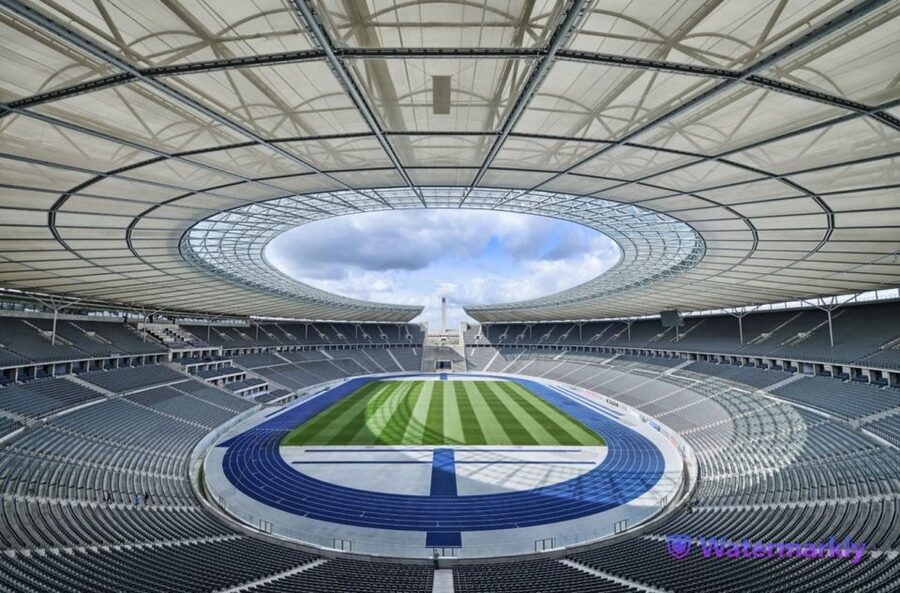
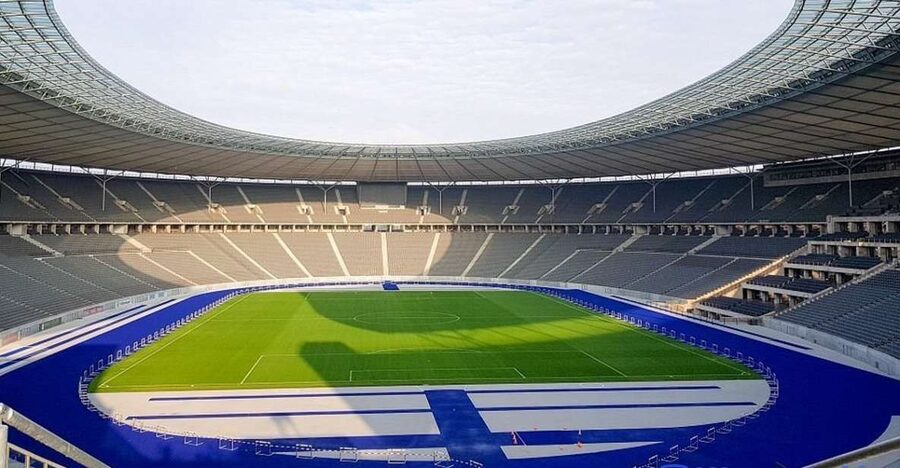
The best part of the visit is simply seeing the stadium from several levels. The Olympiastadion’s full capacity is difficult to grasp from the outside. Once you reach the seating areas, the sweeping rows make the scale clear.
You can sit in the stands and take photos across the pitch. You may also get close to the track and pitch area, depending on which sections are open on the day. From the upper tier, the view changes again, giving you a broader sense of the stadium’s shape and the relationship between the stands and the field.
I recommend taking your time here. A quick walk around will show you the main structure, but an unhurried visit lets you notice details that are easy to miss. Look back toward the seating bowl from the field level, then climb or walk to a higher block and look down. The building changes character at each point.
This is also where the self-guided format works well. You do not need to keep pace with a group, and you can pause as long as you like for photos. An early Sunday visit may be especially quiet. One visitor arrived very early and had almost the entire stadium to themselves, which would make the scale feel even more dramatic.
The experience is not equally complete every day. Access depends on the areas open at the time of your visit. Some people have found the ticket allowed broad access to the stands and upper tier, while others expected more interior access and found that the visit was mainly outdoors and around the pitch. Keep that distinction in mind.
Reading the stadium’s difficult story
The information boards and displays add depth to what might otherwise be a simple photo stop. They explain the stadium’s history and special features, as well as its place in German sport.
I consider this part essential. Without the historical material, you could admire the building but miss why it matters. The Olympiastadion is linked to one of the most politically charged sporting events of the 20th century. The displays help put the architecture and the 1936 Games into context.
The treatment is direct rather than celebratory. You can learn about the stadium’s darker past without finding that past hidden behind football memories or architectural praise. A guide can add more detail, but even the self-guided displays give you a useful starting point.
Do not expect a full Olympic museum attached to the stadium. That is a disappointment if you want a large collection devoted solely to the 1936 Games. The displays around the grounds provide context, but this is still primarily a stadium visit, not a museum exhibition.
More Stadium Tours in the world:
- Madrid: Tour Bernabéu Entry Ticket
★ 4.5 · 21,573 reviews - Liverpool: Liverpool Football Club Museum and Stadium Tour
★ 4.8 · 10,764 reviews - Amsterdam: Johan Cruijff ArenA Tour with Optional Guide
★ 4.6 · 8,954 reviews - Milan: San Siro Stadium and Museum Guided Tour
★ 4.3 · 5,567 reviews
What the basic ticket does and does not include
The $12 price makes sense if your main goal is to see the stadium, walk through the permitted public areas, and take your time. You are paying for access to a major historic sports venue, not for a scripted tour with every back-of-house stop included.
The basic ticket includes entry to the stadium. It does not include a guided tour. That means you should not assume you will visit changing rooms, dressing rooms, tunnels, or other restricted spaces.
This distinction has caused confusion, especially for people who assumed the word stadium visit meant a complete behind-the-scenes tour. If you want stories, explanations, and access to places beyond the normal public areas, ask about a guided upgrade at the visitor centre. An upgrade has sometimes cost about 4 euros per person, though you should check the current offer when booking.
A guided visit can be worthwhile for anyone especially interested in architecture, sporting history, or the 1936 Games. Guides such as Nino have conducted tours in English when arrangements allowed. English availability can vary, so check the language before choosing a tour time. A German tour may not automatically be offered in English.
I would choose the basic ticket for a flexible, low-cost visit. I would choose the guided option if this is one of the main highlights of your Berlin trip or if you want access beyond the seating bowl and pitch area.
How long to spend inside the stadium
The ticket is valid for one day, but the practical visit length depends on your pace. A quick look at the main areas may take less than an hour. If you read the displays, visit different seating blocks, sit in the stands, walk near the pitch, and stop for photos, you can easily make this a several-hour outing.
The open format makes it easy to fit around the rest of your day. You are not locked into a tour group, so you can move faster if you have a busy schedule. I prefer allowing extra time because the stadium rewards looking from more than one place.
A quiet morning is a good choice if you want clear sightlines and fewer people in your photographs. The experience can feel very calm away from match days and major events. That quiet is part of the appeal, though anyone hoping for the noise and energy of a live football crowd may find a regular non-event visit subdued.
Getting there by U-Bahn or S-Bahn
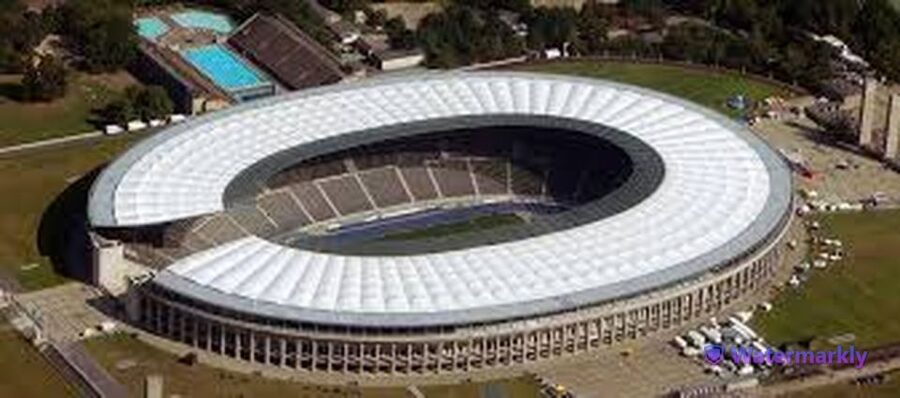
The Olympiastadion is outside central Berlin’s usual sightseeing cluster, but it is easy to reach by public transport. U-Bahn and S-Bahn services connect it with the rest of the city, making the visit practical without a car.
Plan to come to the visitor centre rather than heading straight for the first stadium gate you see. Clearer signs would help, especially when construction work affects the surrounding areas. Give yourself a little extra time to find the correct entrance if you have booked a specific starting time.
The location also gives you a break from central Berlin’s constant traffic and crowds. It feels like a separate outing rather than another quick stop between museums. That change of pace works well after several busy days in the city.
The shop, cafe, and small practical details
There is a stadium shop, which adds a natural final stop if you want a football souvenir. The cafe is useful, but food choices can be limited, so I would not plan the visit around having a full meal there.
Comfortable shoes matter more than smart clothes. You will be walking through a large venue and may want to move between lower and upper seating areas. Take your time on stairs and wear something suitable for the weather, since much of the experience involves open stadium spaces.
The attraction is not presented as a conventional museum. You will not find a large indoor collection covering every chapter of Olympic and football history. Instead, the building itself, the displays, and the views across the stands do most of the work.
Who will enjoy this visit most
I would recommend the Olympiastadion to football fans, Olympic history enthusiasts, architecture followers, and anyone who enjoys places where the past is still visible in the present. It is also a good choice if you like exploring independently rather than following a guide from room to room.
Families can benefit from the freedom to move at their own pace, though the scale and historical displays may appeal more to older children and adults. Photographers should enjoy the repeated changes in viewpoint, especially from the upper tier and near the pitch.
This may not be the right choice if you want a full behind-the-scenes football tour. The basic ticket does not promise dressing rooms or every interior area. It is also less suitable if you want a large Olympic museum with extensive artifacts.
For English speakers, check the tour language carefully. A German guided tour may be the only scheduled option at a particular time, while a self-guided visit avoids that problem.
Is the $12 ticket good value?
At $12, I think the entry ticket offers good value if you understand what you are buying. You get access to one of Germany’s largest stadiums, a chance to view its full 74,475-seat bowl, historical displays, and the freedom to explore without paying for a guided group.
The price is especially fair for people who want photos, architecture, and atmosphere rather than a long narrated presentation. You can spend a few hours here without rushing, and the setting feels quite different from Berlin’s central attractions.
The value drops if you expect dressing rooms, a museum, or a detailed guide to be included. In that case, budget for a guided upgrade if one is available and confirm what it covers. A small extra cost may be worthwhile because the guide can explain details that are easy to miss on your own.
Should you book the Olympiastadion entrance ticket?
Book it if you want to walk through a major sports venue at your own pace, see the vast seating bowl, and think about a complicated chapter of German history in the place where it happened. The combination of scale, open access, and low cost makes it a worthwhile addition to a Berlin itinerary.
Choose the guided option instead, or upgrade on arrival if possible, when the history matters more to you than independent wandering. The basic ticket is not a substitute for a full stadium tour.
My practical advice is simple: read the ticket wording carefully, check the language of any guided option, arrive at the visitor centre, and leave enough time to explore more than one seating level. If you do that, the Olympiastadion offers a thoughtful and reasonably priced visit beyond Berlin’s everyday city noise.
FAQ
What is included with the Olympiastadion ticket?
The ticket includes entry to the stadium. It allows you to explore the permitted public areas on your own.
Is a guided tour included?
No. The basic ticket does not include a guided tour. Guided upgrades may be available separately.
Can I explore the stadium at my own pace?
Yes. The entrance ticket allows you to move through the open areas freely rather than following a group.
Can I visit the dressing rooms?
The entrance ticket does not include dressing room access. A guided upgrade may provide access to areas not open during the basic visit.
How many seats does the stadium have?
The Olympiastadion has a capacity of 74,475 seats.
What kind of stadium is the Olympiastadion?
It is a UEFA category four stadium and Germany’s largest stadium for international football matches.
How do I reach the stadium?
You can reach the Olympiastadion by U-Bahn or S-Bahn. Go to the visitor centre for entry.
What should I wear?
Comfortable clothes and comfortable shoes are recommended.
How long is the ticket valid?
The ticket is valid for one day. Available starting times depend on the date you choose.
Can I cancel my booking?
You can cancel up to 24 hours in advance for a full refund. A reserve now, pay later option is also available.
New on the fixture list around the world
- Spotify Camp Nou Tour F.C. Barcelona Museum (Open Date Ticket)★ 3.5 · 5 reviews
- Ferrari Driving Experience on a Racetrack★ 5.0 · 11 reviews
- Live Muay Thai Action Ticket at Phetchbuncha Samui Stadium★ 4.0 · 6 reviews
- Football tour: Red Star and Partizan Ultras History★ 5.0 · 14 reviews
- Private 4h Tour Of Camp Nou And Most Emblematic Sites Of Barcelona with pick up★ 4.5 · 3 reviews
- Discover Leo Messi’s secrets at Barça Café – Camp Nou★ 5.0 · 22 reviews
- BARCELONA SPORTS VIP – Camp Nou – La Masia & Montjuic (Olympic)★ 4.5 · 3 reviews
- Olympic and Sport Museum of Barcelona “Joan Antoni Samaranch”★ 4.5 · 22 reviews
More Olympic Venues to weigh up.
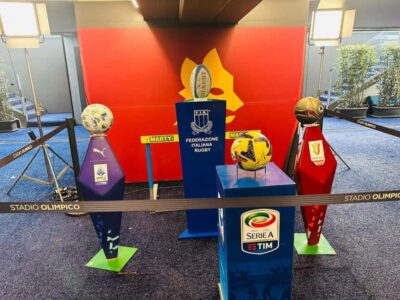
Tickets and Guided Tour of the Olympic Stadium in Rome and Foro Italico
Read our review →


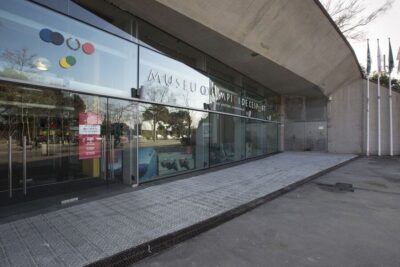
Barcelona: Olympic and Sport Museum – Sports Experience
Read our review →
Maihaugen Museum/The Norwegian Olympic Museum, Lillehammer.
Read our review →
Athens Olympic Museum: Skip-the-Line Entry Ticket
Read our review →
Olympic and Sport Museum of Barcelona “Joan Antoni Samaranch”
Read our review →This one also appears in