

Review · GLASGOW
Glasgow Football Tour: Three Hampdens Walking Tour
The story here begins before modern stadiums, floodlights, and packed stands. In Glasgow’s south side, you follow the ground where the passing and running game took shape, then trace it through three Hampden Parks that helped set the pattern for football grounds around the world.
I like two things straight away: the tour visits real surviving places, not just a museum display, and the guide brings Scotland’s role in football’s development to life through specific matches, players, triumphs, and failures. The first Hampden mural and the old terraces at Cathkin Park give the walk a strong sense of place.
The main drawback is that the walking is short, probably no more than a mile, so much of the two hours is spent standing and listening. Bring warm clothing, especially in cool or wet Glasgow weather. The experience is about stories and atmosphere rather than covering a large distance.
Key points about the Three Hampdens walk
- Three football grounds in one short route: Visit Queen’s Park Recreation Ground, the first Hampden site, Cathkin Park, and modern Hampden Park.
- A rare look at abandoned terracing: Cathkin Park still has original standing areas from its days as a working football ground.
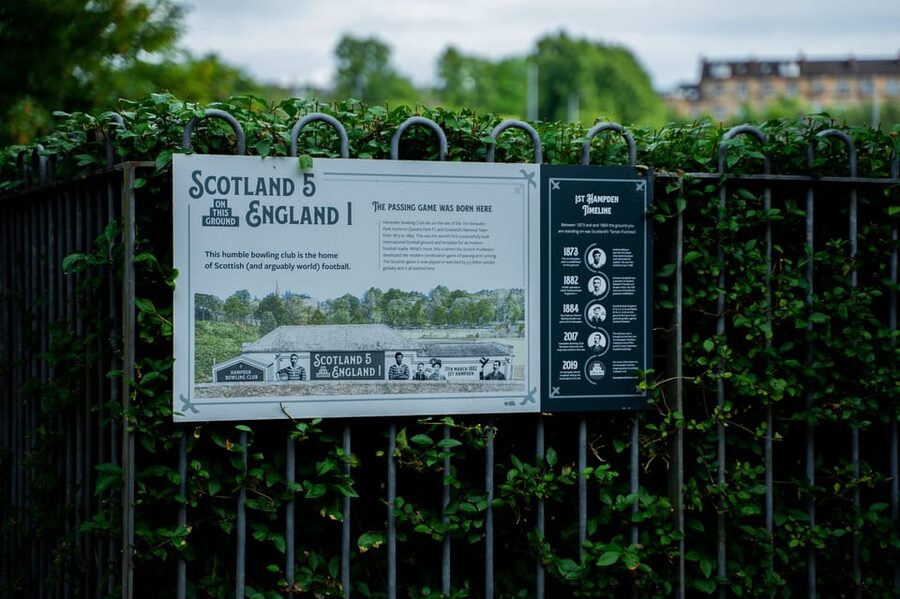
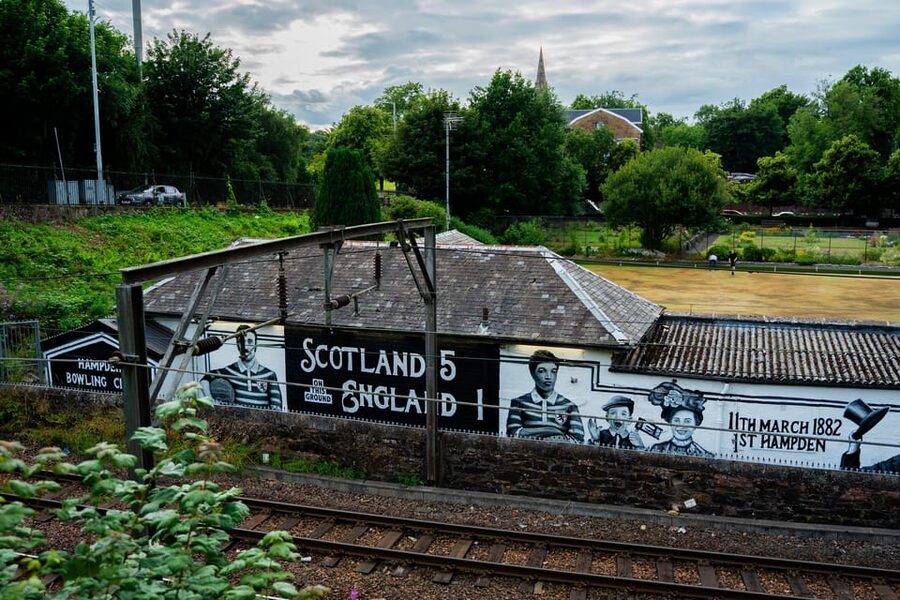
- The 1882 match gets its own mural: See the site linked to Scotland’s 5 to 1 win over England on March 11, 1882.
- Local football expertise matters: The English-speaking guide explains how Scottish football shaped the modern passing and running game.
- A practical length for match day: The route takes two hours and the walking section is short enough to pair with a Queen’s Park game.
- Accessible and flexible booking: The tour is wheelchair accessible, and you can cancel up to 24 hours ahead for a full refund.
Starting at Queen’s Park Recreation Ground
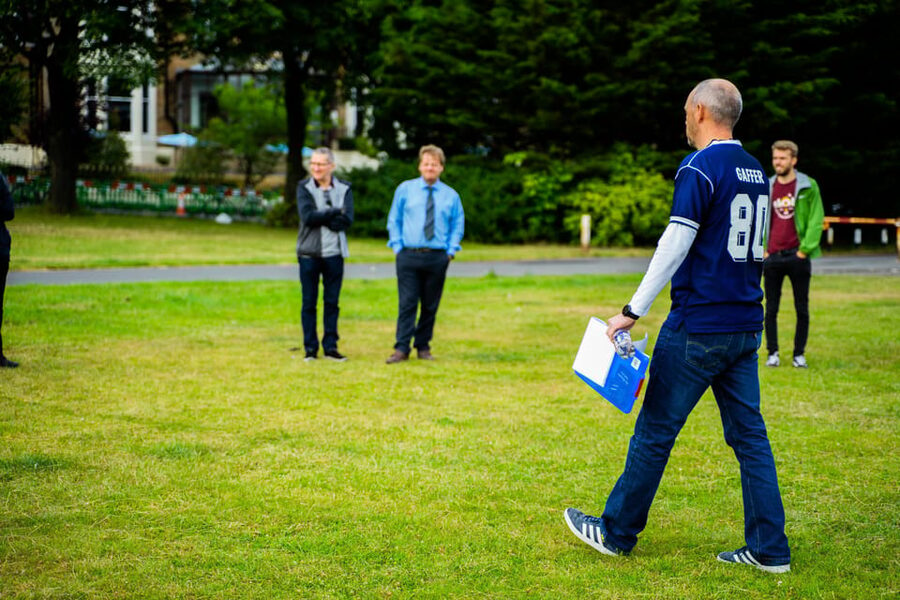
Your meeting point is the skatepark in Queen’s Park Recreation Ground, across from Hotel Number 10. This gives the tour a useful beginning: you are not dropped into an isolated landmark with no context. You start in the open ground connected with Queen’s Park, the club and playing tradition at the heart of the story.
The guide sets out why these fields matter. Scottish football developed a style based on passing and movement rather than relying only on individual dribbling or force. The tour connects that local development with the worldwide game you know today.
I would arrive with enough time to find the skatepark and settle in. The meeting point is specific, but a public recreation ground can have several paths and entrances. Once the walk begins, expect a mix of short movements between sites and pauses while the guide explains what happened there.
This is not a stadium tour in the usual sense. You are not being led through changing rooms, hospitality areas, or a modern club museum. The focus is the ground beneath your feet and the way each site fits into football’s story.
More sporting days out around the UK:
- Liverpool: Liverpool Football Club Museum and Stadium Tour
★ 4.8 · 10,764 reviews - London: Emirates Stadium Entry Ticket and Audio Guide
★ 4.7 · 5,513 reviews - London: Chelsea Football Club Stadium and Museum Tour
★ 4.8 · 4,576 reviews
The first Hampden and the 1882 mural
The first Hampden Park was at the Hampden Bowling Club site. It was the first purpose-built international football stadium, a detail that gives the stop real weight. You are looking at a place tied to the moment when football grounds began to be designed for the sport rather than borrowed from another use.
The mural marks one of the tour’s most photograph-friendly moments. It recalls Scotland’s 5 to 1 victory over England on March 11, 1882. You can take an Instagram photo here, but the more important point is what the match represents: international football was becoming an event with its own venues, rivalries, and public identity.
A guide who knows the subject well can turn a mural into more than a photo stop. You hear how the match, the venue, and the growing popularity of the game fitted together. The stories include football’s modernization and success, but also its failures and the heartbreak that came with them.
The site is especially useful for visitors who know modern football but have little sense of how its grounds evolved. At today’s stadiums, it is easy to assume that terraces, sightlines, crowd movement, and dedicated playing space simply appeared fully formed. This stop helps you see that process in human scale.
Cathkin Park and the ghost of a stadium
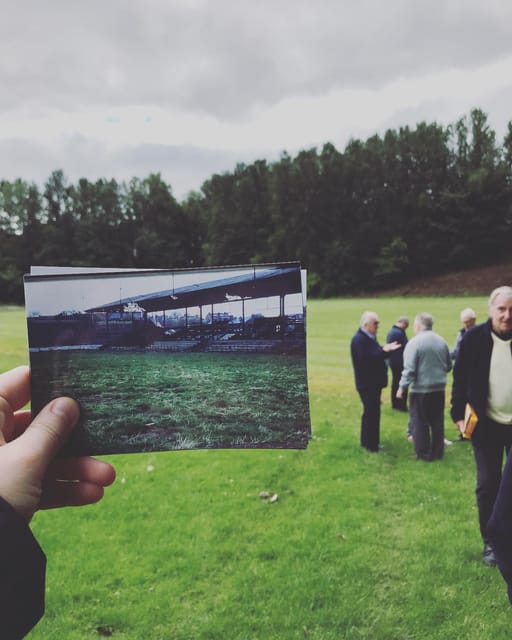
Cathkin Park is the most unusual stop. It is an abandoned football ground with original terracing still in place, giving you a direct look at what remains when a stadium loses its club and its crowds.
The word abandoned can sound dramatic, but the value is in the plain physical evidence. You see the shape of a former football ground rather than a polished reconstruction. The surviving terraces help you picture how spectators once gathered around the pitch, even though the active stadium life is gone.
This is where sturdy footwear and warm clothing make sense. The walking distance is not long, but the stop involves standing outdoors while the guide talks. The site may appeal most to you if you enjoy old sporting places, forgotten buildings, and the contrast between a famous game and the quiet remains left behind.
It is also the point where expectations matter. Do not book this looking for a restored stadium or a formal heritage attraction with indoor facilities. Cathkin Park is valuable because it is raw and incomplete. The guide’s explanation supplies the detail that the physical remains cannot provide on their own.
I find this kind of stop more revealing than a perfectly preserved display. A modern museum can explain the past with objects and panels. An abandoned terrace shows how time, changing clubs, and changing football can erase a working ground while leaving fragments behind.
Modern Hampden and the Rose Reilly mural
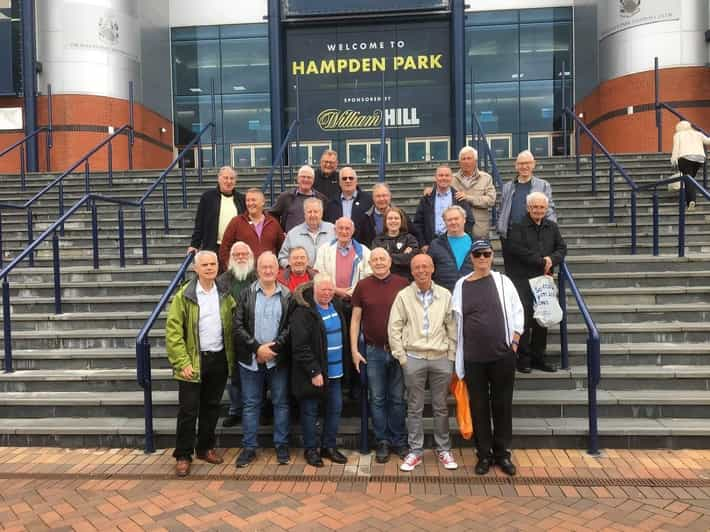
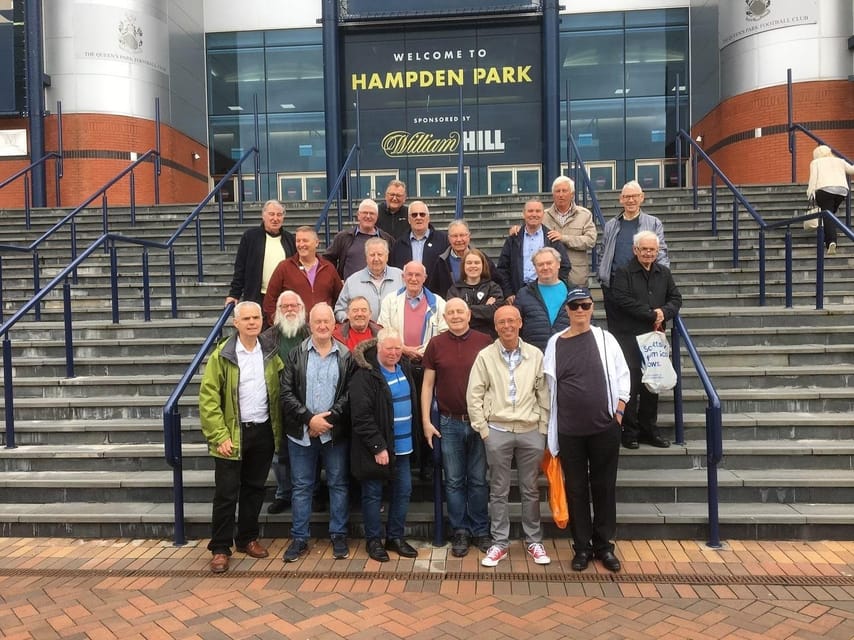
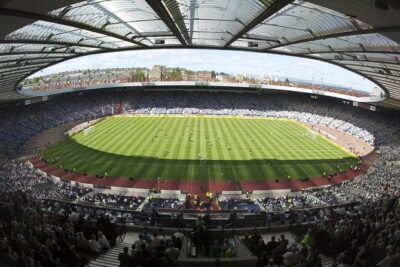
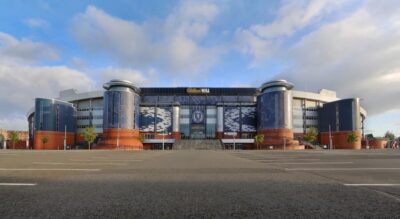
The route then reaches Hampden Park, the third Hampden and the iconic stadium most people associate with Scottish football. Here, the tour places the modern ground beside the earlier sites, allowing you to see the long movement from the first purpose-built international venue to one of the world’s best-known stadiums.
The stop includes a Rose Reilly mural. Her inclusion adds a wider view of Scottish football, showing that the story is not only about famous men’s international matches or stadium architecture. The mural gives the tour another strong visual marker and brings attention to a major Scottish football figure.
You should not expect entry into the stadium itself unless that is separately arranged. The supplied details describe an outdoor walking tour with a visit to the area around Hampden Park, not an interior stadium tour. That distinction matters if you are hoping to see dressing rooms, the pitch, or museum exhibits.
Still, being near Hampden completes the route well. The first Hampden shows the birth of the purpose-built international ground. Cathkin Park shows decline and abandonment. The third Hampden shows the enduring public importance of the stadium form.
Same city, another way to catch the action:
- The Manchester City Stadium Tour
★ 5.0 · 4,176 reviews - London: Wembley Stadium Guided Tour
★ 4.7 · 3,629 reviews - Glasgow: Celtic Park Stadium Tour
★ 4.9 · 3,336 reviews - Guided Celtic Park Stadium Tour
★ 5.0 · 3,136 reviews
How much walking and standing to expect
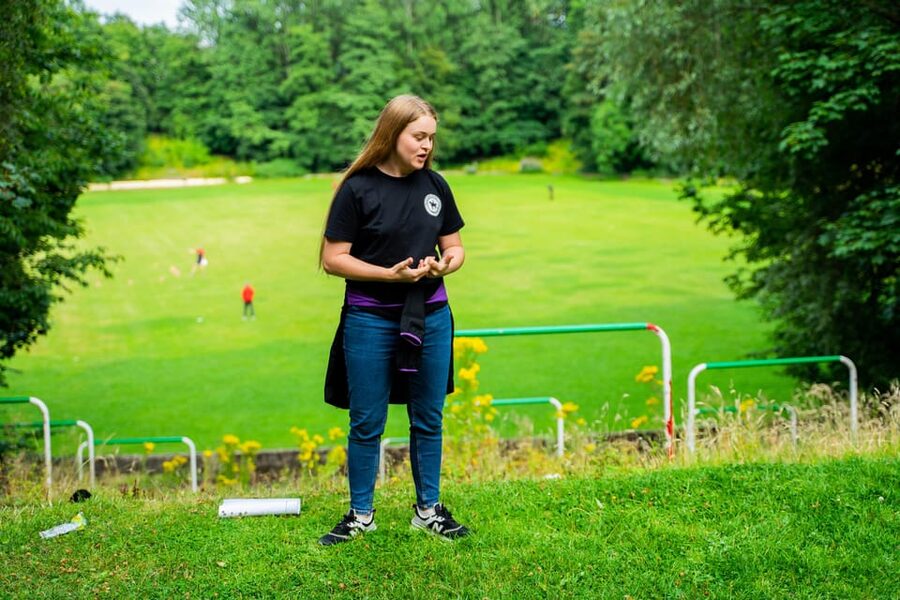
The advertised duration is two hours, while the walking section is probably no more than a mile. That makes this a gentle route in terms of distance, but not necessarily a seated experience. You will spend a fair amount of time standing still as the guide explains each place.
I would dress for the weather rather than for exercise. Glasgow can feel cold when you are stationary, and the tour does not sound like a brisk city walk designed to keep you moving. A warm coat, comfortable shoes, and weather protection are sensible choices.
The short route makes the tour manageable for people who want football history without committing to a long walking day. It can also work well before or after a Queen’s Park match. Some participants arrange to attend a Queen’s Park game after the tour, which creates a neat connection between the historical story and live football.
The two-hour schedule also gives the guide room to explain events instead of rushing from one location to another. The trade-off is that you may find the pace slow if you prefer constant movement. I would choose this only if you are happy to listen outdoors.
The guide’s role in making the tour worthwhile
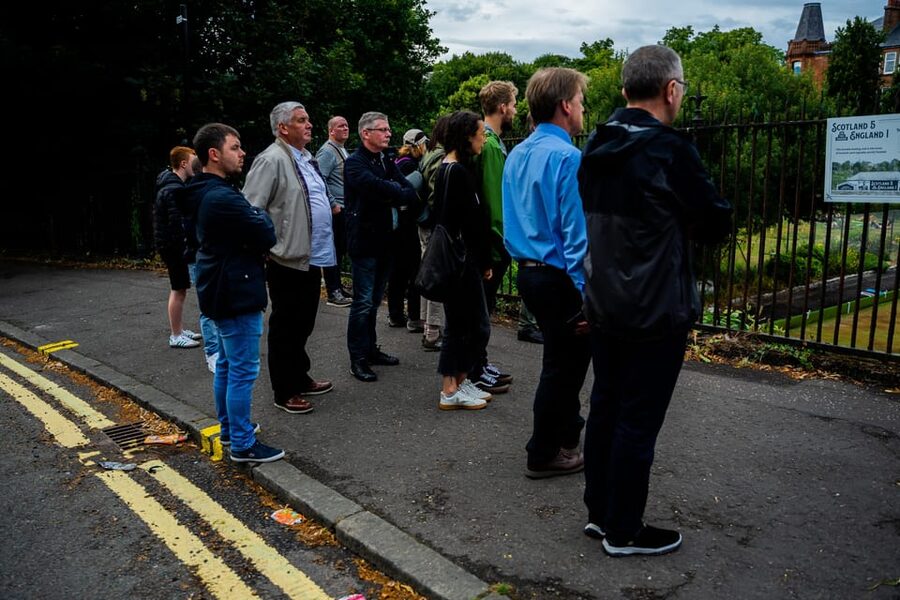
This experience depends heavily on the guide. The sites themselves are interesting, but the first Hampden mural, old terraces, and modern stadium need explanation to become a connected story.
The guide is expected to be a passionate local football specialist who can cover the birth of the modern game, its Scottish roots, its spread around the world, and the people involved. That includes revolutionary changes, major victories, and painful setbacks. The strongest part of the tour is likely to be the spoken detail rather than any single object or view.
Because the tour is in English, you need enough English to follow a fairly detailed talk about football history. The format is live rather than audio-guided, so you can listen and ask questions as the route develops, though no specific guide names or group size are provided.
I would pay attention to the guide’s connections between places. The point is not simply that there were three Hampdens. It is that each ground marks a different stage in football’s development: invention, growth, decline, and continued international importance.
Is $29 a fair price?
At $29 per person, this is reasonably priced if you care about Scottish football or the origins of the modern game. You are paying for two hours with a specialist local guide and access to places that are easy to miss if you explore the area without background.
The value is less obvious if you measure tours by distance or by the number of formal attractions entered. You will not spend two hours inside a major stadium, and the short walking route means the cost is mainly for interpretation. If you already know the history in detail, you may find the physical sites more interesting than the commentary.
For most football fans, though, the price compares well with a standard attraction ticket because it links several locations. You get a story that moves from the first international stadium to an abandoned ground and then to modern Hampden. That sequence gives the experience a clear purpose.
I would also factor in the chance to pair it with a Queen’s Park match. The tour alone gives you historical context. A match afterward can show how the local football setting continues in the present, though the game is not included in the tour price.
Accessibility, booking, and practical planning
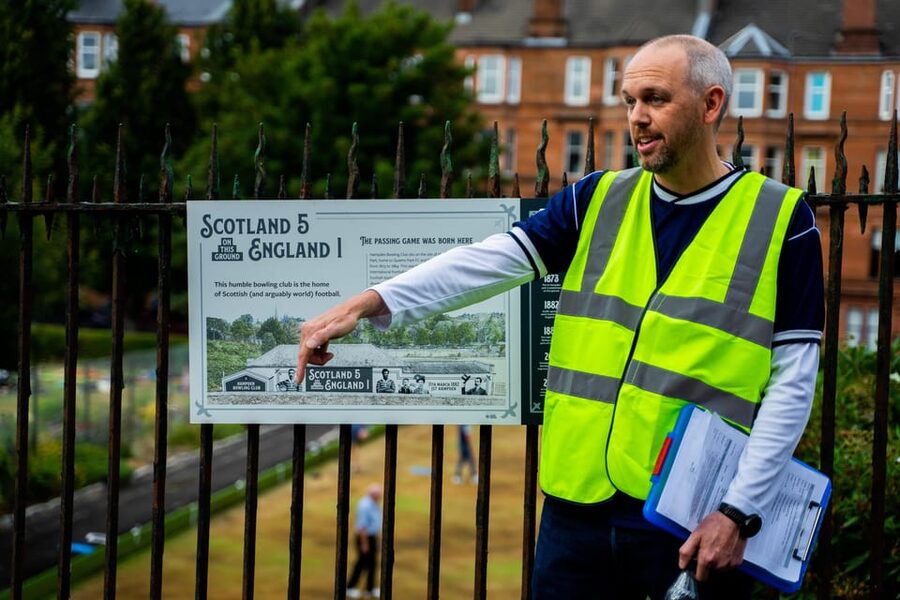
The activity is listed as wheelchair accessible. The short route may be helpful, but the information does not describe the exact surfaces, slopes, or access conditions at every stop. If you use a wheelchair, I would confirm the details with the provider before booking, particularly for the abandoned Cathkin Park section.
The tour is offered in English with a live guide. It lasts two hours, and starting times depend on availability. You can reserve now and pay later, which helps if your Glasgow plans are still changing.
Cancellation is free up to 24 hours before the activity for a full refund. That is useful for a weather-sensitive outdoor walk, especially if you are building a trip around football fixtures.
The meeting point is at the skatepark in Queen’s Park Recreation Ground, across from Hotel Number 10. Bring your phone for the murals, but do not let photography distract you from the guide. The best information comes in the connections between the stops.
Who should book this Glasgow football tour?
I would recommend it most strongly to football fans, Scottish sports-history enthusiasts, and visitors who prefer real places over polished attractions. It also suits anyone curious about how stadiums, terraces, and international football developed.
Families with older children may enjoy the clear sequence of places, especially if the children already follow football. The short route is easier than a long city walk, but the amount of standing may test younger children.
This is less suitable for you if you want a full stadium interior tour, a large museum collection, or a fast-paced sightseeing walk. It is also not ideal if you dislike outdoor talks in cool weather.
The best mindset is to treat the tour as a moving history lesson with three physical case studies. The guide supplies the detail, while the sites give you something concrete to look at. That combination is what makes the route worthwhile.
Should you book the Three Hampdens walk?
Book it if you want to understand why Glasgow matters to football beyond the presence of modern Hampden Park. The first purpose-built international ground, the 1882 mural, the abandoned terraces at Cathkin Park, and the Rose Reilly mural create a route with real variety.
Skip it if your main goal is to enter Hampden Park or cover a large amount of Glasgow on foot. You should also think twice if standing outdoors for much of two hours sounds uncomfortable.
For the right audience, $29 buys more than a short walk. It gives you a clear account of how Scottish ideas helped shape the modern game, told in the places where that story happened. Dress warmly, leave room in your schedule for a Queen’s Park match if one fits, and come ready to listen.
FAQ
Where does the Glasgow Football Tour begin?
The meeting point is at the skatepark in Queen’s Park Recreation Ground, across from Hotel Number 10.
How long does the Three Hampdens tour last?
The tour lasts two hours.
How far do you walk?
The walking section is quite short, probably no more than a mile. Much of the tour involves standing and listening to the guide.
Which football grounds are included?
The route visits Queen’s Park Recreation Ground, the Hampden Bowling Club site of the first Hampden Park, Cathkin Park, and modern Hampden Park, the third Hampden.
What is special about the first Hampden stop?
It is the site of the first purpose-built international football stadium. You can also see a mural recalling Scotland’s 5 to 1 win over England on March 11, 1882.
What can you see at Cathkin Park?
Cathkin Park is an abandoned football ground with original terracing still visible.
Is the tour wheelchair accessible?
Yes, the activity is listed as wheelchair accessible.
Can I cancel the tour for a refund?
Yes. You can cancel up to 24 hours in advance for a full refund.
New on the fixture list around the UK
- London: Shoreditch Junkyard Golf Tickets for 9 or 18 Holes★ 4.7 · 31 reviews
- Newcastle: Junkyard Golf Tickets for 9 or 18 Holes★ 4.3 · 42 reviews
- London: F1® DRIVE – The Official F1® Karting Experience★ 4.3 · 22 reviews
- Leeds: Junkyard Golf Tickets for 9 or 18 Holes★ 4.5 · 38 reviews
- From London: Liverpool FC Stadium & Museum Rail Day Tour★ 4.8 · 8 reviews
- Glasgow: Celtic Park Number 7 Restaurant★ 4.1 · 28 reviews
- Belfast: Ulster Transport Museum Entry Ticket★ 4.7 · 4 reviews
- London: West Ham United Football Game at London Stadium★ 4.9 · 13 reviews
More Glasgow Sports Experiences to weigh up.
Glasgow: Celtic Park Stadium Tour and Dining Experience
Read our review →
Scottish Football Museum and Hampden Park Stadium Tour
Read our review →
This one also appears in