
Review · UK
Belfast: Ulster Transport Museum Entry Ticket
The Ulster Transport Museum turns machines into a story about ordinary life. Steam trains, family cars, ocean liners, aircraft, and scientific inventions show how people in Ireland found faster, safer, and more practical ways to move around. The Rail Gallery and TITANICa displays are the big draws, but the smaller objects help explain why transport changed society.
I like the freedom of a self-guided visit. You can give a quick hour to the cars or spend most of the day with the railway collection and Titanic material. I also like the range: the DeLorean shares space with old locomotives, engineering displays, and an outdoor space trail.
The main drawback is that this is a museum visit, not a guided tour with a storyteller leading you from stop to stop. The site is also closed on Mondays except for some Northern Ireland bank and public holidays, so check the official opening hours before setting out.
Key points to know before you go
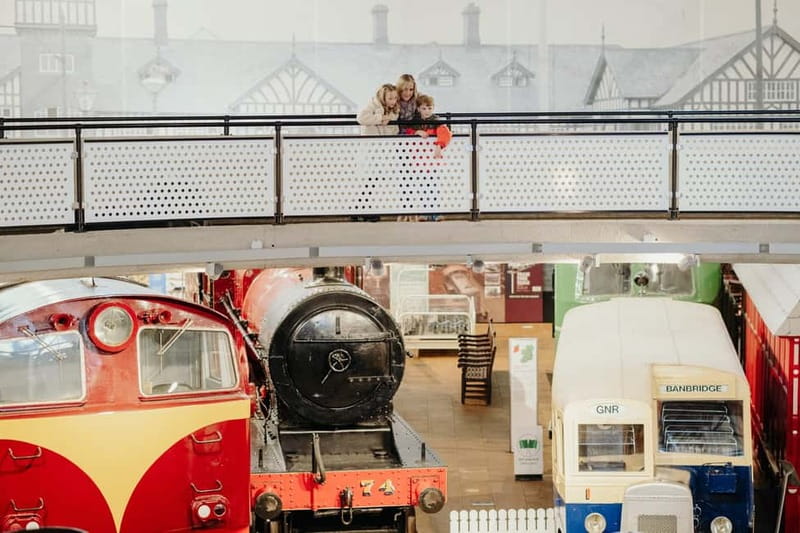
- Ireland’s largest railway collection gives the visit its biggest sense of scale, with steam locomotives and railway objects spread through the Rail Gallery.
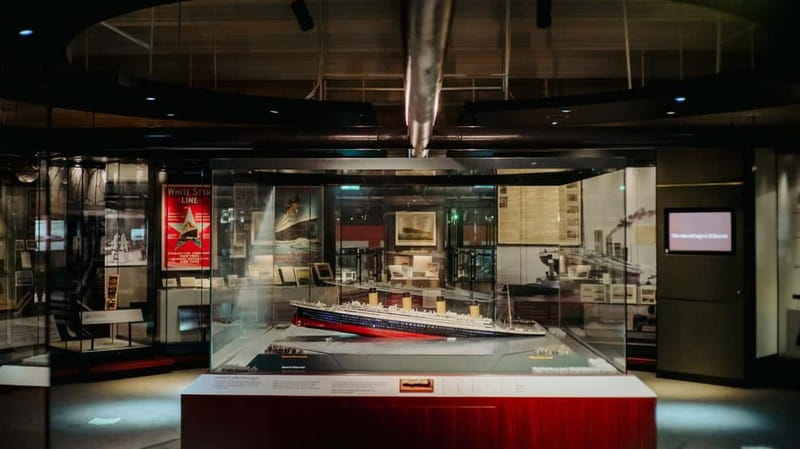
- TITANICa uses original artefacts and personal stories to connect Belfast shipbuilding with the people who built and sailed on Titanic and her sister ships.
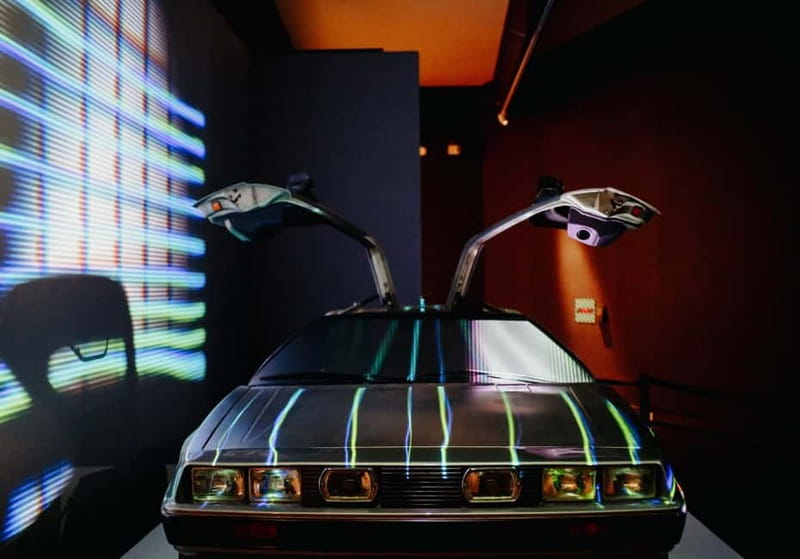
- The DeLorean display adds a striking modern touch to the automobile collection and will appeal to car fans and film enthusiasts.
- The Museum of Innovation links inventions from land, sea, and sky to the practical problems they were made to solve.
- Our Place in Space takes the experience outdoors with a trail about the universe and our place in it.
- A $16 ticket covers both galleries for the whole day, with parking, a map, and no fixed departure time included.
Why this museum tells more than a transport story
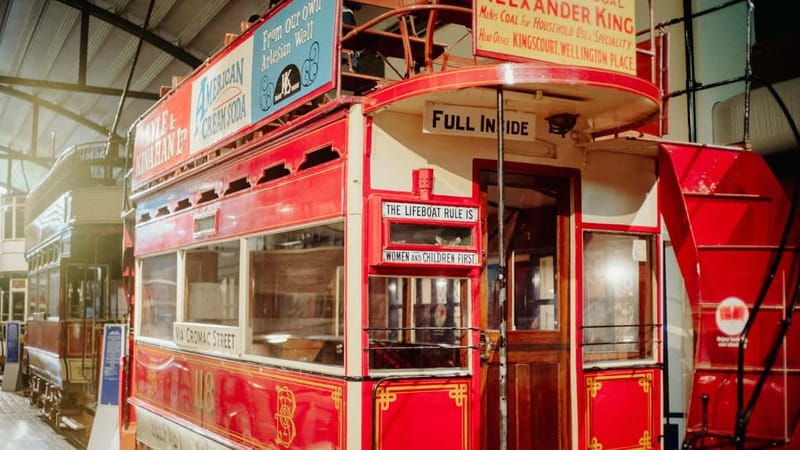
At first glance, the Ulster Transport Museum seems built for people who can name every locomotive part. You do not need that level of interest. Its real subject is change: how transport altered work, travel, trade, family life, and the way people understood distance.
The museum sits on the outskirts of Belfast and uses two gallery buildings. That layout matters. You are not squeezing a few vehicles into one crowded hall. Instead, the collections give large machines room to make an impression, while smaller artefacts and explanations provide the human side.
I find this approach useful because transport can otherwise become a parade of dates and models. Here, a train is not just a train. A car is not merely a polished object. Each one represents an attempt to solve a problem, move goods, connect communities, or make daily life easier.
You receive a complimentary visitor map at the ticket kiosk in the main car park. Keep it handy as you plan your route through the two buildings and the outdoor space trail. Since the visit is self-guided, the map helps you set your own pace rather than follow a fixed sequence.
More seats, stadiums and sporting nights around the UK:
- Liverpool: Liverpool Football Club Museum and Stadium Tour
★ 4.8 · 10,764 reviews - London: Emirates Stadium Entry Ticket and Audio Guide
★ 4.7 · 5,513 reviews - London: Chelsea Football Club Stadium and Museum Tour
★ 4.8 · 4,576 reviews
Starting with the Road Gallery and its cars
The Road Gallery is the natural starting point if cars are your main interest. It presents a collection of automobiles from different periods, letting you see how road travel moved from a specialist pursuit toward a normal part of everyday life.
The collection includes the iconic DeLorean, a particularly memorable stop for anyone interested in Belfast manufacturing, car design, or popular culture. The display gives the museum a modern focal point among the older vehicles and engineering objects.
I would not rush through the less famous cars. The value here comes from comparing them. Look at how body shapes, passenger space, and practical features changed over time. Even without a guide, the vehicles help you think about what people expected from transport in different periods.
The Road Gallery should suit families because cars are easy to recognise and discuss. Children can pick out shapes and features, while adults may find themselves comparing the vehicles with the cars they know today. The display also works well for visitors who want a shorter section before moving to the larger railway and maritime material.
The drawback is simple: if you are visiting mainly for Titanic or trains, the car collection can absorb more time than planned. Give yourself a rough order before entering, or you may discover that the day has disappeared among rows of automobiles.
The Rail Gallery and Northern Ireland’s railway story
The Rail Gallery is likely to be the museum’s most imposing space. It contains Ireland’s largest railway collection, including major steam locomotives and other railway objects that show the scale of earlier rail travel.
Big machines are the point here. You can stand close to locomotives and appreciate the size, weight, and mechanical force that powered long-distance journeys. Photographs cannot quite prepare you for the physical presence of a steam engine. The wheels, metalwork, and sheer height make the technology easier to understand.
I like this gallery because it makes engineering feel physical rather than abstract. You see the answer to a basic question: how do you move large numbers of people and heavy loads across long distances? The railway collection shows one of the most important answers of the modern era.
The gallery also helps place transport in a social setting. Railways were not only about speed. They changed where people could work, how goods reached markets, and how families could travel. The museum’s wider purpose becomes clearest here, as machines connect to daily life.
Allow plenty of time if you enjoy technical displays. The ticket gives you the entire day, so you do not need to inspect every locomotive at the same speed. I would move first through the main line of the gallery, then return to the objects that catch your attention.
Visitors who are less interested in trains may find the size of the collection a little much. That is not a reason to skip it. Even a focused walk through the gallery gives you a strong sense of how railways shaped Ireland’s transport story.
TITANICa and the people behind the ship
TITANICa shifts the mood from general transport to a specific Belfast story. The exhibition explores the famous ship and her sister ships through original artefacts recovered from the Atlantic, along with personal stories about the people who built the vessels and those who travelled on Titanic’s maiden voyage.
That combination is important. Titanic can easily become a story about a single famous ship. The exhibition adds the workers, designers, builders, passengers, and families who made the event human. Original objects give the subject a direct connection to the past without relying only on photographs or familiar headlines.
I would allow quiet time here. Read the personal accounts instead of treating the exhibition as another collection of objects to tick off. The artefacts help you think about the ship as a working project and a place filled with individual lives.
TITANICa also fits the museum’s larger message. Shipbuilding was transport on a massive scale, but the purpose remained familiar: carrying people and goods across difficult distances. The display shows the ambition involved, along with the human cost and emotion attached to the voyage.
This is one of the strongest parts of the visit for people who want more than machinery. It may be less satisfying if you expect a full reconstruction or an entertainment-focused attraction. The supplied information describes artefacts and personal stories, so approach it as a museum exhibition built around evidence and memory.
Same city, another way to catch the action:
- The Manchester City Stadium Tour
★ 5.0 · 4,176 reviews - London: Wembley Stadium Guided Tour
★ 4.7 · 3,629 reviews - Glasgow: Celtic Park Stadium Tour
★ 4.9 · 3,336 reviews - Guided Celtic Park Stadium Tour
★ 5.0 · 3,136 reviews
The Museum of Innovation, from land to sky
The Museum of Innovation brings together selected objects from across the collections. Its focus is on pioneers of science and engineering, with inventions from land, sea, and sky showing how ideas changed the modern world.
I like this section because it widens the subject beyond transport vehicles. It asks you to consider the thinking behind the machine. What problem was someone trying to solve? What made an invention useful? How did one practical improvement affect the way people lived?
The display should help you connect the steam locomotive, the automobile, the ship, and other inventions as part of the same long process. People wanted to travel farther, carry more, reduce effort, and improve control over difficult conditions. The objects here give that process a clear shape.
This gallery is also a good counterweight to the large machines. If the Road and Rail Galleries make you look at size and power, the Museum of Innovation makes you look at design and ideas. I would visit it after seeing at least some of the transport displays, since the connections will make more sense.
Do not expect a separate guided demonstration. The visit is self-guided, and English is the stated language for the museum experience. You set the pace, choose how closely to read the information, and decide which inventions deserve a second look.
Our Place in Space, an outdoor change of scale
Our Place in Space adds an outdoor element to the museum. This trail invites you to think about the universe and humanity’s position within it, giving the visit a change of pace after the enclosed galleries.
The trail is useful for families and for anyone who needs fresh air between indoor displays. It also extends the museum’s interest in movement and discovery beyond roads, rails, and ships. Transport is not only about crossing a town or an ocean. Human curiosity has also pushed outward toward space.
I would save this for the middle or end of the visit, depending on the weather and your energy. Use it as a break after the indoor galleries, or finish with it as a final reminder that the museum’s story reaches beyond local engineering.
The available information does not give a precise trail length or a detailed list of stops, so plan to follow the museum’s map and on-site information. Treat it as an additional outdoor feature rather than the main reason to buy the ticket.
How to plan your one-day visit
The ticket is valid for one day, and there is no time limit during that day. That makes this a flexible stop rather than an attraction you must rush through at a fixed entry hour.
On arrival, go to the Ticket Kiosk in the main Ulster Transport Museum car park. On-site parking is included, and you receive a visitor map. From there, I would use this loose order:
- Begin with the Road Gallery if automobiles are your priority.
- Move to the Rail Gallery while you still have plenty of energy for the large collection.
- Spend focused time in TITANICa, especially with the original artefacts and personal stories.
- Visit the Museum of Innovation to connect the different types of engineering.
- Walk the Our Place in Space trail when you want an outdoor pause.
You can reverse that order without losing anything. The important point is to avoid assuming the museum can be covered in a quick pass. Two gallery buildings, an outdoor trail, and a large collection give you enough material for a substantial visit.
Food and drinks are not included. Plan around that rather than expecting your entry ticket to cover refreshments. The activity information does not specify on-site food arrangements, so check current museum details if you need to organise a meal during the day.
Who gets the best value from the $16 ticket
At $16 per person, the ticket offers solid value if you plan to spend several hours exploring both buildings. You are paying for access to the Road Gallery, Rail Gallery, TITANICa, the Museum of Innovation, and the outdoor space trail, not just a single display.
The value is strongest for families, car fans, railway enthusiasts, people interested in Belfast shipbuilding, and visitors who like museums with a wide subject range. You can move between familiar objects and more unusual inventions without buying separate tickets for each area.
It is also a sensible choice on a rainy Belfast day, provided the museum is open. The indoor galleries give you plenty to see, and the outdoor trail offers an option if the weather improves.
The value is weaker if you only have a short gap in your schedule or dislike self-guided museums. There is no guided tour included, and no named guide leads the visit. You will need to read, compare, and choose your own route.
The free cancellation option, available up to 24 hours before the visit, and the reserve-now-pay-later choice add flexibility when plans are still changing. These are useful booking terms, but the real value comes from allowing enough time to use the full ticket.
Access, timing, and practical points
The museum is wheelchair accessible, which makes the two gallery buildings available to a wider range of visitors. The available information does not give detailed route notes or specific accessibility features, so contact the museum directly if you need precise answers about a particular requirement.
The host or greeter language is English, and the stated museum language is English. This is a self-guided experience, so you should be comfortable following written information without a guide translating or explaining each stop.
Check opening hours before you leave Belfast. The museum is closed on Mondays except for some Northern Ireland bank and public holidays, and the opening schedule can change. The official website is the best place to confirm the day you want.
Because the ticket is valid for the day, you can take a patient approach. Spend more time with the railway collection, shorten the car displays, or return to TITANICa after seeing the other galleries. That freedom is one of the better reasons to choose this ticket instead of a tightly timed activity.
Should you book the Ulster Transport Museum?
Book it if you want a broad, practical museum experience that links Belfast’s engineering story with roads, railways, ships, cars, inventions, and space science. The $16 price is reasonable for a full-day ticket, especially when parking and access to both gallery buildings are included.
I would make it a priority for families and anyone with a serious interest in trains, automobiles, Titanic, or engineering. I would be more cautious if you want a live guide, a tightly organised tour, or a short attraction you can finish in an hour.
Give yourself several hours, check the Monday closure, and use the visitor map to control your pace. The museum rewards curiosity more than speed.
FAQ
Where is the Ulster Transport Museum?
The museum is on the outskirts of Belfast in the United Kingdom. Proceed to the Ticket Kiosk when you arrive at the main Ulster Transport Museum car park.
What does the entry ticket include?
The ticket includes entry to the Ulster Transport Museum, access to both gallery buildings, self-guided admission, on-site car parking, and a complimentary visitor map. It also includes the outdoor Our Place in Space trail.
How long is the ticket valid?
The ticket is valid for one day. There is no time limit on your visit during that day.
Is the museum open every day?
No. The museum is closed on Mondays, except for some Northern Ireland bank and public holidays. Check the official Ulster Transport Museum website for current opening hours.
Is the museum wheelchair accessible?
Yes. The activity information states that the museum is wheelchair accessible.
Is a guided tour included?
No. The visit is self-guided, and food and drinks are not included. The host or greeter language and museum language are English.
New on the fixture list around the UK
- London: Shoreditch Junkyard Golf Tickets for 9 or 18 Holes★ 4.7 · 31 reviews
- Newcastle: Junkyard Golf Tickets for 9 or 18 Holes★ 4.3 · 42 reviews
- London: F1® DRIVE – The Official F1® Karting Experience★ 4.3 · 22 reviews
- Leeds: Junkyard Golf Tickets for 9 or 18 Holes★ 4.5 · 38 reviews
- Glasgow Football Tour: Three Hampdens Walking Tour★ 5.0 · 2 reviews
- From London: Liverpool FC Stadium & Museum Rail Day Tour★ 4.8 · 8 reviews
- Glasgow: Celtic Park Number 7 Restaurant★ 4.1 · 28 reviews
- London: Fulham FC Football Game at Craven Cottage★ 3.4 · 5 reviews
More UK Sports Experiences to weigh up.

Liverpool: Liverpool Football Club Museum and Stadium Tour
Read our review →
London: Emirates Stadium Entry Ticket and Audio Guide
Read our review →
London: Chelsea Football Club Stadium and Museum Tour
Read our review →




This one also appears in