

Review · FRANCE
Behind the Scenes of the Roland Garros Stadium
Roland Garros is more than a famous red clay court. It is a working tennis theater, and this 90-minute behind-the-scenes tour lets you follow the route taken by players, journalists, officials, and VIPs. You move through the changing rooms, press rooms, presidential stand, and the corridor leading toward the court.
I like the tour for two clear reasons. First, it shows the practical side of the French Open rather than just the seats and court you see on television. Second, the guides can add memorable stories about players such as Rafael Nadal, Roger Federer, Steffi Graf, and other champions. Guides including Lionel have been praised for making the visit lively and interactive.
The main catch is that Roland Garros remains an active event venue. A tournament, private function, or setup work can close off areas, cover the court, or restrict photography. The meeting point can also be confusing, so arrive early and do not cut the timing close.
Key points before you book
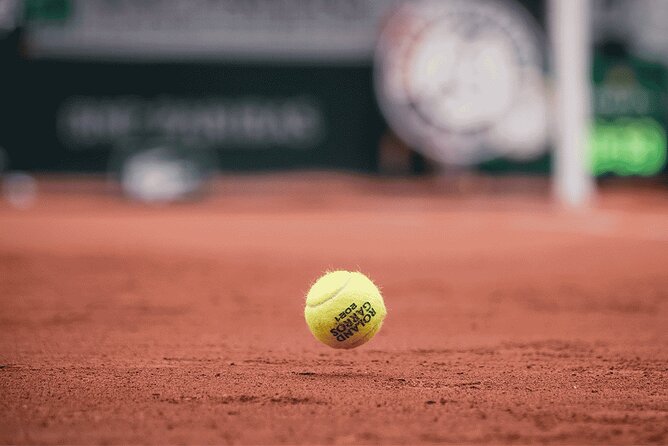
- Follow the players’ route: Walk through the changing rooms and the corridor that leads toward the clay court.
- See the press side of tennis: Visit the interview and press areas where the tournament’s public story takes shape.
- Expect stairs and steady walking: Comfortable shoes matter during this 1.5-hour visit.
- Center court access can vary: Events and venue activity may limit what you can enter or photograph.
- Small group setting: The maximum group size is 30 people, though the feel can depend on the day’s attendance.
- Plan around the shop: The Roland-Garros boutique is at the ending point and is open from 9:30 a.m. to 6:30 p.m.
Why Roland Garros feels different from a normal stadium tour

Most sports stadium tours show you the stands, a trophy display, and perhaps a locker room. Roland Garros adds a stronger sense of movement. You are not simply looking at a court. You are tracing the path a player takes from preparation to public performance.
That route is the heart of the experience. You see where players change, where journalists work, and where competitors emerge before stepping onto the clay. The tour helps you connect the television image with the machinery behind it: interviews, press conferences, officials, security, VIP seating, and the many staff members needed to run a Grand Slam tournament.
The setting also carries a strong connection to tennis history. You may see plaques, statues, trophies, and names connected with major champions. Rafael Nadal receives particular attention, which makes sense given his extraordinary association with the French Open. If Nadal is the reason you know Roland Garros, this tour gives you plenty of small landmarks to look for.
I would not book this as a general Paris sightseeing stop unless you have some interest in tennis, sports venues, or the behind-the-scenes workings of major events. For a tennis fan, though, the appeal is clear. You get access to spaces that ordinary day tickets do not normally reveal.
More Tennis Tours and Tickets in the world:
- Paris: Roland-Garros Stadium Guided Backstage Tour
★ 4.7 · 1,052 reviews - Melbourne Park Tennis Experience
★ 5.0 · 143 reviews - Melbourne Park Tennis Sporting Experience
★ 4.8 · 118 reviews
Starting at 1 Avenue Gordon Bennett
The tour begins at 1 Avenue Gordon Bennett, 75016 Paris, near Roland Garros. It ends at the Roland-Garros boutique at 2 Avenue Gordon Bennett.
The official advice is to arrive 15 minutes early. Take that seriously. The entrance process has caused confusion because the outside gates may not clearly explain where the tour begins. A security guard may direct you to wait, while the guide is already nearby or preparing the group. Go to the designated entrance and have your mobile confirmation ready.
Late arrival is a real risk. Latecomers are not accepted, and no refund is offered if you miss the start. This is one of those Paris activities where arriving early is far less stressful than trying to solve the meeting point at the last minute.
The site is near public transportation, but the supplied information does not specify a particular station or route. Use the exact address rather than relying on a vague search for Roland Garros Stadium. That small bit of preparation can save you from walking to the wrong side of the complex.
The changing rooms and players’ corridor

The changing rooms are among the tour’s strongest stops. They make the visit feel personal in a way that a grandstand cannot. You get a look at the place where players prepare, wait, and gather themselves before entering the public arena.
From there, the tour follows the corridor toward the clay court. This passage is valuable because it gives you the players’ viewpoint. On television, the walk from the dressing area to the court is brief and dramatic. Here, you can see the physical spaces behind that familiar moment.
Your guide is likely to add stories about famous names and tournament traditions along the way. The best guides, including Lionel on some visits, bring energy and specific tennis knowledge to these areas. A strong guide can point out details you might otherwise pass without noticing, from plaques and historic references to the practical routines of tournament day.
The route involves walking and stairs. One and a half hours on your feet is manageable for most people, but this is not a seated museum visit. Wear comfortable shoes, especially if you have already spent the day walking around Paris.
The press rooms and interview spaces
The press rooms show another side of the French Open. Players do not simply walk off court and disappear. They enter a carefully organized media operation, with interviews, press conferences, translation, photography, and questions from journalists.
This stop helps explain why Roland Garros is such a large event even when you are not watching a match. The tournament is also a global broadcast, a news story, and a daily meeting place for the tennis world.
You may find the press spaces less visually dramatic than the court, but they are important to the story. This is where athletes explain a victory, defend a decision, or face questions after a difficult loss. Guides often use famous matches and players to give the rooms context.
Photography rules can change depending on the day. If the venue is preparing for an event, certain areas may be closed or photographs may be restricted. Keep expectations flexible. The tour is about access and context, not a guaranteed photo opportunity in every room.
More sporting days out around the world:
- Madrid: Tour Bernabéu Entry Ticket
★ 4.5 · 21,573 reviews - Barcelona: FC Barcelona Museum “Barça Immersive Tour” Ticket
★ 4.4 · 10,944 reviews - Liverpool: Liverpool Football Club Museum and Stadium Tour
★ 4.8 · 10,764 reviews - Amsterdam: Johan Cruijff ArenA Tour with Optional Guide
★ 4.6 · 8,954 reviews
The presidential stand and the center court
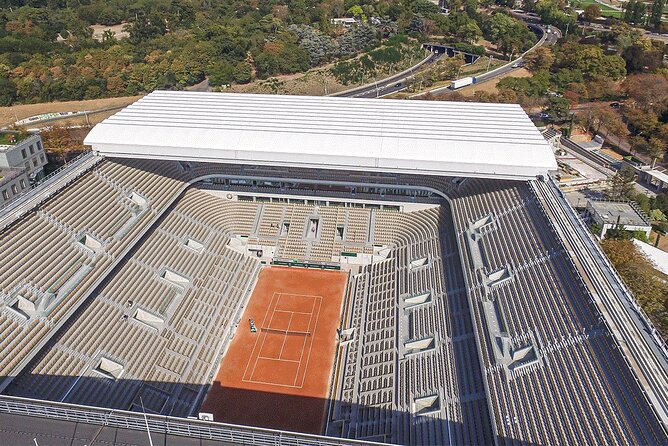
The presidential stand offers a different view of Roland Garros. It shows how the tournament separates public seating, official areas, and special guests. You get a sense of how the stadium works as a formal event venue, not just as a place where people buy a ticket and watch tennis.
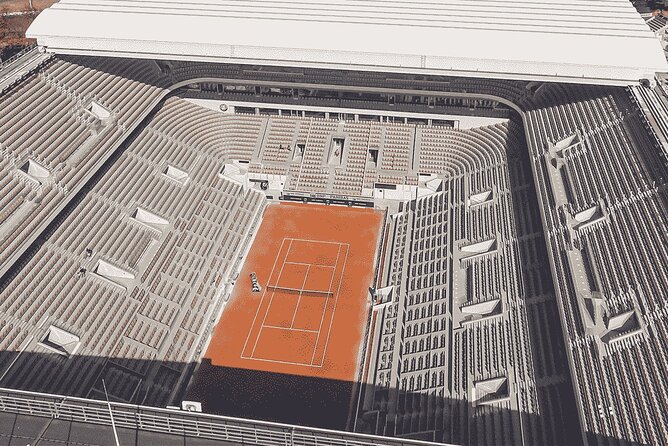
The center court is naturally the emotional high point for many people. You see the space that dominates television coverage and recall the great matches played on clay. The exact access can vary, however. A court may be covered by a platform, used for another event, or closed for operational reasons.
Do not assume you will be able to walk onto the playing surface. One guide allowed part of a group to step onto the clay, but this was not officially permitted. Treat the court as protected space and follow the guide’s instructions. You will still get the essential experience by seeing the court area and approaching it through the players’ route.
The most rewarding court moment may be quieter than expected. It can be standing in the tunnel, looking out toward the clay, and realizing that this is the same transition professional players make before one of the sport’s biggest matches.
Stories about Nadal and the champions
The tour has a clear strength when the guide knows how to connect the physical site with tennis history. Nadal’s plaque is a favorite detail, and fans often make a point of finding it. The tour can also include stories about Federer, Graf, and other major names.
The quality of the storytelling depends on the guide. Lionel has been singled out for an interactive approach and strong communication. Other guides have been described as warm and passionate about tennis. A few visits have suffered from a guide arriving late, giving little explanation, or failing to keep the full group together.
That variation matters. The buildings are impressive on their own, but a good guide turns a hallway into part of a match story. You learn why a room matters, who used it, and how the tournament operates. If your guide is less engaging, you may notice the physical spaces but miss some of their meaning.
The English option is useful for international visitors. On some dates, an English group can fill up and you may be asked to join a French-language group. A multilingual guide may still assist English speakers, but confirm the language when booking if that is important to you.
What the $25.77 price really buys
At about $25.77 per person, this is reasonably priced for a 90-minute guided visit at a major Paris sports venue. You are paying for guided access and the tour entrance, not transportation, food, or drinks.
The value depends on your interest. If you are a serious tennis fan, the price is easy to justify because ordinary sightseeing does not take you into the press rooms, changing areas, presidential stand, and players’ passage. It is also much less costly than attending the French Open itself.
If you are only mildly curious about tennis, the value is less certain. The tour does not promise a live match, and some sections may be unavailable. You are paying for access to the site and the stories around it, not for an active tournament atmosphere.
The tour can also be a thoughtful gift for young tennis players. It offers enough history and working detail to interest people who play the sport, not just those who follow professional matches.
Timing, group size, and practical comfort
The tour lasts about 1 hour and 30 minutes and allows up to 30 people. That maximum is not tiny, but it is small enough for a guided walk rather than a huge stadium crowd.
Plan to use the restroom before the tour or at the start if possible. The boutique at the end does not have a restroom, and once the tour finishes you may not be allowed back into the stadium areas. Public facilities are available across the street in the garden area, but it is simpler to plan ahead.
The boutique is open from 9:30 a.m. to 6:30 p.m. and can be visited before or after the tour. It sells Roland-Garros merchandise, which makes the ending convenient if you want a souvenir. A 10 percent merchandise discount has also been offered with the visit, but confirm the current terms before counting on it.
Bring a charged phone because the ticket is mobile. Food and drinks are not included, so plan those separately. Most people can take part, but the activity includes stairs and walking, and certain parts of the venue may be inaccessible on a particular day.
When the tour may disappoint
The biggest limitation is the venue’s changing schedule. Roland Garros is not a static museum. If an event is taking place, the main court may be covered, photography may be restricted, or sections may be closed. The tour still offers useful access, but it may not match the ideal picture you had in mind.
The tour can also run short. It is advertised at about 90 minutes, but one visit lasted closer to 70 minutes. That is not typical enough to define the experience, but it is worth knowing if you are building a tight Paris itinerary.
The start can feel disorganized if staff and security do not clearly explain where to wait. Arrive early, ask directly for the Roland-Garros guided tour, and do not assume the first gate or security desk will know the full arrangement.
Finally, stay close to your guide. One badly managed visit resulted in part of the group being separated and locked out of a section. Most guides appear to keep the group moving together, but the practical lesson is simple: do not linger far behind when the group changes rooms.
Who should book the Roland Garros tour?
Book it if you love tennis, follow the French Open, admire Nadal, or enjoy seeing how major sports events operate away from the public seats. It is especially good for someone who has already attended the tournament and wants to understand what happens behind the scenes.
It also suits families with older children who play tennis, provided they can manage the walking and stairs. The changing rooms, player corridor, trophies, court view, and press areas give the visit enough variety to hold attention.
I would skip it if you want a guaranteed view of a fully open court, a live match, or an unchanging route through the stadium. I would also avoid booking it as a last-minute filler between major Paris sights. The access depends on venue activity, and the meeting point deserves extra time.
Should you book it?
If Roland Garros means something to you, yes. The tour gives you the best kind of sports access: not just a famous view, but a sense of how the place works and how players move through it.
Book with realistic expectations. Arrive 15 minutes early, wear good shoes, stay with the group, and accept that some areas may close. For roughly $25.77, that is a fair trade for a guided look at one of tennis’s most important venues.
FAQ
Where does the Roland Garros tour begin?
It begins at 1 Avenue Gordon Bennett, 75016 Paris, France.
Where does the tour end?
The tour ends at the Boutique Roland-Garros, 2 Avenue Gordon Bennett, 75016 Paris, France.
How long does the tour last?
The scheduled duration is approximately 1 hour and 30 minutes.
What is included in the price?
The price includes the guide and guided tour entrance tickets. Transfers, food, and drinks are not included.
Is the tour offered in English?
Yes. The experience is offered in English. On some dates, the English group may be full, and you may need to join a French-language group with assistance from a multilingual guide.
Can every part of Roland Garros be visited?
Not always. Because the site may be in use for events or other activities, some spaces may be inaccessible on the day of your visit.
What happens if I arrive late?
Latecomers are not accepted, and no refund is available if you miss the start. Arrive 15 minutes before the scheduled time.
Is there a maximum group size?
Yes. The activity has a maximum of 30 people.
Can I visit the stadium shop?
Yes. The shop can be visited before or after the tour and is open from 9:30 a.m. to 6:30 p.m.
New on the fixture list around the world
- Spotify Camp Nou Tour F.C. Barcelona Museum (Open Date Ticket)★ 3.5 · 5 reviews
- Ferrari Driving Experience on a Racetrack★ 5.0 · 11 reviews
- Live Muay Thai Action Ticket at Phetchbuncha Samui Stadium★ 4.0 · 6 reviews
- Football tour: Red Star and Partizan Ultras History★ 5.0 · 14 reviews
- Private 4h Tour Of Camp Nou And Most Emblematic Sites Of Barcelona with pick up★ 4.5 · 3 reviews
- Discover Leo Messi’s secrets at Barça Café – Camp Nou★ 5.0 · 22 reviews
- BARCELONA SPORTS VIP – Camp Nou – La Masia & Montjuic (Olympic)★ 4.5 · 3 reviews
- Olympic and Sport Museum of Barcelona “Joan Antoni Samaranch”★ 4.5 · 22 reviews
More Tennis Tours and Tickets to weigh up.

Paris: Roland-Garros Stadium Guided Backstage Tour
Read our review →
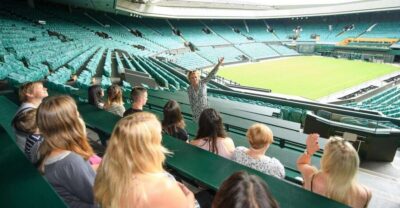
London: Wimbledon Tennis Club and Westminster Walking Tour
Read our review →
US Open Tennis Championship at Arthur Ashe Stadium Ticket
Read our review →
Shanghai: Table Tennis Museum Tour with Practice Session
Read our review →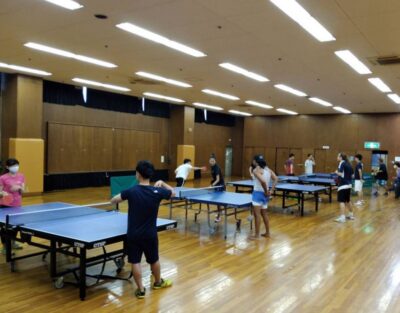
This one also appears in