

Review · FRANCE
Paris: Roland-Garros Stadium Guided Backstage Tour
The best part of this Roland-Garros tour is the walk toward Philippe Chatrier Court through the same corridor used by players. You are not just looking at a stadium from the seats. You are following the route taken by Rafael Nadal, Steffi Graf, Björn Borg, Chris Evert, and many other French Open champions.
I like the access to areas most ticket holders never see, especially the presidential tribune and the media spaces. I also like the way the tour connects the building to tennis history, from the Four Musketeers of French tennis to Nadal’s 14 French Open titles. At $24, that is a fair price for a 90-minute visit.
The main drawback is that the size of the group can make it hard to hear every word. Some guides are easier to understand than others, and stadium activity can close certain areas without warning. If the locker rooms or another section is unavailable, the tour can feel a little less complete.
Key points to know before you go
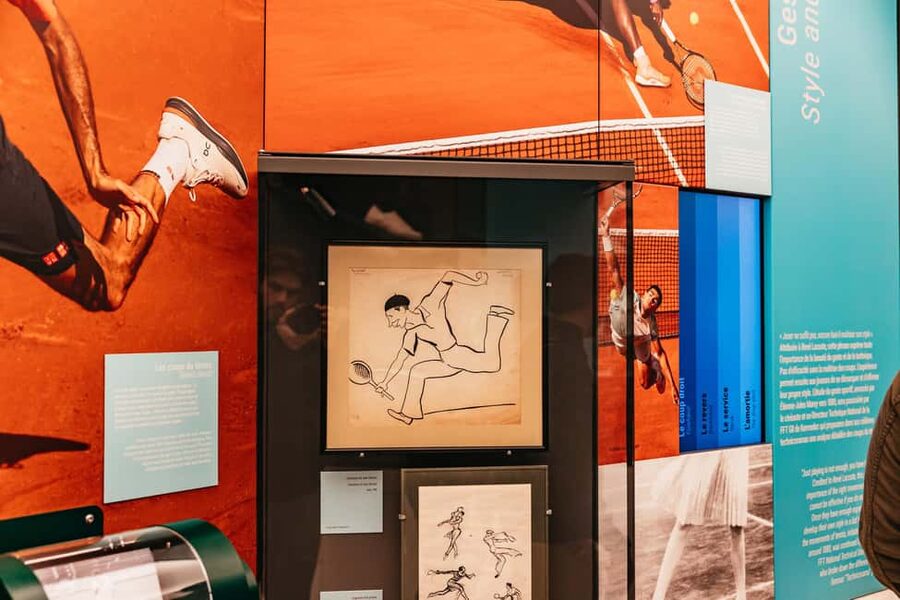
- Walk the player corridor: Follow the route toward the clay court used by the competitors during the French Open.
- See Philippe Chatrier Court: Look across the central court and learn how its retractable roof changed the venue.
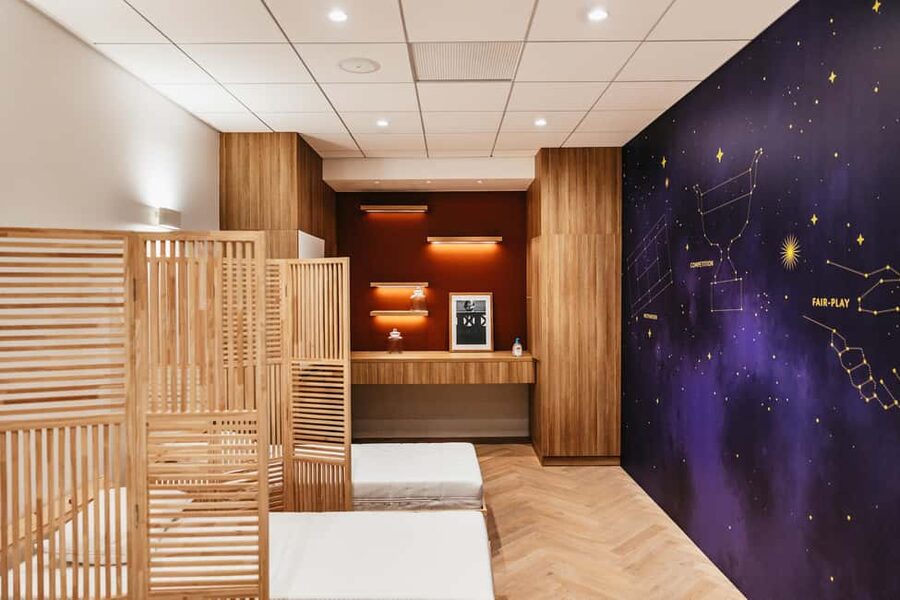
- Visit restricted areas: The tour can include the presidential tribune, media room, locker areas, and other spaces away from the public path.
- Hear French tennis stories: Learn about Nadal, Graf, Borg, Evert, and the Four Musketeers, Jean Borotra, Jacques Brugnon, Henri Cochet, and René Lacoste.
- Allow 90 minutes: The tour begins inside the Grande Boutique at Gate 36 on Avenue Gordon-Bennett and returns there.
- Expect some changes: Stadium work and event preparation can limit access on the day of your visit.
Why Roland-Garros feels different from a normal stadium visit
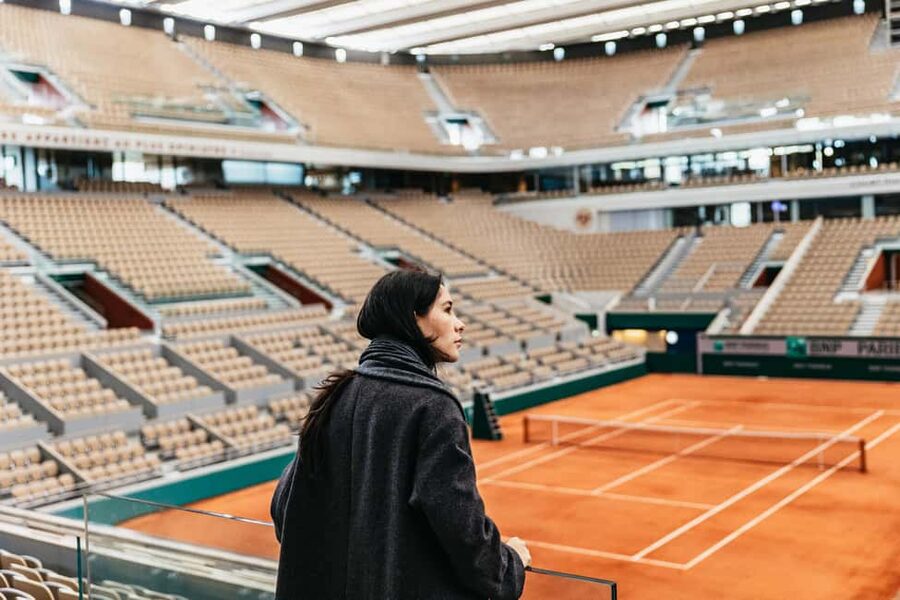
Roland-Garros is not simply a large arena with a tennis court in the middle. Its identity is tied to clay, French tennis, and the annual tournament that turns this part of Paris into one of the sport’s great stages.
The tour gives you a sense of that setting before you even reach the main court. You hear about the Four Musketeers, the French players who helped shape the venue’s early story: Jean Borotra, Jacques Brugnon, Henri Cochet, and René Lacoste. The names matter because they explain why the stadium was named Roland-Garros and why the site carries such weight in French sport.
You also hear about champions from later generations. Steffi Graf, Björn Borg, Chris Evert, and Rafael Nadal are not treated as distant names in a trophy case. Their matches and achievements help explain the spaces you are standing in.
For tennis followers, that connection is the main value of the visit. You can picture the tension of a final while standing near the court, then walk through the player corridor and imagine the quiet before a match. Even if you do not follow tennis closely, the stories give the building a clear purpose and personality.
More Tennis Tours and Tickets in the world:
- Behind the Scenes of the Roland Garros Stadium
★ 4.5 · 197 reviews - Melbourne Park Tennis Experience
★ 5.0 · 143 reviews - Melbourne Park Tennis Sporting Experience
★ 4.8 · 118 reviews
Starting at Avenue Gordon-Bennett and Gate 36
The meeting point is inside the Grande Boutique on Avenue Gordon-Bennett, at Gate 36. This detail matters because the Roland-Garros grounds have several entrances, and an earlier meeting point used by some visitors was different.
I would arrive with enough time to find Gate 36 and get inside the shop before the scheduled start. The stadium is a large site, and arriving at the wrong gate can turn a calm start into a rushed one. The shop is open from 9:30 AM to 6:30 PM, so you can browse before or after the tour.
The tour includes the entrance fee and a live guide. Tours are offered in English, French, and Spanish. The guide is not fixed, so do not book expecting a particular person. Names praised during past visits include Amir, Mathieu, Lionel, Aida, and Fatah, but the staff member leading your tour may be someone else.
Guides can add a lot to this experience. Lionel, for example, was praised for his enthusiasm and detailed answers, while Mathieu was noted for insider stories and a lively manner. Aida was described as warm and energetic. These personal touches matter because a stadium tour can become a dull list of dates and names if the guide simply points at rooms.
Philippe Chatrier Court and the retractable roof
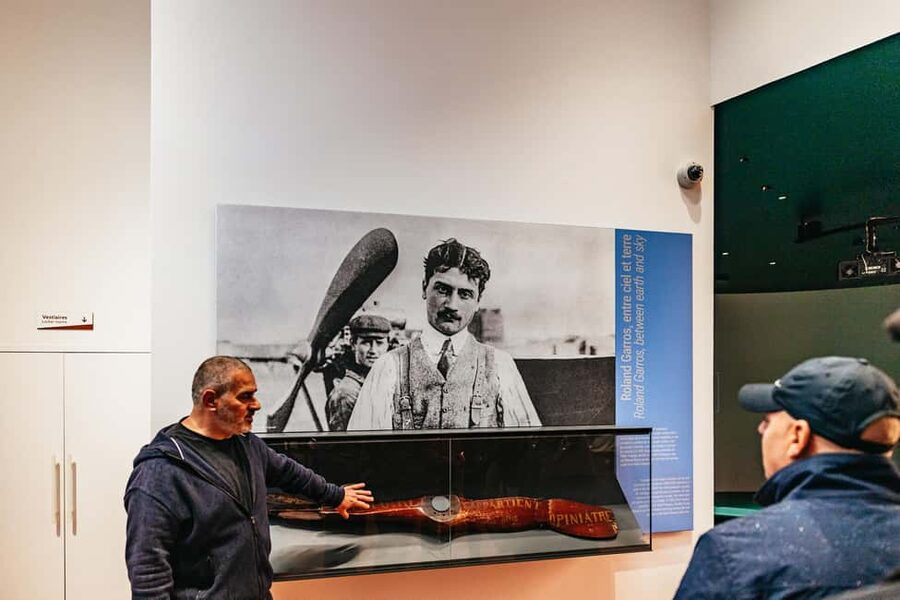
The main event is Philippe Chatrier Court, the central court of Roland-Garros. From here, you get an unobstructed look across the clay and up toward the surrounding cityscape.
The court’s retractable roof is one of the tour’s most interesting design features. Your guide explains how the new structure changed the stadium and how technology now protects important matches from bad weather. It is a useful reminder that Roland-Garros is both an old tennis institution and a modern working venue.
Seeing the court empty gives you a different view from watching the French Open on television. Broadcast cameras compress the space and focus your attention on the players. Inside the stadium, you notice the scale of the seating bowl, the open views, and the distance between the entrance corridor and the court.
The court may not always look exactly as it does during the tournament. One visit found no clay on the main court, and stadium activity can affect what is accessible. If you are hoping for a perfect tournament-day picture, keep expectations sensible. The place is still worthwhile, but it is a functioning venue rather than a permanent museum display.
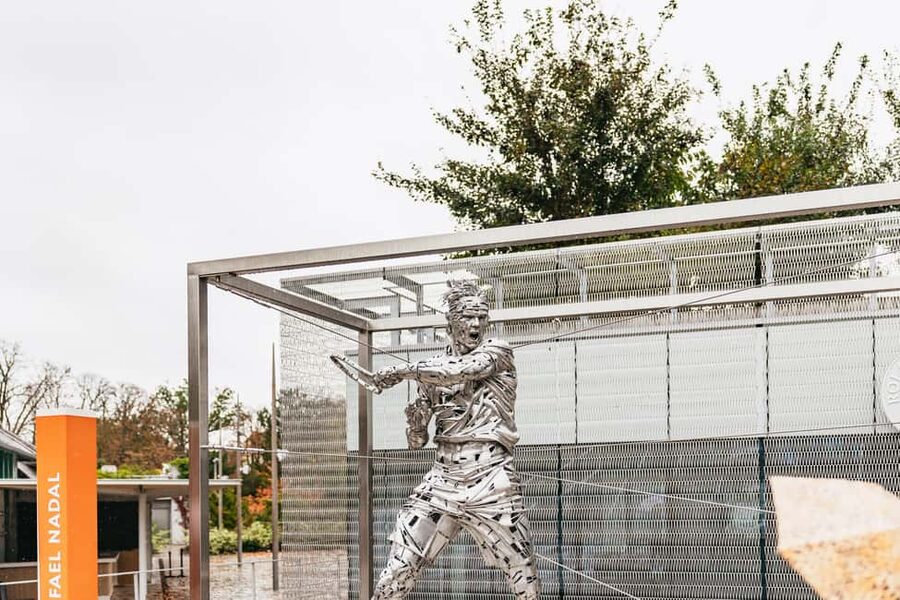
A plaque connected with Nadal is another highlight for many tennis fans. The stadium also features an exhibition honoring him, and some visits include a statue or other tribute. These details can be especially moving if you watched Nadal’s long run at Roland-Garros.
Walking the route used by the players
The corridor leading to the clay court is where the tour becomes more personal. You walk in the footsteps of players rather than simply viewing their names on a wall.
That short passage carries a lot of emotional weight. Players pass through it with a match ahead of them, often surrounded by staff and tournament pressure. You pass through at a much calmer pace, but the route helps you imagine what the entrance to a major final feels like.
This is also one of the better spots for photographs. The experience is less about a single spectacular view and more about standing in a place that normally belongs to competitors and tournament staff.
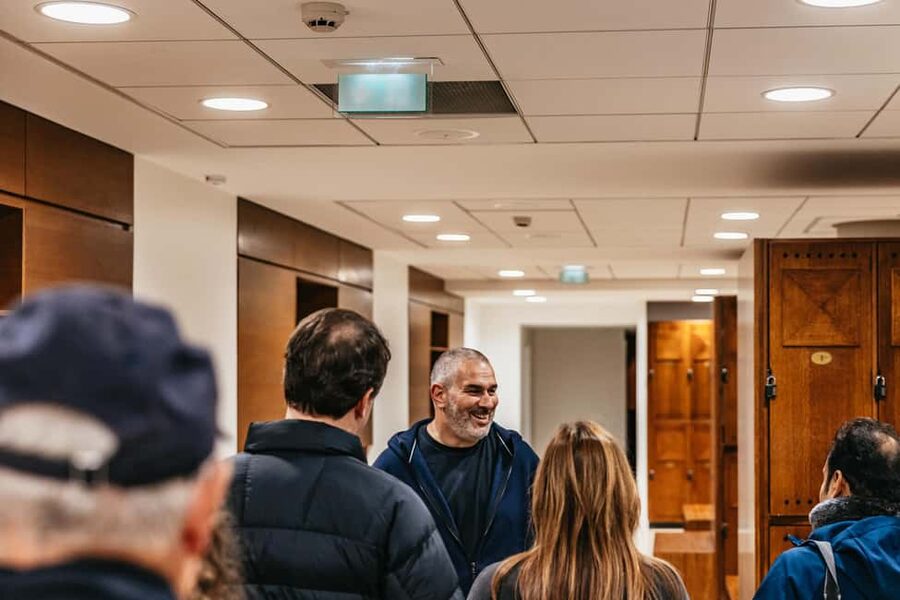
The tour may include locker areas, and previous visits have included glimpses of lockers associated with Nadal and Roger Federer. Access is not guaranteed. Renovation work has kept some locker rooms closed at times, so treat this as a possible part of the route rather than a promise.
That distinction is important when comparing this tour with a standard stadium ticket. The value comes from access to behind-the-scenes spaces, but the precise route can shift according to repairs, preparation, or other stadium duties.
More Stadium Tours in the world:
- Madrid: Tour Bernabéu Entry Ticket
★ 4.5 · 21,573 reviews - Liverpool: Liverpool Football Club Museum and Stadium Tour
★ 4.8 · 10,764 reviews - Amsterdam: Johan Cruijff ArenA Tour with Optional Guide
★ 4.6 · 8,954 reviews - Milan: San Siro Stadium and Museum Guided Tour
★ 4.3 · 5,567 reviews
The presidential tribune and media areas
The presidential tribune gives you a different view of the court. Instead of sitting among the general audience, you see the stadium from one of its more formal seating areas. Your guide can explain who uses the space and how the venue operates during the French Open.
The media room adds another layer. This is where players face questions after matches, and some guides make the stop playful by staging mock interviews. That small activity helps you understand the work around the tennis itself. A tournament is not only rallies and trophies. It also involves press conferences, television coverage, officials, sponsors, and a large support team.
Some visitors have described seeing trophies behind glass as well. The exact displays may change, but the combination of court, press areas, and trophy displays gives you a fuller picture of the tournament machine.
The media room and court also offer good contrast. On court, the player is the focus. In the media room, the player becomes a public figure answering questions under pressure. A good guide draws out that difference with stories rather than technical jargon.
The guide makes or breaks the 90 minutes
A strong guide is the difference between a memorable visit and a quick walk through empty rooms. The best guides on this tour have been praised for being friendly, patient, and able to answer questions about both the stadium and tennis history.
You should expect the guide to talk about champions, French tennis, stadium design, and the way the French Open operates. The presentation is not limited to famous players. Stories about the Four Musketeers give the venue older roots, while Nadal and the newer court bring the story into the present.
Language ability can affect the experience. English, French, and Spanish are offered, but clarity may vary from one guide to another. If you miss a detail, ask the guide to repeat it. A French guide leading an English tour has sometimes needed to repeat information, and most have been patient when asked.
Group size is another practical issue. Larger groups can make it difficult to hear, especially when the guide starts speaking before everyone reaches the next stop. Try to stay close without blocking other people. If you are visiting with someone who has trouble hearing, a smaller group would be preferable, but the available information does not promise a particular group size.
The 90-minute length is about right for the main areas. It gives you enough time for stories and photographs without turning the visit into an all-day commitment. The tradeoff is that you may not have long to read every museum panel or exhibition label.
How much value do you get for $24?
At $24 per person, this is a good-value experience for anyone interested in tennis. The price includes the guide and entry, and you get access beyond what a casual walk around the grounds would provide.
The comparison is simple. You could visit the stadium shop, take photographs near the entrance, and learn a little from public displays. For $24, you add a guided route through the main court, player passage, presidential tribune, and media areas, subject to what is open that day.
The price is especially fair if you are unlikely to attend the French Open itself. Tournament tickets can be difficult to obtain, and a live match gives you the excitement of competition but not always the chance to see the working areas behind it. This tour offers a smaller, calmer look at the place.
It is not the best use of money for someone who wants a long museum visit or a guaranteed look inside every room. You may spend only a short time with the Nadal exhibition, and locker-room access can be restricted. Still, the court access and guided stories give the visit enough substance for most tennis fans.
Practical details for access and comfort
The tour is wheelchair accessible, and past visits have included guides accommodating elevator needs. If you require step-free access, tell the tour staff when you arrive so they can help with the route available that day.
Some parts of the stadium may be closed because of events, repairs, or other activity. This is not unusual for a working sports venue, but it is worth remembering when you book. The advertised experience can change in small ways without losing its main purpose.
You can visit the stadium shop before or after the tour. Its stated hours are 9:30 AM to 6:30 PM. A discount has been offered on souvenirs after some tours, but do not rely on a particular promotion unless it is confirmed at the time of booking.
The activity allows cancellation up to 24 hours before the start for a full refund. You can also reserve now and pay later, which helps if your Paris schedule is still changing.
Who will enjoy this Roland-Garros visit?

This tour is an easy choice for a serious tennis fan. If you have followed Nadal for years, watched the French Open from another country, or dreamed of seeing the center court, the player corridor and court view will likely carry real meaning.
It also works for casual sports fans. You do not need to know every champion or understand the finer points of clay-court play. The guide supplies enough context to make the venue interesting, and the architecture gives you something to look at even when the court is empty.
Families can enjoy it if children are interested in sport, but the 90-minute format is built around listening and walking rather than hands-on activities. The guide may include fun moments, such as mock media interviews, but this is not an entertainment show.
I would skip it if your Paris schedule is already packed with major museums and landmarks and you have no interest in tennis or sports venues. The stadium is outside the historic center, and the experience depends on caring at least a little about the place.
Should you book the Roland-Garros tour?
Book it if you want to see the French Open’s home from the inside, not just watch it on television. The strongest reasons are the Philippe Chatrier view, the player corridor, the presidential tribune, and the stories about champions from the Four Musketeers to Nadal.
Go with flexible expectations about locker rooms, exhibitions, and court conditions. Stadium activity can remove some stops, and a large group can make hearing the guide harder. Even so, $24 buys a focused look at one of Paris’s most important sports venues, with enough access and history to make the visit worthwhile.
FAQ
How long does the Roland-Garros guided tour last?
The tour lasts 90 minutes, or about one and a half hours.
Where does the tour begin?
Meet inside the Grande Boutique on Avenue Gordon-Bennett at Gate 36.
What languages are available?
Live tours are offered in English, French, and Spanish.
Is the tour wheelchair accessible?
Yes, the activity is listed as wheelchair accessible.
Does the tour include Philippe Chatrier Court?
Yes. The tour includes a guided visit to Philippe Chatrier Court, including information about its retractable roof.
Can all areas be visited every day?
No. Stadium activity may make some areas inaccessible on the day of your visit.
Can I visit the stadium shop?
Yes. The shop can be visited before or after the tour and is open from 9:30 AM to 6:30 PM.
New on the fixture list around the world
- Spotify Camp Nou Tour F.C. Barcelona Museum (Open Date Ticket)★ 3.5 · 5 reviews
- Ferrari Driving Experience on a Racetrack★ 5.0 · 11 reviews
- Live Muay Thai Action Ticket at Phetchbuncha Samui Stadium★ 4.0 · 6 reviews
- Football tour: Red Star and Partizan Ultras History★ 5.0 · 14 reviews
- Private 4h Tour Of Camp Nou And Most Emblematic Sites Of Barcelona with pick up★ 4.5 · 3 reviews
- Discover Leo Messi’s secrets at Barça Café – Camp Nou★ 5.0 · 22 reviews
- BARCELONA SPORTS VIP – Camp Nou – La Masia & Montjuic (Olympic)★ 4.5 · 3 reviews
- Olympic and Sport Museum of Barcelona “Joan Antoni Samaranch”★ 4.5 · 22 reviews
More Tennis Tours and Tickets to weigh up.

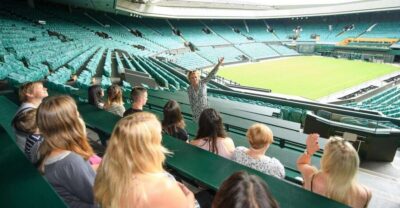
London: Wimbledon Tennis Club and Westminster Walking Tour
Read our review →
US Open Tennis Championship at Arthur Ashe Stadium Ticket
Read our review →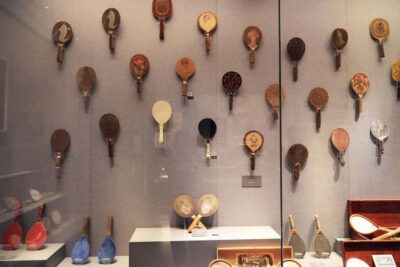
Shanghai: Table Tennis Museum Tour with Practice Session
Read our review →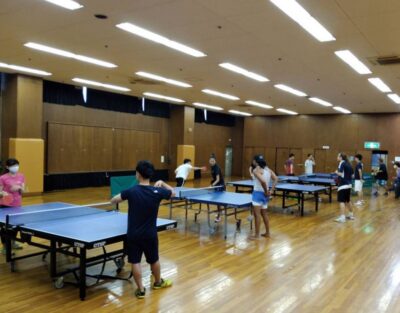
This one also appears in