
Review · GREECE
Marathon, Thermopylae, Thebes/Plataea, Herodotus Private Tour 10h
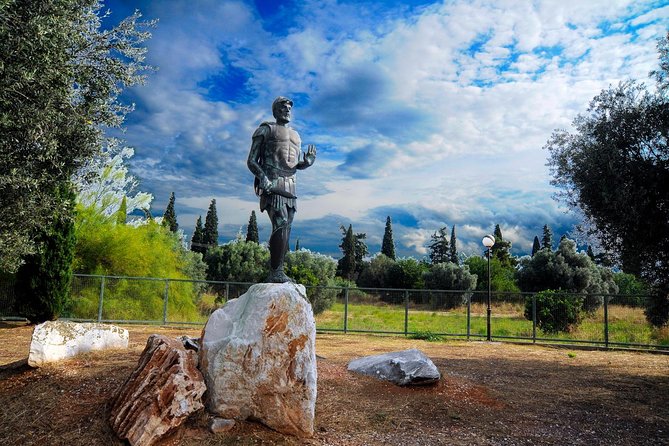
Marathon, Thermopylae, and Plataea are not polished ancient attractions. They are working countryside, roads, springs, hills, and open ground where armies once made decisions that shaped Greek history. This private 10-hour tour lets you connect those places in one long day, with an English-speaking driver-guide explaining the battles as you go.
I like two things here. First, hotel pickup and private transport remove a major headache from a route that is awkward to manage by public transport. Second, guides such as Christos, Nikos, Nikolaus, and Philippi have supplied maps, booklets, phone chargers, bottled water, and battle documentaries during the drives. The main drawback is simple: you spend many hours in the vehicle and move quickly through several stops.
Key points at a glance
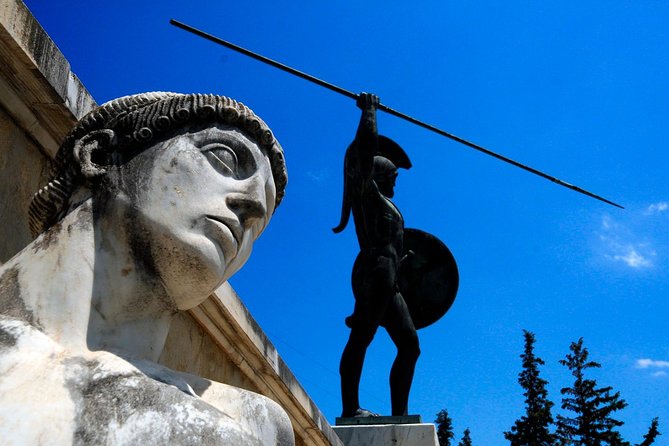
- Three major Persian War battlefields: Visit Marathon, Thermopylae, and Plataea, with the option to see the wider setting around Salamis on some days.
- A private vehicle for your group: Choose a sedan, minivan, or minibus, with pickup from central Athens or Piraeus for an added fee.
- Museums add needed context: The Archaeological Museum of Marathon and the Archaeological Museum of Thebes help fill in what the open battlefields cannot show.
- The scenery is part of the lesson: The route crosses coastal Attica, mountain roads, the Thermopylae area, and the old Athens to Thebes road.
- Built for serious history fans: Herodotus readers and students of ancient warfare will get the most from the day.
- Plan for extra costs: Museum admissions are not all included, and pickup beyond central Athens costs more.
Why this private battlefield tour is different
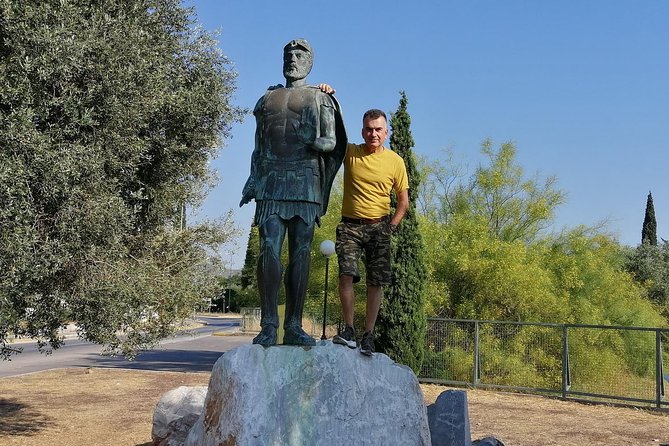
Most Athens day trips point you toward famous temples. This one takes you to places where the evidence is quieter. At Marathon, you see a burial mound and open ground. At Thermopylae, you see a modern road, springs, monuments, and a museum beside terrain changed by centuries of silt and development. At Plataea, you visit a battlefield area and Gargaphia Spring rather than a grand ruin.
That can be thrilling if you already care about the Persian Wars. Walking the ground makes the ancient accounts easier to picture. You can think about distance, access, water, hills, and the movement of armies instead of treating the battles as names on a timeline.
I would not book this as a general sightseeing day. If ancient military history does little for you, the long drives may outweigh the reward. The tour provider itself describes the day as focused on battlefields and scenery, with few ancient ruins. That is an honest warning and an important one.
The experience has earned a 4.8 rating from 28 published evaluations, with 96 percent recommending it. The strongest praise centers on safe driving, clean vehicles, flexible guides, and the amount of historical material provided during the journey.
More seats, stadiums and sporting nights around Athens:
- Athens: Marathon Cape and Bay of Schinias Snorkeling Trip
★ 4.8 · 131 reviews - Private Off-Road Tour Marathon Lake and Mountain from Athens
★ 5.0 · 90 reviews - Marathon & Thermopylae Battlefields Private Day Tour from Athens
★ 5.0 · 64 reviews
Leaving Athens for Marathon
The recommended departure is 7:30 a.m., or earlier during the summer. That early start matters. Marathon is northeast of Athens, Thermopylae is farther north, and Thebes and Plataea pull you back west before the return to Athens. Ten hours sounds generous until you place all those points on a map.
Pickup is offered at your Athens hotel or apartment within 7 kilometers of central Athens. Piraeus pickup is possible for an added charge, while airport and Lavrio Port transfers require prior agreement. Confirm the exact pickup price before booking, since the supplied details list both 15 euro and 25 euro per-way charges for longer pickups.
You travel in an air-conditioned sedan, minivan, or minibus. A sedan takes up to three adults, or two adults and two children. A minivan can carry up to seven people, and a minibus up to 14. The price changes with vehicle and group size, so a larger party may get better value than a solo visitor.
The guides work as driver-leaders rather than as museum lecturers who ride along with a separate chauffeur. That arrangement keeps the tour private and flexible, though the quality of the day depends heavily on the individual guide. Christos Exarchopoulos received especially warm praise for safe driving, practical care, and historical preparation. Nikos, Nikolaus, and Philippi were also praised for clear explanations and patience at the sites.
Marathon Tomb and the first battlefield
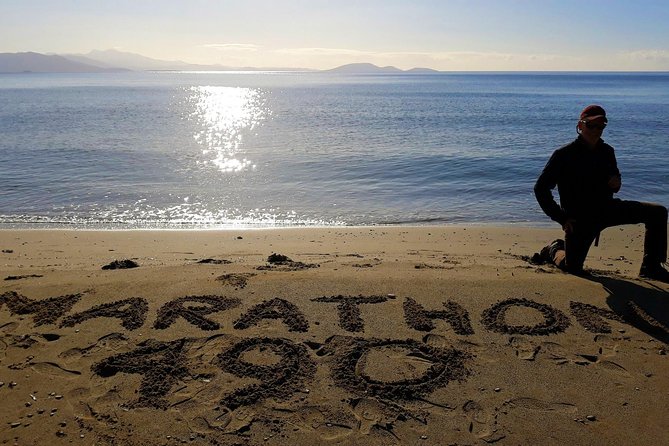
The Marathon Tomb is the natural opening lesson. The burial mound rises about 10 meters and sits roughly 1 kilometer west of Marathon Beach. It marks the burial place associated with the Athenian dead from the Battle of Marathon, fought in 490 BC.
You have about 20 minutes here, and the entry ticket is not included. The stated price is 5 euros, with a reduced ticket of 3 euros. That is enough time to see the mound and absorb the setting, but not enough for a slow archaeological visit or extended walking.
The value comes from scale. An ancient battle can feel abstract in a book. Here, the mound gives the event a physical center. Your guide can connect the ground to the campaign and explain why Marathon Bay mattered.
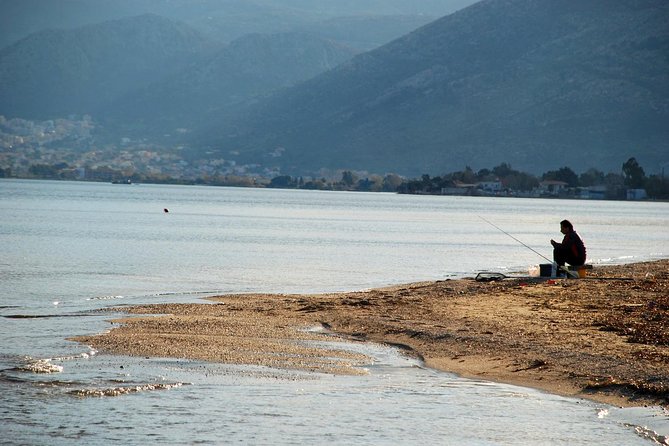
Next comes Schinias, or Marathon Bay. Today it is a popular coastal resort known for clear water and visitor facilities. The stop lasts about 15 minutes and is free. Do not expect a full beach break. Think of it as a quick look at the coastal setting, a photo stop, and a chance to understand the area beyond the battlefield label.
The route also follows Leoforos Marathonos, the modern road linked with the Athens Marathon. The race begins in the modern town of Marathon and ends at Athens Olympic Stadium. This is a useful modern connection: the road is not only a route across Attica, but also part of the story Greece continues to tell about Marathon.
Marathon’s museum and reservoir
The Archaeological Museum of Marathon is about 5 kilometers from the bay. It displays finds from several periods, including Neolithic pottery from the Cave of Pan and objects from the Tomb of the Athenians.
The museum visit is scheduled for about 20 minutes, so you need to keep moving. That is a weakness for anyone who likes to read every label. It is also one of the most useful stops because the battlefield itself offers limited visible remains.
The museum closes every Tuesday. Check the calendar before you commit to the date. The museum is listed as included in the itinerary, but the general fee information says entrance charges are not included, so ask the operator exactly what your booking covers.
The route may also pass Lake Marathon, the reservoir created by Marathon Dam at the meeting point of the Charadros and Varnavas torrents. It supplied Athens from 1931 until 1959, when water from Lake Yliki became available. This is not an ancient site, but it gives the day a broader sense of Attica, showing how the region has managed water and movement in modern times.
Same city, another way to catch the action:
- Private Luxury Tour: Marathon – Battle & Run That Changed History
★ 5.0 · 30 reviews - Athens Olympic Museum: Skip-the-Line Entry Ticket
★ 4.5 · 24 reviews - Private 4×4 Wine Tour from Athens to Marathon Lake and a Winery
★ 5.0 · 21 reviews - Mercedes Private Tour Marathon Olympic Run and Marathon Battle
★ 5.0 · 19 reviews
Thermopylae, Leonidas, and the hot springs
Thermopylae is the emotional center of the day. In 480 BC, Greek forces, including the Spartans under Leonidas, fought the Persian army at this coastal pass. The famous epitaph associated with the fallen Spartans still shapes how many people imagine the battle.
The stop at the battlefield lasts about 30 minutes and is free. Your guide explains that the pass controlled movement along the east coast between northern and southern Greece, which is why it attracted repeated battles. The ground has changed over time, especially as the shoreline shifted, so do not expect the narrow passage shown in popular films.
A practical warning matters here. One published account raised concern about crossing a busy highway near the Thermopylae monument. Follow your guide closely and ask for the safest route. This is not a place to wander casually across the road for a photograph.
The Thermopylae Museum sits beside the Leonidas monument. It is an interactive museum focused on the 480 BC battle, with a listed admission of 3 euros and a reduced price of 1 euro. The scheduled visit is 30 minutes.
This museum is important because it turns a broad military story into something easier to follow. Maps, displays, and explanations can show the changing shoreline, troop movements, and the role of the pass. The time is short, so prepare to concentrate.
Loutra Thermopilon, the hot springs area, gets about 15 minutes. The name Thermopylae means hot gates, referring to the springs. Ancient mythology also connected the cavernous entrances around the springs with Hades. This quick stop offers a physical link to the name and setting, though you should not plan on a long bathing session.
Thebes and the long museum stop
The drive continues through Thebes, one of the most useful cultural stops on the route. The Archaeological Museum of Thebes covers Boeotia from the Paleolithic period through the post-Byzantine era. Its collections include rare or unique objects from excavations across the region.
You have about one hour here, longer than at the Marathon museum. That makes sense. Thebes has a broader archaeological story, and the museum gives you material that the battlefields cannot provide.
The museum closes every Tuesday. General summer admission is listed as 10 euros, with a winter reduced rate of 5 euros. Since ticket policies and the package description appear inconsistent, budget for admission and confirm the current arrangement before departure.
Thebes helps prevent the day from becoming a parade of empty fields. You get artifacts, chronology, and local context. If you enjoy archaeology, this may be the most satisfying museum stop. If your interest is limited strictly to the Persian Wars, you may find one hour demanding after the morning’s driving.
Plataea and the final battlefield lesson
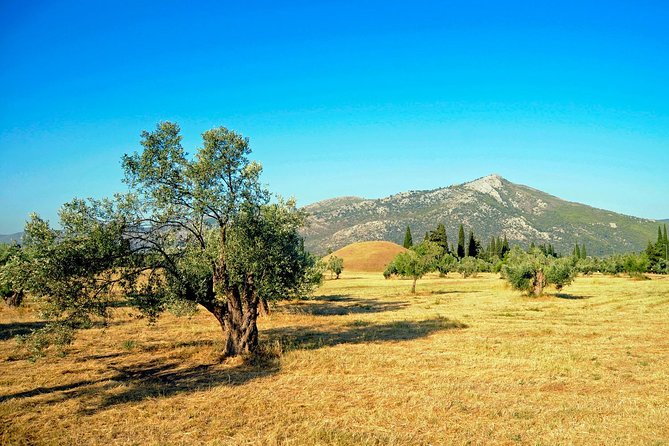
At Plataea, the tour returns to the Persian Wars. The visit focuses on the battlefield of 479 BC and Gargaphia Spring, identified as the place where the battle began. The scheduled stop is 30 minutes and free.
Plataea is especially valuable when placed beside Marathon and Thermopylae. Marathon represents an early Greek victory. Thermopylae represents a famous delaying action and sacrifice. Plataea shows the Greek forces pushing back against the Persian invasion on land.
There are few monumental remains to inspect. You are here to read the ground with help from your guide. This is where a little preparation pays off. Read the relevant sections of Herodotus before the trip, and bring a map or use the material supplied by the guide. The physical setting will make more sense if you already know the names and sequence of events.
Mount Cithaeron and the road back to Athens
The return passes through Mount Cithaeron, Eleutherai, and the old Athens to Thebes National Road. Eleutherai once guarded a narrow route between Athens and Thebes. The area includes the ancient fortress known as Gyftokastro.
The route also touches the story of Dionysus Eleuthereus. Eleutherai was traditionally linked with Dionysus, and the cult image was reportedly moved to Athens under Peisistratus. That connection helps explain how a border settlement could matter both for defense and religion.
You then pass Elefsina and follow the coastal road back to Athens. This final section is not a formal sightseeing stop, but it gives you more geographic context. You see how the ancient routes connected Attica and Boeotia, and why passes and roads mattered so much to military campaigns.
The day can run close to the 10-hour limit. If you extend it, the stated extra charge is 30 euros per hour for a sedan, 45 euros for a minivan, and 60 euros for a minibus. Keep that in mind if a museum closes late, traffic slows the return, or you want to add an unplanned stop.
What the 331 dollar price gets you
The listed price is 331.32 dollars per person. That is not a cheap day trip, but the value changes sharply with group size. You are paying for private transport, fuel, toll roads, parking, hotel pickup and drop-off, and a dedicated English-speaking driver-guide.
The vehicle choice also matters. A solo visitor or couple pays more per person for private service. A family or small group can spread the vehicle cost across several people, making the arrangement more reasonable than hiring separate transport and trying to coordinate the route alone.
Entrance fees are a separate concern. The published information lists individual charges at Marathon, Thermopylae, and Thebes, while another section mentions a combined winter and summer amount. I would set aside at least 18 to 20 euros per person for admissions and confirm the exact total before the morning starts.
The included materials improve the value. Guides have used historical videos during the drives, along with maps, booklets, and audio material. One guide provided cold bottled water and a phone charger. Those are small touches, but they matter during a long day in a car.
How to prepare for the day
Read a short account of the Persian Wars before you go. You do not need a university course, but knowing the basic order of Marathon, Thermopylae, Salamis, and Plataea will help you understand the route.
Wear practical shoes. The tour is not described as a major hiking outing, but you will be moving around open sites, monuments, museum grounds, and roadside areas. Bring sun protection, water, and a phone with room for photographs.
Ask about the exact plan at pickup. The tour is private and flexible, and guides have sometimes adjusted the route. A guide has even substituted Salamis or added Delphi when circumstances allowed. Do not assume an extra stop is guaranteed, but it is worth asking if your priorities differ from the standard route.
Should you book this tour?
Book it if you want to stand on the ground of the Persian Wars and are willing to spend most of a day on the road. The private format, safe driving, historical videos, and flexible pacing make it far easier than attempting Marathon, Thermopylae, Thebes, and Plataea independently.
Skip it if you want ruins, long museum visits, relaxed meals, or a slow countryside day. You will see open battlefields, modern roads, museums, springs, and scenery, not a string of grand ancient monuments.
For a history professor, military-history reader, or anyone who has studied Herodotus, this is a strong use of an Athens day. For everyone else, compare it with a shorter trip to Delphi. The choice comes down to what you want to remember: the physical ground of famous battles, or a more conventional ancient site with more visible remains.
FAQ
How long does the Marathon, Thermopylae, Thebes, and Plataea tour last?
The tour lasts approximately 10 hours, with a recommended start at 7:30 a.m. or earlier in summer.
Where does pickup take place?
Pickup and drop-off are offered at hotels or apartments in central Athens within 7 kilometers of the city center. Other locations may cost extra.
Can I be picked up at Piraeus Port?
Yes, Piraeus Port and the cruise terminal can be arranged for an added charge. Airport and Lavrio Port pickup require prior agreement with the operator.
Is this a private tour?
Yes. Only your group participates, and you travel in a private sedan, minivan, or minibus.
What vehicle sizes are available?
A sedan accommodates up to three adults, or two adults and two children. A minivan carries up to seven people, and a minibus carries up to 14.
Are entrance fees included?
The tour information says entrance fees are not included. Listed charges include 5 euros for the Marathon Tomb, 3 euros for the Thermopylae Museum, and 10 euros for the Thebes Museum in summer, with reduced rates in some cases.
Are the museums open every day?
The Archaeological Museum of Marathon and the Archaeological Museum of Thebes are closed every Tuesday.
Does the tour include a licensed archaeologist?
The included service is a professional English-speaking driver-leader. Historical books, maps, videos, and audio material are provided during the route.
Can the itinerary be changed?
The tour is private and flexible. Guides have sometimes adjusted stops, but extra visits are not guaranteed and should be discussed with the operator or driver.
What happens if I need more than 10 hours?
An extension may be arranged with the driver. The stated hourly charges are 30 euros for a sedan, 45 euros for a minivan, and 60 euros for a minibus.
New on the fixture list around Athens
- Private Luxury Tour: Marathon – Battle & Run That Changed History★ 5.0 · 30 reviews
- Private tour from Athens to Marathon with a pickup★ 5.0 · 7 reviews
- Private Day Trip to Marathon-Thermopylae★ 5.0 · 3 reviews
- Private Cruise & Snorkeling Nea Makri, Marathon, Schinias, Rafina★ 5.0 · 7 reviews
- Private 4×4 Wine Tour from Athens to Marathon Lake and a Winery★ 5.0 · 21 reviews
- Marathon, Thermopylae/ Herodotus History private tour (9 hours)★ 4.0 · 2 reviews
- 2 Days Herodotus Tour – Marathon, Thermopylae, Delphi, Thebes, Plataea, Salamis★ 5.0 · 3 reviews
- Mercedes Private Tour Marathon Olympic Run and Marathon Battle★ 5.0 · 19 reviews