
Review · GREECE
2 Days Herodotus Tour – Marathon, Thermopylae, Delphi, Thebes, Plataea, Salamis
The most unusual thing about this tour is its clear historical thread. In two long days, you follow the battles recorded by Herodotus, from the Athenian victory at Marathon to the Greek defense at Thermopylae and the final defeat of Persia at Plataea. Private transport makes this route possible without piecing together buses, taxis, and rural roads.
I like the freedom to stop at places large coach tours often skip, including Lake Marathon, the hot springs at Thermopylae, and the mountain roads over Parnassus and Cithaeron. I also like the chance to explore Delphi and its museums at your own pace, with an English-speaking driver and audio history during the long stretches between sites. The main drawback is the schedule: this is a packed two-day trip, and your driver is not a licensed guide inside archaeological sites or museums.
Key points to know before booking
- Marathon to Plataea in one historical route: Follow the main battle sites of the Greco-Persian Wars rather than visiting isolated monuments.
- Private vehicle and hotel pickup: Travel from your Athens or Piraeus accommodation with fuel, tolls, parking, and drop-off included.
- A full first day: Marathon, Thermopylae, the hot springs, and the drive over Mount Parnassus make day one long.
- Delphi is the centerpiece: Allow time for both the archaeological site and museum, with entrance fees paid separately.
- Flexible, but not fully guided: Your driver provides historical explanations and audio material, but an archaeologist guide costs extra.
- The overnight stay costs more: Lodging near Mount Parnassus is arranged separately, and the published accommodation prices should be confirmed before booking.
Why this route works for history-minded visitors
This is not a standard Athens day trip with one famous stop. It is a road journey built around a chain of events. Marathon recalls the Athenian victory of 490 BC. Thermopylae brings you to the Greek stand against Xerxes in 480 BC. Delphi shows the religious and political world that shaped Greek decision-making. Plataea completes the story with the Greek victory of 479 BC.
I like that the route gives physical meaning to the story. You are not only looking at museum objects. You pass the coast at Marathon, move along the corridor that once controlled travel through central Greece, cross mountain country near Delphi, and continue toward Boeotia and the old road to Athens.
The route also asks a lot from you. Day one begins at 8:00 a.m. and includes several stops before the long drive to Parnassus. Day two covers Delphi, Thebes, Plataea, Mount Cithaeron, and the return toward Piraeus. You should expect a touring day built around driving, brief site visits, and selected museum stops, not a slow village holiday.
More seats, stadiums and sporting nights around Athens:
- Athens: Marathon Cape and Bay of Schinias Snorkeling Trip
★ 4.8 · 131 reviews - Private Off-Road Tour Marathon Lake and Mountain from Athens
★ 5.0 · 90 reviews - Marathon & Thermopylae Battlefields Private Day Tour from Athens
★ 5.0 · 64 reviews
Starting at Marathon’s burial mound and bay
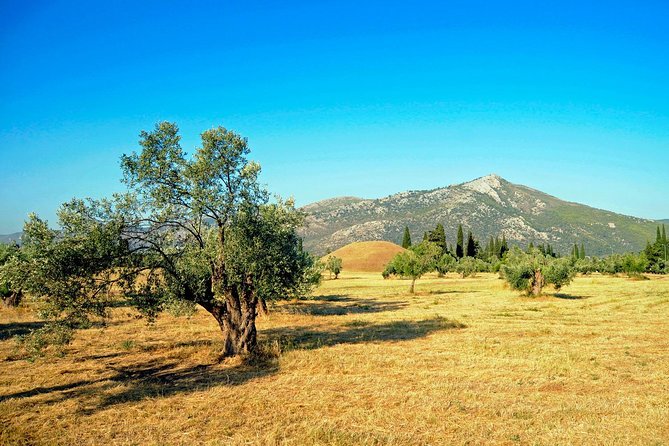
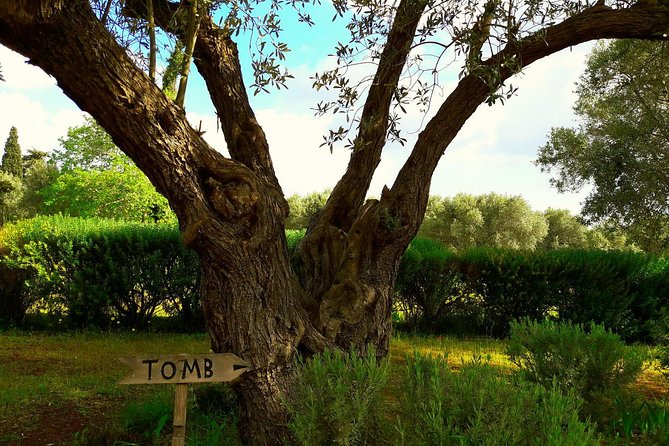
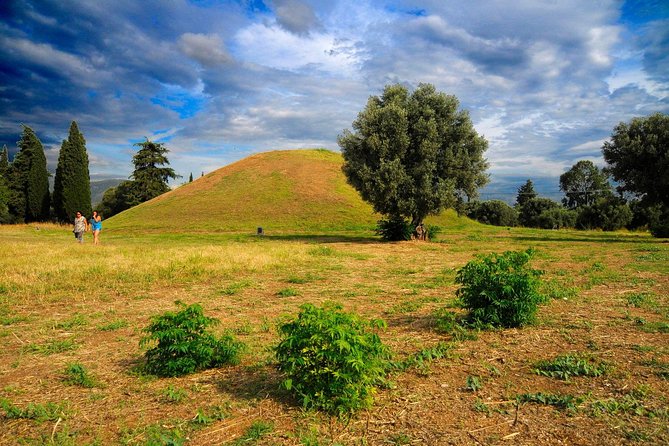
The first stop is the Tomb of the Athenians, about one kilometer west of Marathon beach. The burial mound rises roughly 10 meters and marks the burial place of Athenians killed in the battle. It is a simple site, but its scale and setting help you understand how a single mound can carry the weight of an entire campaign.
You get about an hour here. Admission is not included, and the stated price is €6, or €3 at the reduced rate, with access to the Marathon Museum included. Confirm the current fee at booking time, since entrance charges can change.
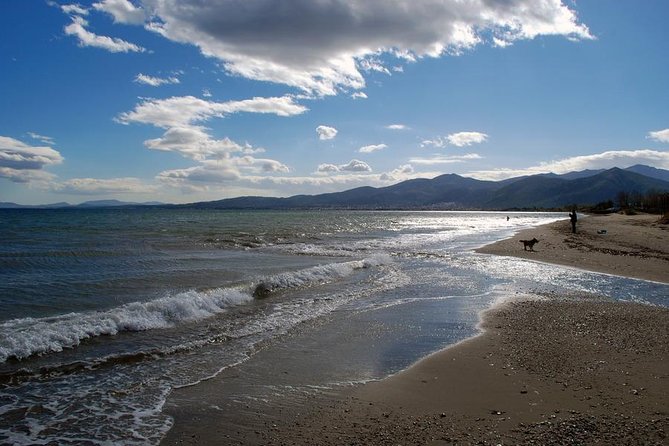
From the mound, the route continues to Schinias and Marathon Bay. You have about 15 minutes for this coastal stop. The area is now known for clear water and resort facilities, which creates an interesting contrast with the battlefield’s ancient purpose. Do not expect a long beach visit. This is a short look at the bay and the terrain connected with the battle.
The Archaeological Museum of Marathon is five kilometers from the bay and gives the morning more substance. Its collection covers several periods, including Neolithic pottery from the Cave of Pan and finds from the Tomb of the Athenians. The museum visit lasts about 30 minutes and is listed as included, though the general tour information also says admission fees are not included. That inconsistency is worth clarifying before departure.
You also pass along Leoforos Marathonos, the modern marathon route. The modern race begins in Marathon and finishes at Athens Olympic Stadium, linking today’s athletic tradition with the ancient battlefield. The stop is brief, but it adds a useful modern layer to the morning.
Lake Marathon and the road to Thermopylae
Lake Marathon is a short photo stop rather than a major attraction. The reservoir was created by the Marathon Dam at the meeting point of the Charadros and Varnavas torrents. It supplied Athens from 1931 until 1959, when water from Lake Yliki became available.
I like this stop because it breaks up the ancient-sites schedule with a piece of modern infrastructure. You see how the region served Athens long after the Persian Wars ended. The exact time is not clearly stated, so treat it as a flexible roadside pause.
The drive to Thermopylae is one of the practical strengths of a private tour. This is a large amount of ground to cover, and the vehicle includes fuel, toll roads, and parking. You avoid the work of arranging several separate transfers through central Greece.
Thermopylae is famous for the 480 BC battle between Greek forces and the Persian army. The pass was important because it offered a narrow route along the east coast of the Greek mainland. Its military value continued long after the Spartan defense, since armies using the north to south passage had to consider this corridor.
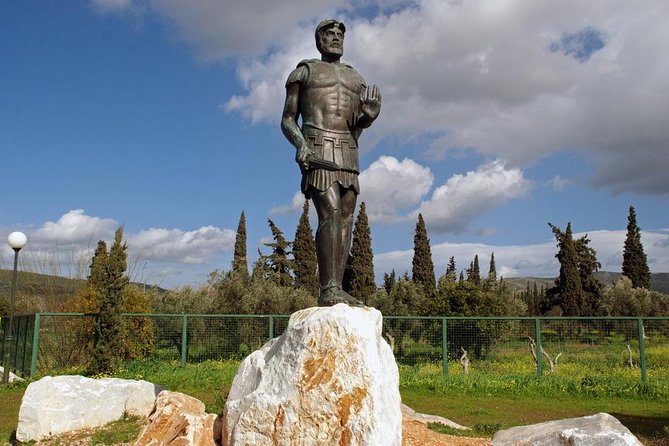
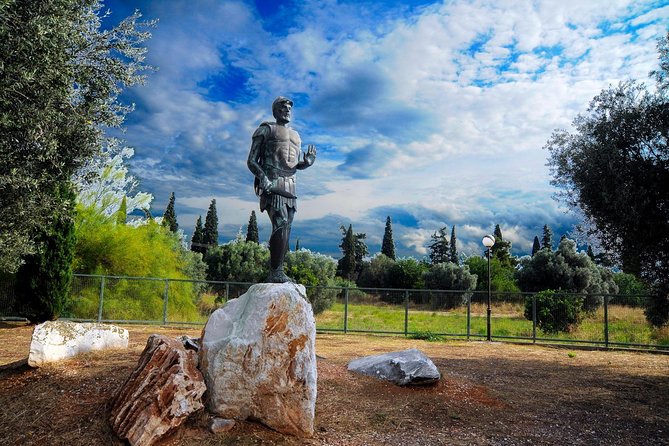
At the battlefield, you have about an hour. The monument to Leonidas and the surrounding area give you a place to connect the written account of the battle with the actual terrain. The site is free, but the modern setting does not recreate the ancient battlefield in a theatrical way. You need to bring your own historical imagination, aided by the driver’s explanations and the supplied audio material.
The Thermopylae Museum is next to the Leonidas monument. It focuses on the 480 BC battle and uses an innovative presentation, according to the supplied description. Admission is listed at €3 and is not included. Allow about an hour.
Then comes Loutra Thermopilon, the hot springs associated with the name Thermopylae, or Hot Gates. You have about 30 minutes here. The springs also carry a mythological connection, since the area was linked with cavernous entrances to Hades. This is a quick stop, and you should not assume it is a full bathing experience. The value is in seeing the natural feature that helped give the pass its name.
Crossing Mount Parnassus to an overnight village
The drive over or around Mount Parnassus takes about an hour and a half. The mountain rises above Delphi and the Gulf of Corinth, with views toward olive groves and the countryside of central Greece. In Greek mythology, Parnassus was linked with Apollo, Dionysus, the Muses, and the Corycian nymphs.
This part of the route matters because it changes the rhythm of the tour. After battlefields and museums, the road becomes the experience. You spend the night in a traditional village on the mountain’s slopes, which puts you near Delphi for the next morning.
Accommodation is not included in the base tour price. The operator can arrange a selected boutique or A-class hotel, or a three- or four-star hotel with breakfast. The supplied information gives two different price sets: one says €90 per double room, rising to €110 on weekends and holidays, while the additional information says from €125 per double room, rising to €150 on weekends and holidays. Confirm the current rate, what room category it covers, and whether breakfast is included.
The driver’s room is complimentary when the operator arranges the accommodation. If you book your own hotel, you must reserve an extra room for the driver. This is an important cost detail that can affect the value of the tour.
Same city, another way to catch the action:
- Private Luxury Tour: Marathon – Battle & Run That Changed History
★ 5.0 · 30 reviews - Marathon, Thermopylae, Thebes/Plataea, Herodotus Private Tour 10h
★ 5.0 · 28 reviews - Athens Olympic Museum: Skip-the-Line Entry Ticket
★ 4.5 · 24 reviews - Private 4×4 Wine Tour from Athens to Marathon Lake and a Winery
★ 5.0 · 21 reviews
Delphi: museum, sanctuary, and the center of the ancient world
Day two begins at the Archaeological Museum of Delphi. You have about an hour to see sculpture, architectural pieces, statues, and smaller objects from the sanctuary. The collection covers the site from the eighth century BC into Late Antiquity.
The museum is especially useful before walking through the ruins. You can see the objects indoors, then recognize the sanctuary’s buildings and functions outside. Admission is not included, so budget for the combined site and museum ticket.
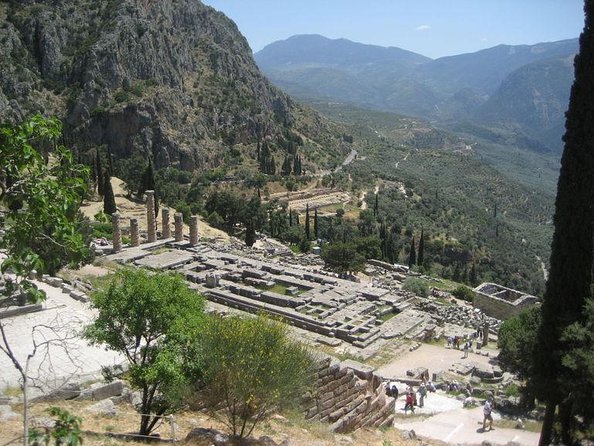
The ancient sanctuary of Delphi is the main event of the second day. The site occupies the southwestern slope of Mount Parnassus and looks over the plain of Phocis toward the Gulf of Corinth. Ancient Greeks treated Delphi as the center of the world, marked by the omphalos stone, and city-states built monuments there to display their religious and political importance.
You have about 90 minutes at the ancient town. That is enough for a focused visit, but not for a leisurely study of every monument. The published ticket price for the site and museum is €20 in summer and €10 in winter, with reduced rates available. Since the driver cannot accompany you as a licensed guide, arrange an archaeologist guide in advance if you want detailed explanations at each building.
The Tholos of Athena Pronaia is given a separate 30-minute stop. This circular building was built between 380 and 360 BC, with 20 Doric columns around its exterior and Corinthian columns inside. It is one of the most recognizable structures connected with Delphi, even though it is separate from the main sanctuary area.
The tour lists admission to the Tholos stop as included, but access rules and ticket arrangements can vary by site. Ask exactly how this stop is handled so you know which ticket to carry.
Thebes and the final battle at Plataea
The Archaeological Museum of Thebes gives you another hour with the ancient world of Boeotia. Its collection runs from the Paleolithic period to the post-Byzantine era and includes objects described as rare or unique. The general summer admission is €6, with a reduced winter price of €3, not included in the tour.
Thebes is a useful addition because it prevents the trip from becoming only a Marathon, Thermopylae, and Delphi circuit. It places the Greco-Persian Wars within the wider region of Boeotia, where several ancient communities had their own political interests and traditions.
At Plataea, the tour turns back to the campaign’s final major land battle. You visit the battlefield and Gargaphia spring, identified as the place where the battle began in 479 BC. The stop lasts about 30 minutes, so the experience is more about locating the setting than examining a large monument complex.
This is one place where a private vehicle helps. The battlefield is not presented as a single, polished attraction with a long visitor route. Your driver helps you reach the area, provides context, and gives you time to look around. If you want detailed battlefield interpretation, request an archaeologist guide before the trip.
Mount Cithaeron, Eleutherai, and the road back to Athens
After Plataea, the route crosses Mount Cithaeron toward Elefsina and the coast. You pass Eleutherai on the old Athens to Thebes road, near the Villia junction. The ancient fortress known as Gyftokastro occupied a lowland and rocky hill position, controlling the passage between Athens and Thebes.
Eleutherai was originally a Boeotian city and later passed to Athens in the sixth century BC. It was also associated with Dionysus, and the cult of Dionysus Eleuthereus was connected with the development of his sanctuary in Athens.
The tour does not give a long walking visit at Eleutherai. This is a drive-through historical stop, best suited to someone who enjoys seeing how roads, passes, and fortifications shaped ancient politics. You will spend more time in the vehicle than on foot during this part of the day.
The final listed stop is the Perama ferry line near Piraeus. Perama sits on the Saronic Gulf at the southwestern edge of the Aegaleo mountains. Its name comes from the Greek word for passage, which fits the route’s repeated focus on crossings and strategic corridors.
The stop is listed as 30 minutes and free. The tour then returns toward Piraeus or your Athens accommodation, depending on the agreed drop-off location.
What the private vehicle changes
Pickup and drop-off are offered from hotels or apartments in Athens and Piraeus, with another location possible by request. You travel in an air-conditioned sedan, SUV, minivan, or minibus, depending on group size. A sedan or SUV handles up to three adults, or a family of four with two children. A minivan serves groups of up to seven, and a minibus up to 14.
The price varies by group size and vehicle type. At $694.56 per person, this is not a cheap sightseeing trip. Its value depends on how many people share the vehicle, how much you value private routing, and whether you would otherwise pay for several long-distance transfers, parking, tolls, and a hotel near Delphi.
The driver is an English-speaking professional and provides historical explanations along with an audio documentary during the drives. One named driver associated with the experience is Nikolaos, described as informative and accommodating, with pickup and return handled at an Athens apartment. That kind of door-to-door service is useful when your lodging is outside central Athens or when you want to avoid managing rural transport.
Still, set your expectations correctly. The driver does not guide you inside Delphi, the museums, or other archaeological sites. You receive transport, orientation, and road commentary, not a fully guided archaeological tour.
Who should book this two-day route
I would choose this tour if you have a strong interest in the Greco-Persian Wars and want to connect several difficult-to-reach sites. It also suits families or small groups who prefer a private vehicle and need flexible pickup, photo stops, and room for a custom pace.
It is less suitable if you want long visits at each museum, a relaxed stay in Delphi, or a specialist guide at every ruin. The two days are full, and several stops are short. You should also be comfortable with long periods in a vehicle and with paying entrance fees and lodging separately.
Book at least two weeks ahead if you want the operator to arrange a room near Parnassus. Weekend and holiday accommodation costs more, and larger groups may qualify for a discount. The cancellation terms are strict close to departure: full refunds require cancellation at least six full days before the start, with a 50 percent refund available from two to six days before departure.
Should you book it?
Book this tour if you want a focused road journey through the Greco-Persian Wars, not a leisurely Delphi escape. The private transport and connected historical route are the real value, especially for small groups that would find public transport awkward.
Before paying, confirm the vehicle category, the current hotel charge, which museum tickets are included, and the cost of adding an archaeologist guide. If those extras fit your budget, this is an efficient way to link Marathon, Thermopylae, Delphi, Thebes, and Plataea in two demanding but memorable days.
FAQ
Where does the tour start?
The tour starts at 8:00 a.m. Pickup is offered from hotels or apartments in Athens and Piraeus, with another pickup location possible by request.
How long does the experience last?
The experience lasts approximately two days. The first day is listed as about 12 hours, including the route from Marathon to Thermopylae and Mount Parnassus.
Is transportation private?
Yes. This is a private tour, so only your group participates. Vehicles include sedans, SUVs, minivans, and minibuses, depending on group size.
Is accommodation included in the price?
No. Accommodation near Mount Parnassus is arranged separately at an additional cost. The driver’s room is complimentary if the operator arranges the lodging.
Can I arrange my own hotel?
Yes, but you must reserve an extra room for the driver if you make your own hotel booking.
Is the driver a licensed tour guide?
No. The driver is an English-speaking professional who provides information and audio material during the journey, but does not accompany you as a licensed guide inside archaeological sites or museums.
Can I hire an archaeologist guide?
Yes. An archaeologist guide can be hired separately, but you need to request this in advance.
Are entrance fees included?
Most entrance fees are not included. Separate charges are listed for Marathon, Thermopylae, Delphi, and Thebes. Confirm the current ticket arrangements before departure.
How many people can travel in one vehicle?
A sedan or SUV accommodates up to three adults, or a family of four with two adults and two children. A minivan accommodates up to seven people, and a minibus accommodates up to 14.
What is the cancellation policy?
A full refund is available when you cancel at least six full days before the start time. A 50 percent refund applies to cancellations made two to six full days before departure. Cancellations made less than two full days before the start are not refunded.
New on the fixture list around Athens
- Private Luxury Tour: Marathon – Battle & Run That Changed History★ 5.0 · 30 reviews
- Private Day Trip to Marathon-Thermopylae★ 5.0 · 3 reviews
- Private tour from Athens to Marathon with a pickup★ 5.0 · 7 reviews
- Private Cruise & Snorkeling Nea Makri, Marathon, Schinias, Rafina★ 5.0 · 7 reviews
- Marathon, Thermopylae, Thebes/Plataea, Herodotus Private Tour 10h★ 5.0 · 28 reviews
- Private 4×4 Wine Tour from Athens to Marathon Lake and a Winery★ 5.0 · 21 reviews
- Marathon, Thermopylae/ Herodotus History private tour (9 hours)★ 4.0 · 2 reviews
- Mercedes Private Tour Marathon Olympic Run and Marathon Battle★ 5.0 · 19 reviews