
Review · GREECE
Marathon, Thermopylae/ Herodotus History private tour (9 hours)
The most rewarding part of this tour is that it takes you beyond Athens’ familiar ruins and into the actual settings of two famous Greek battles. At Marathon, you see the burial mound of the Athenian dead. At Thermopylae, you stand near the pass where Leonidas and his Spartans made their last stand.
I like the private vehicle and flexible format, especially for families or small groups who want to pause for photos, ask questions, or adjust the pace. I also like the way the route mixes battlefields with coastal views, Lake Marathon, a museum, hot springs, and the Damasta Monastery.
The main drawback is the long day. Much of the experience is historical interpretation from the vehicle or at open-air sites, not a tour of grand ruins. Entry fees are extra, and the non-refundable booking policy calls for careful planning.
Key points at a glance
- Marathon’s burial mound: See the 10-meter-high tumulus built over the Athenian dead, about 1 kilometer west of Marathon Bay.
- Thermopylae in context: Learn how the mountain route, coastline, and narrow pass shaped the famous battle of 480 BC.
- Private transport: Choose a sedan, minivan, or minibus, with fuel, tolls, parking, and hotel pickup from central Athens included.
- Strong military-history focus: Your English-speaking driver gives historical commentary, including battle tactics and the role of the mountain path.
- More than battlefields: The day includes Schinias Beach, Lake Marathon, two museums, hot springs, a monastery, and Kamena Vourla.
- Costs to plan for: Museum and site admissions, lunch or dinner, tips, and possible pickup supplements are extra.
Why Marathon and Thermopylae belong on the same day
Athens gives you temples, theaters, and museums. This tour gives you the ground beneath the stories. Marathon and Thermopylae were not simply names from a schoolbook. They were strategic places shaped by roads, water, hills, and the sea.
Marathon lies northeast of Athens on a broad coastal plain. In 490 BC, the Athenian army faced the Persian invasion here. Thermopylae, farther north, is a narrow route along the Malian Gulf. Ten years later, in 480 BC, the Greek forces tried to hold that passage against Xerxes’ much larger Persian army.
The two sites make an effective pair because they show different kinds of warfare. Marathon was a field for a decisive Athenian victory. Thermopylae was a defensive choke point remembered for the sacrifice of Leonidas and his force. Your driver connects the places with the wider story of the Greco-Persian Wars.
The history comes mostly through the guide’s spoken explanation and an audio documentary during the drive. That matters here. These sites contain few monumental ruins, so a good explanation helps you understand what you are seeing.
More sporting history around Athens:
- Private Luxury Tour: Marathon – Battle & Run That Changed History
★ 5.0 · 30 reviews - Tour of Historic Fenway Park, America’s Most Beloved Ballpark
★ 4.5 · 3,013 reviews - St Andrews: Golf Origins and Old Course History Tour
★ 4.7 · 322 reviews
A private start from Athens at 7:30 am
The day begins with pickup from your Athens hotel at 7:30 am. Transportation is by private air-conditioned sedan, minivan, or minibus. A sedan suits up to three adults, or a family of four with two children up to age 12. A minivan can take up to seven people, while a minibus can take up to 14.
Private transport is a real advantage on this route. You are covering a large area, and the day includes several short stops rather than one major site. You can ask questions without competing with a large group, and your driver can explain the changing scenery as you head north.
The driver is also the tour leader. The strongest praise attached to this experience focuses on Philip, whose explanations brought military tactics and battle stories to life. If military history interests you, tell your driver early. That gives the conversation a clear direction from the start.
The tour is advertised as roughly nine hours, although the practical information also describes a flexible format of up to eight hours. The exact length can depend on traffic, questions, lunch, and how long you stay at each stop. If you want extra time, an additional hourly charge applies: 30 euros for a sedan, 45 euros for a minivan, or 60 euros for a minibus.
Marathon Tomb: the day’s most important stop
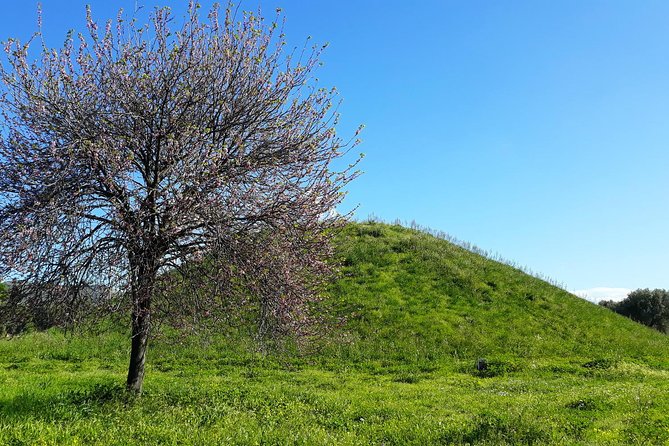
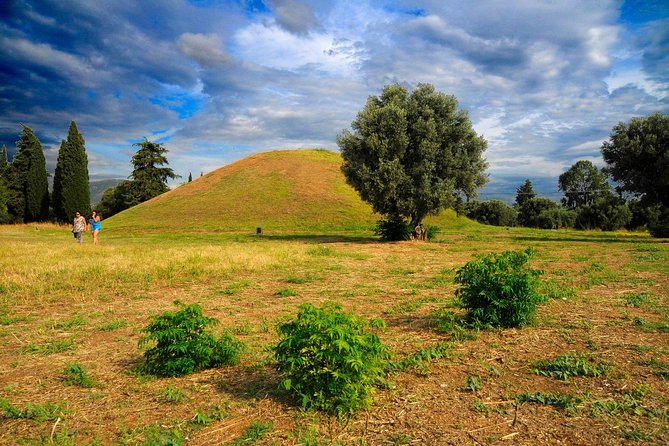
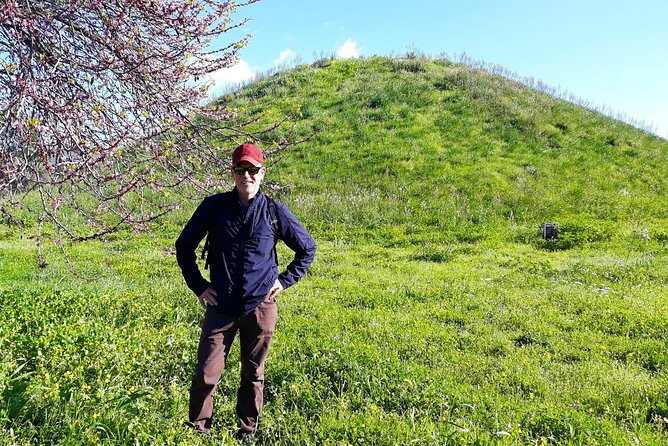
The Marathon Tomb is the emotional center of the first half of the tour. The 10-meter-high mound, called a tumulus, marks the burial place of Athenian soldiers who died in the battle of 490 BC. It sits about 1 kilometer west of Marathon Bay.
Do not expect a grand temple or a reconstructed battlefield. The power comes from the quiet mound and the thought that it covers the dead of the battle. Your guide’s explanation is especially useful here because the open ground does not explain itself.
You get about 30 minutes at the site. Admission is not included. The listed price is 10 euros, with a reduced price of 5 euros, though the exact fee may vary by season or visitor category. Bring a little cash or confirm the current fee before departure.
This is also a place where comfortable shoes help. The stop is brief, but you will want time to look around rather than rush from the vehicle to the mound and back.
Schinias Beach and the Marathon coast
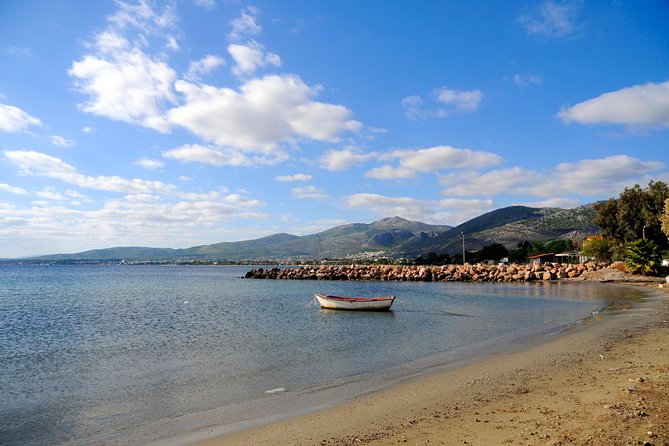
The route continues to Schinias Beach, part of the Marathon area and one of Attica’s well-known coastal resorts. You have about 15 minutes here, with no admission fee.
This is not a long beach visit. Think of it as a short pause to see the coastal setting that helped shape the area. The bay is known for clear water and visitor facilities, and the stop breaks up the historical discussion with sea air and open views.
If you are hoping for swimming or a proper beach afternoon, this tour does not provide enough time. The value is visual and geographic. You see that Marathon was not an isolated inland battlefield. It was tied to a bay and a route of access from the sea.
Same city, another way to catch the action:
- Athens: Marathon Cape and Bay of Schinias Snorkeling Trip
★ 4.8 · 131 reviews - Private Off-Road Tour Marathon Lake and Mountain from Athens
★ 5.0 · 90 reviews - Marathon & Thermopylae Battlefields Private Day Tour from Athens
★ 5.0 · 64 reviews - Marathon, Thermopylae, Thebes/Plataea, Herodotus Private Tour 10h
★ 5.0 · 28 reviews
The Archaeological Museum of Marathon
About 5 kilometers from Marathon Bay, the Archaeological Museum of Marathon gives you a compact look at local finds from several periods. Displays include Neolithic pottery from the Cave of Pan and objects from the Tomb of the Athenians.
You have about 30 minutes inside. That is enough for a focused visit, but not a slow museum study. I would use the time to look for objects connected to the local sites you have just seen. The museum helps turn an otherwise abstract battle stop into a broader picture of human settlement in the area.
The supplied information gives mixed signals about admission, listing the museum stop as included in the schedule while also stating that entrance fees are not included. Budget for admission rather than assuming it is covered. The general fee guidance lists Marathon admissions at 10 euros, or 5 euros at the reduced rate, with seasonal differences possible.
Marathonos Avenue and the modern race connection
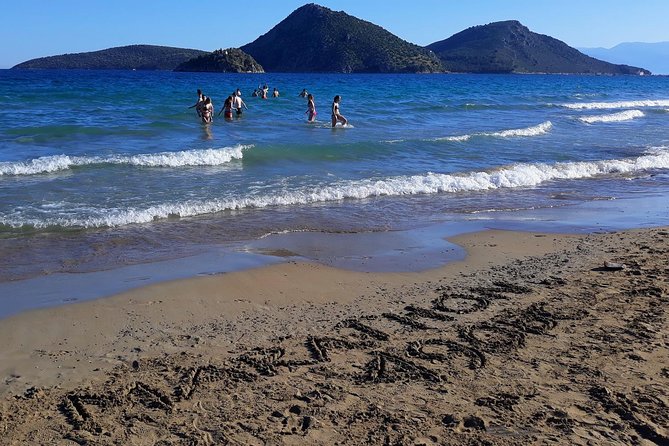
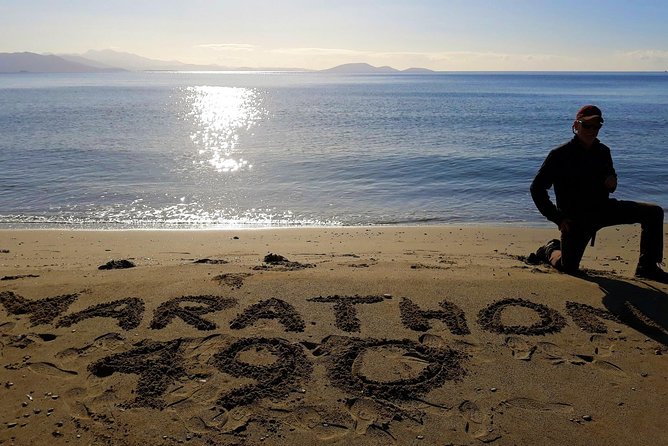
A short stop along Leoforos Marathonos connects the ancient battle with the modern Athens Marathon. The race starts in the modern town of Marathon and finishes at Athens’ Olympic Stadium, a site linked to the modern Olympic Games.
You get about 15 minutes here, and there is no admission fee. This is a small stop, but it gives the place a second identity. Marathon is not only an ancient battlefield. It is also the name carried by one of the world’s best-known long-distance races.
For runners, this may be a personal highlight. For everyone else, it is a useful reminder that ancient Greek stories continue to shape modern public life.
Lake Marathon and the drive north
Lake Marathon is a reservoir formed by the Marathon Dam, built where the Charadros and Varnavas torrents meet near the town of Marathon. It supplied Athens from 1931 until 1959, when water from Lake Yliki became available.
The stop is included in the route, though no exact visit length is given. Your view may depend on the timing and the day’s pace. The lake adds an important piece of modern Greek infrastructure to a tour otherwise centered on ancient warfare.
This is one reason the private format works well. The route is not a simple list of archaeological sites. It moves through the area’s military, coastal, sporting, and civic history. Your driver’s running commentary helps tie those pieces together.
Thermopylae: seeing the famous pass
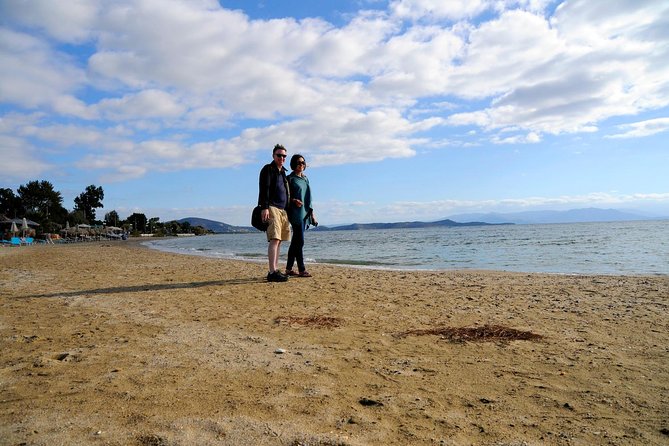
Thermopylae is the second major historical setting of the day. The pass once controlled movement along the east coast of mainland Greece, making it a natural place for repeated battles. In 480 BC, Greek forces led by Leonidas faced the invading Persians here.
You have about an hour at the battlefield. That is the longest stop of the day, and it deserves the time. Look at the relationship between the road, the sea, and the surrounding hills. The geography explains why this narrow passage mattered.
The site has changed over the centuries, including shifts in the shoreline, so the modern setting does not look exactly as it did in antiquity. That makes the guide’s explanation important. You are here for the location and the story, not for a large field of standing ruins.
The Leonidas monument and the famous epitaph are central to the visit. The inscription tells the Spartans that the men buried there obeyed their laws. Your guide can place the monument and the battle in the larger Greek defense against Xerxes.
Admission to the battlefield itself is free.
Thermopylae Museum and the hot springs
Next to the Leonidas monument is the Thermopylae Museum, dedicated to the 480 BC battle. You have about 30 minutes inside. The museum uses modern presentation methods to explain the battle, which can help you visualize troop movements and the role of the pass.
Admission is listed at 3 euros. The general information also refers to a Thermopylae fee of 5 euros in winter and 10 euros in summer, so confirm the current combined or seasonal charge when you book or arrive. The pricing information is not perfectly consistent, and this is one small reason to carry extra euros.
The nearby Loutra Thermopilon, or Thermopylae baths, adds another layer to the site. The name means the place of hot springs, and local mythology connects the cavernous entrances with Hades. You have about 15 minutes here, with no admission fee.
Do not plan on a long spa session. This is a brief stop to see the springs and understand why the location had importance beyond military strategy.
Damasta Monastery and the Anopaia path
The visit to the female Damasta Monastery takes the tour into a quieter setting above the Thermopylae area. The monastery is dedicated to the Birth of the Virgin Mary, and its main church dates to the 11th century. Religious icons inside date to 1818.
The site is tied to the Anopaia path, the secret mountain route used by the Persians after Ephialtes revealed it to Xerxes. That route allowed Persian troops to reach the rear of the Greek force, making the famous defense at the pass impossible to sustain.
You have about 30 minutes, and admission is free. This stop broadens the day beyond battlefield monuments. It also gives you a view of the kind of mountain terrain that shaped the battle. Dress respectfully for the monastery and follow any local instructions about entering the church.
The stop may be less appealing if your sole aim is military history and you want every minute at the battlefield. For most people, though, the connection between the monastery, the mountain route, and the battle adds useful context.
Kamena Vourla: a practical meal stop
On the return toward Athens, the route pauses at Kamena Vourla for about 30 minutes. This coastal town sits on the southern shore of the Malian Gulf and became a major resort after World War II.
Lunch or dinner is optional. The stop is free, but food is not included. Because the day begins early and covers a lot of ground, this is a sensible chance to eat, though 30 minutes may feel short if you want a relaxed meal.
Kamena Vourla also gives you one last coastal view before the drive back to Athens. It is a resort town rather than an ancient site, so treat it as a refreshment and scenery stop, not another historical attraction.
What the $301.98 price really covers
At $301.98 per person, the price makes the most sense for a small private group. You are paying for dedicated transport, a driver and guide, fuel, toll roads, parking, hotel pickup, and the ability to shape the day around your group.
The value improves when several people share a vehicle. Group discounts are available, and the price changes with the number of people and the vehicle type. A solo participant or couple will pay more per person for privacy than a larger family or group.
You still need to budget for admissions, meals, and gratuities. Suggested tips begin at 1 euro per person, though the appropriate amount is your choice. Pickup from central Athens is included, but locations more than 7 kilometers from the city center can add 10 euros each way. Piraeus port and cruise terminal pickups also carry a 10-euro charge each way. Airport and Lavrio port transfers require prior agreement and are not covered by that charge.
The tour accepts either full payment by credit card or a 50 percent deposit, with the balance paid in cash to the driver on the tour date. Since the booking is non-refundable and cannot be changed, make sure your date, pickup point, and group size are correct before paying.
Who should book this full-day history tour
I would choose this tour if you have a serious interest in Greek and Persian military history, especially if you want to see the settings rather than only read about them in Athens museums.
It also suits families with older children, private groups, and visitors who prefer a car over public transport. The vehicle choices cover small parties through groups of up to 14, and children up to age 12 can be free within the stated vehicle limits.
You should think twice if you want long museum visits, major ancient ruins, or a leisurely beach day. The experience is mainly about battlefields, scenery, and spoken interpretation. Much of the day is spent on the road, and the schedule includes many short stops.
FAQ
How long does the Marathon and Thermopylae tour last?
The tour is advertised at approximately nine hours. The practical details also describe a flexible schedule of up to eight hours, so the final length can vary with traffic, questions, meals, and added time.
What time does the tour start?
Pickup begins at 7:30 am.
Is hotel pickup included?
Pickup is offered from Athens city center. A 10-euro charge each way applies to locations more than 7 kilometers from the city center, including Piraeus Port and the Piraeus Cruise Terminal.
What type of vehicle is used?
You can select a sedan, minivan, or minibus. A sedan takes up to three adults or a family of four with two children up to age 12. A minivan takes up to seven people, and a minibus takes up to 14.
Is this a private tour?
Yes. Only your group participates.
Are entrance fees included?
No. Entrance fees are generally extra. The Marathon Tomb lists a 10-euro fee, with a reduced 5-euro rate, and the Thermopylae Museum lists a 3-euro fee. Seasonal pricing information also lists Marathon and Thermopylae fees that may range from 5 to 10 euros.
Is lunch included?
No. Lunch or dinner at Kamena Vourla is optional and is not included in the tour price.
Does the tour include transportation costs?
Yes. The private transportation includes fuel, toll roads, and parking fees.
Can I extend the tour?
Yes, subject to agreement with the driver. Extra time costs 30 euros per hour for a sedan, 45 euros per hour for a minivan, or 60 euros per hour for a minibus.
Can I cancel for a refund?
No. The experience is non-refundable and cannot be changed after booking.
Should you book it?
Book this tour if you want the historical setting, not a long list of ruins. The best parts are the Marathon Tomb, the hour at Thermopylae, the military commentary, and the chance to connect the battlefield with the mountain route, coast, and hot springs.
I would especially recommend it for a small group that can share the private vehicle cost. If you prefer a relaxed day with museums and beaches, this schedule may feel too packed. But if Philip’s style of battle tactics and story-led guiding is what you want, this is a practical way to reach two important sites that are difficult to combine independently from Athens in one day.
New on the fixture list around Athens
- Private Luxury Tour: Marathon – Battle & Run That Changed History★ 5.0 · 30 reviews
- Private Day Trip to Marathon-Thermopylae★ 5.0 · 3 reviews
- Private tour from Athens to Marathon with a pickup★ 5.0 · 7 reviews
- Private Cruise & Snorkeling Nea Makri, Marathon, Schinias, Rafina★ 5.0 · 7 reviews
- Marathon, Thermopylae, Thebes/Plataea, Herodotus Private Tour 10h★ 5.0 · 28 reviews
- Private 4×4 Wine Tour from Athens to Marathon Lake and a Winery★ 5.0 · 21 reviews
- 2 Days Herodotus Tour – Marathon, Thermopylae, Delphi, Thebes, Plataea, Salamis★ 5.0 · 3 reviews
- Mercedes Private Tour Marathon Olympic Run and Marathon Battle★ 5.0 · 19 reviews