
Review · UK
St Andrews: Town, Golf, and Old Course History Tour
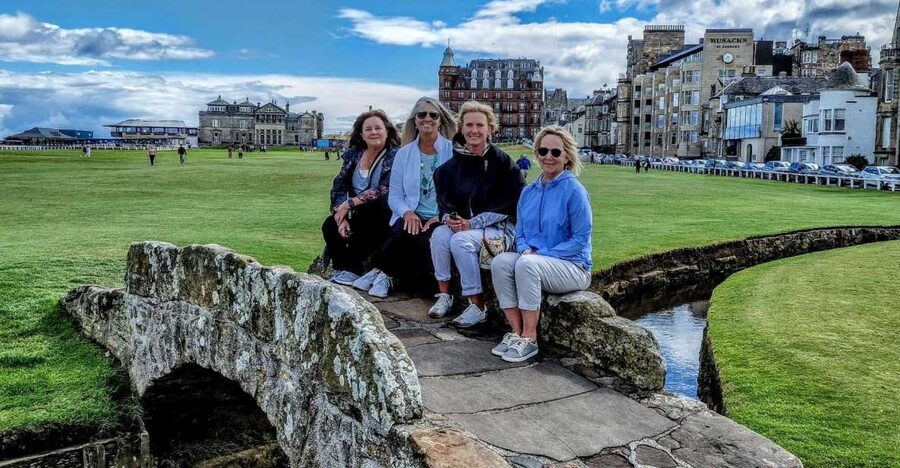
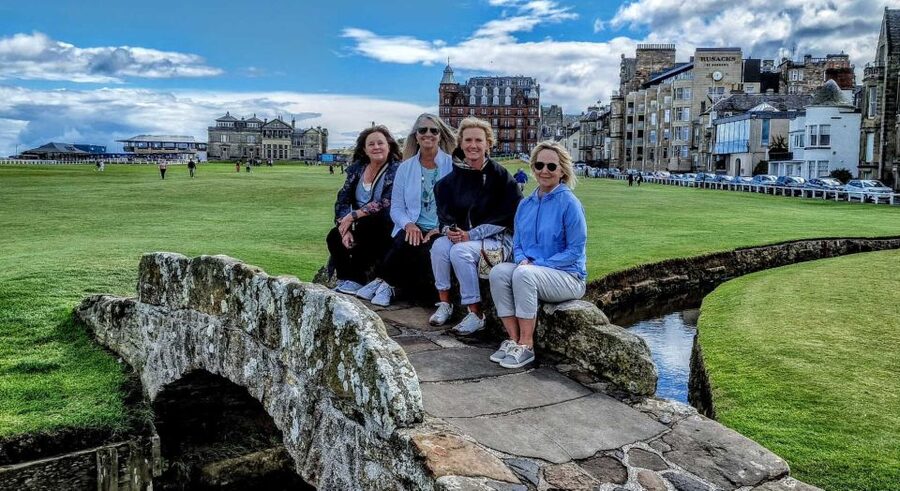
St Andrews is more than a golf pilgrimage. This 105-minute walking tour ties the Old Course to the university, cathedral ruins, royal connections, and the people who shaped the town. You finish at the Swilcan Bridge, where you can pose for the classic photograph.
I like the way the route joins town history with golf instead of treating the course as a stand-alone attraction. I also like the personal touch from guides such as Richard, who has worked as a caddie and is known for clear explanations, local stories, and taking good family photos. The main drawback is the pace: you cover a lot of ground, and one recent group found it hard to keep up when the guide spoke quickly.
Key points to know before you book
- Golf and town history share equal billing: You learn about the Old Course, the university, William and Kate, the cathedral, and St Andrews life.
- The cathedral cemetery has a strong golf connection: Old and Young Tom Morris, Allan Robertson, and Jamie Anderson are among the golfing figures linked to the grounds.
- The Old Course finish is the big reward: You walk by the 18th green, 1st tee, and first fairway before reaching the Swilcan Bridge.
- A fluent command of English is essential: The guide speaks at a normal pace, and translation or slow repetition is not considered suitable for this tour.
- Expect a proper town walk: Comfortable shoes and weatherproof clothing matter more than golf clothing.
- The fairway crossing needs care: You walk by and across parts of the 1st and 18th fairways at your own risk during live play.
Why this St Andrews walk works for golfers and non-golfers
The clever part of this tour is its mix. If you care about golf, you get the origins of the game, the Open Championship, the design of the Old Course, famous moments, and the traditions surrounding the Home of Golf. If you do not play, you still get a useful introduction to St Andrews through its university, religious ruins, royal connections, and streets.
That balance is why I would not reserve this only for a group of golfers. Several couples have enjoyed it when one person cared deeply about golf and the other did not. The guide keeps returning to the town itself, showing how the university and the links helped shape modern St Andrews.
The price is about $27 per person, which is fair for a professional walking tour lasting an hour and 45 minutes. You are not paying for entry to a major museum or for transport. You are paying for the guide’s interpretation, the route, and access to stories that are easy to miss when you explore on your own. At this price, it offers good value if you want an orientation tour early in your stay.
More Golf Rounds and Courses in the UK:
- St Andrews: Golf Origins and Old Course History Tour
★ 4.7 · 322 reviews - St Andrews Tours: Town, Golf and Old Course History
★ 5.0 · 138 reviews - Manchester: Junkyard Golf Club Tickets for 9 or 18 Holes
★ 4.6 · 133 reviews
Starting at T-Squared Social on North Street
Meet your guide outside the main entrance of T-Squared Social at 117 North Street. Arrive early. This tour starts on time and does not wait, and being even a minute late can mean losing your place.
That strict start is worth taking seriously because the walk follows a schedule from the town centre to the Old Course. If you miss it, you must contact the local provider before the start time to ask about another available tour. There is no promise that a later tour will run that day, and there is no refund for missed arrangements.
The opening stop includes a look at T-Squared Social and discussion of the venue’s links with Tiger Woods and Justin Timberlake. You also hear a little about the Dunhill Championship. This is a short introduction rather than a long restaurant visit, so do not arrive expecting a meal or a bar stop.
From here, the guide begins connecting present-day St Andrews with its sporting identity. Guides such as Richard have been praised for adding personal experience from caddying and playing around the area. Jim has also led the walk, with a strong focus on golf history. Guide assignments can vary, but the central theme remains the same.
St Salvator’s College and the university town

The route then moves toward St Salvator’s College, including the quadrangle and St Salvator’s Chapel. St Andrews is Scotland’s oldest university, and its buildings give the tour a useful change of mood after the opening golf talk.
The university is not just a decorative stop. It helps explain why St Andrews feels like a compact academic town as well as a golf destination. The guide talks about William and Kate, who met while students, and points out places connected with their time at the university.
You also hear about the Netflix series The Crown and its time in St Andrews. These modern references make the old streets easier to place. They also give non-golfers something concrete to follow while the guide builds toward the older parts of town.
The chapel and college are visited from the outside or viewed along the route, so this is not a lengthy university admissions or interior architecture tour. Still, it is a useful stop because the university gives St Andrews much of its daily character. Take in the stonework, listen closely, and keep an eye on the group as the walk continues.
Cathedral ruins, graves, and a lost centre of power
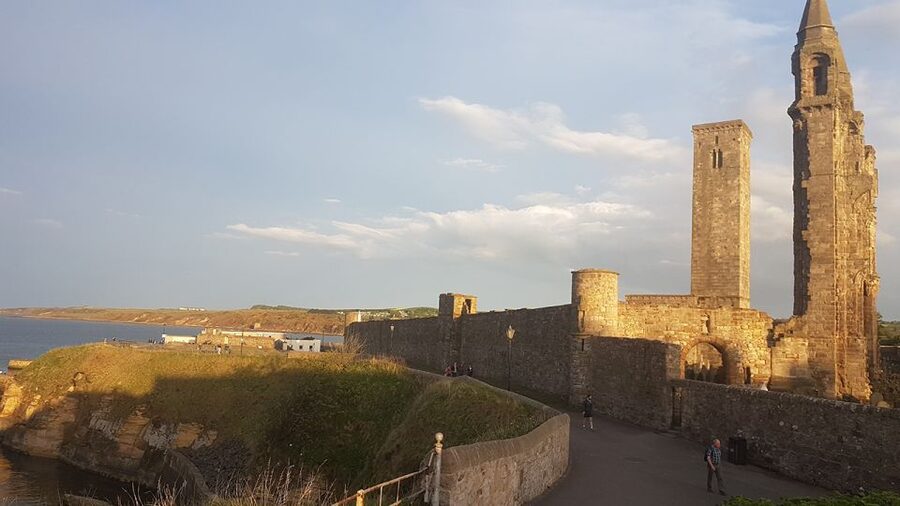
St Andrews Cathedral is one of the most memorable parts of the route. The cathedral is now a ruin, but its scale makes clear how important the town once was as a religious centre. The surrounding grounds are also tied to golf in a very direct way.
The cemetery includes the graves of 124 noted golfers. Among the names highlighted are Old Tom Morris, Young Tom Morris, Allan Robertson, and Jamie Anderson. For anyone interested in golf before its modern television age, this is where the game becomes personal. You are no longer hearing only about famous courses and championships. You are standing among the people who helped shape the sport.
This section can feel a little rushed because the entire route has to reach the Old Course on time. If you want a long, quiet look at the graves or plenty of time for photographs, plan to return to the cathedral grounds after the tour. One person specifically wished for more time in the cemetery and on the golf course, which is a useful warning for visitors who prefer slow sightseeing.
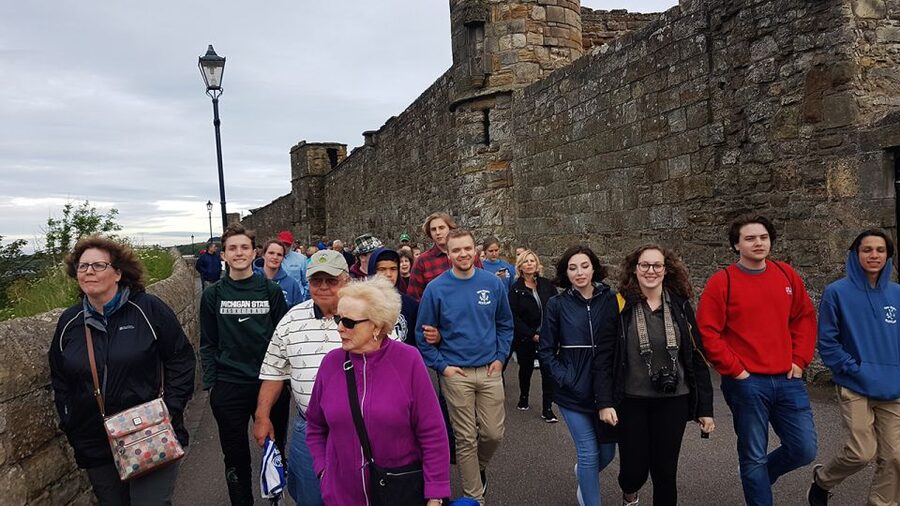
The ruins of St Andrews Castle are seen along the way, with a photo stop and scenic views rather than a full castle visit. The nearby Bishop’s Palace adds another layer, showing the former wealth and power of the Catholic Church in Scotland. You should think of these places as viewed within a walking route, not as separate guided admissions.
More sporting history around the UK:
- Tour of Historic Fenway Park, America’s Most Beloved Ballpark
★ 4.5 · 3,013 reviews - Krabi: Ao Nang Landmark Stadium Muay Thai
★ 4.7 · 287 reviews - Private Luxury Tour: Marathon – Battle & Run That Changed History
★ 5.0 · 30 reviews - FC Barcelona History Immersive Walking Tour – Beer Included
★ 5.0 · 18 reviews
Along the Scores toward the Old Course
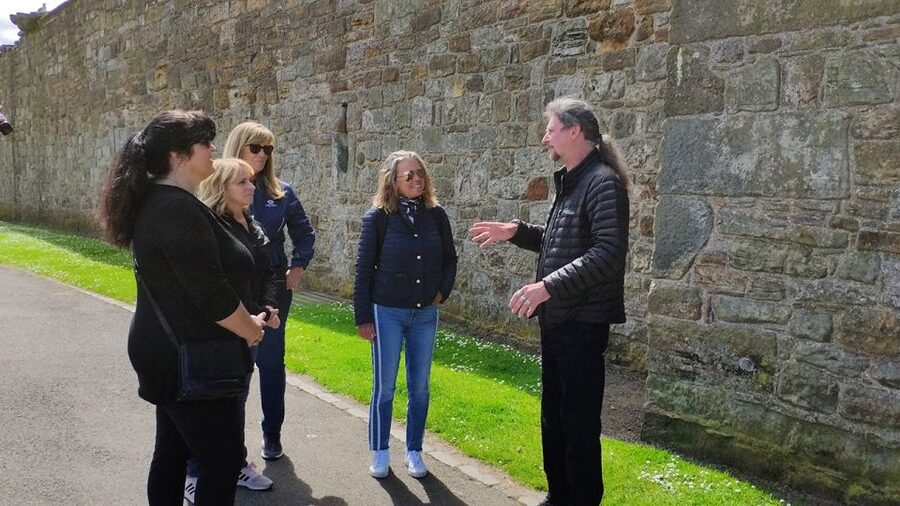
From the cathedral area, the group walks along the Scores. This stretch brings fine Victorian university buildings into view, including the Principal’s House and the residence where William and Kate spent their first year as students.
The route helps you see how close everything is in St Andrews. Medieval religious remains, university buildings, student landmarks, and one of the world’s best-known golf courses all sit within a walkable town. That compact layout is one of the tour’s real strengths. You keep changing subjects without needing a bus or taxi.
The guide also points out a hidden local feature along the way. The exact stop can vary, but it is one of the details that makes a guided walk useful. On your own, you might pass the same doorway or corner without knowing why it matters.
Traffic and street noise can occasionally make listening difficult. Stay near the guide and ask for a repeat if you miss an important point. Most of the walk is outdoors, so wind, rain, and passing vehicles are part of the experience. The guide may speak clearly, but the setting is not a quiet lecture room.
Understanding how St Andrews became the Home of Golf
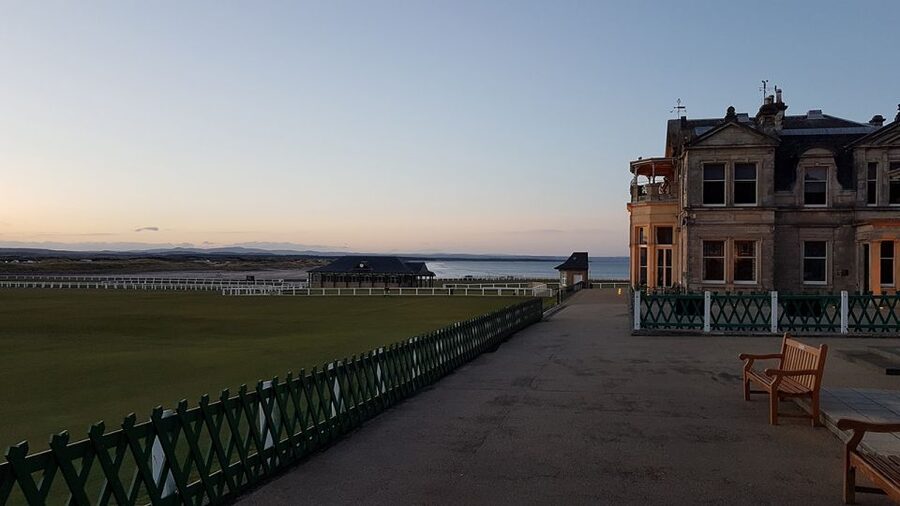
The final section takes you to the Old Course, where the tour puts the earlier stories into context. You hear about the early Open Championship and how golf developed in St Andrews into the game and institution known around the world.
The guide explains why the links has 18 holes and discusses some of the unusual features that shaped the course’s character. You also hear about the buildings overlooking the course and memorable golfing moments connected with this stretch of ground.
You walk by the 18th green, the 1st tee, and the first fairway. This is not a full playing lesson, and it is not a round of golf. You are seeing the course from a walker’s perspective while learning how its layout and traditions developed.
The tour includes walking by and across the 1st and 18th fairways. This happens at your own risk, and you must watch for golf balls during live play. Keep the group together and follow the guide’s directions. If the course is busy, the experience can feel more hurried than a quiet photo visit.
The Old Course section is also where the golf focus becomes strongest. Non-golfers may enjoy the setting and the stories, but anyone hoping for equal time at every historic building may find the balance tilted toward the sport. That is not a flaw, but it is important to know before booking.
Finishing at the Swilcan Bridge
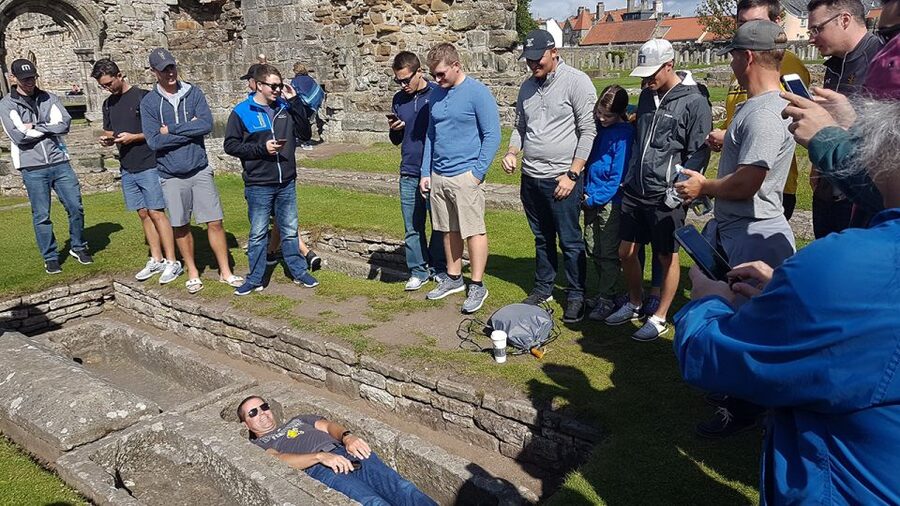
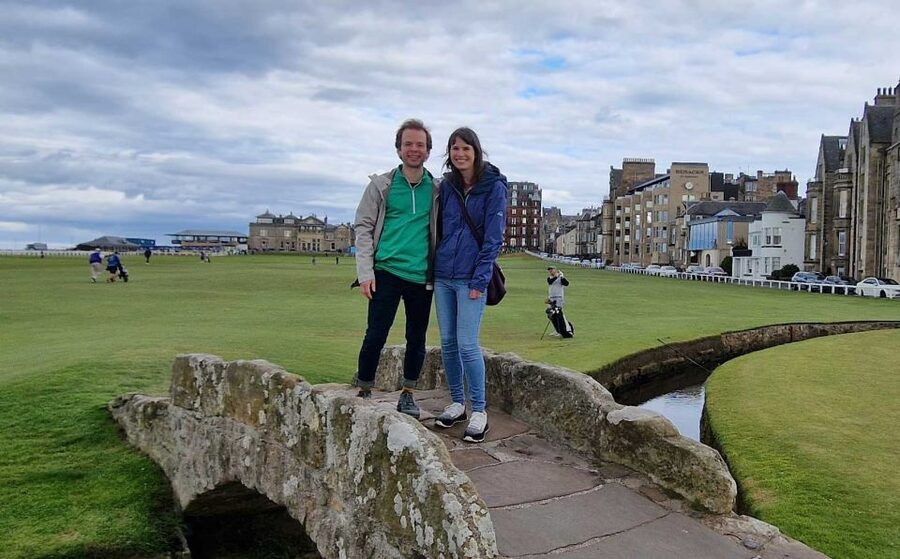
The tour ends at the Swilcan Bridge, the small stone bridge associated with countless Old Course photographs. You have time for pictures there, making this the natural finish for golfers and a good family photo opportunity for everyone else.
Guides such as Richard have been praised for helping with group photos, which is handy when nobody wants to rely on a stranger or a shaky phone timer. The bridge photo is not available on tournament days, so check the date of your visit if that picture is a major reason for booking.
After the tour, you can continue to the Jigger Inn or Old Course Hotel. These are not included stops with a reserved drink or meal, but they provide a place to sit, look back toward the course, and reflect on the stories you have just heard. One useful tip is to consider the upstairs bar at the Old Course Hotel for views.
Pace, walking conditions, and who should book
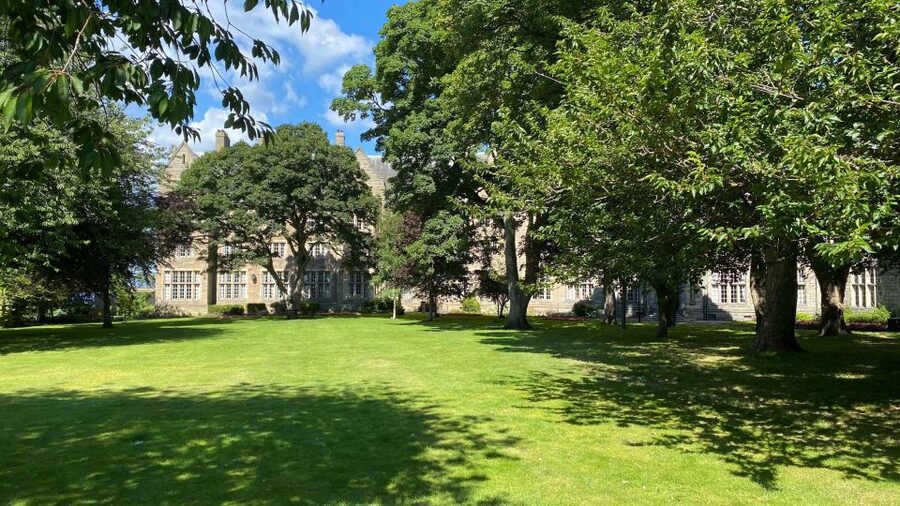
This is a town walk, not a gentle sightseeing circuit. You cover a considerable distance from North Street toward the Old Course, with repeated stops but no vehicle transfer. Wear comfortable shoes and dress for Scottish weather.
The activity is not suitable for wheelchair users or people with mobility impairments. Walking frames, crutches, mobility scooters, baby carriages, and strollers are not allowed, and there is no luggage storage for suitcases, golf clubs, scooters, or other large items.
Children under 16 must be accompanied by an adult. Children under five are free, but the tour is not suitable for children under two. Unaccompanied minors cannot join, and disruptive behaviour or alcohol use is not accepted.
You also need a fluent command of English. The guide’s stories move between names, dates, jokes, golf terms, and local references. Speaking slowly or translating during the walk is not considered workable, so choose another activity if you will struggle to follow spoken English.
The tour suits:
- Golf fans who want the story behind the Old Course, not just a photograph
- Non-golfers who want a broad introduction to St Andrews
- Couples or families with different levels of interest in golf
- First-time visitors who want town orientation before exploring alone
- History fans interested in the university, cathedral, church power, and local figures
It is less suitable if you want a slow cemetery visit, a quiet course walk, or a full tour of the castle and cathedral interiors. It is also a poor choice if you have a tight schedule and cannot arrive early at the meeting point.
Should you book the St Andrews golf history tour?
I would book this if you want one activity to explain both why St Andrews matters to golf and how the town grew around its university and religious past. The price is reasonable, the route covers the essential landmarks, and the final Swilcan Bridge photo gives the walk a clear payoff.
Book it early in your stay if possible. You will get your bearings, hear about places you can revisit, and learn enough golf history to make the Old Course more meaningful. Just allow for a brisk walk, outdoor conditions, occasional street noise, and a golf-heavy final section.
Skip it if you need step-free access, cannot follow English comfortably, or want extended time inside each historic site. For everyone else, this is a practical introduction to St Andrews, with enough local character to make the town more than a backdrop for a famous golf course.
FAQ
How long does the St Andrews tour last?
The tour lasts 105 minutes, or one hour and 45 minutes. It is a continuous walking experience from T-Squared Social to the Swilcan Bridge.
Where does the tour begin?
Meet the guide outside the main entrance of T-Squared Social at 117 North Street, St Andrews, KY16 9AD.
Where does the tour finish?
The tour finishes at the Swilcan Bridge beside the Old Course. You can then continue independently to the Jigger Inn or Old Course Hotel.
Is the Swilcan Bridge photo always included?
Photos at the Swilcan Bridge are included at the end of the tour, except on tournament days.
Is the tour suitable for people who do not play golf?
Yes. The tour includes golf history, but also covers St Salvator’s College, the university, William and Kate, The Crown, the cathedral ruins, the Bishop’s Palace, and St Andrews town history.
What should I bring?
Wear comfortable shoes and clothing suited to the weather. Do not bring luggage, golf clubs, baby carriages, mobility scooters, walking frames, or crutches, as there is no luggage drop and these items are not allowed.
New on the fixture list around the UK
- London: Shoreditch Junkyard Golf Tickets for 9 or 18 Holes★ 4.7 · 31 reviews
- Newcastle: Junkyard Golf Tickets for 9 or 18 Holes★ 4.3 · 42 reviews
- London: F1® DRIVE – The Official F1® Karting Experience★ 4.3 · 22 reviews
- Leeds: Junkyard Golf Tickets for 9 or 18 Holes★ 4.5 · 38 reviews
- Glasgow Football Tour: Three Hampdens Walking Tour★ 5.0 · 2 reviews
- From London: Liverpool FC Stadium & Museum Rail Day Tour★ 4.8 · 8 reviews
- Glasgow: Celtic Park Number 7 Restaurant★ 4.1 · 28 reviews
- Belfast: Ulster Transport Museum Entry Ticket★ 4.7 · 4 reviews
More Golf Rounds and Courses to weigh up.

St Andrews: Golf Origins and Old Course History Tour
Read our review →
St Andrews Tours: Town, Golf and Old Course History
Read our review →
Manchester: Junkyard Golf Club Tickets for 9 or 18 Holes
Read our review →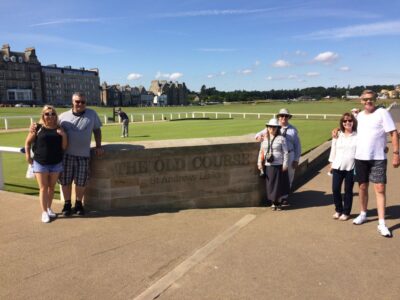

Camden: Junkyard Golf Club Tickets for 9 or 18 Holes
Read our review →

Barbados Golf Experience Pass Challenge and Fun Golf for All
Read our review →
Access the Inaccessible: Sydney Luxury Golf Packages
Read our review →This one also appears in