
Review · SPAIN
Alicante: Bullring and Bullfighting Museum Entry Ticket
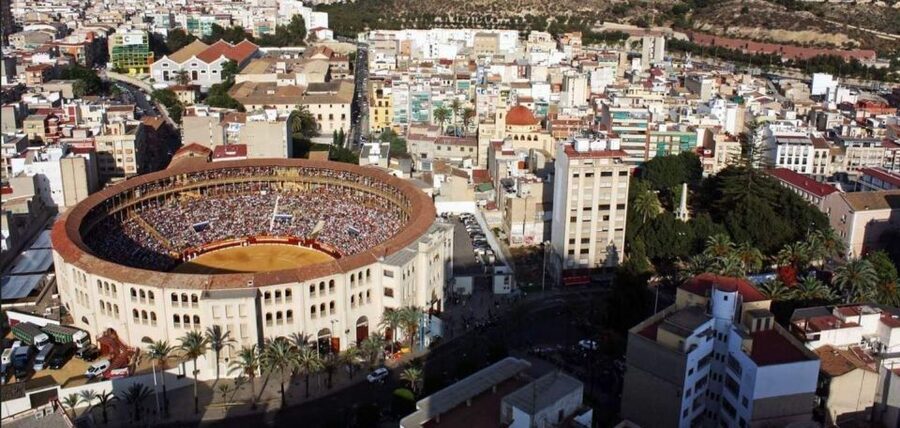
Alicante’s bullring gives you more than a museum display. You can walk into the actual ring, look up at the sweeping seats, and follow the route once used by bullfighters, from the chapel to the bull pens and infirmary. The late 19th-century building is also a fine piece of Alicante architecture, with views toward the castle from the stands.
I like the freedom to move at your own speed, and I like that the audio guide explains local names such as Vicente Blau, José María Manzanares, Francisco Antón and Luis Francisco Esplá. The main drawback is that concerts and seasonal events can cover parts of the ring, while several stairs may make the visit harder for some older visitors despite the stated wheelchair accessibility.
Key points to know before you go
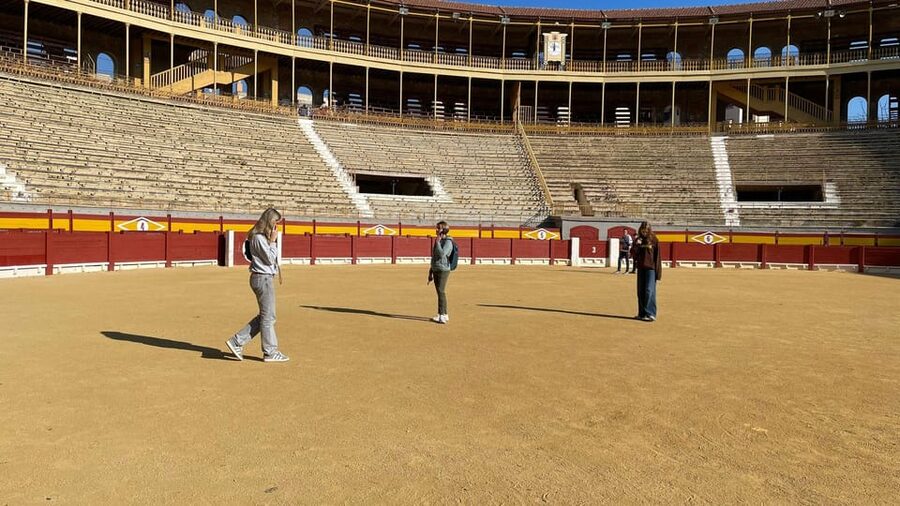
- Walk into the bullring itself: Step onto the sand and see the arena from the bullfighter’s point of view.
- Explore areas normally closed to casual sightseers: The route includes the chapel, bull pens and infirmary.
- Learn about Alicante’s local matadors: Museum displays cover four notable names, along with suits, artwork and videos.
- Use the six-language audio guide: Choose English, Spanish, French, Italian, German or Polish and set your own pace.
- Look toward Santa Bárbara Castle: The upper seating area provides one of the most rewarding views inside the visit.
- Check for events before arrival: Concerts, Oktoberfest setups and stage construction have sometimes reduced access to the ring.
What this one-hour visit is really like
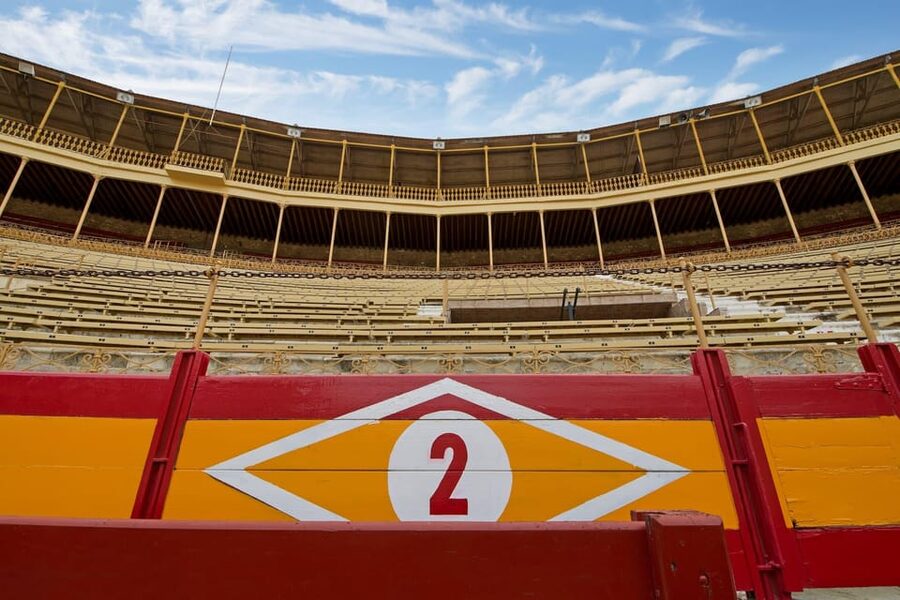
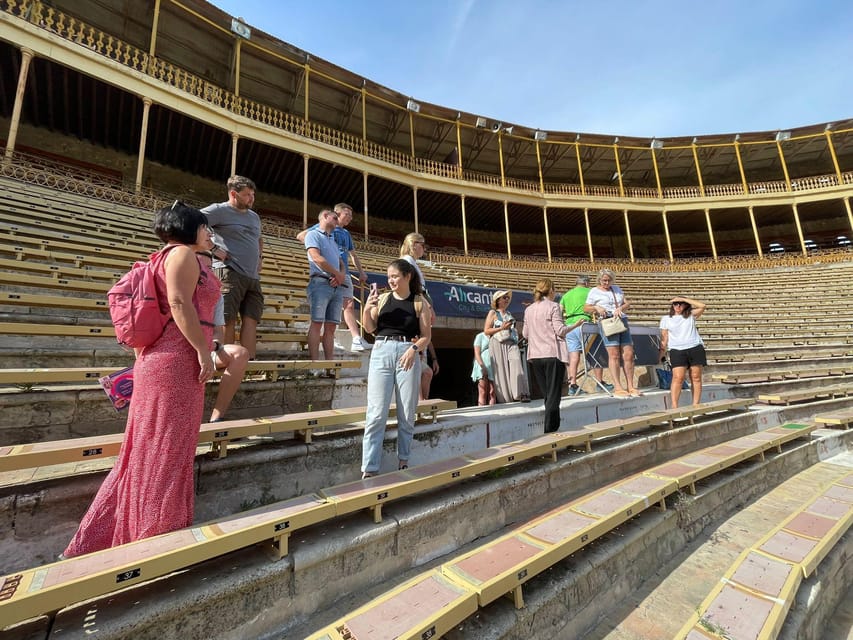
This is a self-guided visit rather than a hosted tour. You enter through the main bullring door, receive the ticket and information leaflet, and use the audio guide as you move around the building. A Spanish or English host may be available at the entrance, but the explanation inside comes through the audio device.
The one-hour estimate works if you keep moving. I would allow more time if you want to pause at the museum displays, watch the videos, take photographs, or listen to every audio stop without rushing. The open format is useful because you are not tied to a group or a fixed speaking schedule.
The route introduces bullfighting as a part of Alicante’s public culture from around 1700. You are not attending a live bullfight, and the visit does not require you to watch one. Instead, the building and museum explain the customs, people and objects connected with the tradition.
That distinction matters. If you want to understand the role bullfighting has played in Spanish culture without committing to a live event, this offers a contained way to examine it. If your main interest is a performance, atmosphere or modern debate around bullfighting, the visit may feel more like a museum lesson than a dramatic spectacle.
More Bullfights and Bullrings in Spain:
- Las Ventas Madrid Bullring & Bullfighting Museum with Audioguide
★ 4.5 · 106 reviews - Las Ventas: Bullfighting Hall, Museum and Tour of the Bullring
★ 5.0 · 78 reviews - Alicante: Visit with Audio Guide Bullring and Bullfighting Museum
★ 4.5 · 63 reviews
Entering Alicante’s late 19th-century bullring
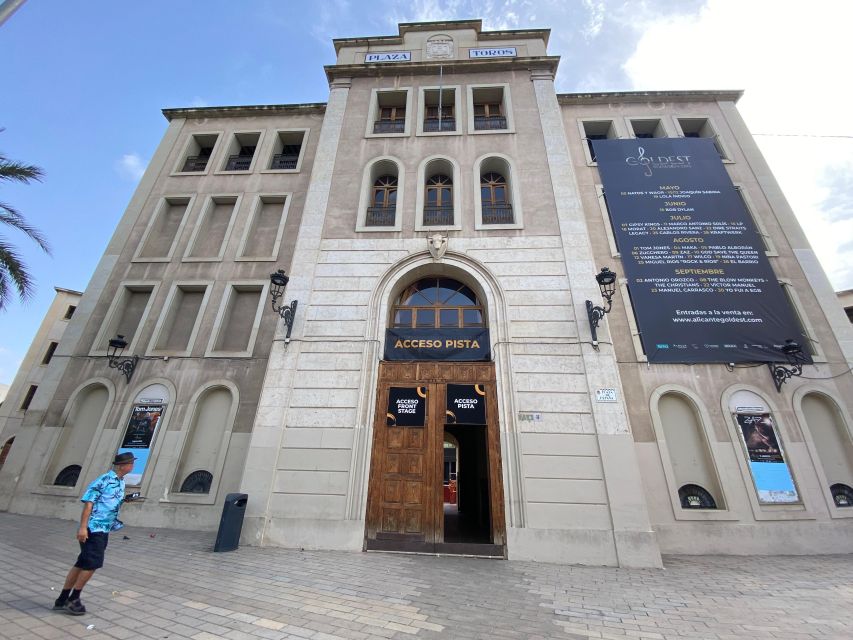
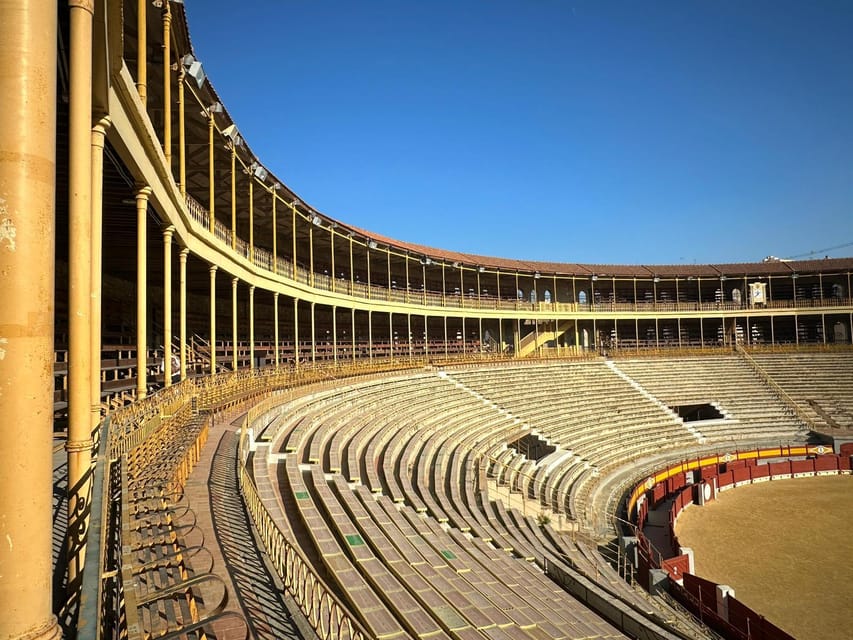
The first pleasure is architectural. Alicante’s bullring is a historical monument from the late 19th century, and its design gives you a sense of how a public arena was built around a central ring. The curved seating, entrances and working areas make more sense once you see them from inside rather than from a street photograph.
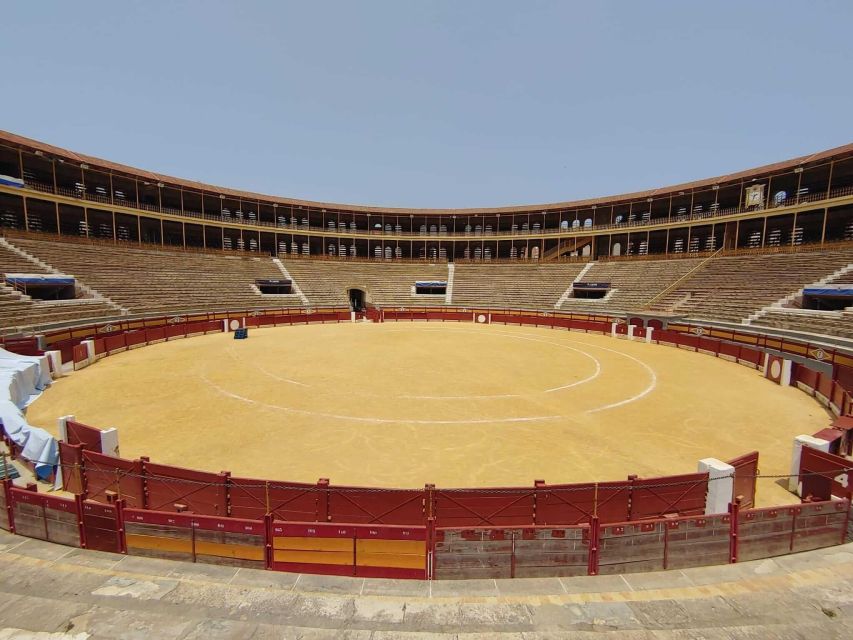
The audio guide helps turn a large, quiet building into a story. You can stop in the arena, then climb to the seating areas and look down toward the place where bullfights took place. From above, the ring’s shape is especially clear, and the view toward Alicante and the castle adds something beyond the museum material.
The arena is not only used for bullfighting today. It can host concerts, tennis and an ice rink, so the building remains an active venue. That is interesting in itself, but it can affect your visit. Temporary seating, a concert stage or an event installation may cover parts of the ring or change its original appearance.
One visit had an Oktoberfest setup inside, and another took place while a stage was being built. The museum could still be visited, but the ring did not look exactly as it would on a clear day. Check locally if the arena setting is the main reason you are booking, especially during festival periods.
The chapel, bull pens and infirmary
The most distinctive part of the route is its look behind the public display. You can see the chapel where Alicante bullfighters pray before a bullfight, then continue toward the bull pens and infirmary. These spaces explain the practical and personal sides of the tradition better than a wall label alone.
The chapel is small but meaningful. It shows that the bullfight was not simply a show in the arena. For the people involved, it could carry religious ritual, fear, pride and preparation. You do not need to share the tradition’s beliefs to understand why this room belongs in the story.
The bull pens give you a sense of what happened before the public saw the animals enter the ring. The infirmary points to the danger faced by bullfighters and the need for medical care close to the arena. Together, these stops make the building feel like a working place, not just a grand circle of seats.
The audio guide is useful here because a self-guided route can otherwise leave these rooms feeling bare. Listen in your chosen language, then take a moment to look at the physical layout. The experience works best when you do not race from one numbered point to the next.
Stepping onto the sand and looking up
The chance to stand in the ring is the visit’s strongest visual moment. You see the arena from ground level, then turn around and look at the tiers of seats rising above you. It is an easy way to understand the scale of the crowd and the exposure of anyone in the center.
From the ring, the building can feel more severe and functional than it does from the upper levels. From the stands, you get the opposite view: the arena becomes a carefully framed stage, with the city and castle beyond it. Bring your camera, but remember that temporary events may limit the clearest angles.
Several stairs are part of the route. One account describes the visit as cheap and interesting but warns that the stairs could be difficult for some elderly or disabled people. The venue is listed as wheelchair accessible, so access is not impossible by definition, but the exact ease of reaching every area may depend on the day’s setup and which parts of the building are open.
If mobility is important to your plans, ask at the main entrance about the route before starting. That simple check can prevent disappointment and helps you decide how much of the bullring you can comfortably see.
More sporting days out around Spain:
- Madrid: Tour Bernabéu Entry Ticket
★ 4.5 · 21,573 reviews - Barcelona: FC Barcelona Museum “Barça Immersive Tour” Ticket
★ 4.4 · 10,944 reviews - Madrid: Atlético de Madrid Stadium Entry
★ 4.7 · 2,022 reviews - Bilbao: San Mamés Museum and Stadium Tour
★ 4.8 · 1,464 reviews
Inside the Taurino Museum
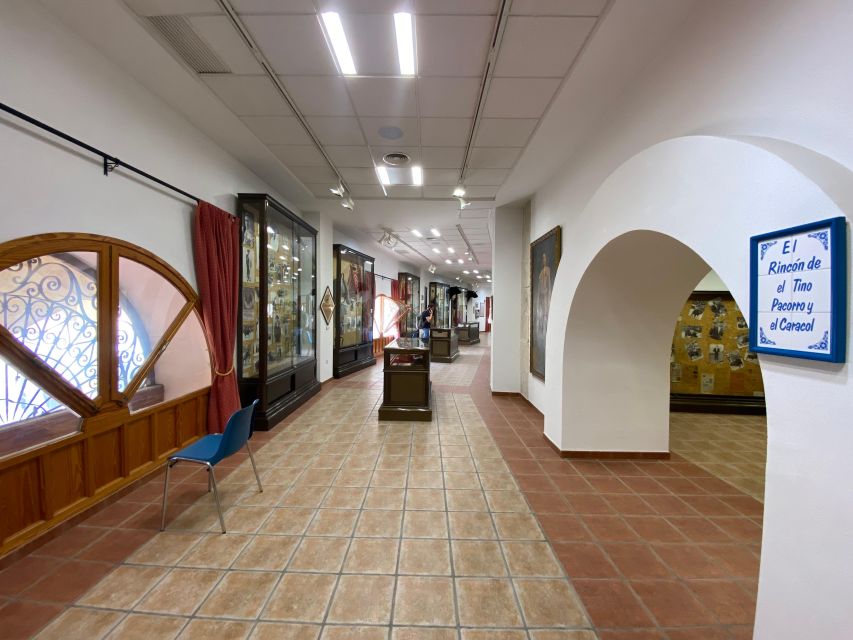
The museum supplies the context for the building. Displays cover bullfighting festivals, local history, artwork, bullfighter suits and important Alicante matadors. You will see the names Vicente Blau, José María Manzanares, Francisco Antón and Luis Francisco Esplá connected with the city’s tradition.
The suits are among the most direct objects on display. Their bright materials and careful decoration show the formal side of bullfighting, while the surrounding information explains the people who wore them. Art adds another layer, presenting bullfighting not only as an event but also as a subject for painters and collectors.
The museum also uses videos. These give you a visual explanation of bullfighting culture and can help if the historical text feels dense. Since the audio guide covers the displays in several languages, you can choose how much information you want rather than relying only on written panels.
I would treat the museum as the part that makes the ring meaningful. Without it, you might admire the architecture and take a few photographs, then leave with only a general idea of what happened there. With the museum, the chapel, working areas and local names connect to a larger account of Alicante’s bullfighting tradition.
The audio guide and the pace of the visit
The audio guide is available in English, Spanish, French, Italian, German and Polish. That is a strong feature for a small attraction because you can follow the explanations without needing a live translator. The guide lets you pause, replay or move on according to your interest.
The format also means you must manage your own visit. There is no live guide continuously pointing out the next detail or adjusting the explanation to your questions. Most people looking for a straightforward introduction will find the route easy to follow, but anyone wanting discussion or debate should not expect a guided conversation.
Go when the building is quiet if possible. A quieter visit makes it easier to listen, photograph the ring and spend time in the smaller rooms. The museum is open Monday through Saturday from 10:00 in the morning until 4:00 in the afternoon, so the opening hours are fairly limited for an attraction that many people may want to fit around a day in Alicante.
The short opening window also makes timing important. This is not an evening activity, and it may not suit a late arrival from a day trip. Check the available start time before you set off, then leave enough room for the walk through the museum and the upper seating areas.
Price, practical value and possible interruptions
At $14 per person, the ticket offers reasonable value if you care about architecture, local culture or unusual city sights. You get entry to both the bullring and museum, a multilingual audio guide and an information leaflet. For a one-hour visit, it is not the cheapest possible museum stop, but it includes access to working areas that you cannot understand from outside the building.
The value improves if you use the entire route. Listen to the museum explanations, see the chapel and bull pens, enter the ring, and climb to the stands for the castle view. If you only want a quick photograph of the arena, the ticket may feel less worthwhile.
The main uncertainty is the event calendar. Because the bullring also hosts concerts, tennis, an ice rink and other activities, the arena may not be presented in its usual form. A stage or temporary installation does not necessarily cancel the visit, but it can reduce the effect of standing in an empty ring.
One scheduled concert was not communicated in advance, yet a helpful guide adjusted the visit so the museum and other areas could still be seen. That suggests the staff may try to make the best of an altered setup, but you should not assume every section will be fully clear on an event day.
Free cancellation up to 24 hours before the visit and a reserve-now, pay-later option make the booking less rigid. Those terms are useful if your Alicante schedule is still shifting, though you should still check the day’s opening hours and any event notices.
Who will enjoy this most
I would recommend this for you if you want a cultural stop that takes about an hour and does not require a live performance. It suits visitors curious about Spanish traditions, local personalities, historic buildings and the practical spaces behind a public spectacle.
It is also a good choice for photographers. The ring, curved seats, chapel and views toward the castle offer more variety than a standard museum room. Go at a quiet time if photographs matter, since an event installation may change the background and crowd levels.
Families and independent sightseers may like the freedom to move without keeping up with a group. The videos and costumes provide visual material, while the audio guide gives enough explanation to make the building understandable.
I would think twice if you dislike self-guided visits, want a long specialist lecture, or expect an untouched arena every time. The hour passes quickly, the route includes stairs, and the building may be partly rearranged for another event.
Should you book Alicante’s bullring visit?
Book it if you want a clear introduction to Alicante’s bullfighting tradition, especially if you can visit Monday through Saturday during the 10:00 to 4:00 opening period. The combination of ring access, chapel, bull pens, museum objects, videos and castle views gives you more substance than a simple entrance ticket.
For the best experience, choose a quieter time and confirm that no concert or seasonal event is taking over the arena. If a stage is in place, you may still find the museum worthwhile, but the central ring will not have its full visual impact.
At $14, this is a sensible short stop for culturally curious visitors. You do not need to attend a bullfight to understand why the building matters, and you can leave with a clearer picture of Alicante’s local matadors and the tradition that shaped this unusual city venue.
FAQ
How long does the bullring and museum visit take?
The stated duration is one hour. You may want extra time if you listen to all audio stops, watch the videos, take photographs or move slowly through the stairs and museum.
What are the opening hours?
The bullring and museum are open Monday through Saturday from 10:00 AM to 4:00 PM.
Is a live guide included?
No. The visit is self-guided, with an audio guide and information leaflet included. A Spanish or English host may be available at the entrance.
Which languages are available on the audio guide?
The audio guide is available in Spanish, English, French, Italian, German and Polish.
What areas can I see inside the bullring?
The visit includes the ring, stands, chapel, bull pens and infirmary, along with the museum areas.
Is the site wheelchair accessible?
The activity is listed as wheelchair accessible. However, the route includes several stairs, so ask at the entrance about access to specific areas if mobility is a concern.
Can I cancel the booking?
You can cancel up to 24 hours in advance for a full refund. A reserve-now, pay-later option is also available.
New on the fixture list around Spain
- Spotify Camp Nou Tour F.C. Barcelona Museum (Open Date Ticket)★ 3.5 · 5 reviews
- Transport Barcelona★ 4.5 · 2 reviews
- Private 4h Tour Of Camp Nou And Most Emblematic Sites Of Barcelona with pick up★ 4.5 · 3 reviews
- Discover Leo Messi’s secrets at Barça Café – Camp Nou★ 5.0 · 22 reviews
- Olympic and Sport Museum of Barcelona “Joan Antoni Samaranch”★ 4.5 · 22 reviews
- BARCELONA SPORTS VIP – Camp Nou – La Masia & Montjuic (Olympic)★ 4.5 · 3 reviews
- Explore Spotify Camp Nou Immersive Tour of Barcelona’s Stadium★ 3.0 · 2 reviews
- Football Club Barcelona Museum Immersive Tour Guided Visit★ 3.5 · 52 reviews
More Bullfights and Bullrings to weigh up.
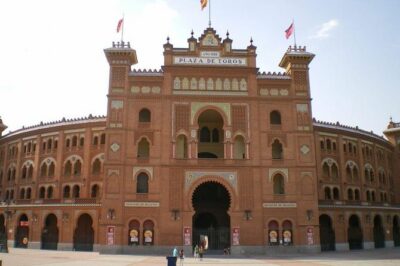
Las Ventas Madrid Bullring & Bullfighting Museum with Audioguide
Read our review →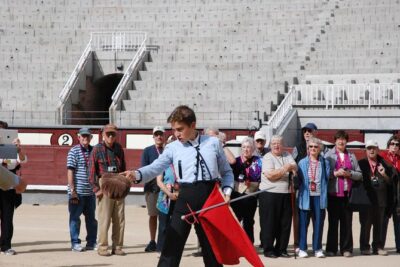
Las Ventas: Bullfighting Hall, Museum and Tour of the Bullring
Read our review →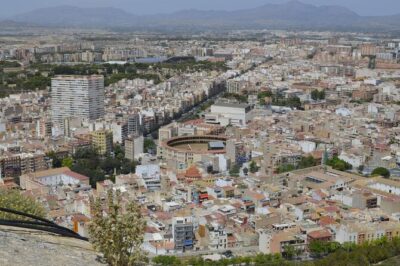
Alicante: Visit with Audio Guide Bullring and Bullfighting Museum
Read our review →This one also appears in