
Review · MADRID
Las Ventas Madrid Bullring & Bullfighting Museum with Audioguide
Las Ventas is more than a bullring. It is a striking Neo-Moorish building, a working arena, and a window into one of Spain’s most debated traditions. With an audio guide in hand, you can enter the ring, inspect the matadors’ passageways, and learn how a corrida unfolds without attending an actual bullfight.
I like the freedom to arrive during opening hours and explore at your own pace. I also like the mix of old and new, from Goya’s bullfighting prints and embroidered costumes to the virtual reality bullfight. The main caution is that parts of the arena may close for construction, special events, or bullfighting, so the route is not always identical.
Key points to know before visiting
- Walk into the actual arena: See the sand, seating tiers, gates, and the alleyway behind the ring.
- Follow the story with an audio guide: Learn the rules, roles, rituals, and history without keeping up with a group.
- Look for the Door of Madrid: This is the exit used by victorious matadors, one of the best photo spots inside.
- Study Goya and matador costumes: The museum covers Spanish bullfighting through art, clothing, and objects linked to Las Ventas.
- Try the virtual reality features: Experience the San Isidro Fair and take part in a simulated bullfight.
- Plan around the calendar: The tour does not operate normally on bullfight days, and construction or events can change access.
Why Las Ventas matters in Madrid
Las Ventas is often called the Bullfighting Cathedral. That grand nickname tells you how seriously the venue is regarded within Spanish bullfighting, but you do not need to support the sport to find the visit worthwhile. The building, rituals, art, and social history offer plenty to consider on their own.
The bullring was built in 1929 on land known as Las Ventas del Espíritu Santo, which gave the venue its name. It opened as one of Spain’s major arenas and now covers about 45,800 square meters, with room for 23,797 people.
That size becomes clear as you walk through the seating levels and look down toward the ring. You can picture the crowd, musicians, officials, medical staff, horsemen, and matadors all working within one tightly controlled space. The audio guide helps explain who does what and why each part of the arena matters.
I find this useful because a bullfight can seem confusing if you have no background. The visit explains the order of events, the people involved, the meaning of the gates, and the traditions connected to success or failure. You get context before deciding if you want to attend a live event.
More Bullfights and Bullrings in Madrid:
- Las Ventas: Bullfighting Hall, Museum and Tour of the Bullring
★ 5.0 · 78 reviews - Alicante: Bullring and Bullfighting Museum Entry Ticket
★ 4.6 · 326 reviews - Alicante: Visit with Audio Guide Bullring and Bullfighting Museum
★ 4.5 · 63 reviews
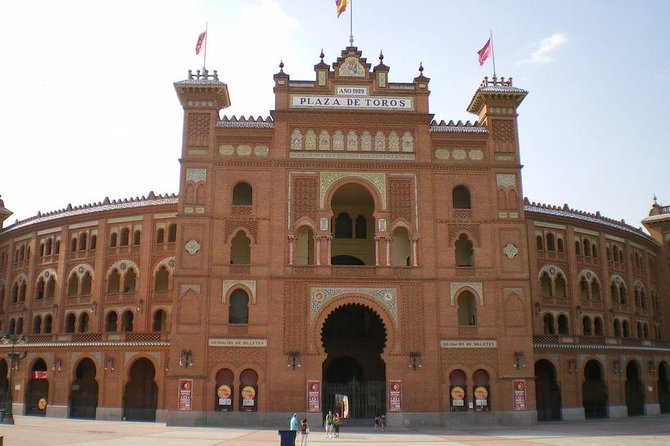
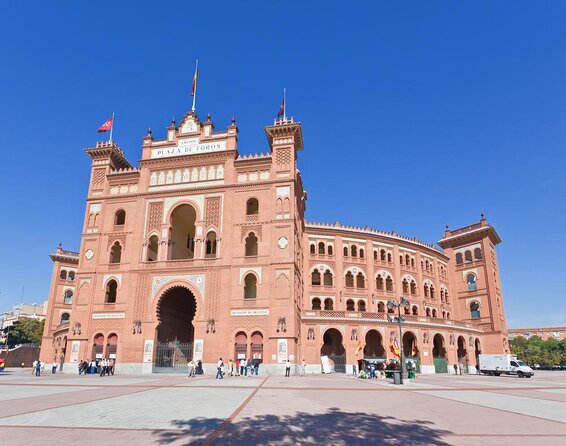
The Neo-Moorish façade and the main entrance
Give yourself a few minutes to look closely at the building before heading inside. Las Ventas uses exposed brick, ceramic decoration, tiled details, and glazed plaques that display the emblems of Spanish provinces.
The design is Neo-Moorish, a style that draws on Islamic architectural forms associated with Spain. The curves, colors, tilework, and patterned surfaces make this very different from Madrid’s grander stone museums and royal buildings.
The exterior is especially good for photographs. The main entrance has the visual weight of a ceremonial gateway, while the surrounding arches and tiles reward a slower look. If you rush straight to the museum, you will miss much of what makes Las Ventas special.
The audio guide adds useful background, but it is worth pausing even when no recording is playing. This is one of those Madrid sights where the building itself gives you a sense of place.
Inside the arena: seating, sand, and the callejón
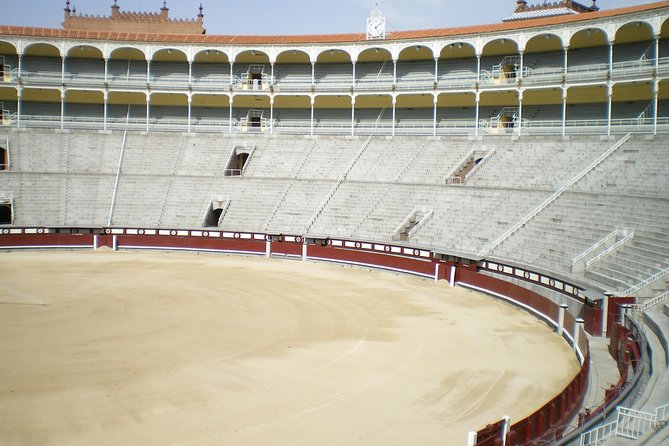
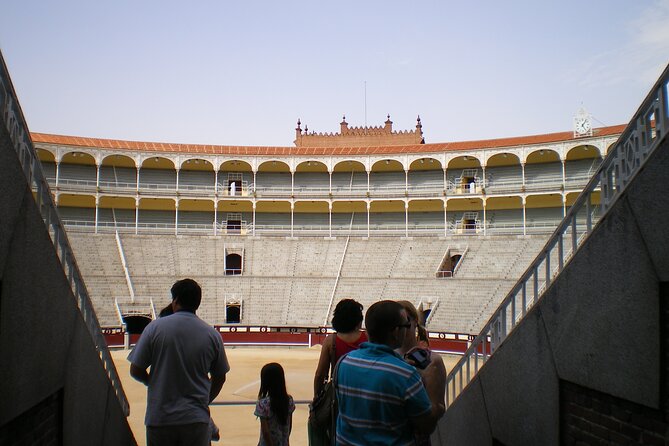
The heart of the visit is the ring. You can enter the arena and look back at the rows of seating, known as the tendidos. From the sand, the building feels much larger than it does from outside.
Take a moment to consider the view from several angles. The lowest seating is close to the action, while higher levels give you a better sense of the full circular design. The arena was built to focus every eye toward the center, and the layout still does that even when the ring is empty.
You also see the callejón, the narrow alleyway that runs around the ring behind the barrier. It is part of the working area used by matadors and other staff, and it helps you understand the physical risks and tight organization of a bullfight.
This is one of the most useful parts of the tour for visual learners. Instead of only reading about a corrida, you can see the distances, gates, barriers, and escape routes for yourself. The audio guide turns these spaces into part of a story rather than empty corridors.
The exact route can change. Construction has sometimes blocked sections of the arena, and special events can lead to a shortened visit. If the ring or a passageway is partly closed, ask at the entrance what remains accessible before you begin.
The Door of Madrid and the rituals of success
Las Ventas has several important gates, and the Door of Madrid is one of the most memorable. It is associated with victorious matadors leaving the arena after a strong performance.
Walking toward this gate gives the audio guide a chance to explain the prizes and customs of the sport. The president of a bullfight can award ears and, in some cases, a tail as trophies. These rituals may sound strange at first, but the visit explains how they fit into the old rules of recognition.
The door also gives you a clear photo opportunity. You can stand near the exit and imagine the public celebration that follows a successful fight. It is a small detail, but it helps connect the architectural tour with the ceremony that makes the arena a living venue.
If you are visiting Madrid with children or with someone who does not want to attend a bullfight, this part offers a way to discuss the sport without placing anyone inside a live performance.
More sporting days out around Madrid:
- Madrid: Tour Bernabéu Entry Ticket
★ 4.5 · 21,573 reviews - Madrid: Atlético de Madrid Stadium Entry
★ 4.7 · 2,022 reviews - Madrid: Guided Tour of Bernabéu Stadium
★ 4.1 · 1,445 reviews - Madrid: Bernabéu Stadium Guided Tour With Megafan Upgrade
★ 4.6 · 873 reviews
The Madrid Bullfighting Museum
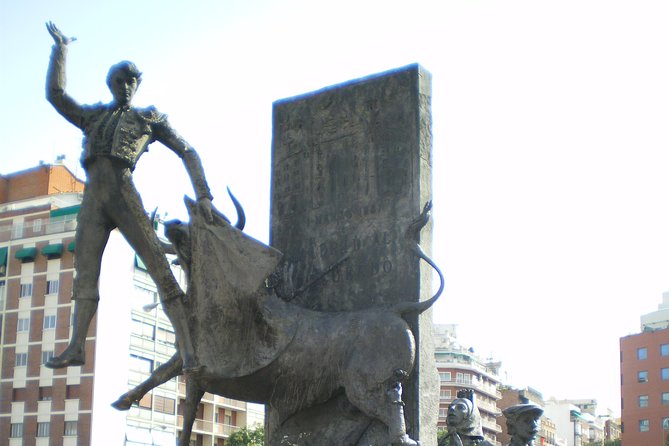
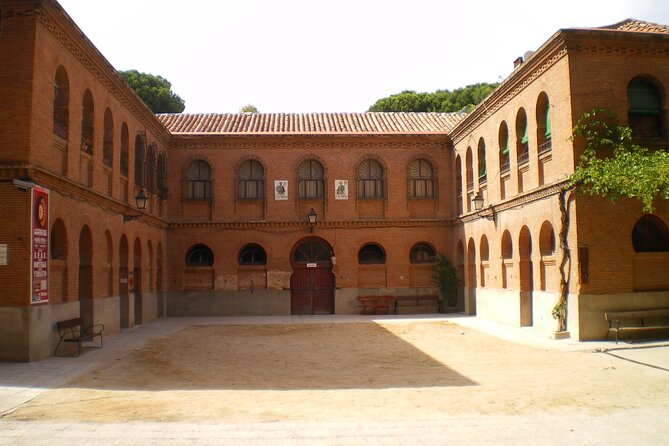
The museum is located in the Patio de Caballos, an important section of the building. It brings together art, clothing, personal objects, and material connected with Las Ventas.
The Goya engravings are among the most important pieces. Goya’s tauromachy prints show how bullfighting entered Spanish art and public culture. They also give you an earlier view of the sport, before modern arenas and twentieth-century celebrities shaped its image.
The museum also displays bullfighters’ costumes from the twentieth century. These outfits, known as trajes de luces, are heavily decorated and made for spectacle as well as movement. Capes and other equipment help explain the visual language of a bullfight, where color, posture, and controlled gestures matter.
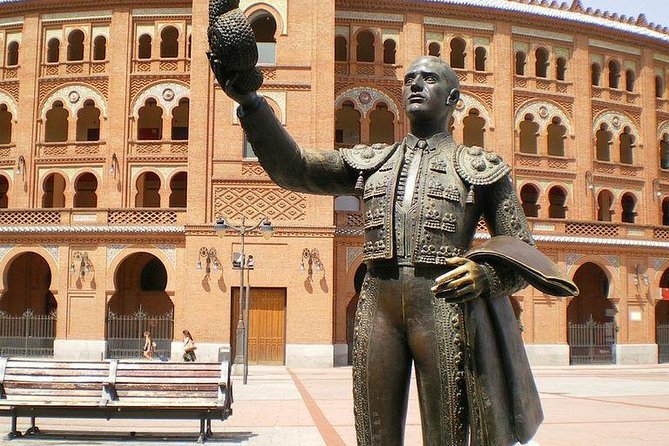
A section devoted to Manolete adds a more personal focus. His name is closely linked with Spanish bullfighting, and the display helps place one famous figure within the wider story of the sport.
The collection also includes many objects connected with the birth and development of Las Ventas. I would allow extra time here instead of treating the museum as a quick add-on. The arena shows you the setting, while the museum explains the people, clothing, art, and memory attached to it.
There is some conflicting information about museum admission. The tour package describes museum entry as included, while the venue has also been described as allowing free museum access in certain circumstances. Your practical concern is simple: ask at the box office how the museum is being handled on the day of your visit, especially if restoration work has affected access.
Virtual reality and interactive features
The tour includes a virtual bullfighting experience and a San Isidro Fair 360º virtual reality feature. These activities add a modern layer to a site that can otherwise feel formal and museum-like.
The virtual experience places you inside a simulated bullfight and lets you see what the arena might feel like from the matador’s position. Some versions also use interactive movement, including a cape sequence. The aim is not to reproduce every detail of a live event, but to give you a sense of timing, proximity, and physical pressure.
There are also photo opportunities that place your face into matador-style images. These are lighthearted and work well for families or groups. The virtual reality headset is shared equipment, so I would be comfortable asking staff if it can be cleaned between uses.
These features are not the main reason to visit Las Ventas, but they help younger visitors stay engaged. They also make the visit feel less like a static museum tour. If a machine is temporarily unavailable, the arena and museum still provide the substance of the experience.
How the audio guide works
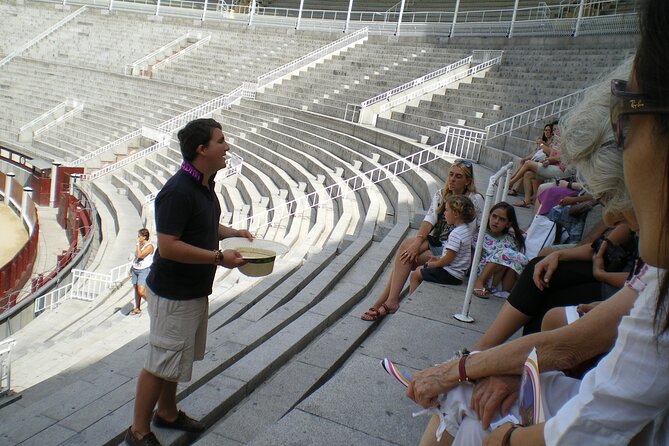
This is a self-guided visit rather than a live tour. You receive access to an audio guide and move through the building in your own time. That format suits you if you like to stop for photographs, replay information, or spend longer in the museum.
The commentary covers the history of bullfighting in Spain, the design of Las Ventas, the roles of the participants, and the meaning of the major gates and spaces. It is designed to explain the sport clearly without requiring specialist knowledge.
A live guide would give you the chance to ask questions, which is the main thing you miss here. On the other hand, a self-guided format avoids the pressure of following a group and makes it easier to keep your attention on the parts you find most interesting.
Audio quality can depend on the surroundings. Construction noise and metal grinders have interfered with listening at times, so bring patience if work is underway. If you use your own headphones, check what the venue provides before assuming they are supported.
Timing, opening hours, and special events
The visit takes about one hour, but you can stay longer if the building is open and you want more time in the museum. I would allow at least 60 to 90 minutes if you plan to study the exhibits and try the interactive features.
The listed seasonal schedule is:
- From May through October: 10 a.m. to 7 p.m., with last entry at 6:15 p.m.
- From November through April: 10 a.m. to 6 p.m., with last entry at 5:30 p.m.
Another published schedule lists 10 a.m. to 6 p.m. from December through March, so check the date-specific hours before setting out. On bullfight days, the tour may end three hours before the show. During the San Isidro Fair, visits are listed from 10 a.m. to 3:30 p.m., and during the Autumn Fair, from 10 a.m. to 4 p.m.
The tour does not operate normally on days of bullfighting. Special events, force majeure, or venue work can also change the route. If your visit is important to your schedule, confirm the hours close to the date and arrive with some flexibility.
Las Ventas is near public transportation, including a Metro stop directly outside the venue. That makes it an easy addition to a Madrid day without a long walk from the city center.
Is the $20.52 price good value?
At $20.52 per person, I consider this a fair price if you want more than a quick look at the façade. The ticket includes the bullring visit, audio guide, museum access as handled by the venue, virtual bullfighting, and the San Isidro Fair virtual reality feature.
The value depends on how much time you spend. If you rush through in 30 minutes, the price feels less attractive. If you use the audio guide, enter the ring, examine the museum, and try the interactive displays, you get a solid hour or more of cultural context.
There is no hotel pickup, food, or drink included. An on-site café is available, but budget separately for refreshments. Since the venue is easy to reach by public transportation, you do not need to pay for a transport package to make the visit convenient.
You also get flexibility. The ability to arrive during opening hours is useful on a busy Madrid itinerary, though you should still check the exact schedule and event calendar.
Who should book this visit?
I would recommend it to anyone curious about Spanish culture, architecture, public rituals, or the history of bullfighting. It is also a good choice if you want to understand the sport before attending a live corrida.
Families can use the virtual reality and photo features to break up the museum visit. Art lovers will find the Goya prints and costumes more rewarding than the simulator. Architecture fans should spend extra time outside and around the tiled entrances.
You may want to skip it if bullfighting is a subject you find too upsetting, since the tour explains and presents the tradition rather than avoiding its central rituals. You also should not book it on a tight schedule if construction or an event could reduce access.
Should you book Las Ventas?
Book this experience if you want a flexible introduction to bullfighting without committing to a live event. The best parts are the chance to walk into the arena, understand the callejón and ceremonial gates, and connect the building with art, clothing, and Spanish history in the museum.
I would schedule it for about 90 minutes, check the current opening hours, and confirm that the museum and full arena route are operating. If you approach Las Ventas as a cultural visit rather than only a sports attraction, the ticket offers good value and a much clearer understanding of why this controversial tradition still matters in Spain.
FAQ
How long does the Las Ventas visit take?
The stated duration is about one hour. You can spend longer inside while the venue remains open, especially if you want time for the museum and virtual reality features.
Is the tour guided by a live person?
No. This is a self-guided visit with an audio guide. You explore at your own pace rather than following a live group leader.
Is the audio guide included?
Yes. The package includes access to the Las Ventas audio guide and the Bullfighting Museum audio guide.
What does the museum contain?
The Madrid Bullfighting Museum includes Goya’s bullfighting engravings, twentieth-century bullfighters’ costumes, a section devoted to Manolete, and objects connected with the history of Las Ventas.
Can I enter the actual bullring?
Yes. The visit includes access to key areas of the venue, including the arena, seating levels, the callejón, and important gates such as the Door of Madrid. Access can change during construction or special events.
Does the ticket include virtual reality?
Yes. The experience includes virtual bullfighting and a San Isidro Fair 360º virtual reality feature.
Does the tour operate on bullfight days?
The tour does not operate normally on days of bullfighting. On some event days, the visit may end several hours before the show, and the route may be changed.
What happens if I need to cancel?
You can receive a full refund if you cancel at least 24 hours before the experience start time. Cancellations or changes made less than 24 hours beforehand are not refunded or accepted.
New on the fixture list around Madrid
- Santiago Bernabeu Stadium Real Madrid Private Tour & Tickets★ 5.0 · 5 reviews
- Real Madrid: Bernabeu Stadium SelfGuided Tour & Wine tasting★ 5.0 · 8 reviews
- Madrid City Pass: Prado, Thyssen, Bernabéu, Flamenco & more★ 3.2 · 6 reviews
- Madrid: Private Santiago Bernabéu Guided Tour★ 4.3 · 13 reviews
- Madrid: Tour with Tuk Tuk Zero: Bernabéu and the Golden Mile. 1h 15min★ 4.3 · 3 reviews
- Madrid: Bernabeu Stadium and Museum Tour + Tapas★ 5.0 · 7 reviews
- Bernabeu Premium Guided Tour: passion, trophies, & the heart of Real Madrid★ 5.0 · 6 reviews
- Atlético de Madrid Stadium Tour and Honorary Kick-Off★ 4.2 · 9 reviews
More Bullfights and Bullrings to weigh up.
Alicante: Bullring and Bullfighting Museum Entry Ticket
Read our review →
Las Ventas: Bullfighting Hall, Museum and Tour of the Bullring
Read our review →
Alicante: Visit with Audio Guide Bullring and Bullfighting Museum
Read our review →This one also appears in