

Review · SPAIN
Gijon : El Molinón Stadium Guided Tour
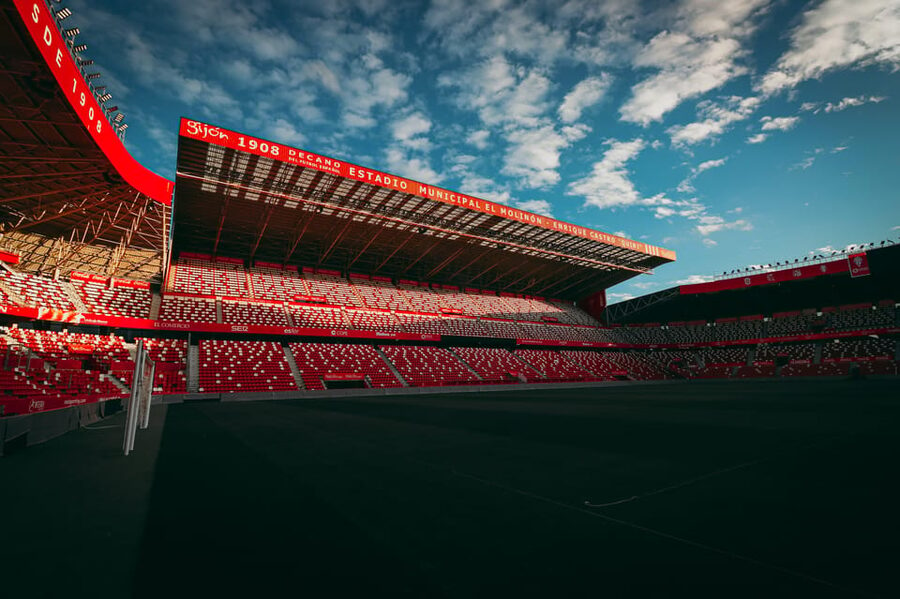
El Molinón is not just a stadium with seats and floodlights. It is Spain’s oldest football stadium, and this tour lets you step into the working spaces normally closed on non-matchdays. You move from the press conference room to the changing rooms, down the historic tunnel, and out beside the pitch.
I like two things here: the route follows the same path a player takes, and the visit gives you club history through real places rather than only display cases. The chance to sit in the dugout and see the shirts in the museum adds plenty for football fans.
The main thing to watch is the timing. The activity is sold as one hour, while the detailed description says approximately one hour and 30 minutes, so check the available start time and allow room in your day. A Spanish or English-speaking guide is available, with guide Laura receiving particular praise.
Key points to know before you go
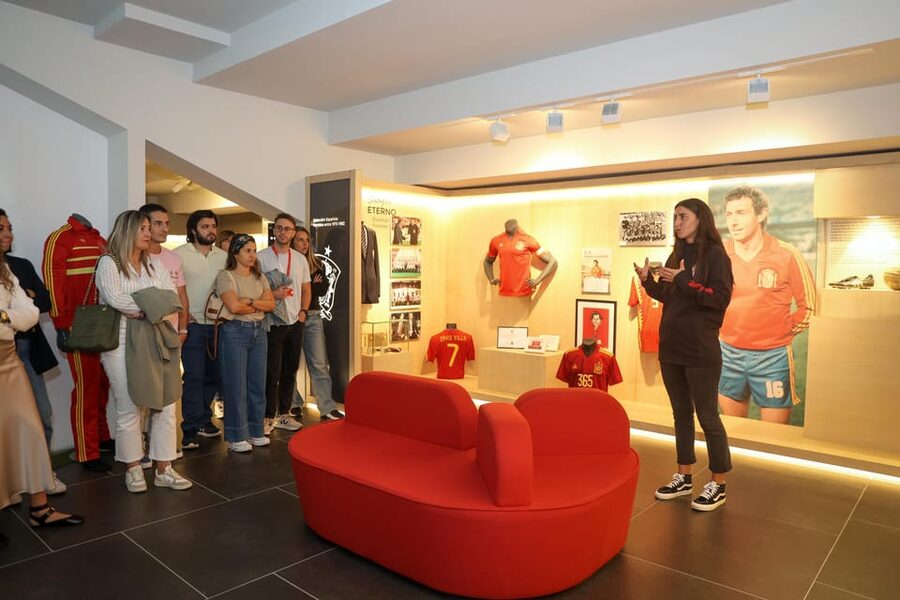
- Walk through the player route: Visit the press room, mixed zone, changing rooms, tunnel, pitchside, and dugout.
- See El Molinón’s football setting: This is a stadium tour in the heart of Gijón, not a general city sightseeing walk.
- Hear about Real Sporting de Gijón: The guide explains the club’s story and the culture connected with its supporters.
- Finish with the museum and shop: Shirts and club displays give the tour a clear ending.
- Choose your language carefully: English and Spanish tours are offered, but English should be requested when booking.
- Allow flexible time: The advertised duration varies between one hour and roughly 90 minutes.
Why El Molinón makes a good stop in Gijón
Football stadium tours can sometimes feel like a quick walk through empty corridors. El Molinón has a stronger reason for being here. Its age gives the visit a sense of place, and its connection with Real Sporting de Gijón gives the tour a local focus.
You are not simply looking at a famous building. You are following the spaces used before a match, during media duties, and on the way to the field. That helps you understand how a football club functions away from the noise of match day.
I also like the setting. El Molinón is in Gijón, on Spain’s north coast, so the tour fits neatly into a city visit. It is a practical choice for football fans, families, and anyone curious about local identity. You do not need to follow Spanish football closely to understand the route. The guide gives the places meaning as you go.
The experience costs about $21 per person. That is a reasonable price for a guided visit lasting around an hour, especially because several areas are normally restricted to the public on non-matchdays. The value depends on what you want from a stadium tour. If you are looking for a long museum visit with a large collection, this may feel brief. If you want access to behind-the-scenes football spaces, it offers a focused and fairly priced hour.
More Stadium Tours in Spain
- Madrid: Tour Bernabéu Entry Ticket
★ 4.5 · 21,573 reviews - Madrid: Atlético de Madrid Stadium Entry
★ 4.7 · 2,022 reviews - Bilbao: San Mamés Museum and Stadium Tour
★ 4.8 · 1,464 reviews
Starting at Puerta 0
The meeting point is Puerta 0 of El Molinón. Plan to arrive at least 10 minutes early. That small buffer matters because the tour has a set starting time, and you will want to find the entrance without rushing.
The visit is guided rather than self-directed. That is useful here because much of the appeal comes from knowing what each area means. An empty press room or tunnel can look ordinary if you do not know how players, coaches, and journalists use it. A guide connects each stop to match preparation and club life.
Tours are available in Spanish and English. English should be requested by the customer, so do not leave the language question until the last moment. If you are visiting with children or with someone who does not speak Spanish, confirming this in advance is sensible.
The published information gives the duration as one hour, while the longer description says approximately one hour and 30 minutes. Treat it as a compact visit, but do not schedule your next activity immediately afterward.
Taking the coach’s seat in the press room
The first major stop is the press conference room. This is where coaches and players answer questions before and after matches. The tour gives you a chance to sit in the setting used for those interviews and see the stadium from the media side.
This is a good opening because it moves you into the club’s public world before taking you behind the scenes. Football is not only played on the field. Press conferences shape how a club speaks to supporters, journalists, and opponents.
You might enjoy this stop most if you like the human side of football. It lets you imagine the pressure before a match, when a coach must explain a lineup or a player must face questions after a difficult result. The stop is also family-friendly in spirit, since children can play along with the idea of being interviewed like a professional.
Do not expect an extended media workshop or a staged performance. The value comes from standing in the actual room and hearing the guide explain its role.
Seeing the mixed zone and VIP areas
From the press room, the route continues through the mixed zone. This is where players and opponents speak with journalists after matches. It is a functional space, but it gives you another view of the club’s matchday routine.
The mixed zone helps explain what happens between the final whistle and the outside world. Players do not simply leave the field and disappear. They pass through a controlled area where media interviews take place, often while emotions are still high.
The tour also includes the VIP areas. This adds a different perspective to the player route. You see where important guests watch the action before continuing toward the team areas.
I like the contrast between these stops. The press room is formal and public. The mixed zone is more immediate. The VIP areas show the polished side of the stadium. Together, they make the building feel like a workplace with many roles, not just a container for football matches.
Same city, another way to catch the action:
- Barcelona: FC Barcelona Museum “Barça Immersive Tour” Ticket
★ 4.4 · 10,944 reviews - Madrid: Guided Tour of Bernabéu Stadium
★ 4.1 · 1,445 reviews - Camp Nou Immersive Tour F.C.Barcelona Museum: Open Date Ticket
★ 4.0 · 1,307 reviews - Madrid: Bernabéu Stadium Guided Tour With Megafan Upgrade
★ 4.6 · 873 reviews
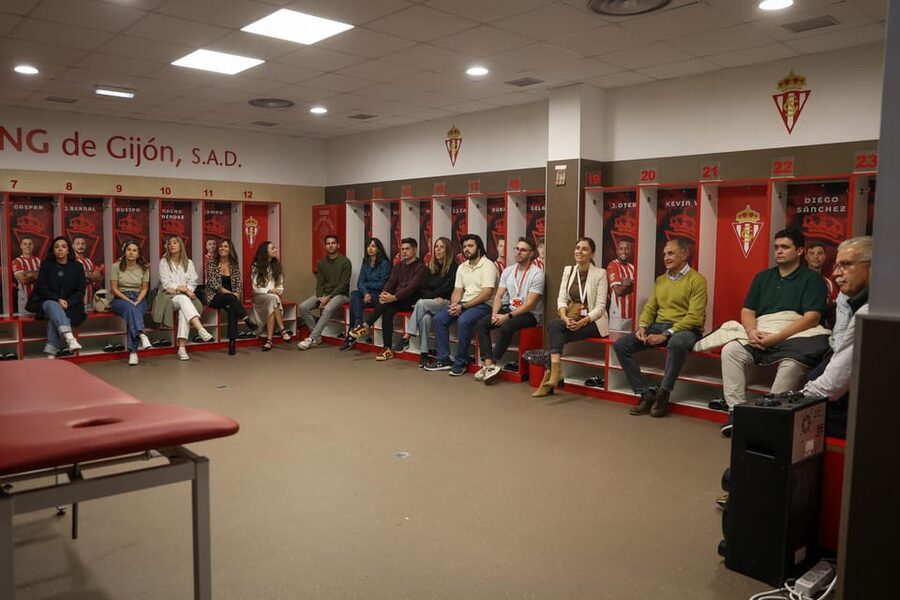
Entering the changing rooms
The changing rooms are one of the strongest parts of the route. Access to them is a major difference between this experience and simply visiting a stadium during a public event.
This is where players prepare, change, and gather before walking onto the field. The guide uses the room to explain club life from the team’s point of view. You begin to see the stadium not as a spectator but as someone preparing to play.
The changing rooms were specifically praised as part of the visit, along with the field and press room. That combination makes sense. These are the places most supporters normally see only from a distance or through television coverage.
The room itself may not take a long time to visit, and the experience is not a chance to handle equipment or enter private areas beyond the tour route. Still, the access is meaningful. For a young football fan, this may be the moment that makes the whole tour worthwhile.
Walking through the historic tunnel to pitchside
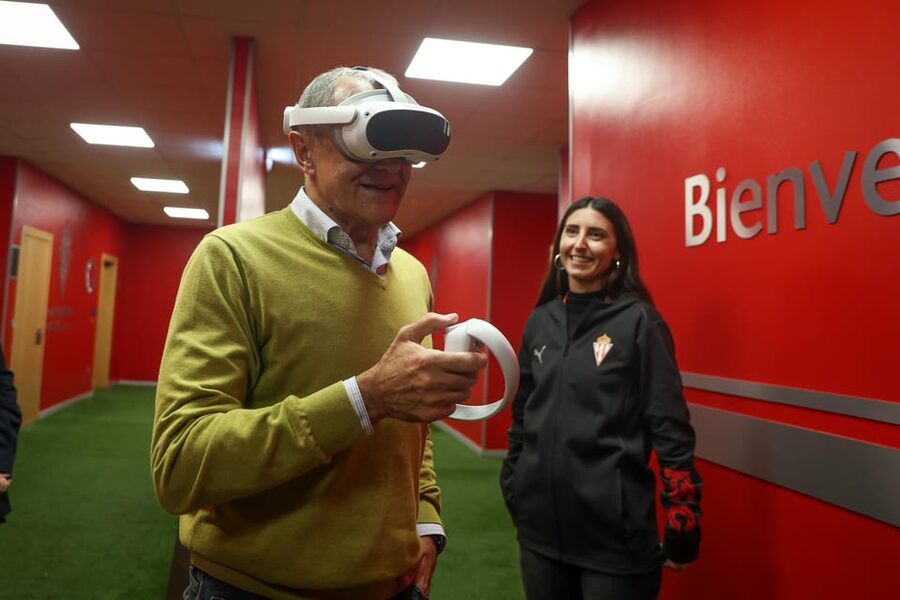
After the changing rooms, you follow the historic tunnel toward the pitch. This is the part that most clearly changes your point of view. Instead of looking down from the stands, you approach the field as players do.
The route gives you a sense of the transition from private preparation to public performance. A few steps separate the changing room from the pitch, but the mood changes completely. One area is controlled and enclosed. The other opens onto the stadium and the crowd.
You should not expect to walk across the playing surface unless the guide specifically allows it. The description promises pitchside access and a view from the players’ perspective, not unrestricted time on the grass. That distinction is worth keeping in mind if you are booking mainly for a field photo.
Even so, pitchside access is a real strength. It helps you understand the scale and layout of El Molinón in a way that seats alone cannot.
Resting in the dugout
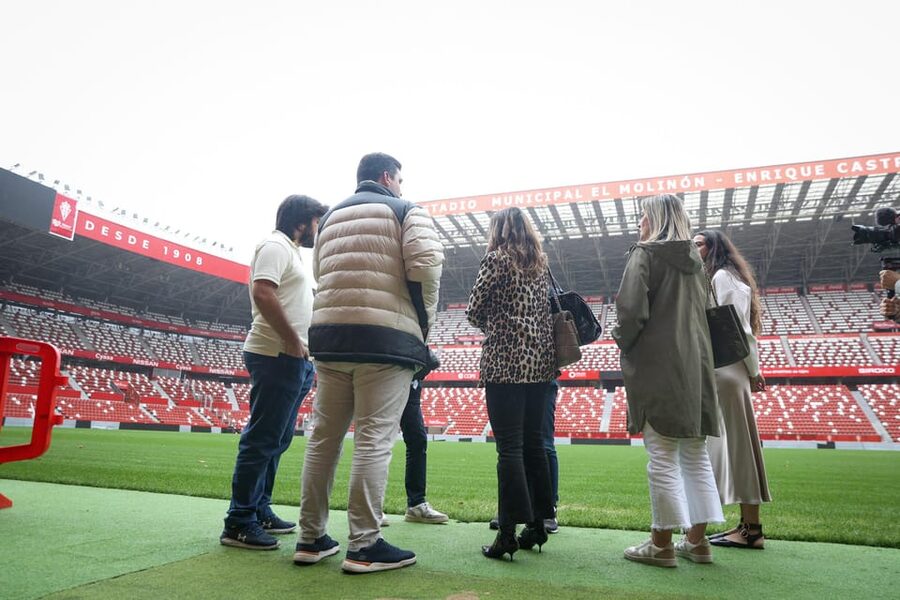
The tour then takes you to the dugout, where you can sit in the area used by the coaching staff and substitutes. This is a small stop, but it is one of the most enjoyable for visitors who want a complete matchday picture.
From the dugout, you are close to the action but not on the field. Coaches watch patterns develop, substitute players wait for their chance, and staff react to every change in the game. Sitting there gives you a brief look at football from the technical area rather than from the stands.
The description presents this as a chance for a well-deserved rest after walking through the stadium. In practice, it is also a good photo opportunity. The tour is designed to let you move through the club’s working spaces, and the dugout provides a natural pause before the final museum section.
Finishing with shirts and club history
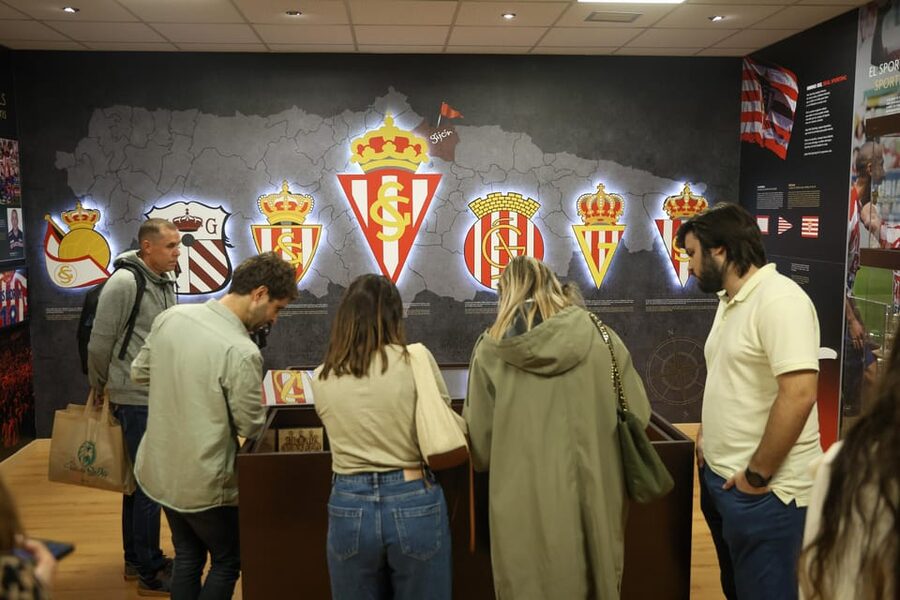
The final major stop is the museum. Here, the focus shifts from stadium access to the story of Real Sporting de Gijón and El Molinón.
The museum includes shirts on display, a detail that has made a strong impression on visitors. A football shirt can tell you plenty about a club. It shows changing designs, eras, identities, and the way supporters carry a team beyond match day.
The museum is likely to appeal most to fans who already know the club, but the guide makes it more useful for newcomers by explaining the background. You get context for the places you have just visited. The changing rooms, tunnel, dugout, and press room are no longer separate stops. They become parts of one club story.
The museum is not described as a huge collection, so set your expectations accordingly. This is a stadium tour with a museum finish, not a full-day football archive. Its strength is the connection between the objects and the building around you.
Ending in the club shop
The route finishes in the club shop. You can look at Sporting de Gijón merchandise and buy a shirt or other item if you want to take the club connection home.
This final stop is optional in spirit, even if it forms part of the route. You are not required to make a purchase. The shop simply gives the tour a natural ending and lets new supporters begin their connection with the club.
For families, this can be a fun finish. One review described a visiting child from Galicia and Ferrol as now being a Sporting supporter, which captures the tour’s appeal for young football fans. A child does not need to know the club’s complete story to enjoy walking through the tunnel, sitting in the dugout, and seeing the shirts.
Who will enjoy this stadium visit
I would choose this tour for:
- Real Sporting de Gijón supporters who want access to areas closed on matchdays or non-matchdays
- Football fans building a sports-themed trip through Spain
- Families with children who enjoy football and behind-the-scenes access
- Visitors curious about Gijón’s local culture
- Anyone who wants a short guided activity rather than a large museum visit
It is less suitable if you want a broad tour of Gijón, a long historical lecture, or unrestricted access to every part of the stadium. The experience stays focused on the club and its home ground.
The language matters too. Spanish and English are offered, but English is available upon request. Confirming that detail is especially important if the history and guide commentary are central to your decision.
Timing, booking, and practical value
The meeting point is Puerta 0, and arriving 10 minutes early is recommended. The activity offers free cancellation up to 24 hours before the start for a full refund, and you can reserve now and pay later. Those terms help if your Gijón plans are still moving around.
The duration needs a little care. The main details call it one hour, while the fuller description says approximately one hour and 30 minutes. I would plan for the longer figure, especially if you want time for photos, questions, and the shop.
At $21 per person, this is good value if restricted areas matter to you. The press room, mixed zone, changing rooms, tunnel, pitchside, dugout, and museum create a fuller visit than a simple stand view. The price is less compelling for someone who is indifferent to football, though the local club story may still hold your interest.
The tour has a rating of 4.6 from nine reviews, with especially strong praise for the guide, the changing rooms, the pitch, the press room, and the shirt displays. Guide Laura has been named positively, so if she is leading your tour, you can expect a personal touch based on the response to her work.
Should you book the El Molinón tour?
Book it if you want to see how a football club works behind the scenes, not just where supporters sit. The route is short, clear, and packed with the places that give a stadium its working character.
I would make it a priority for Sporting supporters and families. For casual visitors, the decision depends on your interest in football and on how well the start time fits your day in Gijón. Check the language and duration before paying, then arrive early at Puerta 0.
For $21, the chance to walk through the changing rooms, follow the player tunnel, sit in the dugout, and see club shirts in the museum makes this a solid specialist stop. You leave with a better sense of Real Sporting de Gijón and with a view of El Molinón that ordinary spectators rarely get.
FAQ
Where does the El Molinón Stadium Tour begin?
The tour begins at Puerta 0 of El Molinón stadium.
How early should I arrive?
You should meet at the entrance at least 10 minutes before the tour begins.
How long does the tour last?
The activity information lists a duration of one hour. The detailed description says approximately one hour and 30 minutes, so allow extra time and check the schedule when booking.
What languages are available?
The tour is available in English and Spanish.
Do I need to request an English tour?
Yes. English is available upon request by the customer, so confirm your preferred language when booking.
What areas of the stadium can I visit?
The route includes the press conference room, mixed zone, VIP areas, changing rooms, historic tunnel, pitchside, dugout, museum, and club shop.
Can I visit the changing rooms?
Yes. The changing rooms are included in the guided route.
Can I see the field?
Yes. The tour takes you pitchside and gives you a view of the stadium from the players’ perspective.
Is a museum visit included?
Yes. The tour includes a museum section about Real Sporting de Gijón and El Molinón, with shirts on display.
Can I cancel for a full refund?
You can cancel up to 24 hours in advance for a full refund.
Do I have to pay when I book?
The reserve-now, pay-later option lets you book your place without paying immediately.
New on the fixture list around Spain
- Spotify Camp Nou Tour F.C. Barcelona Museum (Open Date Ticket)★ 3.5 · 5 reviews
- Transport Barcelona★ 4.5 · 2 reviews
- Private 4h Tour Of Camp Nou And Most Emblematic Sites Of Barcelona with pick up★ 4.5 · 3 reviews
- Discover Leo Messi’s secrets at Barça Café – Camp Nou★ 5.0 · 22 reviews
- BARCELONA SPORTS VIP – Camp Nou – La Masia & Montjuic (Olympic)★ 4.5 · 3 reviews
- Olympic and Sport Museum of Barcelona “Joan Antoni Samaranch”★ 4.5 · 22 reviews
- Explore Spotify Camp Nou Immersive Tour of Barcelona’s Stadium★ 3.0 · 2 reviews
- Football Club Barcelona Museum Immersive Tour Guided Visit★ 3.5 · 52 reviews
More Stadium Tours in Spain to weigh up.

Camp Nou Immersive Tour F.C.Barcelona Museum: Open Date Ticket
Read our review →
Madrid: Bernabéu Stadium Guided Tour With Megafan Upgrade
Read our review →
Sevilla: Ramón Sánchez Pizjuán Stadium Entry Ticket
Read our review →
Bernabeu Stadium & Real Madrid Museum Guided Tour
Read our review →This one also appears in