
Review · SERBIA
Football tour: Red Star and Partizan Ultras History
Belgrade’s football rivalry is not confined to match day. It is painted across neighborhood walls, tied to local identity, and kept alive in the streets. This Red Star and Partizan tour gives you a close look at that world, then takes you inside both major stadiums.
I like the route for two clear reasons: you see real fan districts rather than only polished city sights, and you get unusual access to places such as the Red Star museum and Partizan pitch. The main drawback is that the subject includes ultras and hooligan culture, so it may feel intense if you want a light, purely sports-focused outing.
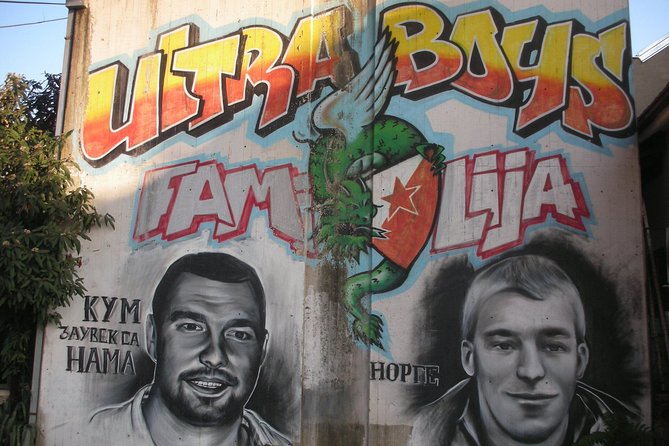
- Dorcol reveals Partizan’s fan territory through murals, pubs, and local streets.
- Senjak holds some of Red Star’s oldest graffiti, including work dating from the 1990s.
- Red Star’s Marakana includes a club museum with trophies, flags, documents, and the 1991 Champions League trophy.
- Partizan Stadium offers pitch access and views across Belgrade.
- Guides such as Andrija and Tihomir add personal context about football, fandom, and Serbian society.
- A beer inside one stadium gives the tour a relaxed break from its heavier historical themes.
Why Belgrade football begins in the neighborhood
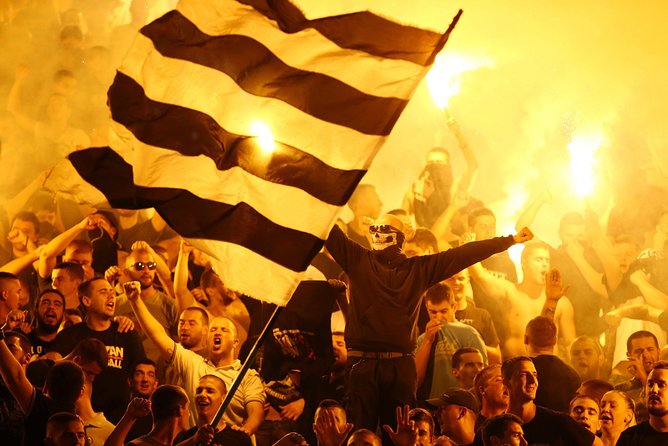
The best part of this experience is that it treats football as a city story, not just a stadium visit. Red Star and Partizan are Serbia’s two biggest rivals, and their supporters have shaped parts of Belgrade for decades.
You begin at Student Park, Studentski trg 16, at 10:00 a.m. From there, the guide leads you through streets where club loyalty is visible on walls and around local hangouts. This walking start matters. You get a sense of how fandom belongs to ordinary neighborhoods, not just to a ticketed match.
The tour is offered in English and lasts about three to four hours. That gives you enough time for walking, conversation, stadium visits, and the museum without turning the day into a rushed checklist.
Guides named Andrija and Tihomir have both been praised for their personal approach. Andrija, in particular, has helped visitors find a Red Star match later in the day and even joined one for a basketball game the following day. That does not form part of the standard tour, but it shows the kind of local sports connection you may find if you ask for advice.
Dorcol: Partizan murals and cafe streets
The first neighborhood is Dorcol, associated here with Partizan supporters. You spend about an hour walking through an area known for supporter graffiti and murals dedicated to football players and clubs.
Dorcol is not only a football district. It is also a popular part of Belgrade with bars, pubs, and attractive older streets. That gives this stop a useful balance. You can look at fierce slogans and fan art, then pause to notice the everyday city around them.
The murals are the main attraction. They offer clues about the way supporters present their club, honor players, and mark territory. Your guide explains the symbols and stories rather than leaving you to guess at unfamiliar names or Serbian text.
This is also the most walking-heavy part of the tour. Wear comfortable shoes, especially if you plan to continue exploring Belgrade afterward. The exact number of stops can depend on the pace of the group and the guide’s explanation, but the scheduled time is one hour.
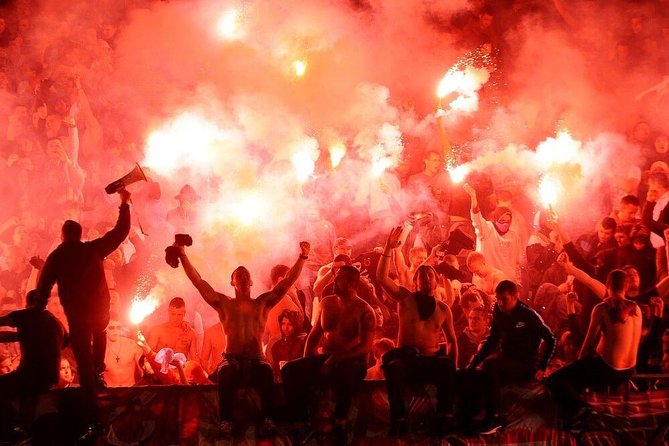
The subject can be serious. Ultras are organized, passionate supporter groups, and some have links to hooligan culture. The tour presents their social effect and place in Serbian football history, so you should expect more than harmless wall art. It is best suited to visitors who want context and are comfortable discussing the harder side of football fandom.
More sporting history around the world:
- Tour of Historic Fenway Park, America’s Most Beloved Ballpark
★ 4.5 · 3,013 reviews - St Andrews: Golf Origins and Old Course History Tour
★ 4.7 · 322 reviews - Krabi: Ao Nang Landmark Stadium Muay Thai
★ 4.7 · 287 reviews
Senjak and Red Star’s older graffiti
From Dorcol, the tour continues to Senjak, a neighborhood linked with Red Star supporters. This visit lasts about 20 minutes, but it carries unusual weight because the area includes some of the oldest football graffiti in Belgrade.
The murals here date from the 1990s and are said to be guarded around the clock by fans. That detail gives the stop a different feel from a normal city art walk. The graffiti is not presented as disposable street decoration. It is part of a living supporter identity.
You will not spend as long in Senjak as in Dorcol, so think of this as a focused stop rather than a full neighborhood tour. The value comes from what the guide can explain about the age of the murals, Red Star’s supporters, and the rivalry between the two clubs.
This short visit also helps the route make sense. You have seen Partizan’s district first, then moved into Red Star territory. The rivalry becomes easier to understand when you see how both clubs claim space across the city.
Red Star’s Marakana and the 1991 European Cup
The major stadium stop is Red Star Belgrade Stadium, widely known as Marakana. You spend about two hours here, including the club museum.
The museum contains trophies, flags, important club documents, and the 1991 European Cup trophy, now commonly referred to as the Champions League trophy. Red Star’s win is one of the defining achievements in Eastern European club football. The tour points out that Red Star is one of only two Eastern European clubs, alongside Steaua Bucharest, to have won this trophy.
For a football fan, this is the tour’s strongest historical stop. The silverware gives you something concrete to focus on, while the documents and flags show how the club has built its identity over time. You are not simply looking at an empty ground. You are seeing the objects that give the club its status.
The visit also includes stadium access, and the wider experience allows you to sip a beer inside one of the grounds. The supplied details do not specify exactly where or when the beer is served, so treat it as part of the stadium experience rather than a guaranteed restaurant-style stop.
Two hours is a generous allocation. That can be a benefit if you want to ask questions and study the displays, though football-neutral visitors may find this the longest section. If you already know Red Star’s story, the guide’s explanation of Serbian football and supporter culture can keep the visit worthwhile.
The stadium also makes a useful contrast with the street murals. In Dorcol and Senjak, the clubs appear through paint and fan territory. At Marakana, the same rivalry is represented through official trophies, museum displays, and club history.
Partizan Stadium and the pitch
The final stadium visit takes you to Partizan Stadium. The scheduled time is about 30 minutes, with access included.
The most distinctive feature is the chance to walk down onto the pitch. That is a different experience from viewing a stadium from the stands. You get a closer sense of the ground as a working football space, even if no match is taking place.
The stadium is described as one of Europe’s last remaining ghetto stadiums. That phrase points to its old, rough-edged character rather than a sleek modern arena. Some visitors will find that authenticity appealing. Others may prefer the polished facilities of newer stadiums.
You can also get strong views across Belgrade from the stadium. One guide has customized the visit to include the pitch and conference rooms, but you should not assume that every added area is part of the standard route. Ask your guide what access is available on the day.
The short duration works well here. After two hours at Marakana, a compact Partizan visit keeps the afternoon moving. It also ends the tour on a physical note, with the chance to stand where the club plays rather than only look at its memorabilia.
More sporting days out around the world:
- Madrid: Tour Bernabéu Entry Ticket
★ 4.5 · 21,573 reviews - Barcelona: FC Barcelona Museum “Barça Immersive Tour” Ticket
★ 4.4 · 10,944 reviews - Liverpool: Liverpool Football Club Museum and Stadium Tour
★ 4.8 · 10,764 reviews - Amsterdam: Johan Cruijff ArenA Tour with Optional Guide
★ 4.6 · 8,954 reviews
What the rivalry adds to the tour
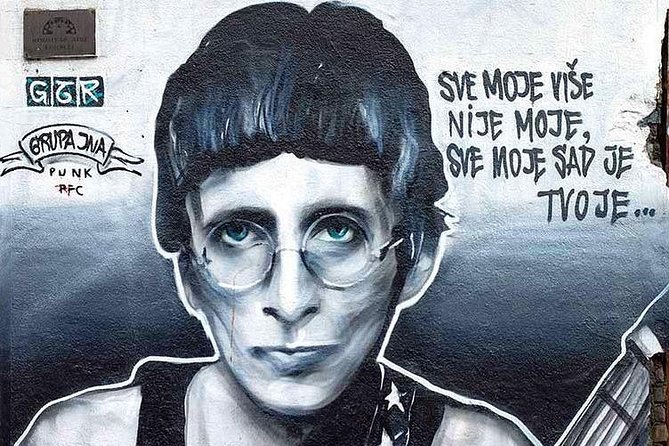
The rivalry between Red Star and Partizan is the reason this experience feels different from a standard football museum visit. You are not studying two unrelated clubs. You are following a contest that reaches into neighborhoods, murals, stadiums, and public identity.
The tour also places supporter culture within the wider history of Serbia. The focus includes the social effects of hooligan groups and the experience of ultras, not only league tables and famous matches. That makes the tour more useful for anyone interested in how sport can reflect political and social change.
At the same time, you should keep your expectations realistic. This is not a match-day security briefing, a ticket to a live game, or a guarantee of access to active supporter groups. It is a guided walk and stadium visit that explains the culture from a local perspective.
The guides are central to the quality of the experience. Tihomir is described as having a strong grasp of ultras history, while Andrija is known for his warm Serbian hospitality and willingness to help with other sporting plans. Your exact guide will shape the tone, but the experience clearly depends on conversation as much as on the buildings.
Price, timing, and practical value
At $84.21 per person, this is not the cheapest way to see a stadium. Its value comes from combining four separate elements: a neighborhood walk, two supporter districts, the Red Star museum, and access to both major grounds.
If you visited the stadiums separately, you would still miss the connection between the murals and the clubs. The guide is what turns separate sights into a story about Belgrade. I consider the price reasonable for football fans who would otherwise need to arrange transport, research the history, and work out what the graffiti means.
The tour is usually booked about 41 days ahead. That suggests you should reserve early if your Belgrade dates are fixed, especially if you want a particular morning. It allows group discounts and uses a mobile ticket.
The maximum group size is listed as 99 people, which is large enough to affect the feel of the walk. A group that size may make personal conversation harder, even with a good guide. On the other hand, the route is designed for a group, and the stadium portions can accommodate more people than a small museum tour.
You meet at Student Park at 10:00 a.m. and return to the same meeting point. The tour is near public transportation, and most people can take part. Service animals are allowed. The activity needs good weather, so poor conditions can lead to a different date or a full refund.
Free cancellation is available until 24 hours before the start time. If you cancel later, you do not receive a refund, and changes made inside that 24-hour window are not accepted.
Who will enjoy this most
I would choose this tour if you like football beyond the match itself. It suits people interested in club identity, supporter art, stadium design, Serbian society, and the way sport shapes a city.
It is also a good choice if you have already seen Belgrade’s central sights and want something more local. Dorcol adds pubs and neighborhood character, while Senjak gives you a look at a less conventional side of the city.
You do not need to support Red Star or Partizan. In fact, neutral visitors may get the clearest view because they can compare both clubs without taking sides. You should, however, have some interest in football culture. Someone looking only for grand architecture or a gentle city walk may find the ultras material too specialized.
Families and casual sports fans can participate, but the language around hooligan groups and fierce rivalry may not suit every child. The supplied information says most people can join, though it does not provide a detailed mobility assessment. If you have specific access needs, ask before booking.
Should you book the Red Star and Partizan tour?
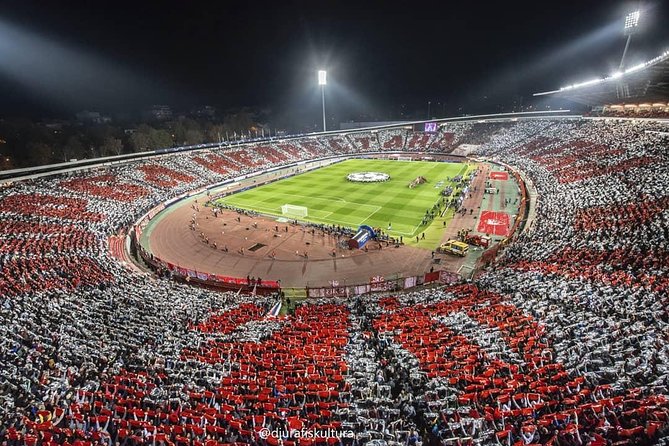
Book it if you want Belgrade through football, not just a stadium photo. The combination of Dorcol murals, Senjak graffiti, Red Star’s 1991 trophy, and Partizan’s pitch gives you a broad look at both clubs in a single morning.
I would be less keen if you want a quiet museum visit or a modern stadium tour with highly polished facilities. The appeal here is the local edge, the rivalry, and the guide’s explanation of a subject that can be difficult to understand on your own.
For football fans, the price is fair and the route is unusually well balanced. If you can, ask the guide about match tickets or other sporting events in Belgrade. Andrija has helped visitors attend a Red Star game and a basketball match, so the tour may be a useful starting point for a wider sports weekend.
FAQ
Where does the football tour begin?
The tour begins at Student Park, Studentski trg 16, Belgrade 11000, Serbia.
What time does the tour start?
The scheduled start time is 10:00 a.m.
How long does the experience last?
The tour lasts approximately three to four hours.
Which neighborhoods does the tour visit?
It visits Dorcol, associated with Partizan supporters, and Senjak, associated with Red Star supporters.
Does the tour visit both stadiums?
Yes. The route includes Red Star Belgrade Stadium, also called Marakana, and Partizan Stadium.
Can I cancel for a full refund?
Yes. You can cancel at least 24 hours before the start time for a full refund. Cancellations or changes made less than 24 hours before the start are not refunded or accepted.
New on the fixture list around the world
- Spotify Camp Nou Tour F.C. Barcelona Museum (Open Date Ticket)★ 3.5 · 5 reviews
- Ferrari Driving Experience on a Racetrack★ 5.0 · 11 reviews
- Live Muay Thai Action Ticket at Phetchbuncha Samui Stadium★ 4.0 · 6 reviews
- Discover Leo Messi’s secrets at Barça Café – Camp Nou★ 5.0 · 22 reviews
- Private 4h Tour Of Camp Nou And Most Emblematic Sites Of Barcelona with pick up★ 4.5 · 3 reviews
- BARCELONA SPORTS VIP – Camp Nou – La Masia & Montjuic (Olympic)★ 4.5 · 3 reviews
- Olympic and Sport Museum of Barcelona “Joan Antoni Samaranch”★ 4.5 · 22 reviews
- Explore Spotify Camp Nou Immersive Tour of Barcelona’s Stadium★ 3.0 · 2 reviews