

Review · SPAIN
Bilbao: San Mamés Museum and Stadium Tour
San Mamés is more than a football ground. It is Athletic Club’s living clubhouse, where the museum explains why this Bilbao team matters so much to the Basque Country, then sends you into the places players use on match day. You can walk the tunnel, step beside the pitch, sit in the dugout, and look around the home changing room.
I like the large amount of stadium access and the museum’s mix of old shirts, trophies, graphics, and modern video displays. I also like the freedom to move at your own pace. The main drawback is practical: the audio guide uses your own phone and headphones, and the directions and audio setup may take a little patience.
- Pitchside access: Walk out from the players’ tunnel and get close to the field.
- Athletic Club story: See more than 500 original football objects collected over more than a century.
- Behind-the-scenes route: Visit the changing room, press room, dugout, and VIP areas.
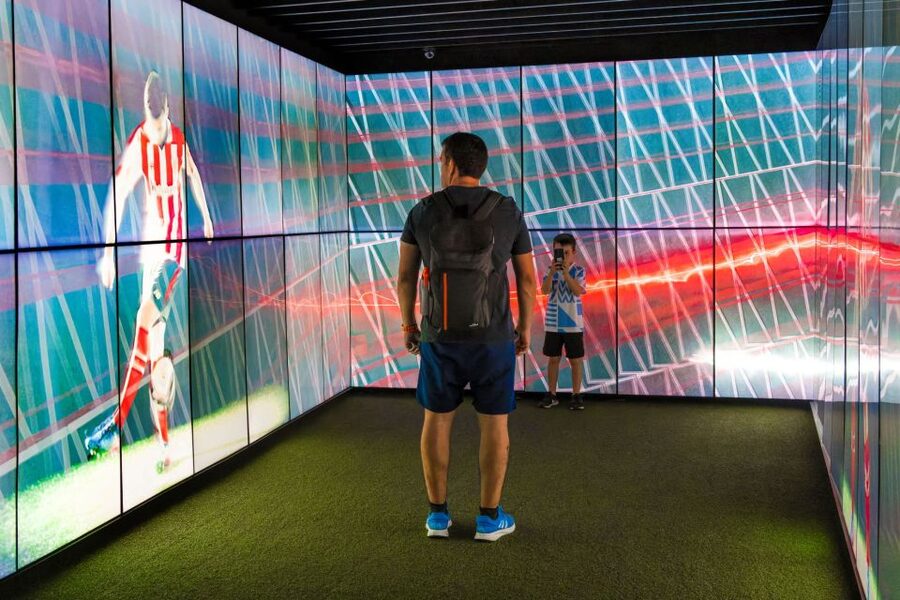
- Interactive museum: Use 13 interactive systems, 600 videos, four audiovisual productions, and an immersive video wall.
- Good family choice: Children and teenagers have plenty to do, including a playroom and interactive displays.
- Useful planning tip: Bring a charged smartphone, headphones, and allow extra time for steps and walking.
Why San Mamés matters in Bilbao

I find the best part of this visit is that it gives you two experiences in one. The museum explains Athletic Club’s identity, while the stadium tour lets you picture the match-day routine at ground level.
Athletic Club is known locally as the Red and Whites, and San Mamés is often called the Cathedral of Football. You do not need to arrive as a serious football supporter to get something from the visit. The club’s connection to Bilbao and the Basque Country comes through in the displays, the team story, and the way the museum presents the club’s past and present.
That local connection makes this different from a simple look around a modern sports arena. The building is impressive, but the point is not just the architecture. You are learning why this particular club carries such weight in the city.
The tour costs about $19 per person, which is a fair price for the amount of access included. You are not paying only to look at a trophy cabinet. The ticket covers the museum, the stadium route, pitchside areas, the changing room, the tunnel, the dugout, and the press room. If you spend two or three hours exploring, the value is particularly good.
Starting between Gates 19 and 20
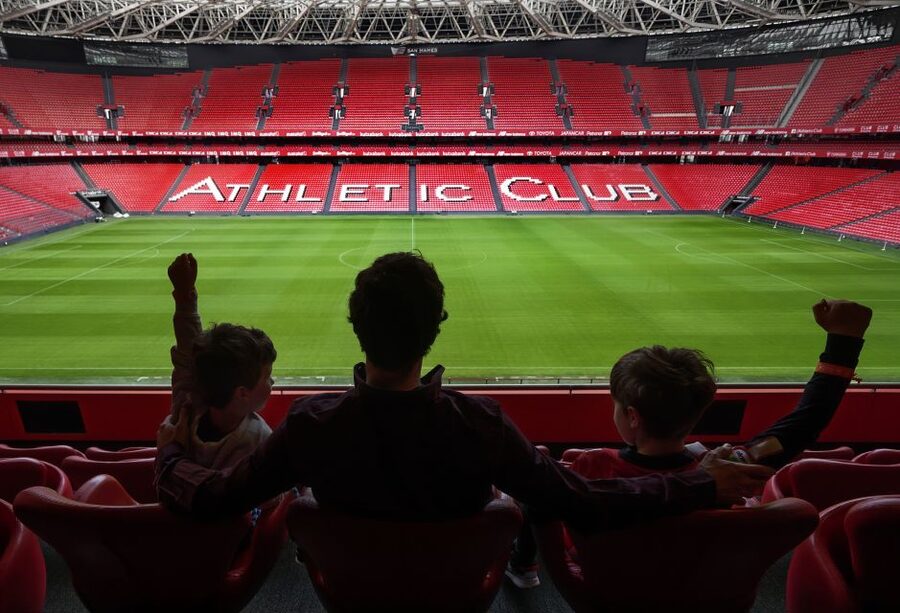
You begin at the museum entrance between Gates 19 and 20 of San Mamés. This detail matters because a large stadium can make a first arrival confusing. Look for the museum access rather than assuming you should enter through one of the main match-day gates.
The visit is self-guided with an audio guide. You choose your own pace, pause where you like, and spend longer on the displays that interest you. This works well if one person in your group wants to read every panel while another would rather move on to the stadium.
You need your own smartphone and headphones or earphones. Charge your phone before arriving, and bring headphones that connect easily. An audio guide user reported trouble because the system required a QR code and there was no free Wi-Fi available at the stadium. That is a useful warning: arrange mobile data before you arrive instead of counting on the venue’s internet.
The audio is available in English, Spanish, Basque, and French. Some people find the setup a little confusing at first, so give yourself a moment to get it working before you start walking. Once it is running, the self-guided format gives you more control than a large group tour.
More Stadium Tours in Spain
- Madrid: Tour Bernabéu Entry Ticket
★ 4.5 · 21,573 reviews - Madrid: Atlético de Madrid Stadium Entry
★ 4.7 · 2,022 reviews - Madrid: Guided Tour of Bernabéu Stadium
★ 4.1 · 1,445 reviews
The Athletic Club Museum and its 500 objects
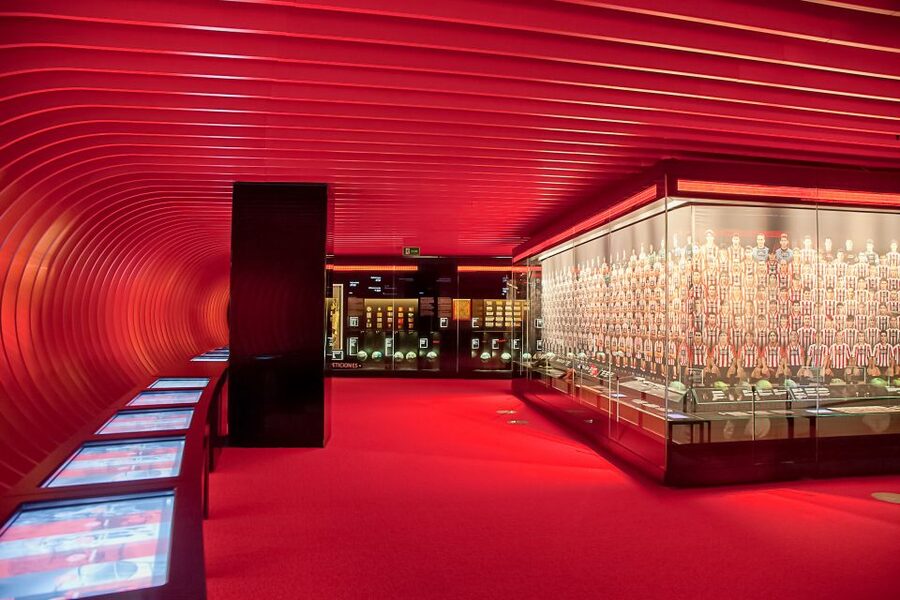
The museum is the heart of the visit. Its collection includes 500 original football-related objects gathered over more than a century. You will find trophies, clothing, old graphics, and audiovisual material that show how the club has developed.
I like the way the museum combines physical objects with digital material. A traditional display case can tell you what a trophy is, but video and sound help explain its place in the club’s story. Four audiovisual productions, an immersive video wall, and around 600 videos give the museum plenty of motion and variety.
There are also 13 interactive systems, so this is not a room where you simply walk past glass cases. The interactive features help younger visitors stay involved, but adults who enjoy football history will find plenty to hold their attention too.
The museum is laid out in thematic areas. That makes it easier to follow the club’s story rather than viewing a random collection of shirts and medals. You can move from the early years to more recent seasons, seeing the club’s identity presented through objects, images, and match-related material.
Plan for more time here than you might expect. One family with teenagers spent about three hours at the stadium and museum, while another visitor found the museum interesting enough to spend several hours. You can see the main displays in less time, but rushing would miss much of what the museum offers.
Walking through the changing room and players’ tunnel
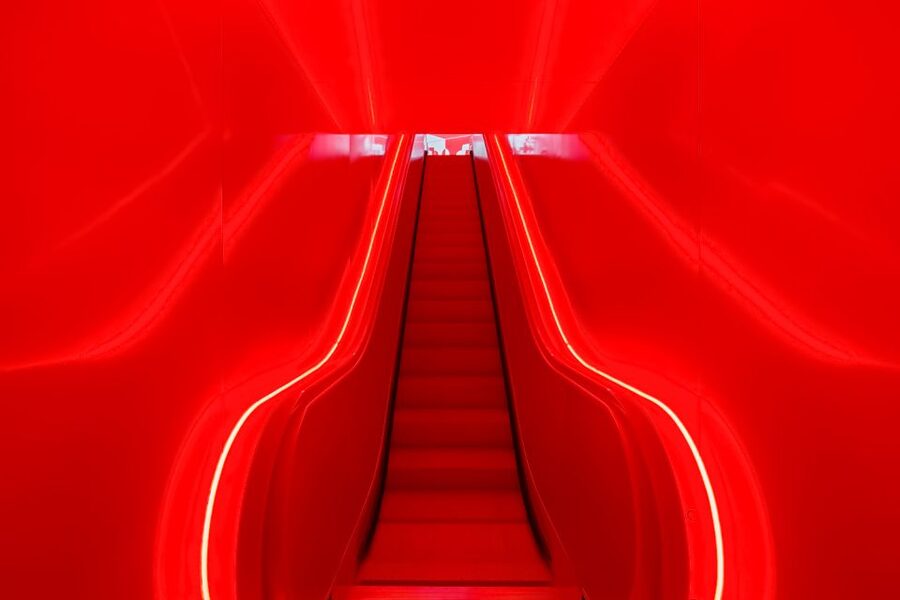
After the museum, the route takes you into areas that normally belong to match-day staff and players. The home changing room gives you a sense of the practical side of football. You can imagine the team preparing here before walking out in front of a full stadium.
The players’ tunnel is the emotional center of the route. You walk along the same basic path used before the team reaches the field, then step out toward the pitch. Even without a match taking place, the change from enclosed tunnel to open stadium is easy to picture.
This is where the visit becomes more than a museum stop. You are not simply reading about famous Spanish footballers. You are standing in the spaces associated with their pre-match routine.
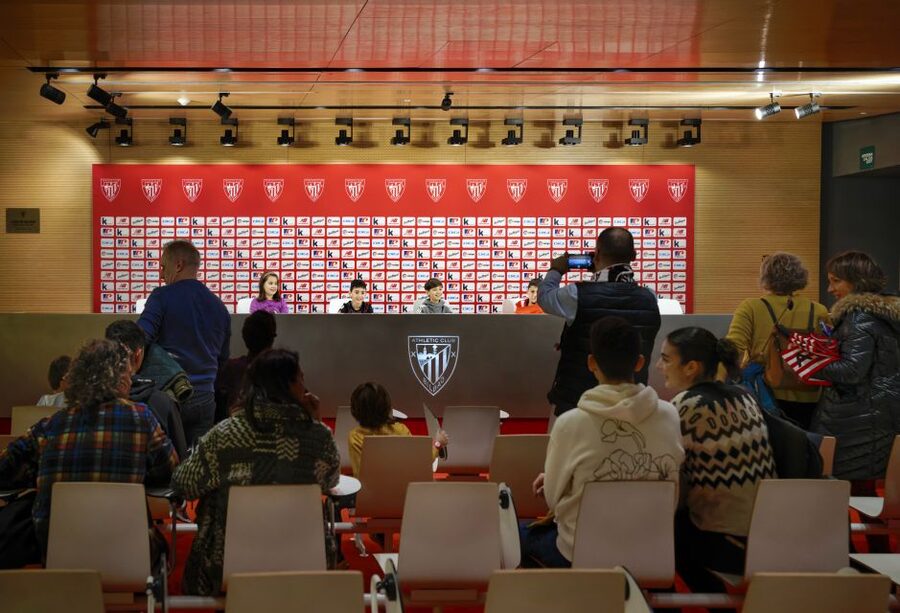
You also visit the press room, where the club’s public side comes into view. The press area helps complete the picture: players prepare in the changing room, emerge through the tunnel, compete on the pitch, and then answer questions after the match.
Pitchside, dugout, and VIP areas
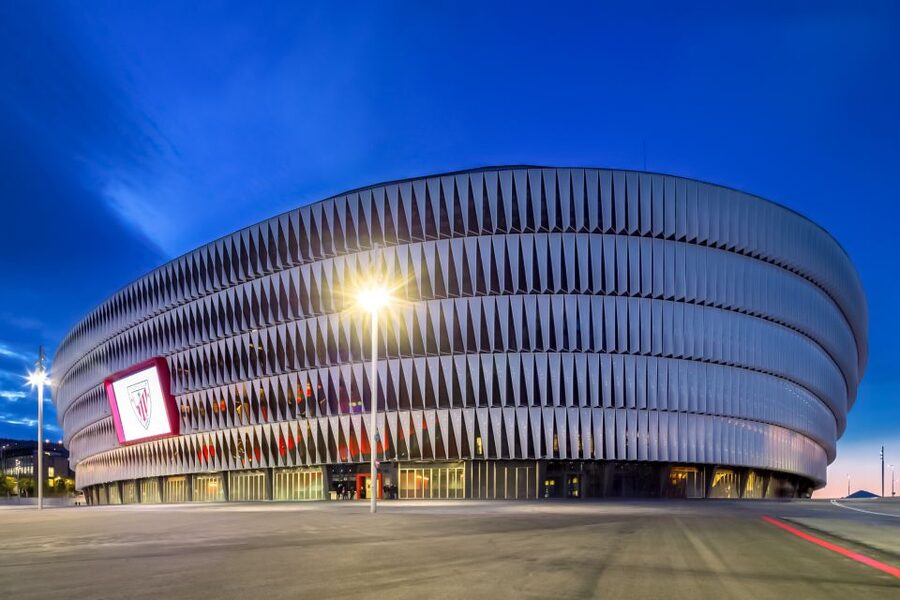
Pitchside access is one of the strongest reasons to book this tour. You can walk close to the field and see the stadium from the level where coaches, substitutes, and match officials experience it.
The dugout and trainer bench offer a different view from the high spectator seats. From here, the stadium feels less like a distant bowl and more like a working football ground. You can think about how much changes when you are close to the grass, even though you are not watching an active match.
The route also includes the VIP area. Access to several different parts of the stadium makes the tour feel broad rather than repetitive. You are not restricted to one corridor and a museum room.
The stadium itself is modern and well kept. Its scale becomes clearer as you move through the various areas, and you get several angles that are not available from a normal match ticket. If you have visited other football grounds, the range of access is one of San Mamés’s strongest points.
There is a physical side to the experience. Expect a fair amount of walking and some climbing of steps. The stadium is wheelchair accessible, but anyone with limited stamina should still allow time and move at a comfortable pace.
Same city, another way to catch the action:
- Barcelona: FC Barcelona Museum “Barça Immersive Tour” Ticket
★ 4.4 · 10,944 reviews - Camp Nou Immersive Tour F.C.Barcelona Museum: Open Date Ticket
★ 4.0 · 1,307 reviews - Madrid: Bernabéu Stadium Guided Tour With Megafan Upgrade
★ 4.6 · 873 reviews - Sevilla: Ramón Sánchez Pizjuán Stadium Entry Ticket
★ 4.5 · 707 reviews
Interactive features for children and adults
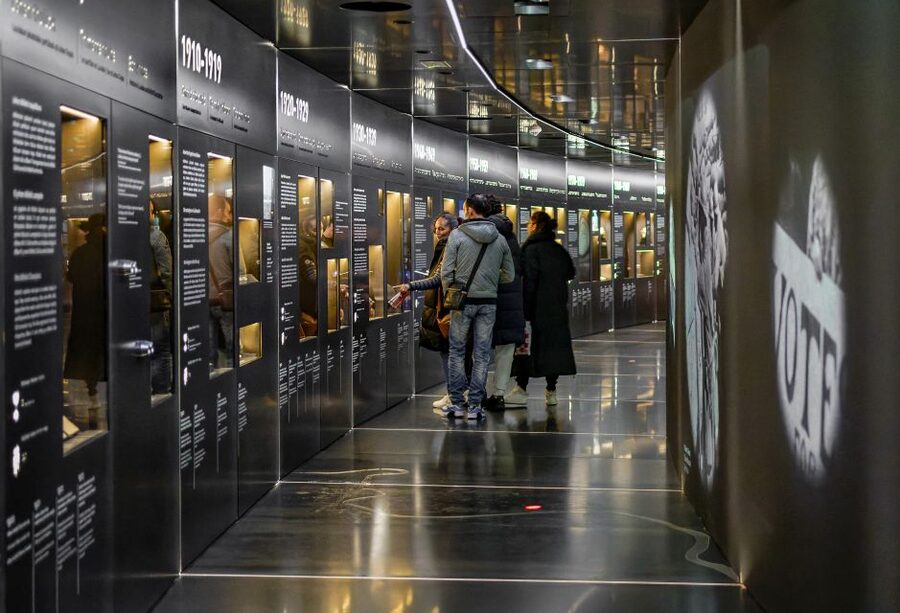
Families tend to get good value here because the museum does not depend only on written information. The playroom provides entertainment for younger children, while the videos and interactive systems appeal to older children and teenagers.
A seven-year-old can enjoy the sense of entering a real stadium, while teenagers may spend longer with the club’s graphics, football footage, and interactive features. One family with children aged 12, 14, and 16 spent three hours without feeling the time drag.
There is also a penalty shoot-out feature, according to the experience details shared by visitors. That gives the visit a hands-on moment rather than making it entirely about looking and listening.
If you are visiting with a mixed group, the flexible route helps. A football fan can stop at every historical display, while someone less interested in the sport can focus on the architecture, behind-the-scenes areas, and interactive sections. That makes San Mamés a safer choice for couples or families where not everyone follows football.
Audio guide or a guided tour?

The ticket described here is for a museum and stadium visit with an audio guide, not a standard live guided tour. That distinction matters.
A self-guided route works well if you want to pause for photographs, reread information, or skip displays that do not interest you. You are not tied to the speed of a group, and you can spend longer in the museum.
Some visitors have upgraded to a live tour on site and found it slower than expected because the same areas were available to explore independently. I would choose the self-guided option unless you specifically prefer a guide speaking to the group.
The audio guide is useful, but it is not completely foolproof. Bring your own headphones and make sure your phone is charged. If the QR code or audio connection does not work immediately, ask staff for help before leaving the entrance area.
Earlier guided visits have included guides named Paulo and Maialen, both praised for clear explanations and close attention to detail. The current format here is audio-guided, so do not book expecting those particular guides or a live presentation.
How long should you allow?
The ticket is valid for one day, with starting times depending on availability. The actual length depends on your interest level.
For a quick visit, you might spend around an hour seeing the main museum and stadium sections. That is enough to cover the route, but it leaves little time for the interactive displays.
I would allow two to three hours if you want to listen to the audio, watch videos, examine the objects, and take your time pitchside. Families may need longer, especially if children use the playroom and interactive features.
The museum closes at 7:00 PM from November through February and at 8:00 PM from March through October. Do not leave the visit until the last part of the day if you want a relaxed experience.
Match days require extra care. The museum may close two hours before kick-off, and stadium access ends four hours before kick-off. Opening times can also change for behind-closed-doors training or other events. Check the schedule before setting out.
Is $19 good value?
For Bilbao, $19 is a reasonable spend, especially if you use the full route. The ticket combines a museum admission and a behind-the-scenes stadium visit, with audio content in four languages.
The value is strongest for people who enjoy access rather than a short photo stop. You can visit the changing room, tunnel, press room, dugout, pitchside area, VIP area, and museum displays in one outing.
It is also good value for families because the ticket includes interactive material for different ages. A football fan may want to stay for several hours, while a less committed companion can still enjoy the stadium itself.
The price does not remove every possible drawback. You must provide your own phone and headphones, and the audio setup may require mobile data. The route also involves walking and stairs. Still, the broad access and time you can spend inside make the cost easy to justify.
Who should book San Mamés?
I would put this near the top of the list for Athletic Club supporters, football fans, and anyone interested in the cultural role of sport in the Basque Country.
It also suits:
- Families with children and teenagers
- Visitors who enjoy interactive museums
- People who want pitchside photographs
- Football fans comparing European stadium tours
- Couples where only one person follows football
- Visitors looking for an indoor activity with flexible timing
You do not need to understand every football reference to enjoy the route. The changing room, tunnel, dugout, and stadium views are immediate experiences. The museum adds context for those who want to understand the club rather than simply walk through its building.
I would think twice only if you dislike stadium tours, have very limited walking ability, or do not want to use your own phone for an audio guide. In those cases, the ticket may feel less convenient.
Final verdict: should you book?
Yes, I would book San Mamés if you want more than a quick football photo. The combination of excellent stadium access, a well-equipped museum, and a relaxed self-guided format gives you plenty for the price.
Book it for the tunnel, changing room, dugout, and pitchside access. Stay for the Athletic Club story and the interactive displays. Bring headphones, charge your phone, check the match schedule, and allow at least two hours if you want to enjoy the visit properly.
FAQ
Where does the San Mamés Museum and Stadium Tour begin?
The visit begins at the museum entrance between Gates 19 and 20 of San Mamés Stadium.
What languages are available for the audio guide?
The audio guide is available in English, Spanish, Basque, and French.
Do I need to bring my own headphones?
Yes. You need your own smartphone and headphones or earphones to use the audio guide. Bring a charged phone as well.
What areas of San Mamés can I visit?
The route includes the home changing room, players’ tunnel, pitchside area, dugout, press room, and VIP area, along with the Athletic Club Museum.
Is the stadium tour wheelchair accessible?
Yes, the activity is wheelchair accessible.
Can I visit on a match day?
Schedules may change on match days. If a match takes place during museum opening hours, the museum closes two hours before kick-off and the stadium cannot be visited four hours before kick-off.
New on the fixture list around Spain
- Spotify Camp Nou Tour F.C. Barcelona Museum (Open Date Ticket)★ 3.5 · 5 reviews
- Transport Barcelona★ 4.5 · 2 reviews
- Private 4h Tour Of Camp Nou And Most Emblematic Sites Of Barcelona with pick up★ 4.5 · 3 reviews
- Discover Leo Messi’s secrets at Barça Café – Camp Nou★ 5.0 · 22 reviews
- BARCELONA SPORTS VIP – Camp Nou – La Masia & Montjuic (Olympic)★ 4.5 · 3 reviews
- Olympic and Sport Museum of Barcelona “Joan Antoni Samaranch”★ 4.5 · 22 reviews
- Explore Spotify Camp Nou Immersive Tour of Barcelona’s Stadium★ 3.0 · 2 reviews
- Football Club Barcelona Museum Immersive Tour Guided Visit★ 3.5 · 52 reviews
More Stadium Tours in Spain to weigh up.



Camp Nou Immersive Tour F.C.Barcelona Museum: Open Date Ticket
Read our review →
Madrid: Bernabéu Stadium Guided Tour With Megafan Upgrade
Read our review →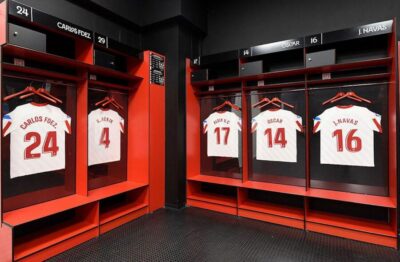
Sevilla: Ramón Sánchez Pizjuán Stadium Entry Ticket
Read our review →
Bernabeu Stadium & Real Madrid Museum Guided Tour
Read our review →
Madrid: Santiago Bernabéu and Real Madrid Guided tour
Read our review →This one also appears in