

Review · SPAIN
Seville: Real Betis Tour at the La Cartuja Stadium
La Cartuja Stadium gives you a behind-the-scenes look at Real Betis, but with one important catch: this is not the club’s usual Benito Villamarín home. You’ll see the presidential box, trophy room, dressing rooms, tunnel, and pitch from the bench area, all at the current La Cartuja base while Benito Villamarín undergoes renovation.
I like the low $14 price and the chance to walk the same route as the players. I also like the trophy exhibition, where shirts, boots, balls, and other club objects bring more feeling to the visit. The main drawback is atmosphere: La Cartuja is an impressive stadium, but it may feel more like a temporary home than the true heart of Betis.
Key points to know before you go
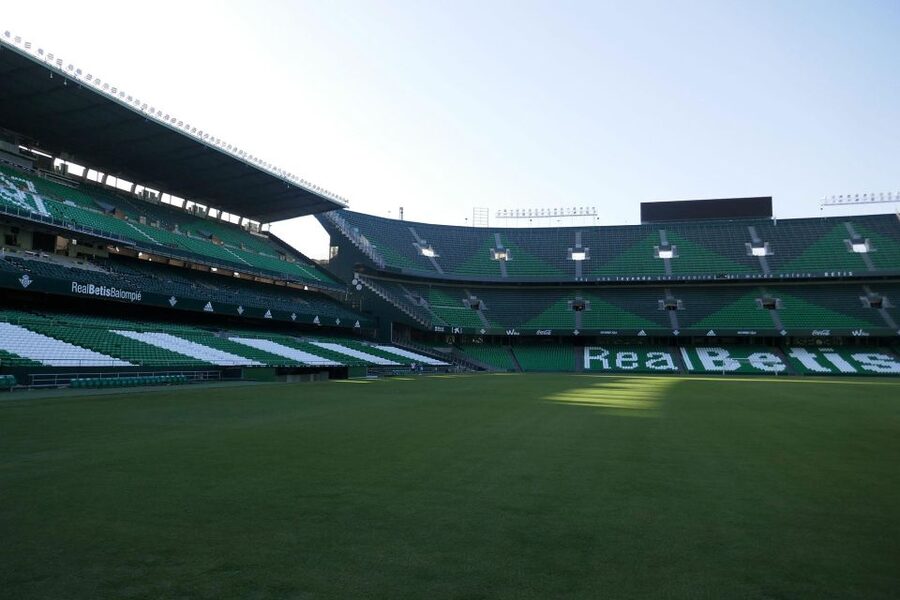
- La Cartuja is the current venue: Go to Gate 2, not Benito Villamarín, which has been under renovation since July 2025.
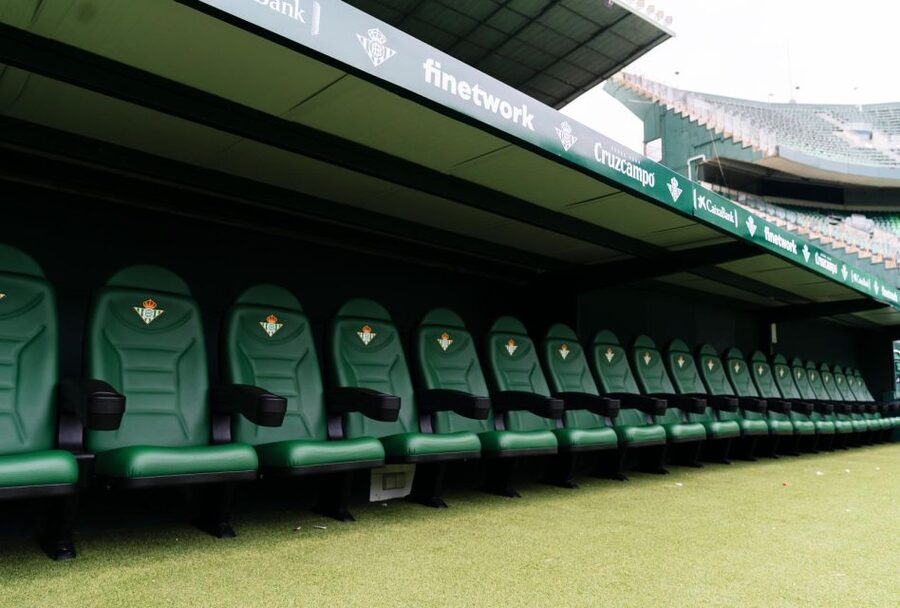
- The player route is the highlight: You cross from the changing rooms through the tunnel to the dugout area beside the pitch.
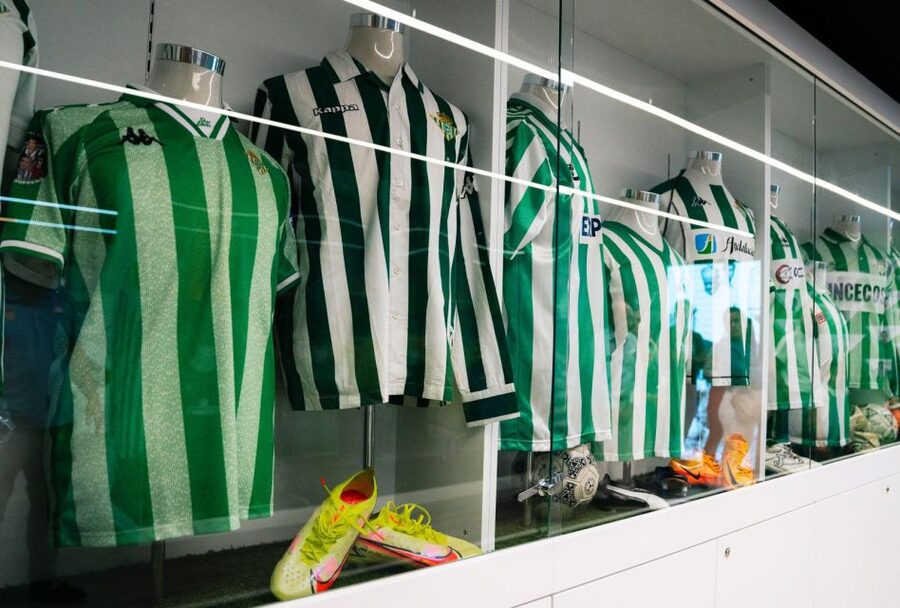
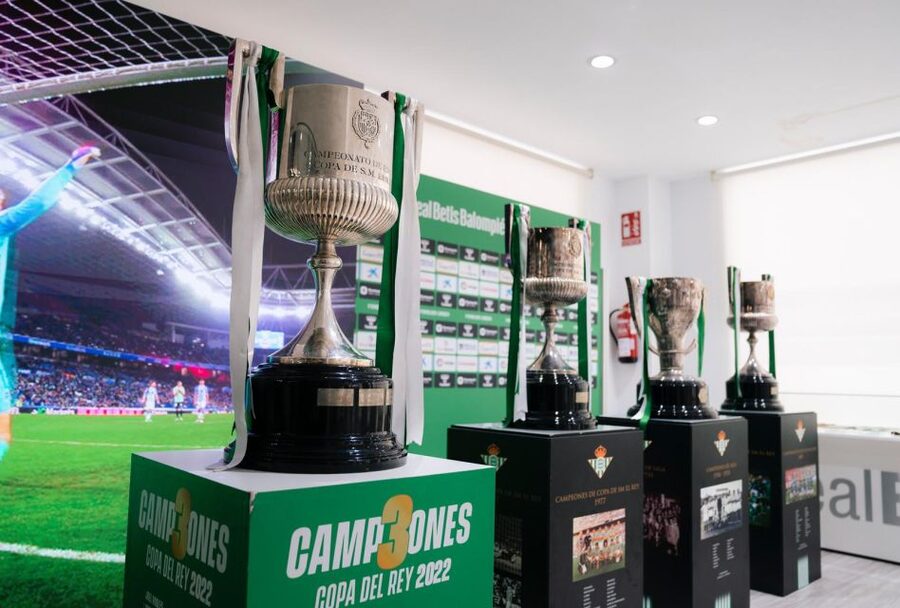
- The trophy exhibition adds club character: Historical shirts, boots, balls, trophies, and symbolic objects fill a display room of more than 150 square meters.
- The Tunnel Club includes both dressing rooms: You enter the Real Betis team room and the coaching staff’s room.
- The tour is short and focused: It is advertised as one hour, though some visits have lasted closer to 30 minutes.
- English, Spanish, and Italian are available: Guide Emilio has led tours with explanations in Spanish followed by English.
La Cartuja is not Benito Villamarín
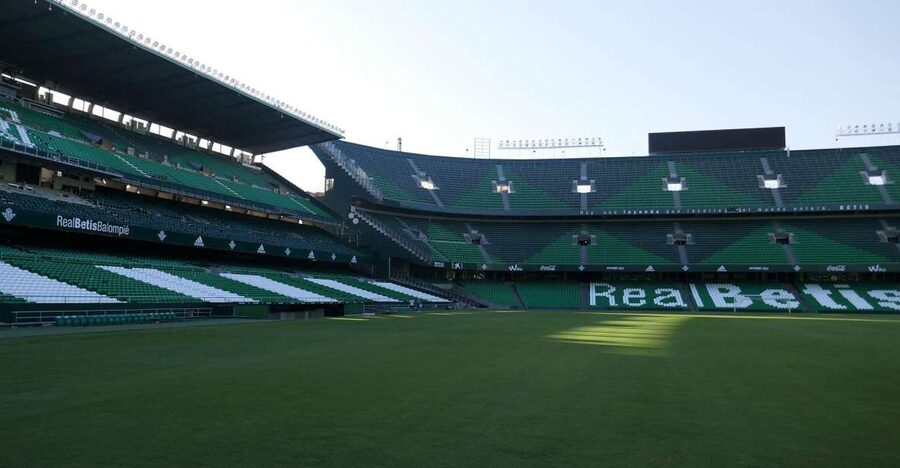
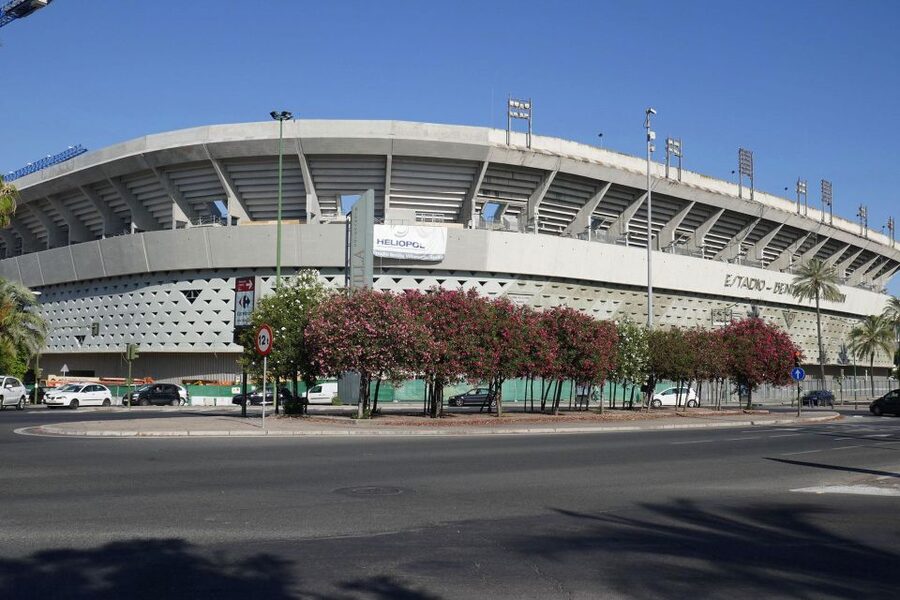
The first thing to understand is the location. The Real Betis Tour takes place at La Cartuja Stadium, Seville’s large stadium used as the club’s current base while Benito Villamarín is being renovated.
That distinction matters. A football stadium is more than seats and grass. It carries memories, local habits, match-day noise, and the feeling of belonging to a neighborhood. La Cartuja can show you the workings of Real Betis, but it does not yet carry the same emotional weight as the club’s traditional ground.
You should give a taxi, Uber, or other public transport service the La Cartuja address. The meeting point is at the entrance to the Presidential Box beside Gate 2. Do not simply tell your driver that you are going to the Betis stadium, since the club’s usual stadium is a different place.
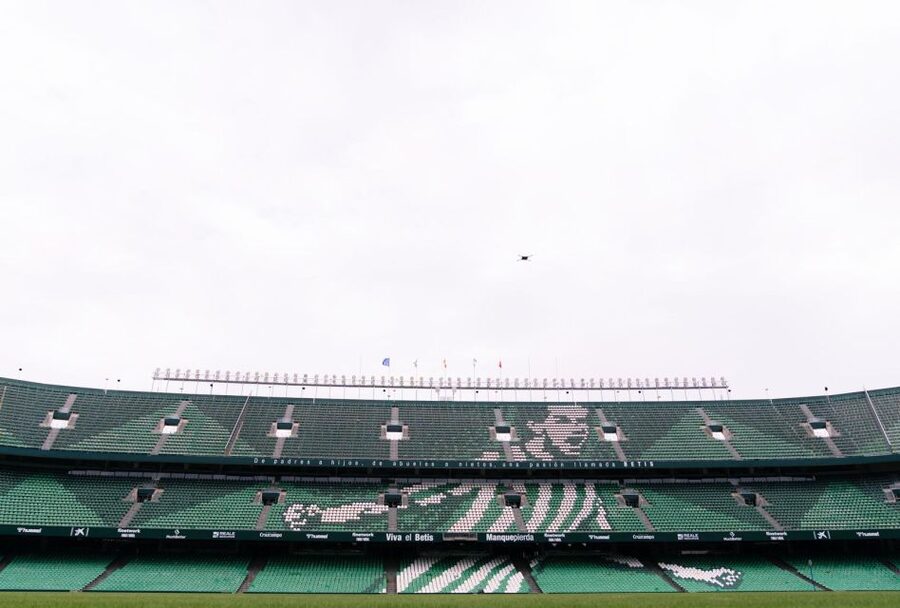
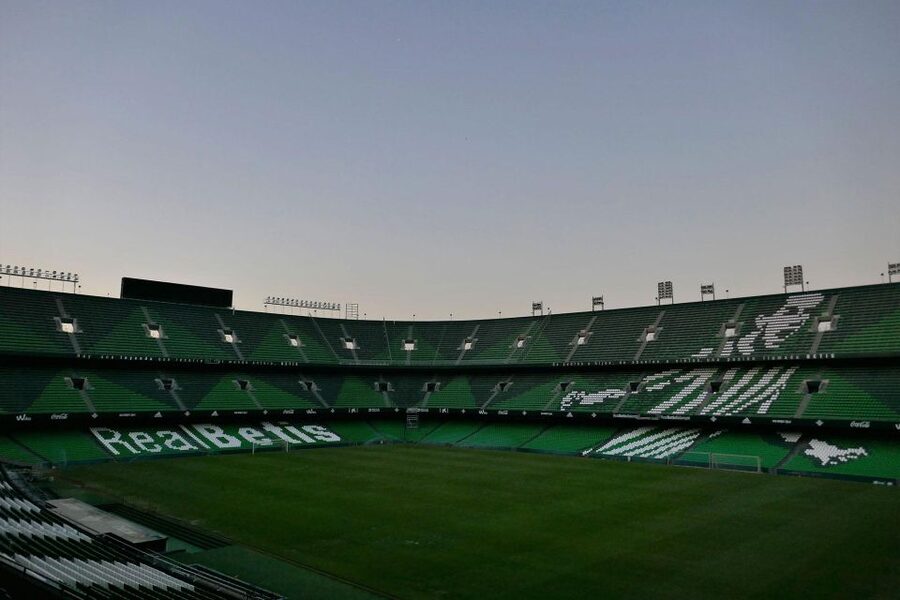
La Cartuja itself is impressive. It has the scale you expect from an Olympic-style venue, with broad seating areas and a large pitch. For the best first impression, arrive ready to look beyond the club decorations and notice the building itself.
More Stadium Tours in Spain
- Madrid: Tour Bernabéu Entry Ticket
★ 4.5 · 21,573 reviews - Madrid: Atlético de Madrid Stadium Entry
★ 4.7 · 2,022 reviews - Bilbao: San Mamés Museum and Stadium Tour
★ 4.8 · 1,464 reviews
The presidential box opens the tour
The tour begins with one of the stadium’s most polished spaces, the presidential box. From here, you can see the full venue at once: the pitch, the seating bowl, and the wide sweep of the stadium.
This is a useful first stop because it gives you a sense of scale before the tour moves into tighter, more private areas. You see the stadium as a VIP match-day visitor might, rather than from an ordinary seat.
The view is also a good photo opportunity. The pitch is close enough to make the next part of the route easy to picture. On match day, this is where important club figures and high-paying ticket holders take in the action. On the tour, you get a short look at that side of football without paying for a match or hospitality package.
The presidential box is not the most emotional stop. It is clean, formal, and built around a broad view. Its value comes from context: it shows you how the club presents itself at the highest level before you move toward the working spaces used by the team.
A 150-square-meter exhibition tells the Betis story
The exhibition room is where the tour gains much of its club identity. It covers more than 150 square meters and focuses on the history of Real Betis Balompié, a club with more than a century of memories behind it.
You can see official trophies along with shirts, boots, balls, and other objects tied to the Green and Whites. These items do more than decorate the room. They help you connect a club name to the people, matches, and eras that shaped it.
I would allow time for the details here. A quick walk through the room can turn into a string of photographs, especially if you follow Betis or have a football fan in the family. The official trophies are the obvious draw, but old kit and equipment often give the display its human touch.
This room also helps if you do not already know the club. Betis has one of Spain’s largest and most loyal fan bases, and the display gives you a basic path through that identity. You get a sense of the colors, symbols, and milestones before entering the spaces where the present-day squad prepares for matches.
The display is not a museum with a long scholarly program. The visit moves at a brisk pace, and the guide explains what you are seeing before directing you onward. If you want time to study every object, keep an eye on the group and use the available moments carefully.
The Tunnel Club shows football’s private side
The Tunnel Club is one of the tour’s more exclusive stops. This hospitality area sits close to the passage used by the teams, so it gives you a look at the line between the polished public side of football and the private work that happens before kickoff.
You enter the Real Betis dressing room and the coaching staff’s dressing room. These rooms are important because they are where the team gathers, prepares, and focuses before heading out. The tour does not turn that preparation into a theatrical performance. Instead, you see the rooms and hear how they fit into the match-day routine.
For many people, this will be more interesting than the presidential box. The box is about watching football in comfort. The dressing rooms are about getting ready to play it.
The coaching staff’s room is a useful addition. It reminds you that a football match is not only about the players who appear on the pitch. Coaches and staff work through tactics, preparation, and decisions before the crowd sees any action.
You should expect a guided look rather than a long period alone in each room. The tour is designed to keep moving, which helps you cover the full route in a limited time but can make the experience feel brisk.
Same city, another way to catch the action:
- Barcelona: FC Barcelona Museum “Barça Immersive Tour” Ticket
★ 4.4 · 10,944 reviews - Madrid: Guided Tour of Bernabéu Stadium
★ 4.1 · 1,445 reviews - Camp Nou Immersive Tour F.C.Barcelona Museum: Open Date Ticket
★ 4.0 · 1,307 reviews - Madrid: Bernabéu Stadium Guided Tour With Megafan Upgrade
★ 4.6 · 873 reviews
Follow the players from the dressing rooms to the bench
The final route is the most direct connection to match day. You walk through the changing-room tunnel, follow the passage toward the field, and emerge near the dugout area.
You will be only a few meters from the pitch at this point. That proximity changes the feel of the stadium. From the presidential box, the field looks like a complete scene. From the bench area, it feels like a workplace, with the technical area and player route right in front of you.
This is also the clearest point of connection between the tour and a real match. You are following the same basic path the players take from preparation to competition. The tunnel is where the mood shifts from quiet concentration to public spectacle.
If you enjoy football architecture, notice how the route narrows and then opens toward the field. That change is simple, but it explains why the tunnel remains such a powerful place in stadium tours. It is the last private step before the crowd, lights, and noise.
The tour may also include the press room, but this is subject to availability. Treat it as a possible extra, not a guaranteed part of the visit.
What the one-hour timing really means
The stated duration is one hour, which is enough for a compact circuit through the main areas. You move from the presidential box to the exhibition room, VIP spaces, dressing rooms, tunnel, and bench area without spending a full afternoon inside the stadium.
That short format suits you if you want a focused football stop between other Seville plans. It also works well for families, since the route has a clear sequence and does not require a long museum visit.
You should keep your expectations realistic. One recorded visit lasted barely 30 minutes, and another described the tour as having relatively little to visit. The actual pace can depend on the guide, group, access to rooms, and how much time is available at each stop.
Guide Emilio has led tours with explanations in Spanish followed by English. Italian is also listed as an available language. The experience is guided rather than self-directed, so you should check the starting time and language when choosing your booking.
The tour works best when you treat it as a concise introduction to the club and stadium, not as a full-day museum. If you want long storytelling, extensive archival material, or a large collection of interactive displays, this may feel too brief.
The guides shape the experience
A live guide adds useful structure to the route. You do not have to work out which room you are seeing or how it relates to the team. The guide connects the spaces and points out the purpose of each one.
Emilio has received specific praise for presenting in Spanish and then English, which is helpful for a mixed-language group. The listed tour languages are English, Spanish, and Italian.
The guide’s role matters more here than it might at a large museum. Several stops are rooms rather than major exhibits, so a clear explanation gives them meaning. Without that context, the presidential box is simply a box, and a dressing room is simply a room.
At the same time, the tour’s format leaves little room for extended conversation. You should ask your key questions while the group is in each area, rather than expecting a long discussion at the end.
A small practical touch has also added to the match-day feel. At least one tour group received lightweight Real Betis banner flags while waiting at security. That is not listed as a guaranteed part of the experience, but it shows how a simple club detail can improve the mood before the tour begins.
Is $14 good value?
At $14 per person, I consider this a fair price for a one-hour stadium tour. You get access to areas that ordinary ticket holders do not normally enter: the presidential box, VIP spaces, trophy exhibition, two dressing rooms, changing-room tunnel, bench area, and possibly the press room.
The value is strongest if you already care about Real Betis or enjoy visiting football grounds. The dressing rooms and player route give you access to the working side of the club, while the exhibition adds enough background to make the visit more than a simple walk around an empty stadium.
The value is less certain if you are seeking the emotional force of Benito Villamarín. La Cartuja is currently decorated in Betis colors and used for the club’s daily activities, but it is not the traditional home ground. You may appreciate the building and the access while still feeling that something is missing.
The price helps offset that limitation. You are not paying a premium for a long, museum-style program. You are buying a compact look behind the scenes at a low cost, with a clear football focus.
Who should book the Real Betis Tour?
I would choose this tour if you fall into one of these groups:
- You support Real Betis and want access to the club’s current working spaces.
- You enjoy football stadiums, even when the venue is not the team’s traditional home.
- You are looking for a one-hour activity at a modest price.
- You are visiting with children or family members who prefer a clear route to a long museum visit.
- You want photographs in the presidential box, trophy area, dressing rooms, and beside the pitch.
- You are curious about how a team moves from preparation to the field.
I would pause if your main goal is to feel the full soul of the club’s historic home. The current venue has scale, but it may not provide the same sense of place. You should also be comfortable with a brisk visit, since the advertised hour can be shorter in practice.
Free cancellation up to 24 hours before the start and the option to reserve now and pay later make it easier to fit into a changing Seville schedule. Those terms do not fix the venue limitation, but they reduce the risk of adding a short activity to your plans.
My recommendation for football fans in Seville
Book the Real Betis Tour if you want affordable access to dressing rooms, club trophies, VIP areas, and the players’ route to the pitch. The bench and tunnel route is the part that best captures the match-day experience, while the exhibition room gives the club’s identity more substance.
Skip it if you are expecting Benito Villamarín, a long museum visit, or a highly emotional look at Betis tradition. La Cartuja is a temporary setting, and the tour can move quickly.
For the right visitor, $14 is a sensible way to spend an hour. Just arrive at Gate 2 with the correct stadium in mind, enjoy the access, and judge the experience as a current Real Betis behind-the-scenes visit rather than a tour of the club’s permanent home.
FAQ
Where does the Real Betis Tour take place?
The tour takes place at La Cartuja Stadium in Seville, not at Benito Villamarín.
Where is the meeting point?
Meet at the entrance to the Presidential Box beside Gate 2 at La Cartuja Stadium.
How long does the tour last?
The stated duration is one hour. Some visits have lasted closer to 30 minutes, depending on the pace and access during the visit.
What languages are available?
The live tour guide is available in English, Spanish, and Italian.
Does the tour include the Real Betis dressing room?
Yes. The tour includes the Real Betis dressing room and the coaching staff’s dressing room.
Can I see the trophies?
Yes. The exhibition area includes official trophies along with shirts, boots, balls, and other historical club objects.
Does the tour include the presidential box?
Yes. You visit the presidential box and see the stands and pitch from this VIP area.
Can I visit the press room?
The press room may be included, but access is subject to availability.
Why is the tour at La Cartuja Stadium?
Benito Villamarín has been undergoing renovation since July 2025. Real Betis activities connected with its day-to-day operation take place at La Cartuja Stadium.
New on the fixture list around Spain
- Spotify Camp Nou Tour F.C. Barcelona Museum (Open Date Ticket)★ 3.5 · 5 reviews
- Transport Barcelona★ 4.5 · 2 reviews
- Private 4h Tour Of Camp Nou And Most Emblematic Sites Of Barcelona with pick up★ 4.5 · 3 reviews
- Discover Leo Messi’s secrets at Barça Café – Camp Nou★ 5.0 · 22 reviews
- BARCELONA SPORTS VIP – Camp Nou – La Masia & Montjuic (Olympic)★ 4.5 · 3 reviews
- Olympic and Sport Museum of Barcelona “Joan Antoni Samaranch”★ 4.5 · 22 reviews
- Explore Spotify Camp Nou Immersive Tour of Barcelona’s Stadium★ 3.0 · 2 reviews
- Football Club Barcelona Museum Immersive Tour Guided Visit★ 3.5 · 52 reviews
More Stadium Tours in Spain to weigh up.


Camp Nou Immersive Tour F.C.Barcelona Museum: Open Date Ticket
Read our review →
Madrid: Bernabéu Stadium Guided Tour With Megafan Upgrade
Read our review →
Sevilla: Ramón Sánchez Pizjuán Stadium Entry Ticket
Read our review →
Bernabeu Stadium & Real Madrid Museum Guided Tour
Read our review →This one also appears in