
Review · GERMANY
Dortmund: BVB Self-Guided Stadium Walk
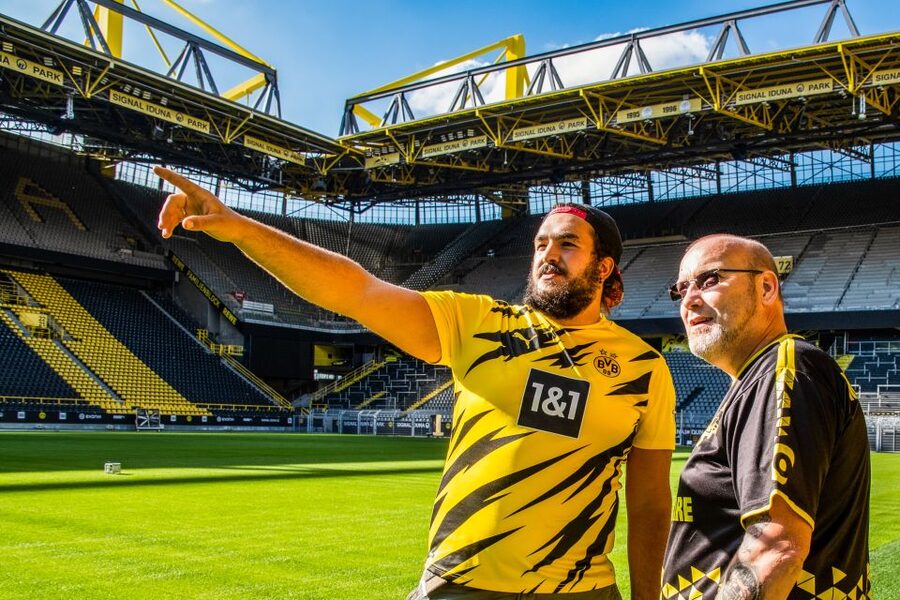
Signal Iduna Park is not just a football ground. It is Borussia Dortmund’s home, and the famous Yellow Wall gives the stadium its character before you have even reached the changing rooms. This self-guided walk takes you through the player tunnel, mixed zone, dugouts, coaching area, and parts of the stands.
I like the freedom to set your own pace, and the QR codes add useful club-made videos in German and English. At about $14, it is also a strong value for football fans. The catch is that this is not a guided tour, and changing rooms, upper seating, the pitch, or other areas may be closed on the day.
Key points at a glance
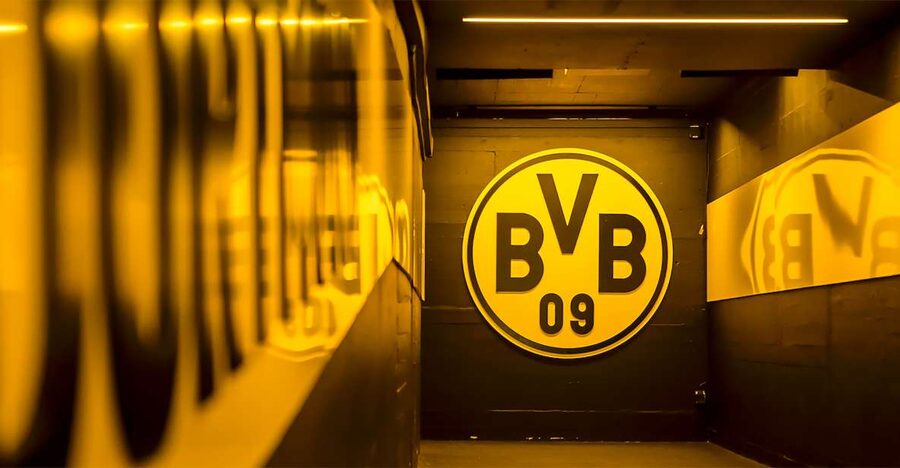
- See the Yellow Wall from inside the stadium: Visit the South Stand and understand the scale of Dortmund’s famous home support.
- Walk where the team works: The route includes the players’ changing room, mixed zone, player tunnel, coaching area, and dugouts when open.
- Use QR codes for extra context: Scan selected stops for club-produced videos and facts in German and English.
- Go at your own speed: You can pause for photos and take your time instead of keeping up with a group.
- Plan around the football calendar: The walk closes on home matchdays, the day before a UEFA Champions League home match, and during some events or renovation work.
- Expect a simple, affordable visit: Free onsite parking is included, but the route is not barrier-free and large bags, food, drinks, pets, and strollers are not allowed.
Why Signal Iduna Park feels different
Many stadium tours are really museum visits with a few seats attached. This one puts more weight on the working parts of a football ground. You follow marked yellow footsteps through areas used by players and staff, then stop wherever you want to take in the scale of the building.
The key attraction is the sense of access. You can sit in the player dugouts, look across the coaching zone, walk through the tunnel, and see the spaces around the dressing rooms. The pitch itself is not open to you, and you should not expect to wander into every stand or room, but the route reaches enough working areas to make the visit feel connected to matchday.
The stadium’s identity comes through most clearly in the South Stand. This is the home of Dortmund’s famous Yellow Wall, the enormous block of standing supporters that turns home matches into one of Europe’s best-known football spectacles. Seeing the stand empty gives you a calmer look at its size and design. It also helps you understand why the view from the opposite side of the stadium is such a central part of the matchday experience.
More Stadium Tours in the world:
- Madrid: Tour Bernabéu Entry Ticket
★ 4.5 · 21,573 reviews - Liverpool: Liverpool Football Club Museum and Stadium Tour
★ 4.8 · 10,764 reviews - Amsterdam: Johan Cruijff ArenA Tour with Optional Guide
★ 4.6 · 8,954 reviews
Starting at FanWelt
The meeting point is FanWelt at Signal Iduna Park. From there, you enter the stadium and begin following the marked route. The arrival process is not presented as a formal group departure, so you do not need to wait for a guide to gather everyone before setting off.
This is useful if your day in Dortmund is built around other plans. Opening hours are listed as 10:00 AM to 6:00 PM, with last entry at 5:30 PM. You can arrive during that period on an available day, although the ticket information also describes the booking as valid for one day and asks you to check availability for the starting time.
Finding the correct entrance can take some patience. Construction around the stadium has made parking signs and access points less obvious at times. Free onsite parking is included, but give yourself a few extra minutes to find FanWelt and the tour entrance rather than arriving just before the last entry.
Once inside, look for the yellow footsteps. They guide you around the stadium and prevent the route from feeling completely loose. Still, the markings can be confusing in places, and it is possible to lose the path or end up near a car park. Staff are available to help, but this is not the sort of visit where someone explains every turn.
The Yellow Wall and the lower stands

The South Stand is the emotional center of the visit. The Yellow Wall is famous because of its size, color, and matchday noise, but an empty stand tells a different story. You can study the rows, the sightlines, and the sheer amount of space reserved for home support without a crowd around you.
Access to the seating areas can vary. The lower sections are the most reliably available, while upper seating has been closed at times. If you are hoping to see the stadium from the highest tier, treat that as a bonus rather than a promise.
This matters for photographers. A quiet stadium gives you time to frame the Yellow Wall without people blocking the view, but temporary work on the pitch or in the stands can change what you see. Equipment used to provide sunlight for the grass has sometimes occupied the field, and turf work has occasionally left the pitch covered or partly removed. The building remains impressive, but the classic matchday view is not guaranteed.
I would spend time here early in the route, before becoming focused on the behind-the-scenes rooms. The Yellow Wall is the part of the stadium that makes Signal Iduna Park instantly recognizable, and it deserves more than a quick photograph.
Locker rooms, tunnel, and mixed zone
The player areas provide the most direct link to the team. The route can take you into the players’ changing room, through the player tunnel, and into the mixed zone where footballers and media meet after matches.
Seeing a locker room is different from looking at a display case. It is a practical space, and that is its appeal. You get a sense of the short distance between the players’ preparation area and the pitch, as well as the sequence of spaces they pass through before a game.
Access is not guaranteed every day. At least one visit found the locker rooms closed, even though they are normally part of the advertised route. Matchday preparation, U23 matches, events, and renovation work can force temporary changes. The same warning applies to other working areas.
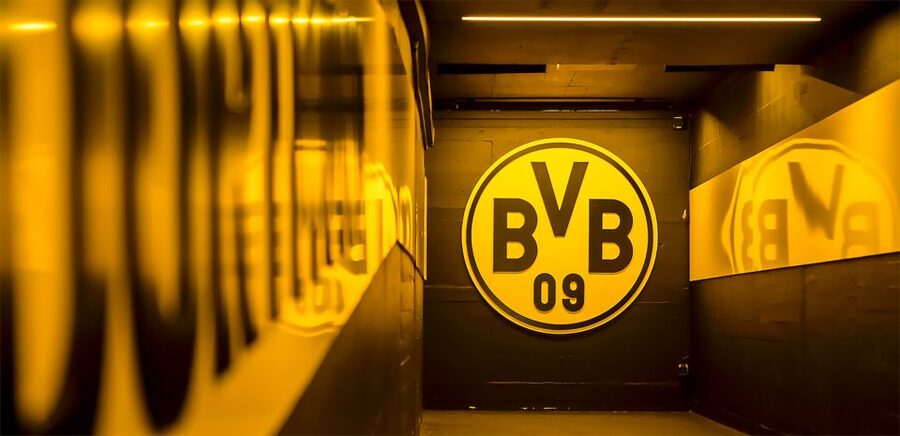
The tunnel is often the strongest photo stop because it narrows the view before opening toward the stadium. You can stand where the players line up and imagine the change in atmosphere between a quiet tour day and a packed Bundesliga match. You will not walk onto the pitch itself, which protects the playing surface but may disappoint anyone expecting a full field visit.
The mixed zone adds a useful bit of context. It shows the less glamorous side of professional football, where players pass from the pitch toward interviews and post-match duties. This is one of the places where the QR videos can help, since the self-guided format provides little spoken explanation beside each stop.
More self-guided stadium visits around the world:
- London: Emirates Stadium Entry Ticket and Audio Guide
★ 4.7 · 5,513 reviews - Emirates Stadium and Arsenal Museum Entrance Ticket Including Audio Guide
★ 4.5 · 113 reviews - Alicante: Visit with Audio Guide Bullring and Bullfighting Museum
★ 4.5 · 63 reviews - Tokyo: Sumo Keiko Training Tour with Audio Guide & Photo
★ 4.8 · 5 reviews
Dugouts and coaching area
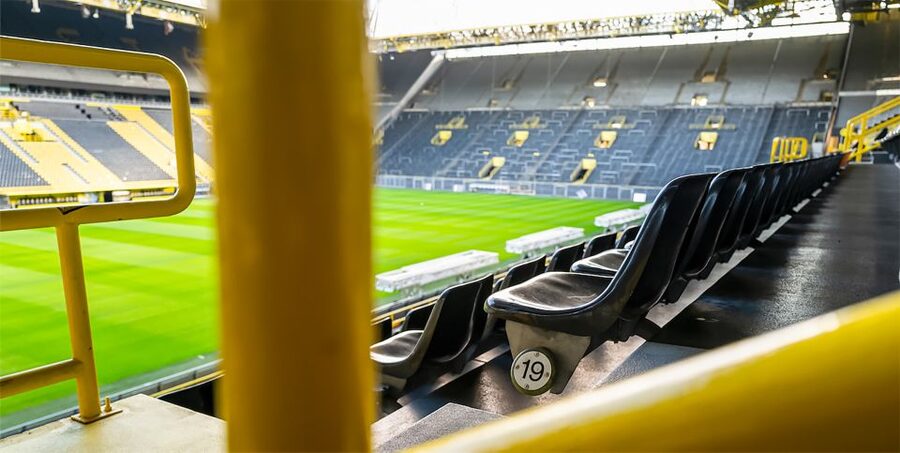
The dugouts are one of the best practical features of the walk. You can sit in the seats used by home and away staff and look back toward the pitch from the same low angle as the coaching teams.
From the ordinary spectator seats, the pitch feels like a stage. From the bench, the view is flatter and closer, with the touchline immediately in front of you. That change in perspective makes the stop worthwhile even if you are not a committed football follower.
The coaching zone is nearby. You can see where managers and substitutes work during a match, then take photos without being hurried along. This is also a good place to slow down and think about how much of a match is directed from the edge of the field rather than from the seats.
The route does not give you access to every office or private room. The Media Center and Stadium Prison are excluded, along with other restricted areas. Some visitors have also wished for a trophy room, boardroom, or stronger presentation of the club’s titles. If you want a full Borussia Dortmund museum, this walk will feel limited. If you want the working stadium, it delivers more directly.
QR codes and the self-guided format
At selected stations, you scan QR codes with your phone. The codes connect to club-made YouTube videos with information about the stadium and club. English and German options are available, which makes the system more useful for international visitors.
Bring a charged phone and enough data access to watch the videos. The QR system is not a small extra. It provides the narration that a live guide would normally supply, including facts about the building and the areas along the route.
Still, the experience depends on how much explanation you want. If you prefer a guide who tells stories, answers questions, and keeps the route moving, this format may feel thin. The host or greeter language is German, and no named guide is assigned to lead you around. Staff can help with directions, but they are not there to give a full club talk at every stop.
I like the balance for independent visitors. You can scan only the stations that interest you, replay a video, or skip ahead to the next room. Families also benefit because children can pause for photos without holding up a group. The downside is that you have to manage the information yourself, and the route can be unclear at times.
How long should you allow?
The ticket is valid for one day, and the opening window runs from 10:00 AM to 6:00 PM, with last entry at 5:30 PM. The actual visit can be much shorter. About an hour is enough for the basic route if you move steadily, while football fans who watch the videos, take photos, and linger in the stands should allow more time.
Do not feel tied to the exact opening time printed on your reservation. The important practical point is to enter during the available window and finish within the operating hours. Arriving late in the afternoon can work well because the stadium may feel quieter, but leave enough time for the full route and any wrong turns.
I would not combine this with a rushed pre-match schedule. The stadium may be preparing for an event, and parts of the route may close. If you want the broadest possible access, choose a normal non-matchday when no special event or renovation is scheduled.
The walk is closed on home matchdays and the day before a UEFA Champions League home match. It can also close for other special events. On December 24, December 25, and December 31, it closes from 2:00 PM onward.
Price, value, and what is not included
At about $14 per person, this is inexpensive for access to a major European football stadium. You are paying for the stadium entrance and the self-guided mobile tour, not for a guide-led presentation or a museum collection.
That distinction makes the price easier to judge. If your priority is sitting in the dugout, seeing the Yellow Wall, walking through the tunnel, and entering the players’ areas when available, the cost is very reasonable. You get the main physical spaces without paying for a longer, more formal production.
The value drops if you expect every section to be open. The pitch is off limits, the upper tier may be closed, and the changing rooms can be unavailable. The Media Center and Stadium Prison are not included. There is also no player meet-and-greet, since the players are off-site during opening hours.
Food, drinks, luggage, and large bags are not allowed. Pets, baby strollers, smoking, and intoxication are also prohibited. Free onsite parking helps keep the total cost down, but the walk is not barrier-free and is not suitable for wheelchair users.
Free cancellation up to 24 hours before the visit and the option to reserve now and pay later make the booking easier to fit around a changing Dortmund schedule. You still need to check the day carefully against home matches and special events.
Who will enjoy this most?
This is a natural choice for Borussia Dortmund supporters, especially anyone who wants to see the stadium before attending a match. It also suits football fans who enjoy architecture, stadium design, and the working spaces around a pitch.
Families can make good use of the flexible pace. Children can sit in the dugouts, follow the yellow footsteps, and stop for pictures without being pushed through a fixed group itinerary. The lack of a live guide means parents may need to explain some parts themselves, but the route is simple enough to follow when the markings are clear.
It is less suitable for visitors who need step-free access, want a polished museum experience, or expect an English-speaking guide. It may also disappoint anyone whose main goal is to stand on the pitch, reach the highest seats, or see trophies and club offices.
For the best chance of seeing the advertised spaces, check the date before booking and avoid the periods immediately around major matches. Wear comfortable shoes, charge your phone, and arrive with only the essentials.
Should you book the BVB Stadium Walk?
Book it if you want a low-cost, flexible look at Signal Iduna Park and care more about being inside the working stadium than receiving a long historical presentation. The Yellow Wall, player tunnel, locker room when open, mixed zone, coaching area, and dugouts give you plenty to see for the price.
Skip it if you need guaranteed access to every room or want a guide to tell stories throughout the visit. The route can be briefly confusing, some sections close without much warning, and the experience depends on QR videos rather than personal commentary.
For most football fans in Dortmund, I would book it, then treat the exact route as subject to stadium operations. The real reward is sitting in the dugout, looking toward the Yellow Wall, and seeing how the parts of a football ground fit together before the noise of matchday returns.
FAQ
Is the BVB Stadium Walk guided?
No. It is a self-guided route through Signal Iduna Park. You follow marked yellow footsteps and scan QR codes at selected stations for additional information and videos.
What areas can I see?
The route includes the South Stand, players’ changing room, mixed zone, player tunnel, coaching area, and dugouts when those areas are open. The pitch itself is not accessible.
Are the QR videos available in English?
Yes. The QR codes provide club-made videos in German and English.
How much does the Stadium Walk cost?
The listed price is about $14 per person.
When is the Stadium Walk open?
Opening hours are 10:00 AM to 6:00 PM, with last entry at 5:30 PM, on selected available days. It is closed on home matchdays, the day before a UEFA Champions League home match, and during some special events or renovation work.
Where does the visit begin?
The meeting point is FanWelt at Signal Iduna Park.
Is the stadium tour wheelchair accessible?
No. The Stadium Walk is not barrier-free and is not suitable for wheelchair users.
Can I bring food, drinks, luggage, or a stroller?
No. Food and drinks, luggage or large bags, baby strollers, pets, and smoking are not allowed.
New on the fixture list around the world
- Spotify Camp Nou Tour F.C. Barcelona Museum (Open Date Ticket)★ 3.5 · 5 reviews
- Ferrari Driving Experience on a Racetrack★ 5.0 · 11 reviews
- Live Muay Thai Action Ticket at Phetchbuncha Samui Stadium★ 4.0 · 6 reviews
- Football tour: Red Star and Partizan Ultras History★ 5.0 · 14 reviews
- Private 4h Tour Of Camp Nou And Most Emblematic Sites Of Barcelona with pick up★ 4.5 · 3 reviews
- Discover Leo Messi’s secrets at Barça Café – Camp Nou★ 5.0 · 22 reviews
- BARCELONA SPORTS VIP – Camp Nou – La Masia & Montjuic (Olympic)★ 4.5 · 3 reviews
- Olympic and Sport Museum of Barcelona “Joan Antoni Samaranch”★ 4.5 · 22 reviews
More Stadium Tours to weigh up.

Liverpool: Liverpool Football Club Museum and Stadium Tour
Read our review →
Amsterdam: Johan Cruijff ArenA Tour with Optional Guide
Read our review →
Milan: San Siro Stadium and Museum Guided Tour
Read our review →
London: Emirates Stadium Entry Ticket and Audio Guide
Read our review →
London: Chelsea Football Club Stadium and Museum Tour
Read our review →
Lisbon: Luz Stadium Tour & SL Benfica Museum Entry
Read our review →This one also appears in